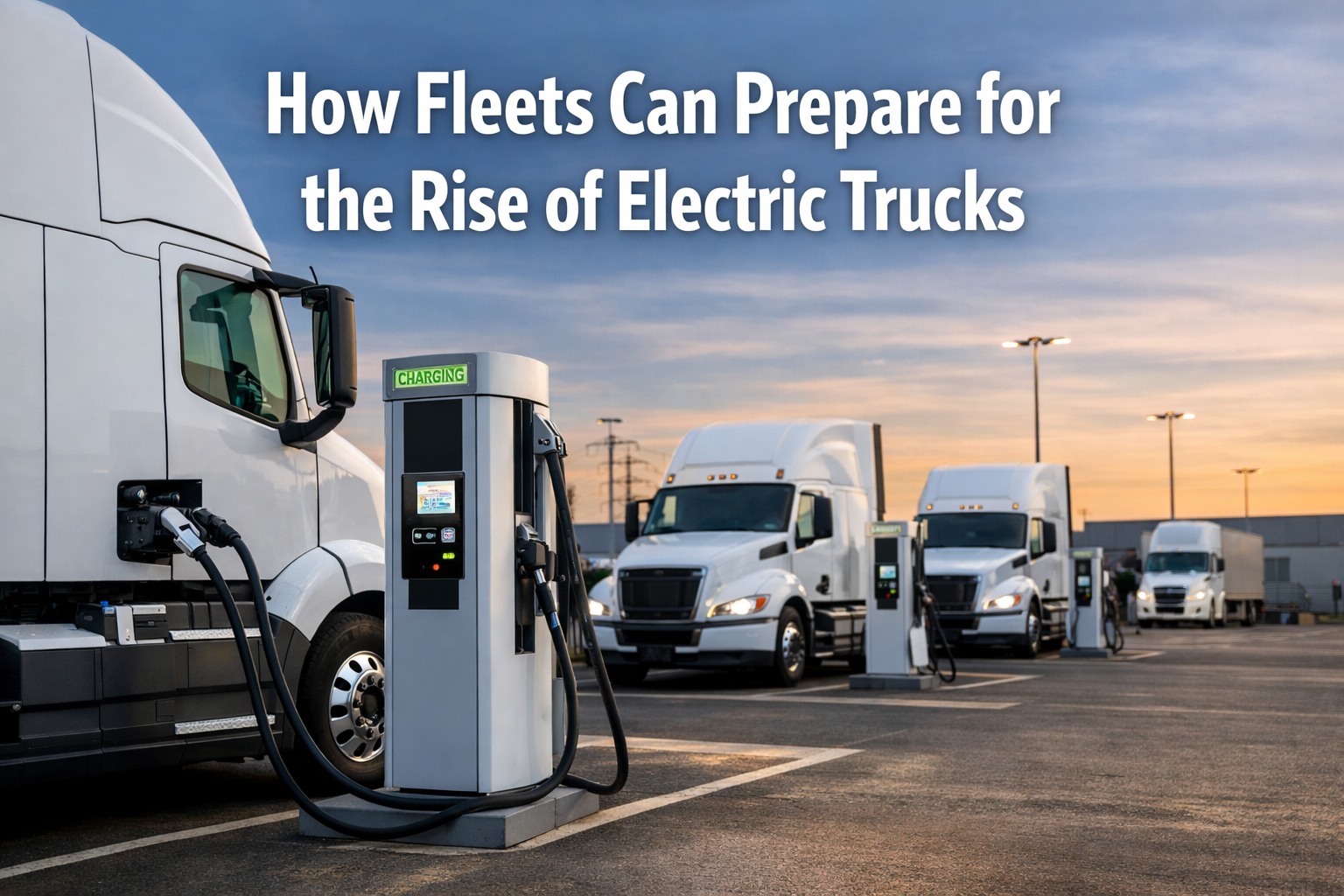
The electric truck revolution isn't coming—it's already here. In 2025, electric trucks have moved from experimental pilots to core fleet strategy for transportation companies across North America. While some fleet operators scramble to catch up with regulations and rising diesel costs, forward-thinking fleets have already positioned themselves to capture the 40% operational cost savings that electric trucks deliver. The fleets that prepare systematically today will dominate their markets tomorrow—while those who wait will face compliance penalties, higher operating costs, and competitive disadvantage. Start your EV transition assessment in under 15 minutes, or schedule a personalized EV strategy consultation.
The transition to electric trucks represents the most significant operational shift in trucking since the move from manual to automatic transmissions. But unlike previous changes, this transition comes with regulatory deadlines, substantial financial incentives, and a competitive landscape that rewards early movers. By 2030, electric commercial vehicles could make up more than 30% of the medium-duty truck market in North America. Whether driven by California's Advanced Clean Fleets mandate, EPA emissions standards, corporate sustainability goals, or pure economics, the question isn't whether to transition—it's how to transition successfully.
2026 Electric Truck Reality Check
Market Truth: Electric trucks are no longer experimental—they're proving cost-effective in real-world operations. Fleets with systematic EV transition strategies are achieving 3-5 year payback periods on vehicle investments while reducing maintenance costs by 20-65%. Urban and regional operations are already cost-superior compared to diesel, with long-haul expected to reach parity by 2030. The difference between successful and struggling transitions isn't the trucks themselves—it's systematic preparation covering infrastructure, operations, training, and financial planning.
Quick EV Readiness Assessment
Before diving into your electric truck strategy, assess your current readiness level in 5 minutes. Understanding where you stand determines your optimal transition path. (Try our EV fleet readiness assessment tool free)
5-Minute EV Fleet Readiness Check:
- ☐ Have you analyzed which routes could be electrified based on daily mileage (under 100-150 miles)?
- ☐ Do you know your depot's current electrical capacity and upgrade requirements?
- ☐ Have you identified available federal and state incentives for your fleet?
- ☐ Do you have a total cost of ownership (TCO) comparison for diesel vs. electric vehicles?
- ☐ Is your driver and maintenance team prepared for EV-specific training?
- ☐ Have you engaged with your local utility about fleet charging requirements?
If you answered "no" to more than two items, you need a systematic EV transition plan before regulations and market forces make the decision for you. (Book a free 30-minute EV strategy consultation)
Successful EV fleet transitions share common elements: thorough route analysis, strategic infrastructure investment, comprehensive training programs, and phased implementation that builds organizational confidence. The fleets achieving the best results aren't necessarily the largest—they're the ones who approached the transition as a systematic business transformation rather than a simple vehicle replacement. (Start building your EV transition expertise with FleetRabbit free for 30 days)
The Real Numbers: Prepared vs. Unprepared Fleet Transitions
EV Transition Performance: Strategic vs. Reactive Approaches
| Performance Metric | Strategic Transition | Reactive Transition | Difference | Key Factor |
|---|---|---|---|---|
| Payback Period | 3-5 years | 7-10+ years | -50% | Incentive optimization |
| Vehicle Uptime | 96-98% | 80-85% | +15% | Infrastructure planning |
| Maintenance Savings | 40-65% | 10-20% | +30% | Proper training |
| Driver Satisfaction | High (quieter, smoother) | Low (range anxiety) | Significant | Training investment |
| Infrastructure Delays | Minimal (planned) | 6-18 months | -80% | Early utility engagement |
| Regulatory Compliance | 100% | At risk | Critical | Strategic timeline |
Understanding the Electric Truck Landscape in 2026
The commercial electric truck market has matured dramatically over the past two years. What was once limited to light-duty delivery vans now spans the full range of commercial vehicles, from Class 2b cargo vans to Class 8 semi-trucks. Major manufacturers including Freightliner, Volvo, Tesla, Peterbilt, and emerging players like Rivian and RIZON are delivering production vehicles that meet real-world fleet requirements.
Available Electric Truck Classes
Electric Truck Options by Class (2026):
- Class 2b-3 (8,501-14,000 lbs GVWR): Ford E-Transit, Rivian Commercial Vans, GM BrightDrop—ideal for last-mile delivery with 150-200+ mile ranges
- Class 4-5 (14,001-19,500 lbs GVWR): RIZON, Lightning eMotors, Freightliner eM2—urban delivery and service applications with 100-160 mile ranges
- Class 6-7 (19,501-33,000 lbs GVWR): Freightliner eCascadia, Volvo VNR Electric—regional distribution with 150-275 mile ranges
- Class 8 (33,001+ lbs GVWR): Tesla Semi, Freightliner eCascadia, Volvo VNR Electric, Nikola Tre—drayage and regional haul with 200-500 mile ranges
- Yard Tractors: Multiple manufacturers—fully electrified operations ideal for depot and port applications
Find the Right Electric Trucks for Your Fleet
Our fleet analysis tools match your operational requirements with available electric truck options, ensuring you select vehicles that meet your route demands while maximizing ROI.
Step 1: Conduct a Comprehensive Fleet Assessment
Before purchasing a single electric truck, successful fleets invest in thorough operational analysis. This assessment identifies which vehicles and routes are immediately suitable for electrification versus those requiring technology improvements or infrastructure development. Start your fleet assessment in under 15 minutes.
Route Analysis: Your Foundation for Success
Route analysis is the cornerstone of EV transition planning. The goal is to identify vehicles with predictable daily mileage patterns that fall within current EV range capabilities—typically under 100-150 miles for regional operations.
Critical Route Assessment Factors:
- Daily Mileage Patterns: Focus on vehicles with consistent routes under 100 miles daily for initial deployment
- Return-to-Base Operations: Routes that end where they begin are ideal for overnight depot charging
- Dwell Time Analysis: Identify stops of 30+ minutes where opportunity charging is possible
- Elevation Changes: Factor in terrain that affects range—hills consume more energy but enable regenerative braking
- Temperature Extremes: Cold weather can reduce range by 20-40%—plan accordingly
- Load Weight Variations: Heavier loads reduce range—analyze typical versus maximum payloads
- Charging Access: Map existing and planned charging infrastructure along routes
Studies show that 75% of commercial vehicles analyzed could transition to battery-electric today, with overnight charging meeting most daily route needs. The key is matching vehicle capabilities to actual operational requirements, not theoretical maximums.
Fleet Electrification Suitability by Application
EV Suitability Assessment by Fleet Type
| Fleet Application | EV Readiness | Typical Daily Range | Best Starting Point | Key Consideration |
|---|---|---|---|---|
| Last-Mile Delivery | Excellent | 50-80 miles | Immediate deployment | High stop frequency aids regen |
| Urban Distribution | Excellent | 60-100 miles | Immediate deployment | Depot charging ideal |
| Service/Utility Fleets | Very Good | 40-80 miles | Immediate deployment | Predictable daily patterns |
| Regional Distribution | Good | 100-200 miles | Phased deployment | May need mid-route charging |
| Drayage Operations | Very Good | 50-150 miles | Immediate deployment | Port/rail charging available |
| Long-Haul Trucking | Developing | 300-500+ miles | Wait for infrastructure | Public charging network needed |
Step 2: Plan Your Charging Infrastructure
Charging infrastructure is the foundation that makes electric fleet operations possible. Without adequate charging, even the best electric trucks become expensive paperweights. The most critical mistake fleets make is underestimating the time and investment required for infrastructure development. Schedule a charging infrastructure consultation.
Understanding Charging Levels
Commercial Charging Options:
- Level 2 AC Charging (7-19 kW): Best for overnight depot charging—full charge in 5-10 hours depending on battery size. Lower infrastructure cost, suitable for predictable overnight dwell times.
- DC Fast Charging (50-350+ kW): Adds 100+ miles of range in 30-60 minutes. Higher infrastructure cost but enables mid-shift charging and faster turnaround.
- Megawatt Charging System (MCS): Emerging standard for Class 8 trucks—up to 1+ MW charging for rapid heavy-duty vehicle charging.
Infrastructure Planning Priorities
Critical Infrastructure Considerations
- Engage Utilities Early: Grid upgrades can take 12-24 months. Start utility conversations immediately—this is the longest lead-time item.
- Assess Electrical Capacity: Many depots require transformer upgrades, new service drops, or dedicated feeders for fleet charging.
- Plan for Growth: Install conduit and panel capacity for future expansion even if you're starting small.
- Consider Demand Charges: Peak power draw triggers demand charges that can exceed energy costs. Smart charging and load management are essential.
- Charger-to-Vehicle Ratio: Most fleets operate at 1:2 to 1:4 charger-to-vehicle ratios with smart scheduling—you don't need one charger per truck.
- Leverage Utility Programs: Many utilities offer incentives covering 50-80% of infrastructure costs through EV fleet programs.
Infrastructure Cost Planning
Typical Charging Infrastructure Investment
| Infrastructure Component | Small Fleet (5-15) | Medium Fleet (16-50) | Large Fleet (50+) | Notes |
|---|---|---|---|---|
| Electrical Service Upgrade | $10,000-50,000 | $50,000-200,000 | $200,000-1M+ | Site-specific |
| Level 2 Chargers (per unit) | $3,000-8,000 | $2,500-6,000 | $2,000-5,000 | Volume discounts available |
| DC Fast Chargers (per unit) | $50,000-150,000 | $40,000-120,000 | $35,000-100,000 | Including installation |
| Site Work/Trenching | $5,000-20,000 | $20,000-75,000 | $75,000-300,000 | Varies by layout |
| Smart Charging Software | $100-300/mo | $500-2,000/mo | $2,000-10,000/mo | Essential for optimization |
| Utility Incentive Offset | 30-80% | 30-80% | 30-80% | Location dependent |
Optimize Your Charging Infrastructure Investment
Our infrastructure planning tools help you right-size charging capacity, maximize utility incentives, and avoid costly over-building while ensuring operational reliability.
Step 3: Understand the Financial Picture
The financial case for electric trucks has improved dramatically. While upfront costs remain higher than diesel equivalents, total cost of ownership (TCO) analysis increasingly favors electric—especially when incentives, fuel savings, and reduced maintenance are factored in. Access our TCO calculation tools.
Total Cost of Ownership Components
TCO Factors Favoring Electric Trucks:
- Fuel Savings: Electricity costs $0.04-0.15 per mile versus $0.25-0.50 for diesel—savings of 50-80% on fuel costs
- Maintenance Reduction: 20-65% lower maintenance costs—no oil changes, fewer brake replacements (regenerative braking), simpler drivetrain
- Incentives: Federal tax credits up to $40,000 per Class 8 truck, plus state incentives that can reduce net cost by $100,000+ per vehicle in some regions
- Stable Energy Costs: Electricity prices are more stable and predictable than diesel, enabling better budget planning
- Longer Vehicle Life: Electric drivetrains have fewer wear components, potentially extending useful vehicle life
- Reduced Downtime: Fewer moving parts mean fewer breakdowns and less unplanned maintenance
Current Incentive Landscape
Important Incentive Updates (2025-2026)
Note: The federal Qualified Commercial Clean Vehicle Credit (IRC 45W) ended for vehicles acquired after September 30, 2025. However, vehicles with binding contracts and deposits made by that date remain eligible for credits up to $40,000 per vehicle. State and utility incentives continue to offer significant savings—California, New York, Colorado, and other states maintain robust programs. Always verify current incentive availability before making purchase decisions.
Key Incentive Sources to Research:
- State Clean Vehicle Programs: California HVIP, New York Truck Voucher Program, Colorado incentives offer $50,000-175,000+ per vehicle
- Utility EV Fleet Programs: Many utilities cover 50-80% of charging infrastructure costs
- EPA Clean Ports Program: Significant funding for drayage and port-related operations
- CARB Low Carbon Fuel Standard (LCFS): Ongoing credits for California operations create revenue streams
- Alternative Fuel Vehicle Refueling Property Credit: 30% credit for charging equipment through June 30, 2026
- Manufacturer Incentives: OEMs increasingly offer fleet pricing and lease programs
Sample TCO Comparison
5-Year TCO: Class 6 Electric vs. Diesel (Urban Distribution)
| Cost Category | Diesel Truck | Electric Truck | Difference | Notes |
|---|---|---|---|---|
| Vehicle Purchase | $85,000 | $180,000 | +$95,000 | Before incentives |
| Incentives Applied | $0 | -$80,000 | -$80,000 | State + utility programs |
| Net Vehicle Cost | $85,000 | $100,000 | +$15,000 | After incentives |
| Fuel/Energy (5 yr) | $87,500 | $25,000 | -$62,500 | 25,000 mi/yr average |
| Maintenance (5 yr) | $35,000 | $14,000 | -$21,000 | 60% reduction |
| Infrastructure Share | $0 | $15,000 | +$15,000 | Allocated per vehicle |
| 5-Year TCO | $207,500 | $154,000 | -$53,500 | 26% savings |
Step 4: Navigate Regulatory Requirements
Regulatory pressure is accelerating EV adoption, particularly for fleets operating in California and states adopting California standards. Understanding compliance timelines is essential for planning vehicle purchases and avoiding penalties.
California's Advanced Clean Fleets (ACF) Regulation
California's ACF regulation represents the most comprehensive EV fleet mandate in North America, affecting high-priority fleets, drayage operations, and government agencies. At least 10 other states have adopted or are considering similar rules.
ACF Key Requirements Summary
- High Priority Fleets ($50M+ revenue or 50+ vehicles): Must purchase only ZEVs starting January 2024; ICE vehicles must be removed at end of useful life (13-18 years or 800,000 miles) starting January 2025
- Drayage Fleets: Only ZEV drayage trucks can newly register starting January 2024; all drayage trucks must be ZEV by 2035
- State/Local Government: 50% ZEV purchases starting 2024; 100% ZEV purchases by 2027
- ZEV Milestones Option: Alternative compliance pathway with percentage targets by vehicle type through 2042
- Exemptions Available: Daily usage exemptions, infrastructure delays, vehicle delivery delays, and purchase exemptions for unavailable configurations
EPA Emissions Standards
Federal Regulatory Timeline:
- EPA Clean Trucks Plan (2027): New Class 8 trucks must cut nitrogen oxide emissions by up to 80%
- Greenhouse Gas Limits (2028-2032): Up to 60% reduction per ton-mile for vocational trucks
- Advanced Clean Trucks (ACT) Rule: Manufacturer ZEV sales requirements adopted by California and other states
- 2036 Sales Requirement: All new medium and heavy-duty vehicle sales must be zero-emission in California
Step 5: Train Your Team for EV Success
Driver and technician training is often underestimated in EV transition planning, yet it's critical for achieving operational efficiency and maximizing vehicle performance. Electric trucks require different operating techniques and maintenance approaches than diesel vehicles. Schedule a training program consultation.
Driver Training Essentials
Key Driver Training Topics:
- Range Management: Understanding factors that affect range—speed, climate control, load weight, driving style
- Regenerative Braking: Maximizing energy recovery through proper braking technique—can extend range 10-20%
- Charging Procedures: Proper plug-in protocols, charging status monitoring, troubleshooting common issues
- Pre-Trip Inspection Differences: EV-specific inspection items including charge status, battery indicators, charging equipment
- Eco-Driving Techniques: Smooth acceleration, anticipating stops, optimal speed for efficiency
- Emergency Procedures: High-voltage safety awareness, what to do in case of accidents or failures
- Route Planning: Understanding charging locations, planning for range requirements, weather adjustments
Maintenance Team Training
Technician Certification Requirements:
- High-Voltage Safety: Essential certification for anyone working on EV systems—typically OSHA-compliant training
- Battery Systems: Understanding thermal management, diagnostics, and when to escalate to specialists
- Charging Equipment: Installation, troubleshooting, and maintenance of EVSE
- OEM-Specific Training: Most manufacturers require certification for warranty work
- Software Systems: Managing vehicle firmware updates, telematics integration, charging software
- Cross-Training: Preparing technicians to work on mixed diesel/electric fleets during transition
Prepare Your Team for Electric Fleet Success
Our training resources and partner network help you develop comprehensive EV competencies across your organization—from drivers to technicians to fleet managers.
Step 6: Develop Your Implementation Roadmap
Successful EV transitions follow phased implementation plans that build organizational capability while managing risk. A typical timeline spans 12-24 months from initial assessment to full deployment.
12-Month EV Transition Roadmap
Phase 1: Assessment and Planning (Months 1-3)
- Complete fleet operational analysis and route assessment
- Identify pilot vehicles and routes for initial deployment
- Conduct site assessment for charging infrastructure
- Engage utility company about service requirements and incentive programs
- Research available incentives and develop financial projections
- Establish project team and assign responsibilities
Phase 2: Infrastructure Development (Months 3-9)
- Finalize charging infrastructure design and equipment selection
- Submit utility service upgrade requests (critical path item)
- Apply for infrastructure incentives and permits
- Begin site preparation and electrical work
- Select and order electric vehicles (consider lead times)
- Develop driver and technician training programs
Phase 3: Pilot Deployment (Months 9-12)
- Commission charging infrastructure and verify operation
- Take delivery of pilot vehicles and complete PDI
- Conduct comprehensive driver and technician training
- Deploy pilot vehicles on selected routes
- Monitor performance, collect data, and address issues
- Refine operational procedures based on pilot learnings
Phase 4: Scale and Optimize (Months 12+)
- Evaluate pilot results and refine TCO projections
- Expand deployment to additional routes and vehicles
- Optimize charging schedules and energy management
- Scale infrastructure to support growing EV fleet
- Continue training programs for new personnel
- Document lessons learned and best practices
Managing the Mixed Fleet Transition
Most fleets will operate mixed diesel and electric vehicles during the transition period. Successfully managing this complexity requires intentional planning for operations, maintenance, and route assignment.
Mixed Fleet Management Challenges
- Route Optimization: Matching vehicle capabilities to route requirements—EVs for shorter, predictable routes; diesel for longer or variable routes
- Maintenance Complexity: Supporting two different powertrains with different skill requirements and parts inventories
- Driver Assignment: Ensuring EV-trained drivers operate electric trucks while maintaining diesel proficiency fleet-wide
- Infrastructure Balance: Managing both fuel and charging infrastructure during transition
- Cost Tracking: Accurately attributing costs to compare EV and diesel performance
- Technology Integration: Ensuring fleet management systems support both vehicle types with unified reporting
Common Pitfalls to Avoid
Learning from others' mistakes can save significant time and money. Here are the most common EV transition pitfalls and how to avoid them.
EV Transition Mistakes That Destroy ROI
- Underestimating Infrastructure Timeline: Utility upgrades can take 12-24 months. Start early—this is the longest lead-time item.
- Skipping Route Analysis: Deploying EVs on unsuitable routes creates range anxiety and operational failures. Match vehicles to routes.
- Over-Building Infrastructure: Installing more chargers than needed wastes capital. Start with adequate capacity and plan for expansion.
- Neglecting Training: Untrained drivers waste energy and create range problems. Untrained technicians can cause safety incidents.
- Ignoring Demand Charges: Unmanaged charging can create electricity bills higher than diesel costs. Smart charging is essential.
- Missing Incentive Deadlines: Incentive programs have application windows and funding limits. Apply early.
- Going Too Big Too Fast: Large initial deployments amplify problems. Start with pilots to learn before scaling.
- Forgetting Driver Buy-In: Drivers who don't understand or trust EVs will underperform. Invest in communication and training.
Conclusion: Your Path to Electric Fleet Success
The transition to electric trucks is not a question of if, but when and how. Fleets that approach this transition strategically—with thorough planning, appropriate infrastructure investment, comprehensive training, and phased implementation—are achieving significant operational and financial benefits while positioning themselves for regulatory compliance and competitive advantage.
The most successful transitions share common characteristics: they start with honest assessment of current operations, invest adequately in infrastructure before vehicles arrive, train teams comprehensively, and build organizational capability through measured pilot deployments before scaling. They also take full advantage of available incentives and utility programs that can dramatically improve project economics.
Whether you're responding to regulatory requirements, pursuing sustainability goals, or simply seeking lower operating costs, the electric truck transition rewards those who prepare. The technology is ready. The economics are increasingly favorable. The regulatory direction is clear. The only question is whether your fleet will lead or follow. Start your EV transition planning today, or schedule a personalized strategy session with our fleet electrification experts.
Start Your Electric Fleet Transition Today
Join forward-thinking fleets achieving 40%+ operational cost savings with systematic EV transition strategies. Real planning, real infrastructure, real results.
Frequently Asked Questions About Electric Truck Fleet Transitions
Q: How do I determine if my fleet is ready for electric trucks?
Start with route analysis to identify vehicles with predictable daily mileage under 100-150 miles and return-to-base operations. These are ideal initial candidates. Assess your depot's electrical capacity, identify available incentives in your region, and calculate total cost of ownership comparisons. Most fleets find that 30-50% of their vehicles are immediately suitable for electrification, with the remainder becoming viable as technology and infrastructure improve.
Q: What's the typical payback period for electric truck investments?
With current incentives and energy costs, well-planned EV deployments typically achieve payback in 3-5 years for urban and regional operations. Factors affecting payback include incentive levels (which can reduce vehicle cost by $50,000-100,000+), electricity rates, annual mileage, and diesel price assumptions. Fleets with high annual mileage and access to strong incentive programs often see faster returns. Always run TCO analysis specific to your operation rather than relying on industry averages.
Q: How long does it take to install charging infrastructure?
Timeline varies significantly based on electrical capacity requirements. Simple Level 2 installations at sites with adequate power can be completed in 4-8 weeks. Sites requiring utility service upgrades typically take 12-24 months—this is the critical path item for most fleet transitions. Engage your utility early, even before finalizing vehicle orders. Many fleets underestimate infrastructure timeline and end up with vehicles waiting for chargers.
Q: What happens if my electric truck runs out of charge on a route?
Proper route planning should prevent this scenario, but contingencies include mobile charging services, towing to a charging location, or public DC fast charging. Most fleet management platforms provide real-time state-of-charge monitoring and alerts to prevent low-charge situations. Training drivers on range management and building 10-20% buffer into route planning virtually eliminates range-related incidents. Some fleets keep backup diesel vehicles available during initial deployment phases.
Q: Are electric trucks suitable for cold climate operations?
Yes, but with considerations. Cold weather can reduce range by 20-40% due to battery chemistry and heating demands. Successful cold-climate fleets use battery pre-conditioning (warming batteries while plugged in before departure), plan routes with additional range buffer, and may install heated parking to maintain battery temperature. Many Scandinavian and Canadian fleets operate electric trucks successfully year-round with proper planning.
Q: Should I lease or purchase electric trucks?
Both approaches have merit. Leasing reduces upfront capital requirements, transfers residual value risk to the lessor, and may simplify access to incentives. Purchasing provides ownership of appreciating technology, maximizes incentive capture for tax-paying entities, and avoids mileage restrictions. Many fleets use leasing for initial deployments to limit risk while learning, then transition to purchasing as confidence grows. Evaluate your capital availability, tax situation, and risk tolerance.