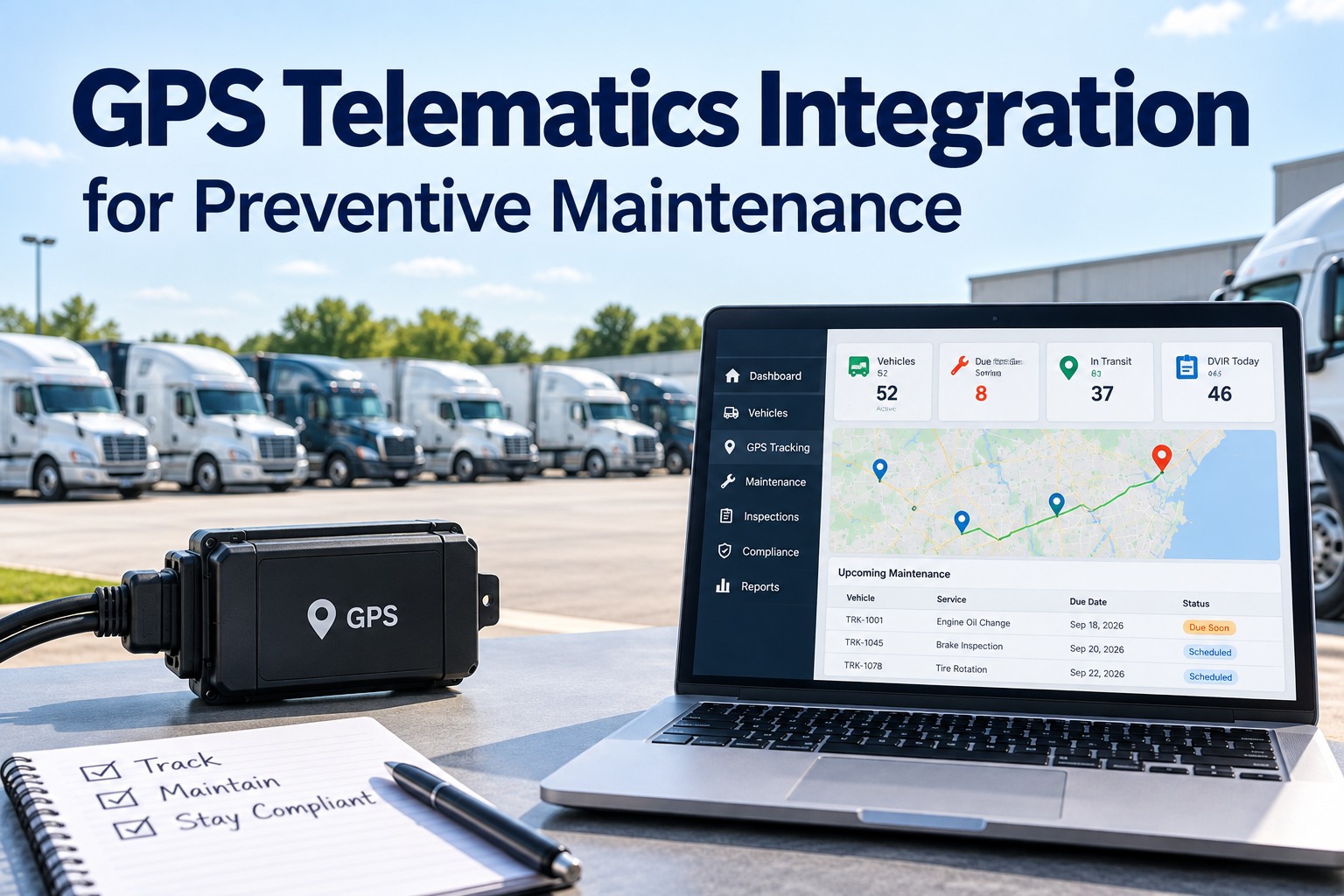
GPS Telematics Integration for Preventive Maintenance
By Alex Rowan on September 16, 2026
There is a measurement problem hiding inside the phrase "GPS telematics," and it decides whether your preventive maintenance schedule is accurate or merely automated. GPS-estimated distance and ECM-read odometer are not the same number. GPS drifts one to three per cent on winding or hilly terrain, so the same truck reports differently depending on the route it ran. A telematics unit reading the odometer directly from the engine control module through the diagnostic interface matches the dashboard exactly, with no drift and no estimation. On a truck covering 130,000 miles a year, that difference is between 1,300 and 3,900 miles, which is a meaningful fraction of a service interval. And it sits beneath a larger problem: most fleets with telematics installed are still keying odometer readings by hand into the maintenance schedule, at a reported error rate of 15 to 30 per cent. Bring five vehicles' recorded mileage to a session and we'll compare it against the dashboards. The gap is usually larger than anyone expects.
Integration · GPS & Telematics Data
GPS Telematics Integration for Accurate Preventive Maintenance
Connect ECM-read odometer and engine-hour data to preventive maintenance schedules, improve audit-ready records, and service every vehicle against the number on its dashboard.
How GPS telematics accuracy affects preventive maintenance
They are not equivalent, and most fleets are using the worst one without realising there was a choice.
Least accurate
Typed in by hand
15–30% error rateDiscrepancies averaging 200 to 500 miles per vehicle per month, drawn from paper logs and driver reports. Enough to distort service schedules, fuel economy figures and fuel tax reporting simultaneously, and it is what most fleets still do even when telematics is installed.
Better, but estimated
GPS-derived distance
1–3% driftCalculated from position rather than read from the vehicle, so it drifts on winding or hilly terrain. Automated and consistent, but systematically wrong in a way that varies by route, because mountain work drifts differently from flat corridors.
Accurate
Read from the ECM
Matches the dashboardTaken directly from the engine control module through the diagnostic interface. No GPS drift, no manual input, and it reconciles exactly with what the driver sees. This is the number a service interval should be measured against.
The practical consequence is that "we have telematics" does not answer the question. What matters is which of those three numbers is feeding your maintenance schedule, and in a great many fleets the answer is the first one, because the telematics platform and the maintenance spreadsheet were never connected and somebody types the readings across on a Friday.
At a glance
The maintenance data gap, in three charts
A quick comparison of what manual readings change across accuracy, completion and accumulated drift.
01Error exposure
Which number reaches the schedule?
Hand entry
15–30%
GPS estimate
1–3%
ECM read
0%
Machine-read data keeps the schedule aligned with the dashboard.
02PM completion
Automation closes the follow-through gap
94%
Automated
62%
Manual
The difference is whether the step can be skipped during a busy week.
0312-month drift
A small monthly gap compounds quietly
High range
6,000 mi
Low range
2,400 mi
At month twelve, the schedule is operating against a materially wrong number.
Figures shown here reflect the ranges and reported outcomes explained below; actual results vary by fleet, route and data source.
01A third of missed intervals trace back to itManual entry is reported as responsible for around 34 per cent of missed preventive maintenance intervals in fleets without integration. Not forgotten schedules, but schedules working correctly against wrong numbers.
02Compliance rates split roughly 94% against 62%Automated fleets are reported above 94 per cent preventive maintenance compliance, against roughly 62 per cent where tracking is manual. That is not a difference in diligence. It is a difference in whether the step that gets skipped during a busy week exists at all.
03Deferred work multipliesDeferred maintenance is reported to carry a cost multiplier approaching five times, and an unplanned breakdown averages around $3,900. A schedule running a thousand miles behind reality is deferring quietly, without anyone choosing to.
04Three other systems inherit the errorThe same inaccurate reading distorts fuel economy per vehicle and fuel tax reporting at the same time. One bad number, three wrong outputs, which is why fixing the source beats correcting any of them downstream.
Meter-based preventive maintenance keeps service intervals accurate
This is usually sold as a cost saving. It is more honest, and more persuasive, to describe it as a timing correction.
Calendar intervals across a mixed fleetLong-haul, 130,000 mi/yrChronically under-serviced, reaching wear thresholds long before the date arrivesLocal delivery, 40,000 mi/yrOver-serviced, paying for work the vehicle had not yet earned
Meter-based intervals on live dataHard-working unitsServiced more often, matched to actual wearLight-duty unitsServiced less often, without risk
Here is the part worth repeating to whoever approves the budget, because it is what makes the case credible: the overall preventive maintenance spend stays roughly the same. What changes is the timing, which is where the downtime and compliance improvements actually come from. Anyone promising that meter-based scheduling cuts your service budget is describing under-servicing, not optimisation.
Ten-minute checkWalk to five trucksPhotograph each dashboard. Compare to your maintenance record.
Whatever the gap is, that is what your PM schedule is running on
Manual entry drift averages 200 to 500 miles per vehicle per month, which compounds quietly across a quarter. This test costs ten minutes, requires no software and tells you immediately whether you have an integration problem or not. Do it yourself, or send us the five readings and we will work out the interval impact with you.
Telematics data streams that improve fleet maintenance decisions
Odometer is the headline, but a telematics connection carries four streams and each one changes a different decision.
Swipe to see all columns
Stream
What it drives
What it replaces
Odometer
Mileage-based service intervals, fuel economy per vehicle, disposal records
Hand-keyed readings carrying 15–30% error
Engine hours
Hour-based intervals for plant, yard units and anything that idles more than it travels
A mileage rule applied to equipment that barely moves
Fault codes
Diagnostic work orders raised on a developing problem
Waiting for the interval, or for the breakdown
Idle time and hard events
Fuel waste coaching, and a cross-check on whether a wear pattern is behavioural
Assuming every unusual wear rate is a vehicle problem
The third row earns particular attention. Fault codes add a real-time layer over fixed intervals, flagging a developing problem days or weeks before mileage alone would have caught it, which is the difference between scheduled work and a roadside event. Sync frequency matters here too: a fifteen-minute refresh behaves very differently from a platform updating hours or once a day.
Audit-ready records
Build a maintenance record that stays ready when an auditor asks
Federal maintenance rules require a clear record of the vehicle, the work due, and the inspection or repair history. The retention window continues beyond the day-to-day service event.
Each period drawn to the same 12-month scale
Active recordMinimum record period
30 days30 days · the rolling window of records held where the vehicle is housed or maintained
Vehicle retainedWhile housed or maintained
1 year12 months · runs for as long as the vehicle stays under your control
After disposalAfter leaving carrier control
6 months6 months · the clock starts the day the vehicle leaves your control
036912 months
Compliance reference: 49 CFR § 396.3 on inspection, repair and maintenance records.
Use accurate mileage data to plan maintenance 10–14 days early
A small scheduling decision with a measurable price attached, and one most fleets have never made deliberately.
Raise the work order before the threshold, not at it
Issuing work ten to fourteen days ahead of the service point means parts can be sourced at planned rates. Waiting until the interval arrives means sourcing under pressure, at a reported premium of 15 to 30 per cent.
Which only works if the countdown is accurate
A fourteen-day lead calculated from an odometer reading that is 400 miles stale is not a fourteen-day lead. The whole practice depends on knowing where the vehicle actually is against its interval, which is the argument for live data rather than periodic entry.
And it takes the queue off dispatch
Once intervals run on live readings with lead time built in, nobody has to remember which truck is due. The schedule raises its hand at the right point every time, which is what lets maintenance planning run independently of whoever is managing loads that week.
Preventive maintenance results after connecting telematics
Rather than a feature list, here is the sequence fleets report after connecting telematics to maintenance: first week, first month, first quarter, first year.
Week oneReadings stop being a taskOdometer and engine hours arrive on their own. Whoever was typing them across gets that time back immediately, and the drift stops accumulating from that day rather than from the next audit.
First monthIntervals resettle against realitySome units turn out to be overdue and some have been serviced early. This is the uncomfortable month, and it is also the proof. A fleet reporting that telematics integration "killed all of that in about 30 days" is describing exactly this correction.
First quarterCompliance becomes a number you can quoteReported completion rates land above 94 per cent against roughly 62 per cent on manual tracking, and it becomes a live dashboard figure rather than something reconstructed from invoices when someone asks.
First yearRoad failures fall without new equipmentOne regional carrier running 128 tractors reported unplanned road failures down 41 per cent in the first year, attributed not to new vehicles but to finally servicing the existing ones when they actually needed it. Structured automated programmes are reported around 45 per cent fewer breakdowns and 28 per cent lower repair costs.
OngoingThe weekly review takes fifteen minutesOne dashboard: what came due, what closed, what slipped and why. That habit is the whole programme, and everything the software does is automation supporting a quarter-hour conversation.
Note which of those are software outcomes and which are operational ones. Week one is the only thing the integration does by itself. Everything after it comes from the schedule being right, which is worth saying plainly because it sets the expectation correctly with whoever funded it.
Accurate odometer history supports vehicle resale compliance
An entirely separate reason to hold clean telematics-generated mileage history, and it sits outside maintenance altogether.
The rule
Every sale or transfer needs a certified odometer disclosure
Federal law requires a signed statement whenever a motor vehicle changes hands, with the seller certifying the reading and flagging known discrepancies. Violations carry fines reported up to $10,000 each, plus civil liability.
The exposure
A mileage dispute after the sale lands on you
Fleets that dispose of vehicles without clean odometer records carry real post-sale liability if a discrepancy surfaces later, and against a national fraud problem estimated above a billion annually, buyers and authorities are looking. Hand-kept records with a 15 to 30 per cent error rate are a weak position to defend from.
The fix
A continuous machine-read history closes it
Telematics-generated odometer history, read from the vehicle rather than transcribed, removes that exposure, and it also produces per-state mileage and journey records automatically, which reduces manual reconciliation elsewhere.
Worth raising with whoever handles disposals rather than with maintenance. The same connection that fixes your service intervals also produces the defensible mileage record you need at resale, a benefit that appears in a completely different budget line and is almost never counted when these decisions get made. Worth ten minutes with whoever signs your disposal paperwork.
How to connect telematics to preventive maintenance
Four steps, and the third is where the thinking goes.
1Check what your provider actually sendsSpecifically whether odometer comes from the engine control module or is derived from GPS distance, and how often it refreshes. Two platforms both described as telematics can differ meaningfully on both points.
2Reconcile once, manually, at the startPhotograph dashboards against system readings on a sample before you switch over. Starting from a verified baseline means the first month's corrections are trusted rather than argued about.
3Set intervals per asset class, not per fleetMileage for over-the-road units, engine hours for plant and anything that idles, calendar for the few things genuinely time-governed. A single interval across a mixed fleet is the problem meter-based scheduling exists to solve, so do not recreate it in the new system.
4Build in the lead timeWork orders raised ten to fourteen days ahead of threshold so parts are sourced at planned rates. Configure it once at setup rather than deciding case by case afterwards.
Put three vehicles on live readings and watch the first correction
Free, no card, no time limit. Connect three units, let real odometer and engine-hour data drive their schedules for a month, and see how far their intervals move against what your current records say. That first correction is the most informative thing about this whole subject, and doing it on three vehicles costs you nothing and tells you whether the other ninety-seven have the same problem.
Frequently asked questions about GPS telematics and preventive maintenance
Is GPS mileage the same as odometer?
No, and the difference matters for scheduling. GPS-estimated distance is calculated from position and drifts one to three per cent on winding or hilly terrain, so the same vehicle reports differently depending on its route. Telematics that reads the odometer directly from the engine control module through the diagnostic interface matches the dashboard exactly, with no drift and no manual input. Check which your provider sends before you build intervals on it.
We already have telematics. Why would PM still be inaccurate?
Because having telematics and having it connected to the maintenance schedule are different things. Plenty of fleets run a tracking platform and then key odometer readings into a separate spreadsheet by hand, at a reported 15 to 30 per cent error rate with monthly discrepancies averaging 200 to 500 miles per vehicle. Manual entry is attributed to around 34 per cent of missed preventive maintenance intervals in fleets without integration.
Does meter-based scheduling reduce our maintenance budget?
Not meaningfully, and anyone claiming otherwise is describing under-servicing. The overall spend stays roughly the same; what changes is timing. Under calendar intervals, high-mileage units are chronically under-maintained while low-use units are over-maintained. Meter-based scheduling moves services to where the wear actually is, and the return shows up in downtime and compliance rather than in a smaller service bill.
What difference does it make to compliance?
Reported preventive maintenance completion rates run above 94 per cent where readings are automated against roughly 62 per cent where tracking is manual. Structured automated programmes are associated with around 45 per cent fewer breakdowns and 28 per cent lower repair costs, and one 128-tractor carrier reported unplanned road failures down 41 per cent in the first year, attributed to servicing existing equipment correctly rather than to replacing it.
How far ahead should work orders be raised?
Ten to fourteen days before the service threshold, so parts can be sourced at planned rates rather than at the 15 to 30 per cent premium that comes with emergency sourcing. That lead time only works if the countdown is accurate though. Calculated from a reading that is several hundred miles stale, a fourteen-day lead is not actually fourteen days.
Is there a benefit outside maintenance?
Yes, at disposal. Federal law requires a certified odometer disclosure whenever a vehicle is sold or transferred, with violations carrying fines reported up to $10,000 plus civil liability, and fleets disposing of vehicles without clean mileage records carry real post-sale exposure if a dispute surfaces. A continuous machine-read odometer history removes that, and generates per-state mileage records that reduce manual reconciliation elsewhere.
How do we find out whether we have a problem?
Walk to five trucks, photograph the dashboards and compare them against your maintenance records. It takes ten minutes, costs nothing and tells you immediately whether your schedule is running on accurate numbers. If the gaps are in the hundreds of miles, that is drift compounding across every interval you have. Run the free 3-vehicle check and watch how far their intervals move in the first month.
Turn Accurate Mileage Into Audit-Ready Maintenance
A schedule that fires reliably against a wrong number is still wrong; it is just wrong on time. Find out whether your mileage is read from the engine or estimated from position, stop anyone transcribing readings by hand, set intervals by asset class rather than across the fleet, and build in lead time so parts are bought at planned rates. Then hold a fifteen-minute review each week on what came due, what closed and what slipped. That last habit is the programme; the rest is plumbing that makes it possible.
Error rates, drift figures, compliance percentages and outcome data are drawn from published 2026 industry research and reported fleet results, and vary by vehicle type, provider, terrain and operating pattern. Verify what your own telematics provider sends and how often before designing intervals around it.