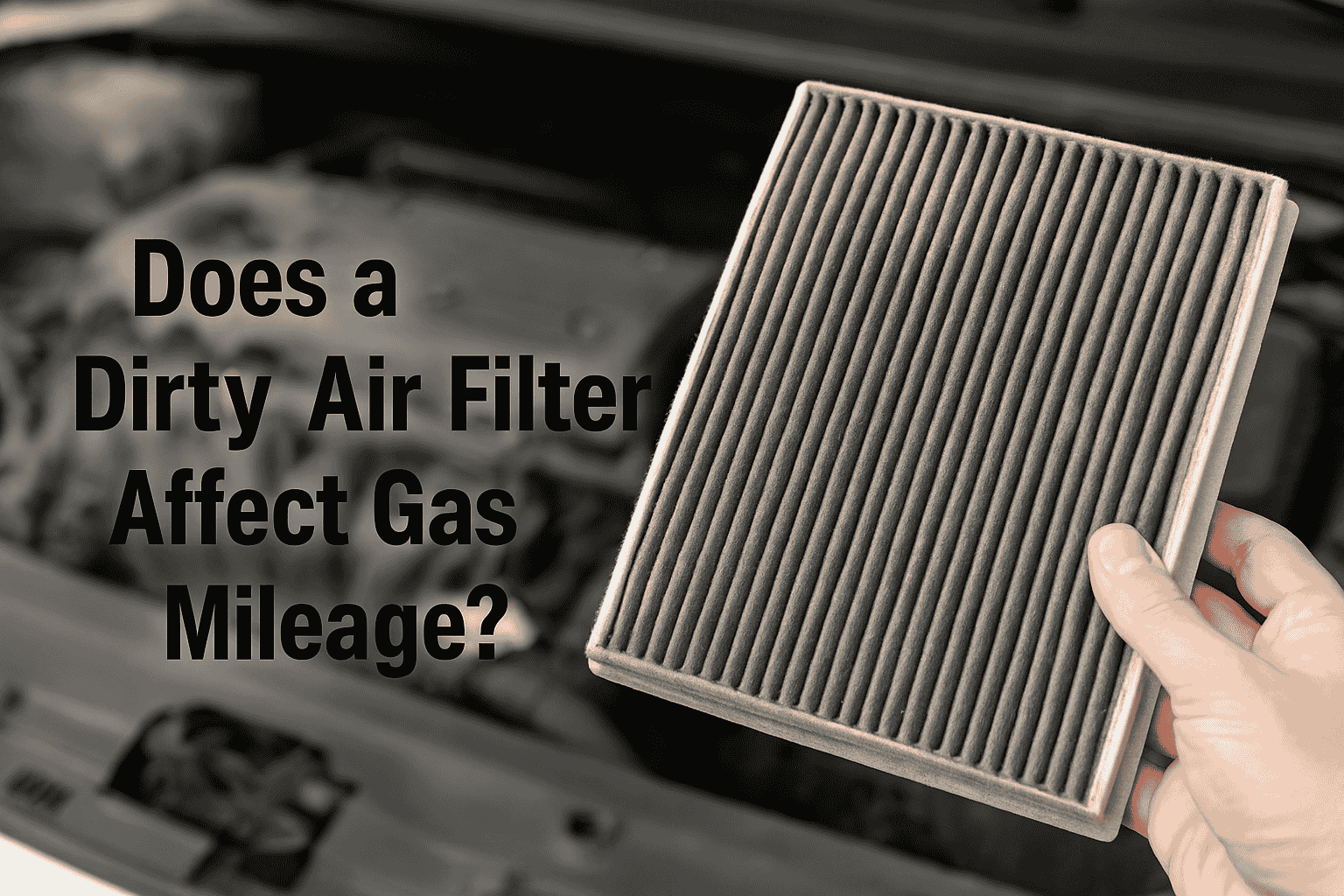
A dirty air filter reduces fuel economy by 6-11% in carbureted engines and 2-6% in modern fuel-injected vehicles while costing drivers $150-400 annually in wasted fuel per vehicle. While clean air filters maintain optimal airflow for efficient combustion, clogged filters force engines to work harder and consume more fuel to produce the same power output. Understanding air filter impact on fuel consumption isn't about minor maintenance details—it's about measurable efficiency losses that compound into significant annual costs for fleet operators and individual drivers alike.
The 2025 automotive environment features increasingly efficient engines that demand optimal airflow to achieve EPA-rated fuel economy numbers. Modern turbocharged and direct-injection engines are particularly sensitive to air filter restriction, losing efficiency faster than older naturally aspirated designs when filters become dirty. Smart drivers who maintain clean air filters achieve manufacturer-rated fuel economy consistently, while those who ignore filter maintenance face 8-15% fuel economy penalties plus accelerated engine wear from contaminated airflow. Start tracking your air filter maintenance and fuel economy free in under 10 minutes, or schedule a personalized efficiency optimization consultation.
2025 Air Filter Efficiency Reality
Performance Truth: Modern engines with dirty air filters consume 2-11% more fuel than EPA ratings, costing the average driver $200-500 annually in wasted gasoline. The difference between clean and dirty filter performance isn't gradual degradation—it's measurable efficiency loss that begins when filters reach 50% capacity and accelerates rapidly beyond 75% restriction. Professional operators who monitor filter condition maintain peak efficiency while reactive drivers unknowingly waste thousands in fuel costs.
Quick Air Filter Efficiency Assessment
Before driving another mile, evaluate your air filter's impact on fuel economy and engine performance. Early replacement prevents the efficiency losses that cost far more than filter replacements. (Try our filter efficiency tracking tool free)
3-Minute Air Filter Performance Check:
- □ When did you last replace or inspect your engine air filter?
- □ Has your fuel economy decreased noticeably in recent months?
- □ Does your engine feel less responsive during acceleration?
- □ Have you driven in dusty or dirty conditions recently?
- □ Is your current filter darker or visibly dirty when inspected?
If you answered "yes" to reduced fuel economy, decreased response, or filter darkness, replacement will likely improve efficiency immediately. (Book a free filter optimization consultation)
Fuel efficiency depends on optimal airflow that dirty filters restrict significantly. While you can't control fuel prices, you can maintain clean air filters that maximize your engine's efficiency and minimize fuel consumption for every mile driven. (Start optimizing your air filter maintenance with FleetRabbit free for 30 days)
The Real Impact: Clean vs. Dirty Air Filter Efficiency
Annual Fuel Economy Impact: Clean Filter vs. Dirty Filter Performance
| Engine Type | Clean Filter MPG | Dirty Filter MPG | Efficiency Loss | Annual Fuel Cost |
|---|---|---|---|---|
| Carbureted Engine | 24.0 MPG | 21.4 MPG | 11% reduction | +$420 wasted fuel |
| Port Fuel Injection | 28.5 MPG | 26.7 MPG | 6% reduction | +$240 wasted fuel |
| Direct Injection | 32.0 MPG | 30.4 MPG | 5% reduction | +$185 wasted fuel |
| Turbocharged Engine | 29.0 MPG | 26.6 MPG | 8% reduction | +$315 wasted fuel |
| Hybrid System | 42.0 MPG | 40.1 MPG | 4% reduction | +$125 wasted fuel |
| Diesel Engine | 35.0 MPG | 32.2 MPG | 8% reduction | +$280 wasted fuel |
How Air Restriction Affects Engine Performance
Dirty air filters create intake restriction that forces engines to work harder for the same power output. Understanding restriction mechanisms reveals why seemingly minor filter contamination produces measurable fuel economy losses.
Airflow Restriction Science
Engine performance depends on precise air-fuel ratios that dirty filters disrupt through restricted airflow and altered combustion characteristics. Start your free airflow analysis in under 10 minutes, or schedule a personalized performance optimization consultation.
Optimize Engine Airflow for Maximum Efficiency
Our airflow optimization system monitors filter condition and guides replacement timing for peak fuel economy and engine performance.
Restriction Impact Analysis
Progressive Filter Restriction Effects:
- 0-25% Restriction: No measurable performance or efficiency impact
- Airflow: Unrestricted engine breathing
- Fuel Economy: Maintains EPA ratings
- Power Output: Full manufacturer specifications
- 25-50% Restriction: Minor efficiency reduction begins
- 50-75% Restriction: Noticeable fuel economy and power losses
- 75-90% Restriction: Significant performance degradation
- 90%+ Restriction: Severe efficiency loss and potential engine damage
- Vacuum Effect: High restriction can collapse flexible intake components
- MAF Sensor Impact: Altered airflow readings affect fuel delivery
Engine Type Sensitivity Differences
Different engine designs respond differently to air filter restriction. Understanding your specific engine's sensitivity helps optimize replacement intervals and maintain peak efficiency.
Technology-Specific Impacts
Modern engine technologies including turbocharging, direct injection, and variable valve timing create unique sensitivity patterns to air filter condition. Start your free engine-specific analysis in under 10 minutes, or schedule a personalized efficiency consultation.
Air Filter Sensitivity by Engine Technology
| Engine Technology | Sensitivity Level | Efficiency Impact | Replacement Interval | Performance Notes |
|---|---|---|---|---|
| Carbureted Engines | Very High | 6-11% fuel loss | Every 12,000 miles | Direct airflow restriction |
| Throttle Body Injection | High | 4-8% fuel loss | Every 15,000 miles | Vacuum-dependent operation |
| Port Fuel Injection | Moderate | 2-6% fuel loss | Every 15,000-20,000 miles | MAF compensation limits |
| Direct Injection | Moderate | 2-5% fuel loss | Every 20,000-25,000 miles | Precise air metering needs |
| Turbocharged Engines | High | 4-8% fuel loss | Every 12,000-15,000 miles | Compressor efficiency affected |
| Hybrid Systems | Low-Moderate | 2-4% fuel loss | Every 20,000-30,000 miles | Electric assist compensates |
Measuring Air Filter Condition
Determining optimal replacement timing requires systematic assessment of filter condition rather than relying solely on mileage intervals. Visual and performance indicators reveal when replacement delivers maximum efficiency benefits.
Professional Assessment Techniques
Experienced technicians use multiple evaluation methods to determine precise filter replacement timing that maximizes efficiency while avoiding premature replacement costs. Start your free filter assessment training in under 10 minutes, or schedule a personalized evaluation consultation.
Filter Condition Evaluation Methods
Professional Filter Assessment Protocol:
- Visual Inspection: Color change, debris accumulation, and structural integrity
- Light Transmission Test: Hold filter to bright light to assess blockage
- Vacuum Gauge Testing: Measure intake restriction with professional equipment
- Performance Monitoring: Track fuel economy changes over time
- Acceleration Response: Note throttle response degradation
- Engine Sound Changes: Listen for altered intake noise characteristics
- Mass Airflow Data: Monitor sensor readings for restriction indicators
- Pressure Drop Testing: Measure filter pressure differential
Replacement Timing and Cost-Benefit Analysis
Optimal air filter replacement balances filter costs against fuel economy benefits to maximize overall value. Understanding replacement economics prevents both premature replacement and efficiency-destroying delays.
Economic Optimization Strategy
Professional fleet managers calculate precise replacement timing that minimizes total costs through efficient filter utilization while avoiding fuel economy penalties. Start your free replacement optimization in under 10 minutes, or schedule a personalized cost analysis consultation.
Air Filter Replacement Cost-Benefit Analysis (Annual)
| Replacement Strategy | Filter Costs | Fuel Waste | Total Annual Cost | Efficiency Rating |
|---|---|---|---|---|
| Every 10,000 miles | $45-90 | $0 | $45-90 | Optimal (wasteful) |
| Every 15,000 miles | $30-60 | $25-50 | $55-110 | Good balance |
| Every 20,000 miles | $25-45 | $75-150 | $100-195 | Moderate efficiency loss |
| Every 30,000 miles | $15-30 | $200-400 | $215-430 | Poor (high waste) |
| Condition-Based | $25-50 | $10-25 | $35-75 | Optimal efficiency |
Environmental Conditions and Filter Life
Operating environment dramatically affects air filter lifespan and replacement intervals. Understanding environmental impacts helps optimize maintenance schedules for different operating conditions.
Environmental Impact Assessment
Driving conditions including dust, humidity, temperature, and air quality significantly influence filter contamination rates and optimal replacement timing. Start your free environmental analysis in under 10 minutes, or schedule a personalized condition assessment consultation.
High-Risk Environmental Conditions:
- Construction/Work Sites: Heavy dust reduces filter life by 50-75%
- Desert/Arid Regions: Fine sand particles clog filters rapidly
- Agricultural Areas: Pollen and crop debris accelerate contamination
- Urban Pollution: Particulate matter and soot increase restriction
- Coastal Areas: Salt air and humidity affect filter materials
- Industrial Zones: Chemical contaminants and heavy particles
- Unpaved Roads: Continuous dust exposure shortens filter life
- High Traffic Areas: Brake dust and tire particles accumulate
Adjustment Rule: Severe conditions may require 50-75% shorter replacement intervals to maintain efficiency. (Get environment-specific maintenance schedule - expert consultation)
Performance Testing and Monitoring
Systematic performance monitoring reveals air filter impact on fuel economy and identifies optimal replacement timing through data rather than guesswork.
Efficiency Monitoring Systems
Professional operators track fuel economy trends, acceleration performance, and engine parameters to optimize air filter maintenance schedules based on actual performance data. Start your free performance monitoring in under 10 minutes, or schedule a personalized monitoring strategy consultation.
Monitor Filter Performance Like a Pro
Our comprehensive monitoring system tracks fuel economy trends and identifies optimal filter replacement timing through performance data analysis.
Key Performance Indicators
Critical Air Filter Performance Metrics:
- Fuel Economy Tracking: Monitor MPG trends over multiple fill-ups
- Acceleration Response: Measure 0-60 times and throttle response
- Mass Airflow Data: Track MAF sensor readings for restriction signs
- Intake Manifold Vacuum: Monitor vacuum levels at idle and load
- Engine Load Factors: Assess load percentages during normal driving
- Exhaust Gas Temperature: Monitor EGT changes indicating efficiency loss
- Turbo Boost Pressure: Track boost levels in forced induction engines
- Long-Term Fuel Trim: Monitor fuel delivery adaptations
Filter Types and Efficiency Comparisons
Different air filter materials and designs provide varying levels of filtration efficiency and airflow characteristics. Understanding filter options helps optimize both protection and performance.
Filter Technology Analysis
Modern air filters use various materials and construction methods that affect filtration efficiency, airflow restriction, and service life. Start your free filter technology comparison in under 10 minutes, or schedule a personalized filter selection consultation.
Air Filter Type Performance Comparison
| Filter Type | Filtration Efficiency | Airflow Restriction | Service Life | Cost Range |
|---|---|---|---|---|
| Paper (Standard) | 95-98% | Moderate | 15,000-25,000 miles | $8-25 |
| Cotton Gauze | 97-99% | Low | 50,000 miles (cleanable) | $40-80 |
| Synthetic Media | 99-99.5% | Low-Moderate | 20,000-30,000 miles | $15-35 |
| Foam | 92-96% | Very Low | 25,000 miles (cleanable) | $20-45 |
| High-Flow Performance | 96-98% | Very Low | 50,000+ miles | $50-120 |
DIY Replacement vs Professional Service
Air filter replacement is one of the simplest automotive maintenance tasks, making DIY replacement cost-effective for most drivers. Understanding proper installation ensures maximum efficiency benefits.
Installation Best Practices
Proper air filter installation requires attention to sealing, orientation, and housing cleanliness to achieve optimal performance and protection. Start your free DIY installation guide in under 10 minutes, or schedule a personalized installation training consultation.
Professional Installation Protocol
Correct Air Filter Installation Steps:
- Housing Inspection: Check for cracks, warping, or damage
- Surface Cleaning: Remove debris from housing and sealing surfaces
- Filter Orientation: Install with airflow direction arrows aligned
- Seal Verification: Ensure complete sealing around filter perimeter
- Housing Alignment: Proper clip engagement and cover sealing
- System Testing: Verify no air leaks or installation errors
- Documentation: Record replacement date and mileage
- Performance Check: Monitor initial efficiency improvement
Fleet and Commercial Applications
Commercial vehicles and fleet operations face unique air filter challenges due to high mileage, varied operating conditions, and economic optimization requirements.
Fleet Management Strategies
Professional fleet managers optimize air filter maintenance through systematic monitoring, bulk purchasing, and condition-based replacement schedules that minimize total operating costs. Start your free fleet optimization analysis in under 10 minutes, or schedule a personalized fleet strategy consultation.
Commercial Vehicle Considerations
- High-Mileage Impact: 100,000+ annual miles accelerate filter contamination
- Varied Conditions: Mixed urban/highway/industrial exposure patterns
- Driver Training: Educate operators on filter condition monitoring
- Bulk Purchasing: Economic advantages through volume filter buying
- Predictive Maintenance: Schedule replacements based on operating conditions
- Standardization: Use common filter types across similar vehicles
- Performance Tracking: Monitor fuel economy across entire fleet
- Cost Management: Balance filter costs against fuel efficiency gains
Fleet Advantage: Proper air filter management can improve fleet fuel economy by 3-8%, saving thousands annually in fuel costs. (Get fleet optimization strategy - immediate consultation)
Conclusion: The Simple Path to Better Fuel Economy
Air filter maintenance represents one of the most cost-effective methods to maintain optimal fuel economy and engine performance. The difference between clean and dirty filters isn't about minor efficiency gains—it's about measurable fuel savings that compound into significant annual benefits for drivers who prioritize proper maintenance.
Every mile driven is either at optimal efficiency or wasting fuel through preventable restriction. Every filter inspection is either proactive maintenance or reactive cost acceptance. Every replacement decision is either economic optimization or efficiency sacrifice. The choice to monitor air filter condition systematically is yours, but the fuel economy consequences are predictable and measurable. Start your free air filter efficiency optimization in under 10 minutes, or schedule a personalized fuel economy strategy demo.
Remember, fuel efficiency is a choice backed by maintenance decisions. Every filter you inspect, every replacement you time properly, and every efficiency gain you capture either saves or wastes money at every fill-up. Make decisions based on condition assessment, not convenience. Focus on optimization, not just replacement. Build efficiency habits, not maintenance costs.
Start Maximizing Your Fuel Economy Today
Join millions of drivers who optimize fuel efficiency through proper air filter maintenance. Real savings, real efficiency, real results from simple maintenance.
Frequently Asked Questions About Air Filters and Fuel Economy
Q: How much can a dirty air filter really affect my gas mileage?
Dirty air filters can reduce fuel economy by 2-11% depending on your engine type and filter condition. Carbureted engines suffer the worst impact (6-11% loss), while modern fuel-injected engines typically see 2-6% reduction. For the average driver using 1,000 gallons annually, this translates to $150-400 in wasted fuel costs. Turbocharged engines often fall in the middle range (4-8% loss) due to their sensitivity to intake restriction. The impact becomes noticeable when filters reach 75% capacity and accelerates rapidly beyond that point.
Q: How often should I replace my air filter for optimal fuel economy?
Replace air filters based on condition rather than mileage alone. Most vehicles need replacement every 15,000-25,000 miles under normal conditions, but severe environments (dusty, construction zones, unpaved roads) may require replacement every 10,000-15,000 miles. Check your filter monthly by visual inspection—replace when it appears dark, dirty, or clogged. A simple light test helps: hold the filter to bright light, and if you can't see through most of the pleats, it's time for replacement. Condition-based replacement saves money while maintaining peak efficiency.
Q: Are expensive high-flow air filters worth the extra cost for fuel economy?
High-flow filters ($50-120) can provide slightly better fuel economy than standard paper filters ($8-25), but the improvement is typically only 1-3% in most applications. The payback period often exceeds the filter's service life unless you drive very high mileage (30,000+ miles annually). Standard quality paper filters provide excellent filtration and adequate airflow for most drivers. Focus on timely replacement of standard filters rather than expensive upgrades—a clean $15 filter outperforms a dirty $80 filter every time. The maintenance schedule matters more than the filter brand.
Q: Can I clean and reuse a paper air filter to save money?
Never attempt to clean paper air filters—the cleaning process damages the filter media and reduces both filtration efficiency and structural integrity. Paper filters are designed as disposable items, and cleaning attempts often tear the pleated material or create holes that allow unfiltered air into the engine. Some cotton gauze and synthetic filters are designed for cleaning and reuse, but these are specifically manufactured for that purpose. For maximum fuel economy and engine protection, replace paper filters with new ones and dispose of old filters properly. The small cost savings aren't worth the risk of engine damage from inadequate filtration.
Q: Will a dirty air filter trigger my check engine light?
A dirty air filter alone rarely triggers the check engine light in modern vehicles, as the engine management system can compensate for moderate restriction through fuel delivery adjustments. However, severely restricted filters can cause the Mass Airflow (MAF) sensor to read incorrectly, potentially triggering lean or rich fuel mixture codes. More commonly, drivers notice reduced acceleration, decreased fuel economy, and sluggish throttle response before any warning lights appear. If you're experiencing these symptoms without error codes, check the air filter first—it's often the simplest and least expensive solution.
Q: Does air filter brand matter for fuel economy, or are all filters basically the same?
Quality varies significantly between air filter brands, affecting both filtration efficiency and airflow characteristics. Premium brands often use better filter media that maintains airflow while providing superior protection, potentially offering 1-2% better fuel economy than cheap alternatives. However, the most important factor is replacement frequency—a clean budget filter outperforms a dirty premium filter. Stick with reputable brands (AC Delco, Bosch, K&N, Fram, WIX) that meet or exceed OEM specifications. Avoid extremely cheap no-name filters that may use inferior materials or poor construction that restricts airflow even when new.