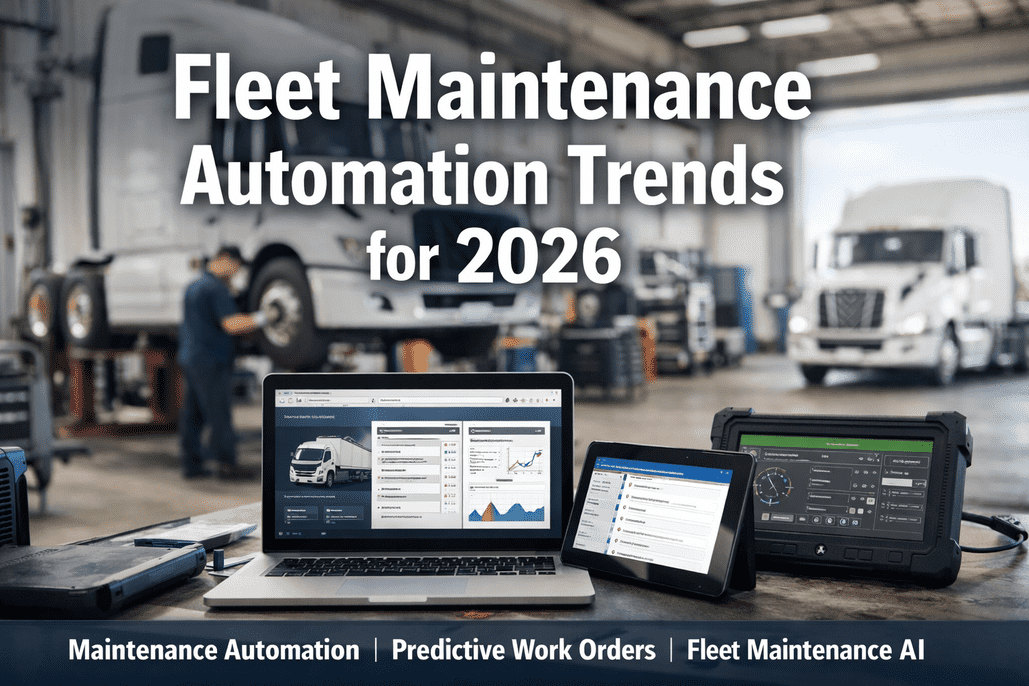
Fleet maintenance in 2026 isn't about keeping up—it's about staying ahead. The fleets winning this year aren't just running hard; they're running smart with AI-driven systems that predict failures weeks in advance and automate the entire repair workflow from detection to resolution.
The numbers tell the story: 65% of maintenance teams plan to use AI by the end of 2026, yet only 27% currently use predictive maintenance. That gap between "planning to adopt" and "actually operational" is where competitive advantage lives. This guide breaks down the automation trends reshaping fleet maintenance and how forward-thinking operators can position themselves to benefit. Start automating your maintenance workflows today.
The Automation Advantage in 2026
Ready to Automate Your Fleet Maintenance?
FleetRabbit's AI-powered platform transforms reactive maintenance into predictive workflows. See results in weeks, not years.
Start Free TrialTrend #1: Predictive Maintenance 2.0
Predictive maintenance has evolved from simple detection to automatic action. When AI detects an impending failure, the system doesn't just send an alert—it checks parts inventory, schedules the repair, assigns the right technician, and orders parts if needed, all before a human reviews anything. Book a demo to see predictive maintenance in action.
From Detection to Action
- Identifies anomalies
- Sends manual alerts
- Requires human scheduling
- Reactive parts ordering
- Predicts specific failures
- Auto-schedules repairs
- Assigns technicians
- Pre-orders parts
Real-World Impact
A Texas contractor with 35 excavators implemented AI predictive maintenance and saw a 73% reduction in hydraulic failures within 6 months. Their maintenance budget dropped from $620K to $410K annually—a $210K savings that paid for the system three times over.
Trend #2: Automated Work Order Management
Still relying on whiteboards or spreadsheets to track maintenance jobs? In 2026, fleets are ditching manual systems for automated work order tools that streamline everything from job creation to technician assignment and reporting.
Automated Work Order Flow
Time Savings
Reduce admin work from 12 hours/week to 1 hour
Better Tracking
Real-time visibility into every repair status
Integration
Connects telematics, parts, and scheduling
Trend #3: Digital DVIR & Inspection Automation
Paper forms get lost, manual processes take time, and human error introduces risk. Digital DVIRs are rising fast in 2026 as fleets replace paper inspection checklists with mobile apps that guide drivers through standardized inspections and automatically trigger work orders for any failed items. Try FleetRabbit's mobile inspection app free.
Mobile-First Design
Drivers complete inspections from smartphones with guided checklists, photo attachments, and electronic signatures.
Instant Alerts
Defects flagged by drivers immediately notify maintenance teams—no more waiting until the next shift.
Auto-Documentation
Inspection logs stored securely with timestamps and audit trails that meet DOT compliance standards.
Go Paperless with Digital Inspections
FleetRabbit's mobile app guides drivers through pre-trip checks and automatically creates work orders for defects found.
Trend #4: AI-Powered Diagnostics & OEM Integration
Over 90% of vehicles manufactured in 2026 ship with embedded telematics. That means rich diagnostic data—tire pressure, battery voltage, engine parameters, DTC codes—streaming directly from the factory without installing aftermarket devices.
OEM Telematics Intelligence
AI analyzes sensor data to pinpoint component failures before they occur—turning data into proactive maintenance decisions.
Trend #5: CMMS + FSM Integration
Siloed systems create blind spots. In 2026, more fleet operators are switching to integrated platforms that combine CMMS (maintenance tracking) and FSM (field service management) functionalities into a single command center.
Why Integration Matters
The ROI of Maintenance Automation
Automation delivers documented returns across multiple dimensions. Here's what fleets are measuring:
The fleets that wait will keep paying the reactive maintenance tax: emergency repairs, roadside breakdowns, rush shipping, lost revenue, frustrated drivers, and disappointed customers.
Getting Started: Your 2026 Action Plan
Month 1-2: Foundation
Implement modern telematics and digitize inspections. Most fleets see first ROI within 60-90 days.
Month 3-4: Automation
Deploy automated work order management and connect systems into a unified platform.
Month 5-6: Intelligence
Activate AI predictive maintenance on your highest-value assets. First prevented failure typically pays for the system.
See What Automation Could Save Your Fleet
FleetRabbit helps fleets of all sizes implement maintenance automation step by step. Start with what matters most—and scale from there.
Get a Custom DemoFrequently Asked Questions
How much does maintenance automation really save?
Studies show predictive maintenance programs can reduce unplanned downtime by 32% and maintenance costs by 20-40%. Most fleets see positive ROI within 6 months of implementation, with the first prevented breakdown often paying for the entire system.
Is this practical for smaller fleets?
Absolutely. Smaller fleets often see higher percentage ROI because one prevented failure has immediate impact on tight margins. Modern platforms start at affordable monthly rates and scale with your operation.
What's the single best automation to implement first?
Digital inspections and telematics deliver the fastest payback (60-90 days), require minimal change management, and create the data foundation needed for other technologies.
Will AI replace our maintenance team?
No. AI handles cognitive load and pattern detection, while humans continue to make judgment calls, coach drivers, and manage exceptions. Think of AI as amplifying human capability, not replacing it.
The Future of Fleet Maintenance is Automated
65% of maintenance teams plan to use AI by end of 2026. Will your fleet be among the leaders—or still planning while competitors execute?