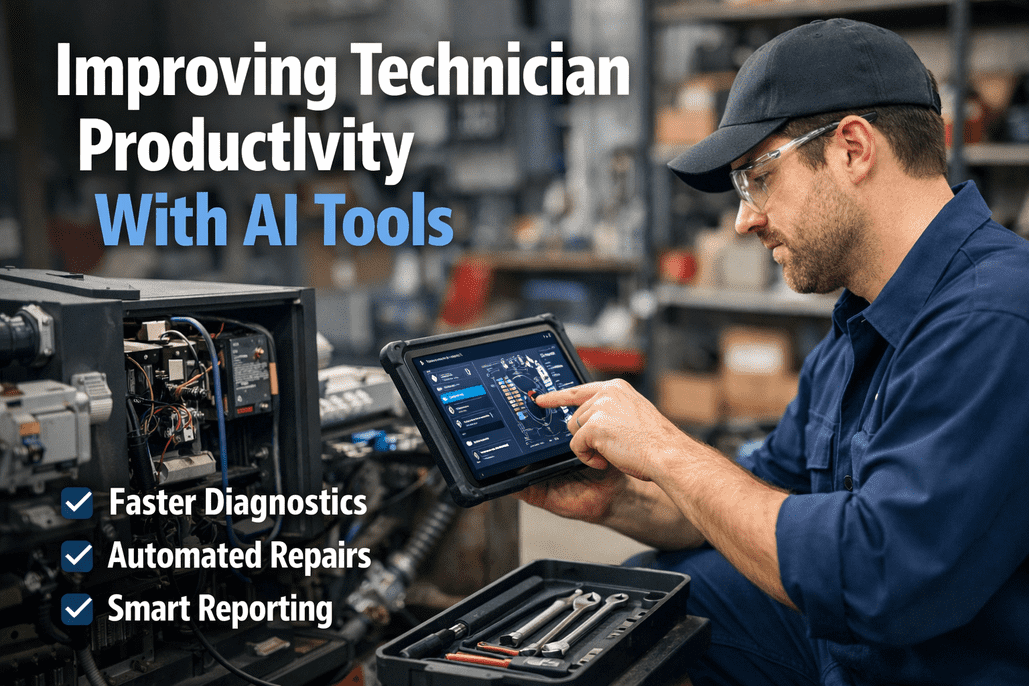
Your technicians are skilled, experienced, and dedicated—but they're drowning in data. The average fleet vehicle generates 8,000+ fault codes per year, and your team is expected to identify which 5-10 actually matter. Meanwhile, the industry faces a critical technician shortage that's only getting worse. The solution isn't hiring more people—it's empowering your current team with AI tools that multiply their effectiveness. See how FleetRabbit's AI tools boost technician productivity.
According to recent industry research, workers using AI tools report an average 40% productivity boost, while predictive maintenance can reduce diagnostic time by up to 70%. For fleet maintenance operations, this translates to faster repairs, fewer comebacks, and technicians who can finally focus on high-value work instead of chasing false alarms.
The AI Productivity Revolution
The Technician Challenge: Do More With Less
Fleet maintenance is facing a perfect storm. Vehicles are becoming more complex, experienced technicians are retiring at alarming rates, and the pipeline of qualified replacements isn't keeping pace. The numbers paint a clear picture of what's happening across the industry.
Technician Shortage
Demand for technicians projected to grow 3-10% over the next decade while retirements accelerate
Data Overload
Vehicles generate 8,000+ fault codes annually—most are noise, few require action
Rising Complexity
ADAS, EVs, and advanced systems require specialized skills that take years to develop
Knowledge Loss
When veteran techs retire, decades of tribal knowledge walk out the door
Don't Let the Skills Gap Slow You Down
FleetRabbit's AI-powered diagnostics help less experienced technicians perform like veterans by providing guided repair workflows and intelligent fault prioritization.
Book a DemoHow AI Tools Transform Technician Workflows
AI isn't replacing technicians—it's amplifying their capabilities. Here's how modern AI maintenance tools are revolutionizing the way your team works, from the moment a vehicle enters the bay to the final quality check. Start your free trial to experience the difference.
Intelligent Fault Prioritization
Instead of sorting through thousands of codes, AI identifies only the 5-10 issues that actually matter per vehicle annually. Pattern recognition trained on billions of miles of fleet data distinguishes real problems from noise.
Guided Diagnostics & Repair
AI assistants provide step-by-step troubleshooting tailored to each specific failure pattern. Technicians see ranked insights from minor to critical before they even lift the hood, saving approximately 20 minutes per repair event.
Predictive Failure Alerts
Instead of reacting to breakdowns, AI predicts which component will fail, when it will fail, and what to do about it. Multi-sensor fusion analyzes temperature, pressure, voltage, and vibration to identify failure signatures with 85-95% accuracy.
Automated Documentation
AI captures repair details, generates service records, and maintains compliance documentation automatically. Your technicians spend time fixing vehicles, not fighting paperwork.
Real-World Impact: AI Maintenance Results
These aren't theoretical benefits—they're proven results from fleets that have already implemented AI-powered maintenance tools. The data shows consistent improvements across operations of all sizes.
Calculate Your Potential Savings
See exactly how much AI-powered maintenance could save your fleet. Our team will analyze your current operations and show you the ROI.
Schedule ConsultationKey AI Features That Boost Productivity
Not all AI maintenance tools are created equal. The most effective solutions combine multiple capabilities that work together to maximize technician efficiency. Here's what to look for when evaluating platforms.
Predictive Analytics
Machine learning models analyze historical data and real-time sensor readings to forecast failures days or weeks before they occur.
Fault-to-Fix Workflows
Step-by-step repair guidance with VIN-matched parts lists and wiring diagrams ensure even newer technicians can work efficiently.
Remote Diagnostics
Evaluate emerging issues while vehicles are en route—no need to bring equipment into the shop to identify problems.
Knowledge Capture
Codify tribal knowledge from experienced techs into searchable databases that surface relevant information at point of work.
Mobile Access
Technicians receive and close work orders from anywhere, eliminating unnecessary trips back to the office.
Integration Ready
Connect with existing telematics, CMMS, and fleet management systems for unified data and streamlined operations.
The Numbers That Matter
Getting Started With AI Maintenance Tools
Implementing AI doesn't require a complete overhaul of your operations. The most successful fleets start with targeted, actionable projects that demonstrate value quickly. Try FleetRabbit free for 14 days.
Start With High-Impact Areas
Identify data-rich areas where lost revenue is highest—focus there first for quick wins.
Connect Your Data Sources
Integrate telematics, maintenance history, and sensor data into a unified platform.
Train Your Team
Help technicians understand AI insights—not to replace judgment, but to enhance it.
Measure & Optimize
Track MTBF, MTTR, and cost per vehicle to continuously improve your approach.
Frequently Asked Questions
Will AI replace our technicians?
No—AI assists technicians, it doesn't replace them. The goal is to help your team work smarter by eliminating diagnostic guesswork, reducing paperwork, and surfacing the insights that matter. Technicians remain essential for validating AI recommendations and performing actual repairs.
How quickly can we see ROI from AI maintenance tools?
Most fleets report measurable ROI within 3-6 months. Quick wins come from reduced diagnostic time (20+ minutes per event), fewer emergency repairs, and lower parts costs through optimized replacements. The compound effect grows as AI models learn your specific fleet patterns.
What data do we need to get started?
The basics include telematics data, maintenance history, and work order records. More advanced implementations add sensor data for components like batteries, brakes, and engines. Don't worry if your data isn't perfect—AI can help clean and standardize records over time.
How accurate are AI failure predictions?
Modern AI systems achieve 85-95% accuracy for major component failures. Accuracy improves over time as models learn from your fleet's specific patterns, operating conditions, and maintenance outcomes. The key is closed-loop feedback that continuously refines predictions.
Ready to Supercharge Your Technician Productivity?
Join the 65% of maintenance teams moving to AI-powered operations. FleetRabbit's intelligent maintenance platform gives your technicians the tools they need to work faster, smarter, and more effectively.