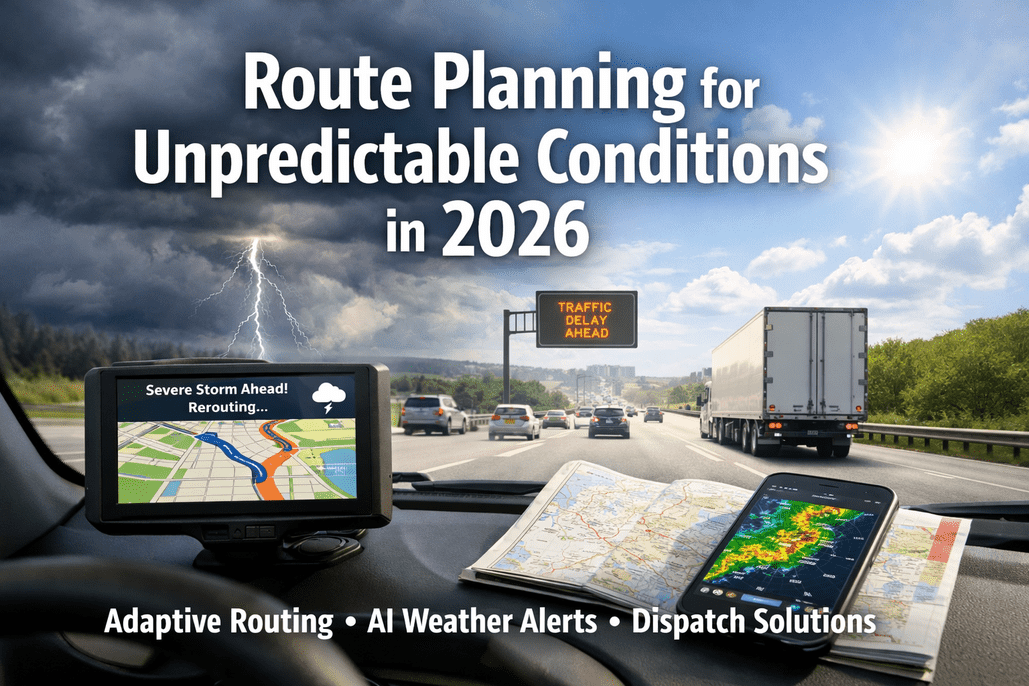
In 2024, flooding accounted for 70% of all weather-related supply chain disruptions. Global natural disasters caused economic losses exceeding $368 billion. And extreme weather is now ranked as the second most likely cause of a global crisis in 2025. For fleet operators, the message is clear: static route planning is no longer enough. The fleets thriving in 2026 are those that have built adaptive routing capabilities into their operational DNA. Build routing resilience with FleetRabbit.
According to Gartner, over 75% of commercial supply chain applications will incorporate AI by 2026. The shift from reactive to predictive routing isn't coming—it's already here. This guide shows you how leading fleets are using adaptive route planning to navigate weather disruptions, traffic volatility, and the unexpected challenges that define modern logistics.
The New Reality of Fleet Operations
Why Static Routing Fails in 2026
Traditional route planning treats the road network as a predictable, stable system. But today's reality is anything but predictable. From hurricanes shutting down major highways to wildfires closing LA port routes, the conditions your drivers face can change by the hour—or by the minute.
Static Route Planning
Adaptive Route Planning
See Adaptive Routing in Action
FleetRabbit's intelligent routing automatically adjusts to traffic, weather, and operational changes—keeping your fleet moving even when conditions shift.
Schedule DemoThe 5 Pillars of Adaptive Route Planning
Building routing resilience requires more than just better software. It requires integrating multiple data sources, predictive capabilities, and automated response systems. Here's the framework that leading fleets are using in 2026. Get started with FleetRabbit's adaptive routing.
Real-Time Traffic Intelligence
Modern AI routing analyzes live traffic data, accident reports, and road closures to adjust routes instantly. When a snowstorm shuts down a major highway, the system automatically reroutes vehicles to the safest, most efficient alternate path.
Weather-Based Routing
With 13% of large truck accidents involving bad weather, proactive weather integration is essential. AI systems now layer weather forecasts onto route planning to avoid storms, floods, and dangerous conditions before drivers encounter them.
Predictive Analytics
Machine learning algorithms analyze historical patterns to forecast congestion, seasonal trends, and customer behaviors. This allows fleets to plan proactively rather than reactively—anticipating delays before they occur.
Multi-Constraint Optimization
True optimization considers vehicle capacities, time windows, service durations, driver hours, and geographical zones simultaneously. AI evaluates all cost components—fuel, tolls, time—to determine the most optimal route.
Automated Dispatch Integration
Route changes mean nothing if they don't reach drivers instantly. Modern systems integrate routing with dispatch, automatically updating driver instructions, customer ETAs, and operational dashboards in real-time.
Key Disruption Scenarios and Responses
Understanding how adaptive routing handles specific disruptions helps illustrate its value. Here's how intelligent systems respond to the most common unpredictable conditions.
Severe Weather Events
Hurricanes, floods, and winter storms can shut down entire regions. Adaptive systems monitor weather forecasts and automatically reroute vehicles around affected areas—often before conditions deteriorate.
Traffic Incidents
Accidents, road construction, and unexpected closures create real-time delays. AI analyzes traffic patterns and instantly adjusts routes to avoid congestion—saving hours of driver time.
Demand Fluctuations
Last-minute order changes, cancellations, or priority shifts require dynamic route recalculation. Modern systems reoptimize entire routes when new stops are added or removed.
Infrastructure Failures
Bridge closures, port shutdowns, and facility outages require rapid adaptation. AI identifies alternate routes and modes—including rail-to-truck transfers when road options are limited.
Plan for the Unpredictable
Don't wait for the next disruption to expose routing gaps. FleetRabbit's scenario planning tools help you prepare contingencies before they're needed.
Get a ConsultationThe ROI of Adaptive Routing
Investing in intelligent routing delivers measurable returns across multiple dimensions. Here's what fleets are achieving with modern adaptive systems.
UPS Route Optimization Impact
UPS designed routes with as few left-hand turns as possible and implemented route planning technology that automates the process. Since deployment, they've eliminated millions of miles off delivery routes and saved 10 million gallons of fuel.
Technology Stack for 2026
Building adaptive routing capability requires integrating several technology layers. Here's what the modern stack looks like. Explore FleetRabbit's integrated platform.
Data Collection Layer
Intelligence Layer
Optimization Layer
Execution Layer
Implementation Roadmap
Transitioning to adaptive routing doesn't happen overnight. Here's a phased approach that minimizes disruption while building capability.
Weeks 1-4: Data Infrastructure
- Deploy telematics across fleet
- Integrate weather and traffic feeds
- Establish baseline route metrics
- Document current planning processes
Weeks 5-8: AI Integration
- Implement route optimization software
- Configure constraint parameters
- Train models on historical data
- Test automated rerouting scenarios
Weeks 9-12: Dispatch Integration
- Connect routing to dispatch systems
- Deploy driver mobile applications
- Configure customer notifications
- Establish escalation protocols
Ongoing: Continuous Improvement
- Monitor performance metrics
- Refine algorithms based on outcomes
- Expand scenario coverage
- Scale to additional routes/regions
Frequently Asked Questions
How quickly can AI routing respond to changing conditions?
Modern systems process real-time data continuously and can generate new route recommendations within seconds. The practical response time depends on driver notification and acknowledgment—typically under 5 minutes from disruption detection to driver action.
Does adaptive routing work for small fleets?
Yes. Cloud-based routing solutions have made adaptive capabilities accessible to fleets of all sizes. Small fleets often see proportionally larger benefits because they have less operational slack to absorb disruptions.
How accurate are weather-based routing predictions?
Accuracy depends on the weather data sources and forecast horizon. For 24-48 hour forecasts, modern systems achieve 85%+ accuracy for significant weather events. The key is integrating multiple data sources and building appropriate response thresholds.
What's the ROI timeline for adaptive routing technology?
Most fleets see positive ROI within 3-6 months. Fuel savings alone—typically 10-15%—often cover technology costs within the first year. Additional benefits from reduced delays, fewer missed deliveries, and improved customer satisfaction compound over time.
Can adaptive routing integrate with our existing TMS?
Leading routing solutions offer APIs and pre-built integrations with major TMS platforms. The key is ensuring real-time data flow between systems so route changes automatically update dispatch, billing, and customer communication.
Ready for Routing That Adapts?
The fleets winning in 2026 aren't the ones with perfect conditions—they're the ones prepared to handle any condition. FleetRabbit's adaptive routing gives you the intelligence to navigate whatever comes next.