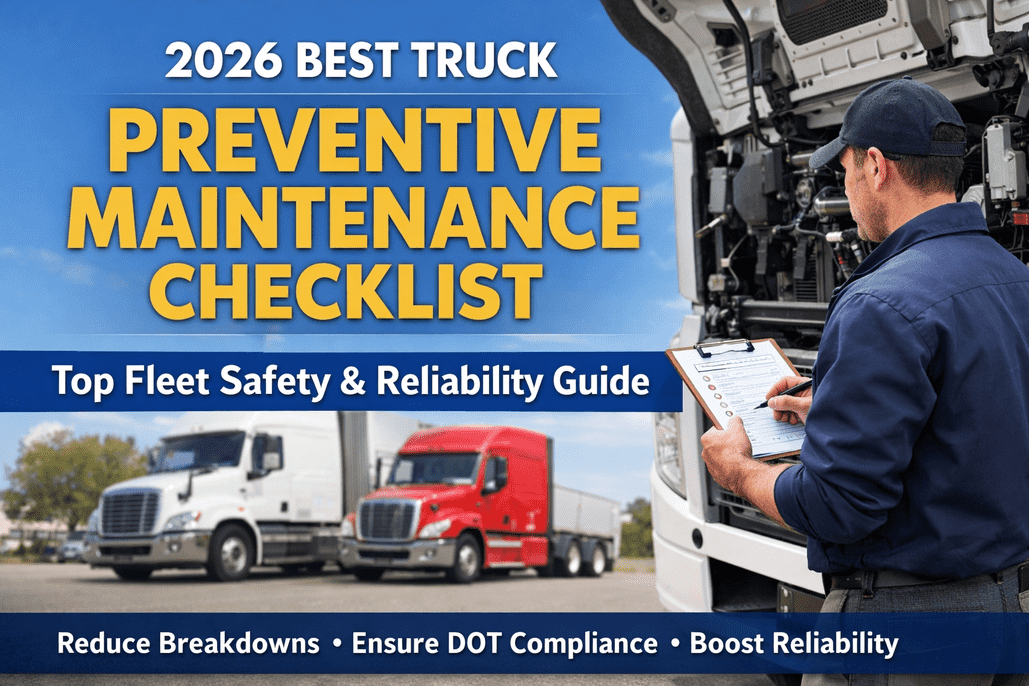
Maximize your fleet's uptime and safety with our 2026 Best Truck Preventive Maintenance Checklist. Designed for fleet managers and specialized technicians, this definitive guide provides a structured approach to maintaining commercial trucks, ensuring DOT compliance, and reducing costly unexpected breakdowns. By strictly following this preventive maintenance schedule—covering everything from engine fluids and chassis lubrication to ADA accessibility features and emergency safety gear—you can significantly extend vehicle lifespans and ensure every truck is road-ready and reliable. Start your free maintenance trial today
Truck Preventive Maintenance
2026 Fleet Safety & Reliability Guide
Maintenance Purpose
Maximize Uptime
- Proactive replacement of filters, belts, and fluids prevents compounding mechanical failures that keep trucks off the road.
Safety & Compliance
- Regular checks of brakes, steering, and ADA equipment ensure compliance with DOT regulations and passenger safety standards.
Asset Value Retention
- Documented preventive maintenance history significantly increases the resale value of commercial fleet vehicles.
1. Engine & Under Hood Fluids
Service engine components and verify all critical fluid levels:
Engine Service
Cooling & Belts
Fluid Levels
2. Chassis & Brake System
Inspect steering, suspension, and braking components:
Steering & Suspension
Driveline & Mounts
Brake Inspection
3. Drivability, Cab & ADA
Check driver controls, accessibility features, and cab condition:
Cab & Controls
Wheelchair Lift & ADA
Exterior & Lube
4. Safety Items & Wrap-Up
Verify emergency equipment and finalize the PM service:
Safety & Emergency
PM Wrap-Up
Digital PM Scheduling & Tracking
Fleet Rabbit App Benefits for Preventive Maintenance:
- ✓ Automate PM scheduling based on mileage or engine hours
- ✓ Digital service history for every asset in your fleet
- ✓ Mobile mechanic access to checklists and repair logs
- ✓ Inventory management for filters, fluids, and parts
- ✓ Real-time alerts for overdue maintenance tasks
Why Consistent PM is Critical
Reduced Downtime
- Scheduled vs. Unscheduled: Planned maintenance takes hours; breakdown repairs can take days. Consistent PM keeps your trucks generating revenue.
Fuel Economy
- Efficiency: Properly inflated tires, clean air filters, and aligned wheels can improve fuel efficiency by up to 10%, directly impacting your bottom line.
Liability Reduction
- Documentation: In the event of an accident, a complete, digital history of preventive maintenance demonstrates due diligence and responsible fleet management.
Frequently Asked Questions
1. How often should a truck PM be performed?
PM intervals vary by vehicle type and usage (e.g., city vs. highway). Common intervals are every 10,000 to 25,000 miles for oil changes (Service A) and more comprehensive checks (Service B/C) annually or bi-annually. Consult your OEM manual.
2. What is the difference between an inspection and preventive maintenance?
An inspection is a check to identify defects (e.g., pre-trip). Preventive maintenance involves active servicing—changing fluids, replacing filters, lubricating parts—to prevent those defects from occurring.
3. Do I need to inspect the wheelchair lift if I don't use it?
Yes. If the vehicle is equipped with ADA features like a wheelchair lift, they must be maintained and operational to meet ADA and DOT regulations, regardless of frequency of use. Seals can dry out and mechanisms can seize from lack of use.
Optimize Truck Maintenance
Ensure every truck in your fleet is serviced on time with digital PM tracking and automated alerts.


