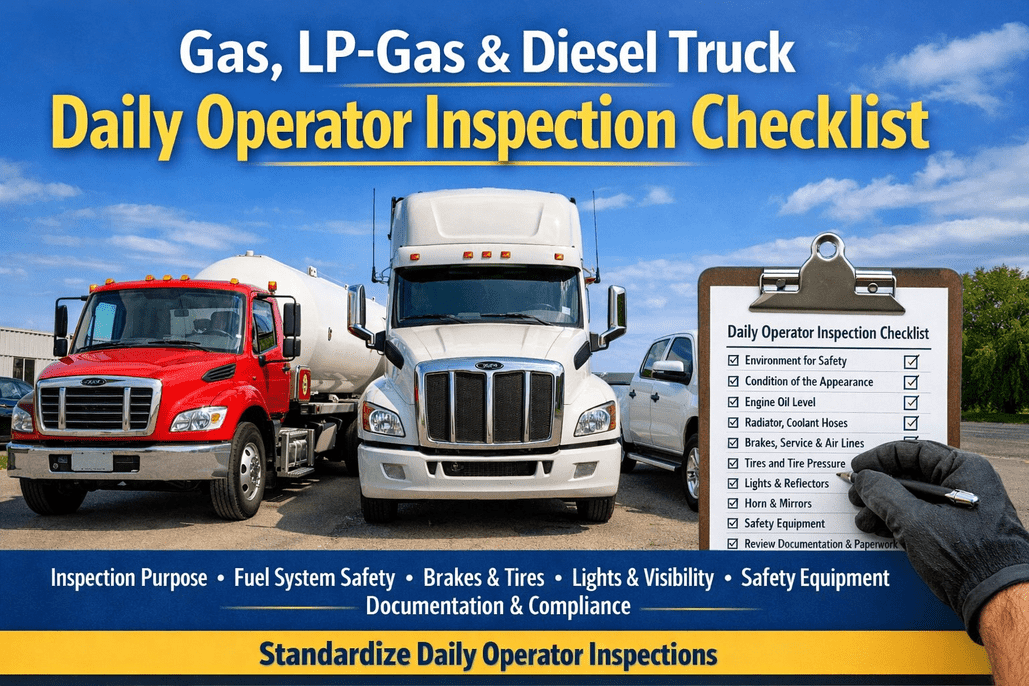
A daily operator inspection checklist for gas, LP-gas, and diesel trucks to help drivers identify safety issues, verify fuel system integrity, and ensure compliant, road-ready operation before each shift. Start your free inspection trial
Gas / LP-Gas / Diesel Truck
Daily Operator Inspection Checklist
Inspection Purpose
Fuel System Safety
- Checking propane tanks, fuel lines, and sedimentors prevents leaks that can lead to fires, explosions, or engine failure.
Operational Readiness
- Verifying controls, brakes, and hydraulics ensures the truck can safely handle loads and operate in warehouse environments.
Compliance & Uptime
- Daily checks of fluid levels, belts, and indicators catch problems before they cause breakdowns or OSHA violations.
1. Gauges & Controls
Turn on the truck and verify all instruments and controls are operational:
Gauges
Drive Controls
Hydraulic Controls
2. Operator's Compartment & Engine
Inspect the cab area and engine compartment for fluid levels and condition:
Operator's Compartment
Engine Fluids
Engine Components
3. Fuel System & Visual Inspection
Walk around to check for leaks, tire condition, and safety components:
Leaks & Tires
Mast & Forks
Fuel Specific & Safety
Digital Operator Inspections
Fleet Rabbit App Benefits for Warehouse Fleets:
- ✓ Enforce pre-shift inspections with operator sign-off accountability
- ✓ Flag LP-gas or fuel leaks for immediate maintenance attention
- ✓ Track hour meter readings for precise service scheduling
- ✓ Maintain OSHA-compliant digital inspection records
- ✓ Identify recurring defects across your fleet to reduce downtime
Frequently Asked Questions
1. What should I check on an LP-gas propane tank?
Inspect the tank for dents, rust, and secure mounting. Check the hose connections, regulator, and shut-off valve for leaks or damage. Never operate a truck with a leaking or damaged propane system.
2. Why is the fuel sedimentor important on diesel trucks?
The sedimentor (water separator) removes water and debris from diesel fuel. Water in diesel can damage injectors and cause engine failure. Check and drain it daily as part of your pre-shift routine.
3. How do I check for hydraulic leaks?
Look for wet spots or pooling fluid under the truck, around the mast cylinders, hoses, and fittings. Check the hydraulic tank level—a sudden drop indicates a leak that must be repaired before operation.
Standardize Daily Operator Inspections
Ensure every truck is inspected before each shift with repeatable, digital inspection workflows.


