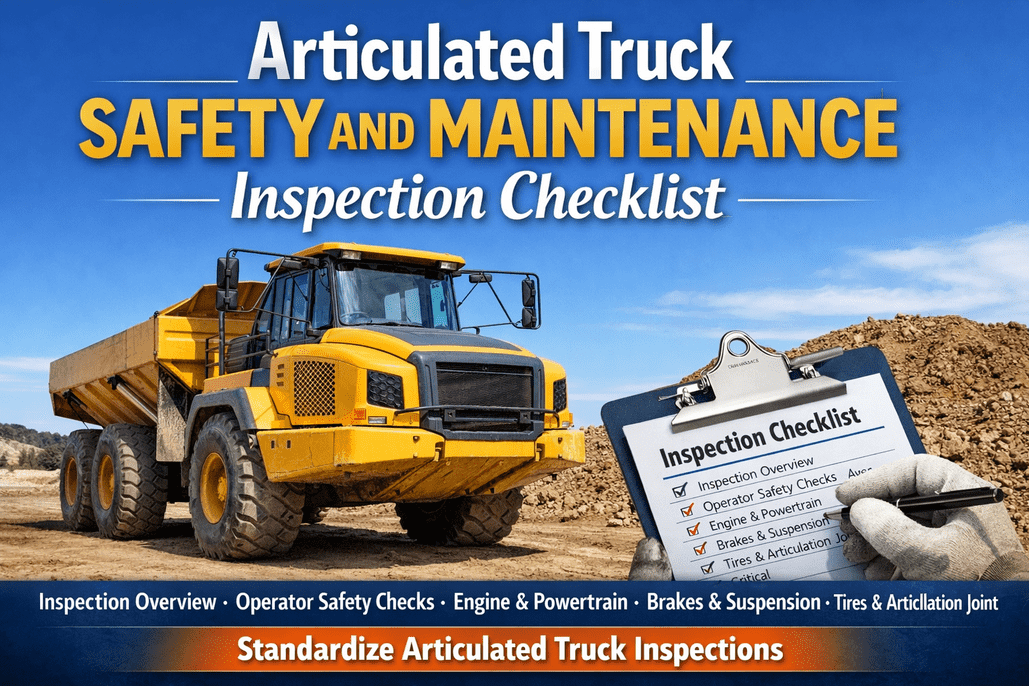
A comprehensive articulated truck safety and maintenance inspection checklist designed to help construction and mining fleets identify risks, prevent breakdowns, and maintain safe, compliant articulated vehicle operations. Start your free inspection trial
Articulated Truck Inspection
Safety & Maintenance Checklist
Inspection Purpose
Articulation Safety
- Checking the articulation frame, bearings, and hitch pins prevents catastrophic separation or loss of steering control on uneven terrain.
Hydraulic Integrity
- Inspecting hoist cylinders and steering lines ensures the truck can safely dump heavy loads and maneuver without fluid failure.
Braking & Control
- Verifying service brakes, retarders, and suspension systems is critical for handling massive payloads on steep grades.
1. Ground & Chassis Level
Walk around the entire machine, inspecting the chassis, suspension, and articulation joint:
Front & Middle Chassis
Articulation & Hitch
Rear Body & Dump System
2. Engine & Fluid Compartments
Inspect critical powertrain components and fluid levels:
Engine & Transmission
Hydraulics & Systems
3. Cab & Safety Checks
Verify operator safety systems and cab environment:
Access & Exterior
Interior Controls
Digital Heavy Equipment Inspections
Fleet Rabbit App Benefits for Mining & Construction:
- ✓ Ensure MSHA/OSHA compliance with un-editable digital logs
- ✓ Track tire wear across the fleet to optimize expensive replacements
- ✓ Instantly report articulation joint play or hydraulic leaks to maintenance
- ✓ Monitor average engine hours to schedule preventive maintenance precisely
- ✓ Keep operators safe by enforcing mandatory pre-shift safety checks
Frequently Asked Questions
1. What is the most critical check on an articulated truck?
The articulation joint and steering cylinders are critical. Failure here results in total loss of steering control. Daily checks of the hitch pins, bearings, and hydraulic locking systems are essential.
2. How often should the ROPS be inspected?
The ROPS (Roll-Over Protective Structure) should be visually inspected daily for any cracks, loose bolts, or structural damage. Any compromise to the ROPS puts the operator at fatal risk during a rollover.
3. Do I need to check the ejector system daily?
Yes, if equipped. The ejector blade, guides, and cylinders operate under immense force. Checking them ensures the load can be dumped safely without jamming or causing mechanical failure.
Standardize Articulated Truck Inspections
Ensure every truck in your fleet meets safety standards with repeatable, digital inspection workflows.


