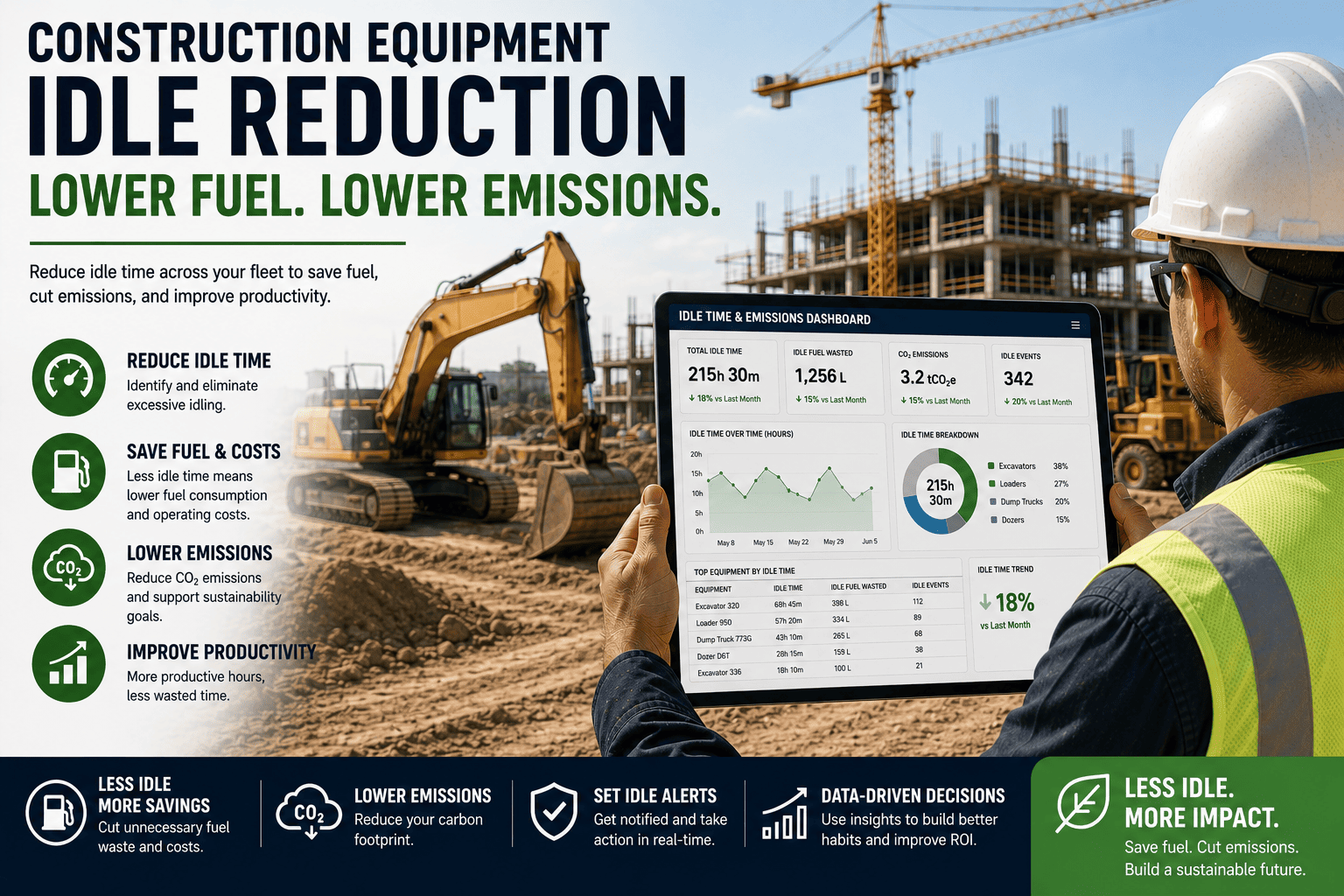
Walk any job site at midday and you will see it, an excavator sitting with the engine running while the operator waits on a delivery truck. Nobody plans for equipment to idle this much, it just accumulates in small moments that nobody tracks. Industry data shows many machines idle 40 to 60 percent of their operating hours, and every one of those hours burns fuel and adds wear without moving a single yard of material. Idle reduction is one of the few fleet improvements that costs nothing to implement and pays back almost immediately once you can see where the waste is happening.
Construction equipment idle reduction cuts fuel and emissions by identifying which machines idle the most, then addressing the specific habits or workflow gaps causing it, without changing how the work itself gets done. Fleets that bring idle time down from 40 percent to 25 percent typically see 10 to 15 percent lower total fuel costs, and a single machine idling one avoidable hour daily can waste $600 to $1,600 a year in fuel alone.
What An Idling Hour Actually Costs
Idle time feels harmless because the machine is not doing anything, but the cost is very real, it is just split across two categories most fleets never combine into one number.
That second number surprises most fleet managers. Idle hours still count toward oil change intervals and general wear, and the idle wear factor typically runs 30 to 50 percent of full working wear, meaning a quiet, parked machine is still consuming a meaningful share of its service life.
Idling Adds Up Faster Than It Looks
A single machine rarely feels like a problem. A fleet of them does. Here is what unmanaged idle time looks like once it is scaled across a crew.
One Machine, One Hour
A medium excavator idling one extra hour a day burns roughly one gallon of fuel for nothing.
One Machine, One Year
At 150 working hours a month, that single wasted hour daily adds up to hundreds of dollars a year per unit.
Five Machines, One Fleet
Across a five-machine fleet, that same one gallon per hour of waste totals roughly $32,850 a year.
Why Reducing Idle Time Does Not Slow Down The Job
The biggest hesitation fleet managers have is assuming idle reduction means asking crews to work slower or shut down equipment they might need again in five minutes. In practice, the target is not zero idle, it is cutting the avoidable portion, warm-up that runs long, machines left running through lunch, or units idling while waiting on a truck that is still twenty minutes out. To see how this looks against your own fleet's data, you can book a demo and review a sample idle breakdown.
Which Machines Are Actually Idling The Most
Without per-machine visibility, idle time gets blamed on operators generally instead of identified on the specific units driving it. A typical fleet idle ranking looks uneven once the data is broken out.
Individual machines in the same fleet can range from 18 percent idle time to over 50 percent, which means a single fleet-wide reminder rarely works. The fix has to target the specific machines and shifts where idle time is concentrated.
FleetRabbit tracks idle time per machine, flags the biggest offenders, and shows the trend as your team makes changes. Sign up and get a baseline idle report within the first week.
A Simple Approach To Bringing Idle Time Down
The most effective idle reduction programs are the least complicated ones. They rely on visibility and a clear target, not new equipment or added steps for crews.
What Usually Drives Idle Time On A Job Site
Most avoidable idling comes from a short list of habits: warm-up that runs longer than needed, machines left running during breaks, units waiting on material delivery, and equipment kept on near the site office for climate control. None of these require new hardware to fix, they require the data to know they are happening.
What The Savings Look Like Once Idle Comes Down
The Maintenance Side Of The Savings
Fuel is the number most people focus on, but the maintenance side of idle reduction compounds over the life of the machine. Fewer idle hours mean fewer hours pushing toward the next oil change or service interval, which stretches out scheduled maintenance and keeps machines productive longer.
Frequently Asked Questions
Idle time is one of the few costs in a construction fleet that can be reduced without touching production schedules or crew workflow. FleetRabbit shows you exactly which machines are idling, by how much, and whether your changes are working.