Two excavators sit on the same lot. Both are due for service on the 30th of the month, because that's what the calendar says. One of them logged 240 engine hours this month running double shifts on a hard rock job. The other sat mostly idle, clocking just 40 hours while it waited for a delayed permit. Same due date, same service ticket, same parts pulled from inventory, even though one machine did six times the work of the other. That's the quiet, expensive flaw in calendar-based maintenance: it treats every machine like it worked the same month, when it almost never did.
Service interval optimization means setting maintenance schedules based on actual engine hours, utilization, and equipment condition instead of a fixed calendar date. Research shows up to 30 percent of preventive maintenance tasks are performed unnecessarily under calendar-based scheduling, servicing components that still have plenty of useful life left. Switching low-utilization equipment to hours-based intervals cuts that waste, while high-utilization equipment gets serviced sooner, before a rushed calendar date lets it run past a safe threshold.
The Same Due Date, Two Very Different Machines
The clearest way to see why calendar intervals fail is to put two real machines side by side and look at what a fixed 30-day schedule actually asks of each one.
Machine A wasted a service visit that added no real value. Machine B ran past the point where its filters and fluids were doing their job properly, quietly accumulating wear the whole time. Neither outcome is good, and a calendar can't tell them apart because it was never built to measure work, only time.
FleetRabbit tracks engine hours and utilization for every machine and adjusts service intervals automatically, so lightly used equipment isn't over-serviced and heavily used equipment isn't left running past its limit. Sign up free and see your fleet's real intervals today.
Calendar Scheduling vs Usage-Based Scheduling
Neither approach is wrong in every situation, but each one fits a different kind of equipment and usage pattern. Knowing where each one holds up, and where it quietly wastes money, is the starting point for optimizing your own intervals.
| Factor | Calendar-Based Scheduling | Usage-Based Scheduling |
|---|---|---|
| Trigger | Fixed date, regardless of how much the machine actually ran | Engine hours, mileage, or cycles reaching a set threshold |
| Best fit | Steady, predictable usage or compliance-mandated intervals | Equipment with seasonal swings or project-to-project variation |
| Main risk | Over-servicing idle equipment, under-servicing heavily used equipment | Requires reliable hour-meter data to trigger correctly |
| Cost impact | Wastes labor and parts on components with life left | Aligns spend directly with actual wear and workload |
| Setup effort | Low, works with a simple schedule and no sensors | Moderate, needs engine-hour tracking already in place |
When a Hybrid Approach Makes the Most Sense
Most construction fleets don't need to pick one method for every machine. A hybrid model, where usage-based intervals govern wear-driven service items like oil and filters while calendar checks still cover time-driven risks like hose aging or seasonal inspections, captures the benefit of both without demanding a complete overhaul of your maintenance program.
Signs Your Fleet Is Ready to Switch to Usage-Based Intervals
- Utilization varies widely between machines doing similar work on different projects
- Seasonal swings leave equipment idle for weeks and then running double shifts soon after
- Engine-hour data already exists through telematics or hour meters, even if nobody is using it to schedule service yet
- Repeated over-servicing shows up in maintenance logs as parts replaced well before their expected wear point
- Unplanned failures keep happening on machines that were technically "current" on their calendar schedule
Building an Interval Optimization Process Step by Step
Moving from calendar-only scheduling to optimized intervals doesn't require ripping up your entire maintenance program. A focused rollout across a few key steps gets most of the benefit without disrupting work already underway.
How FleetRabbit Automates Interval Optimization
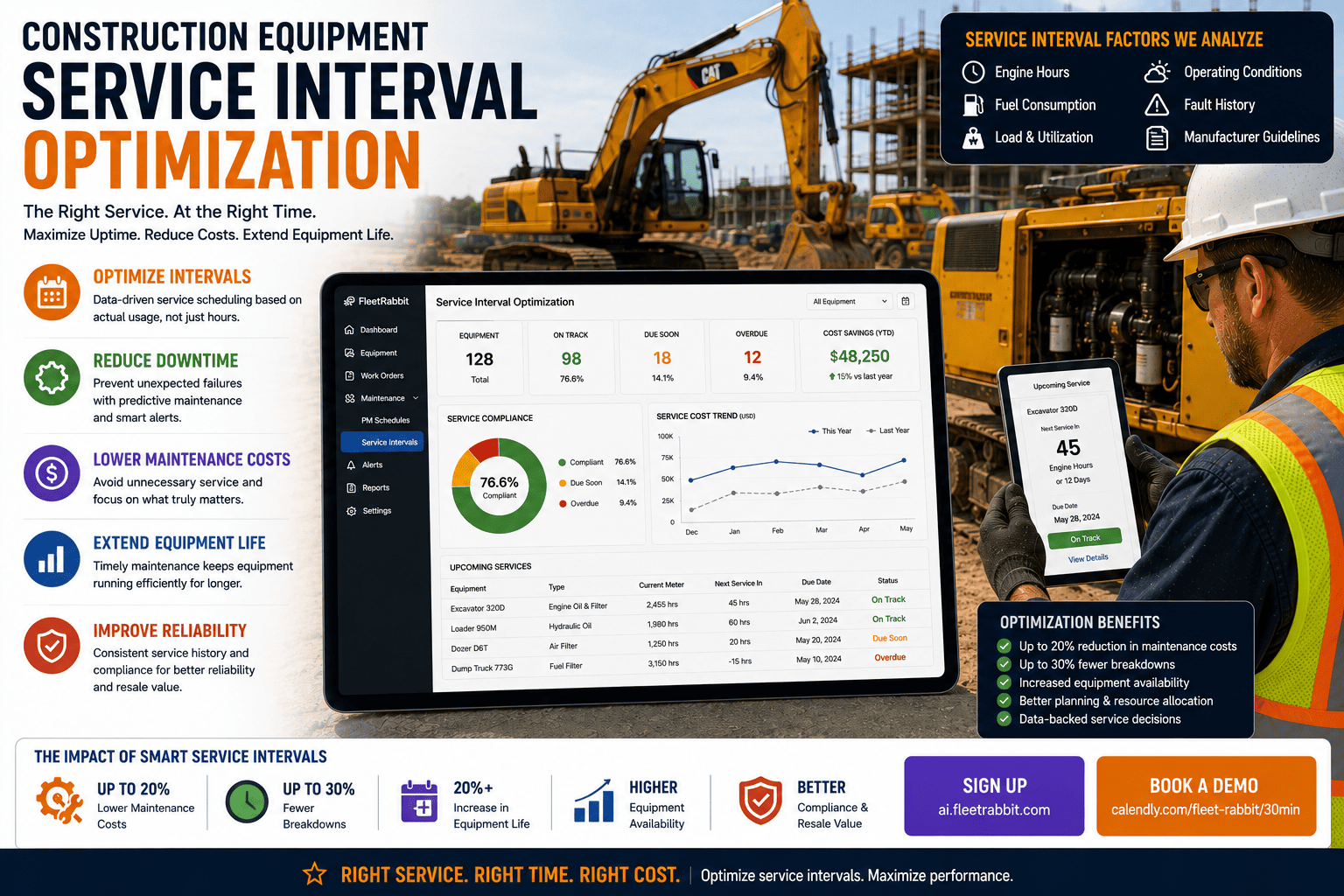
Manually tracking engine hours against OEM thresholds for every machine across multiple sites is exactly the kind of task that gets skipped when a crew is busy, which is how fleets end up back on default calendar dates within a few months of trying to fix the problem. FleetRabbit pulls engine-hour and utilization data automatically for every piece of equipment and triggers service alerts the moment a machine crosses its actual usage threshold, whether that happens two weeks early or two months late compared to the calendar.
The same system flags equipment sitting well below expected utilization so a scheduled service can be safely pushed back without violating OEM guidance, and flags high-utilization machines early enough for parts and technician time to be booked before a breakdown forces the issue. Fleets running this way consistently report fewer wasted service visits and fewer surprise failures on machines everyone assumed were current. If you'd like to see how your own fleet's utilization spread compares, you can book a demo and walk through it with our team.
Get automatic service alerts based on real utilization, not a fixed date on the calendar. Create your free account or talk it through with our team first.
Frequently Asked Questions
A calendar is a convenient way to schedule maintenance, but it has no idea whether a machine sat idle for three weeks or ran double shifts through a hard rock job. Engine hours do. Once service intervals follow actual usage instead of a fixed date, lightly used equipment stops absorbing unnecessary labor and parts costs, and heavily used equipment stops quietly running past the point where it needed attention. That shift alone turns preventive maintenance from a routine expense into a genuinely optimized part of running a fleet.
FleetRabbit tracks utilization across every machine and adjusts service intervals automatically, cutting unnecessary maintenance while catching high-use equipment before it runs past its limit. Get started free, no credit card required, or book a demo to see your fleet's real intervals first.