A rental invoice for an excavator lands on your desk, and it looks routine. Another job needed a machine, the yard didn't have one free, so you rented one. Except in one documented fleet audit, reviewers found that owned equipment of the same class was sitting idle within fifteen miles during seventy-eight percent of those rental periods. The company was not short on equipment. It was short on visibility into what it already owned.
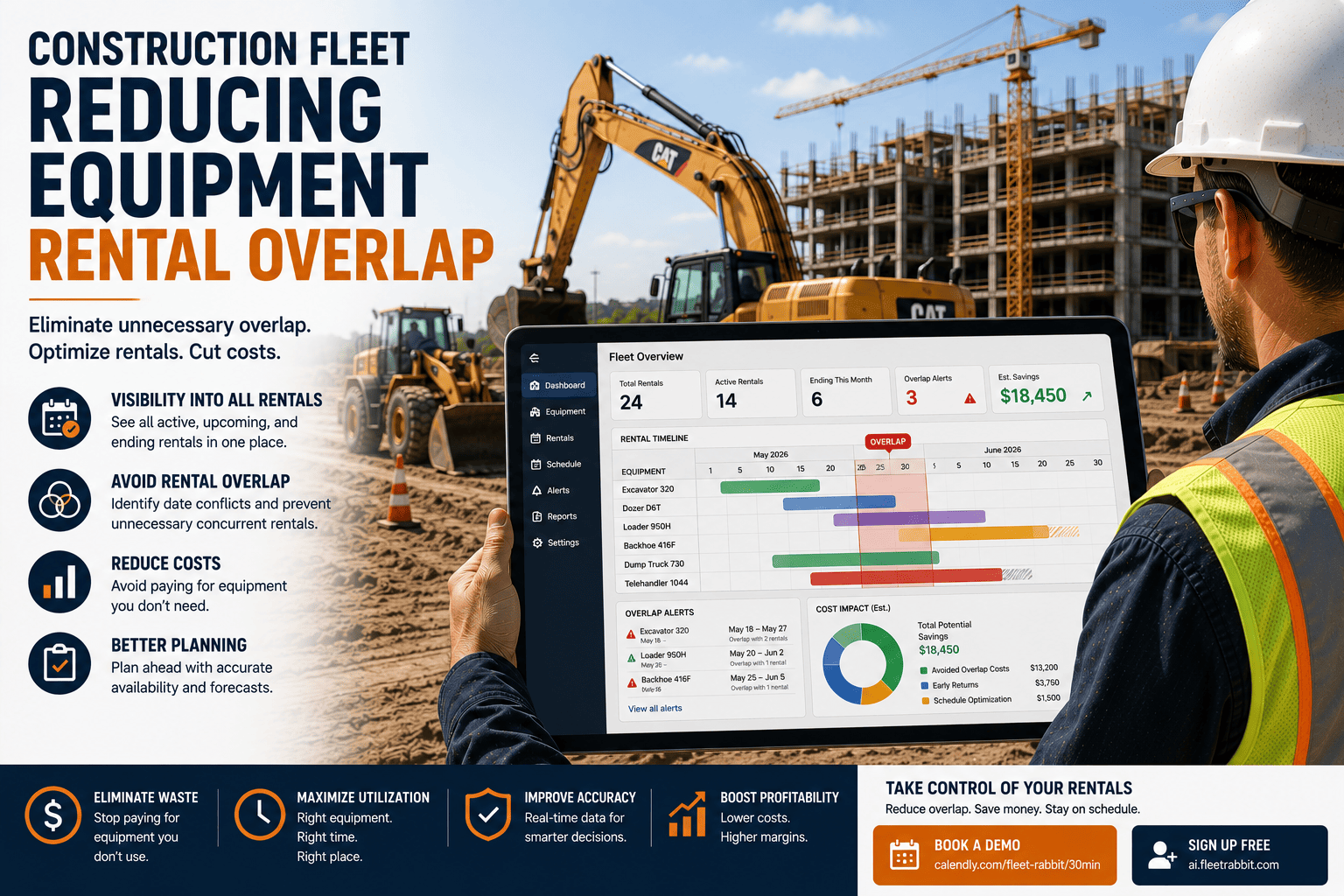
That gap between owned and rented equipment is one of the most overlooked sources of waste in construction fleet spending, and it rarely shows up as a single obvious mistake. It shows up as dozens of small rental decisions made without knowing a comparable machine was parked a few miles away. This guide breaks down how that overlap happens, what it actually costs, and how FleetRabbit gives fleet teams the visibility to catch it before the next invoice arrives.
How Rental Overlap Quietly Builds Up
Most contractors run a mix of owned and rented equipment on purpose, and that strategy makes sense when project pipelines are unpredictable. The problem is not the mixed fleet model itself. It is the absence of a shared, real-time view of where every owned asset sits at any given moment. Without that visibility, a project manager on one site has no way of knowing a skid-steer is finishing up two miles away and about to become available.
Healthy time utilization for most equipment classes falls between 65 and 75 percent. Fall consistently below 55 percent and you are carrying more equipment than your work actually requires, which is usually the same fleet that keeps generating rental invoices anyway, because nobody can see the idle capacity sitting in the yard or on another job.
Why This Keeps Happening Even at Well-Run Companies
Rental overlap is not usually a sign of poor management. It is a sign of information living in the wrong places. One project's equipment log lives in a spreadsheet, another site's foreman tracks availability by memory, and nobody is comparing the two before a rental order goes out. The fix is not more discipline. It is one shared view of every asset's location and status.
FleetRabbit shows real-time location and availability across your entire fleet, so a rental request gets checked against what you already own before it gets approved. Sign up free and see what's actually sitting idle in your fleet right now.
What Rental Overlap Actually Costs
A documented case at one construction fleet showed the scale this problem can reach. The company spent 1.2 million dollars annually on rental equipment to cover what looked like shortages, while an end-of-year audit found six machines sitting unused for over ninety days. The rentals were not covering real gaps in capacity. They were covering a lack of visibility into equipment the company already owned.
Four Signs Your Fleet Has a Rental Overlap Problem
Rental Spend Rising While Fleet Size Stays Flat
If your owned equipment count hasn't changed but rental invoices keep climbing, that is usually a visibility problem rather than a genuine capacity shortage.
No Shared View of Equipment Location
If a project manager can't check where every owned asset is right now without calling around, rental decisions are being made blind.
Machines Discovered Idle During Audits
Finding units that sat unused for weeks or months only during a year-end review means that overlap has already been happening far longer than anyone realized.
Maintenance Scheduled by Calendar, Not Usage
Fixed service intervals that ignore actual engine hours often mean underused machines look "busy" on paper while sitting idle in practice, masking real availability.
Closing the Gap Between Owned and Rented Equipment
Track Location and Status in Real Time
Every owned asset needs a live status, whether that is active on a site, available, or in maintenance, visible to anyone making a rental decision. Without that, availability is guesswork dressed up as a phone call.
Check Utilization Before Approving a Rental Order
Building a simple rule that every rental request gets compared against current fleet utilization catches the overlap before the invoice, not during the next audit.
Match Maintenance Scheduling to Real Usage
Servicing equipment based on actual engine hours instead of the calendar reveals which machines are genuinely underused, so they can be redeployed instead of quietly parked while a rental fills the gap.
FleetRabbit compares live utilization data against every incoming rental request, flagging owned equipment that could cover the job instead. Book a demo to see how much overlap might be hiding in your current rental spend.
Getting Started Without Overhauling Your Whole Fleet
You do not need to replace your rental strategy to fix this. Start by pulling the last twelve months of rental invoices and checking each one against what your fleet owned in the same equipment class at the time. Most fleet teams are surprised by how many of those invoices had a match sitting idle somewhere close by. That single audit is usually enough to justify building real-time visibility into how rental decisions get made going forward.
Every rental invoice for equipment you already own is money that should have stayed on your bottom line. FleetRabbit gives you the real-time visibility to catch overlap before it becomes another line item.