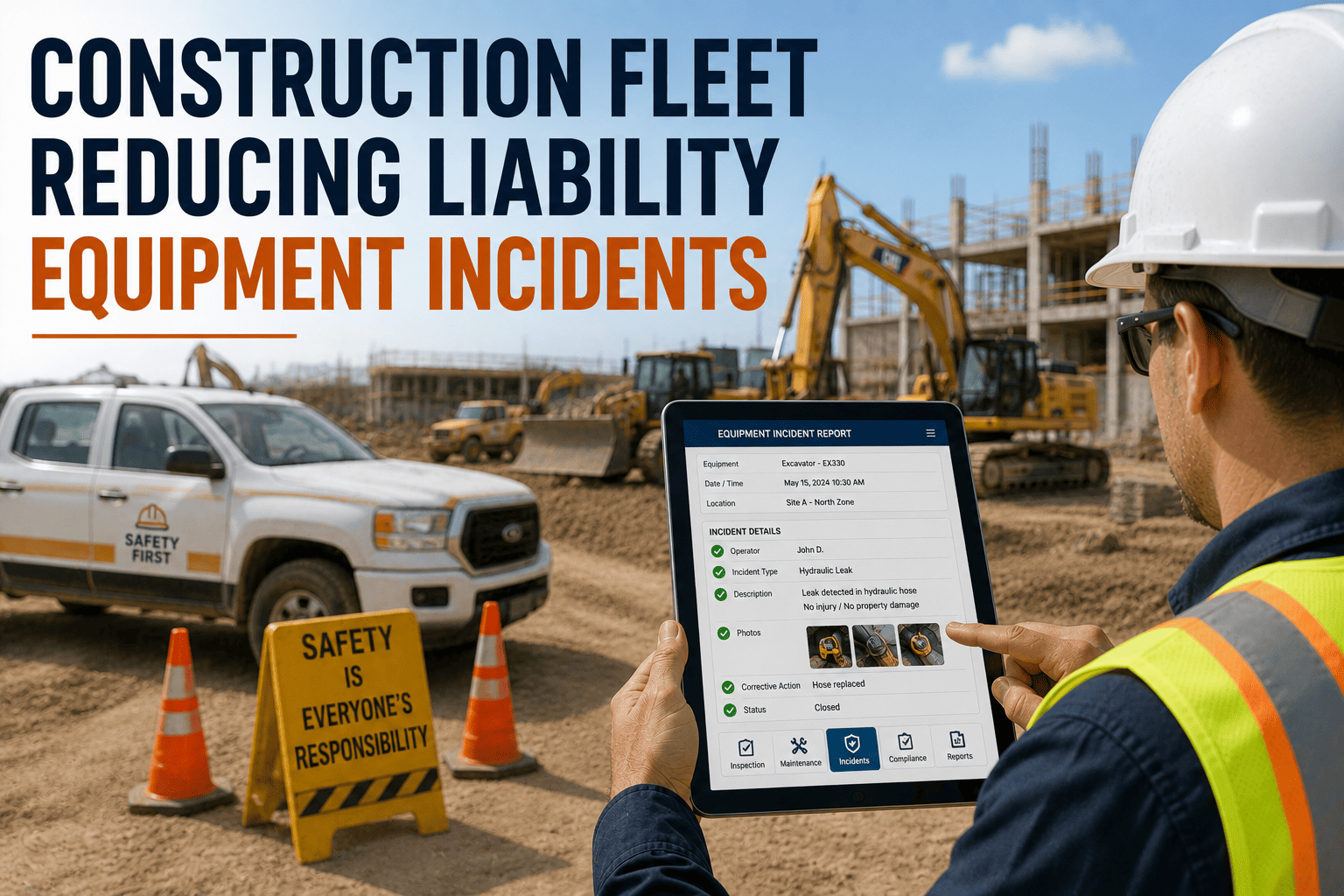
A crane, a forklift, or a compactor doesn't fail on its own. Something upstream of the incident always exists first: a skipped inspection, a repair that got delayed, a certification that expired without anyone noticing. When equipment on a job site injures someone, the accident report is only the beginning of the story. What happens next is a legal review of every maintenance log, inspection sheet, and training record your company can produce, and construction liability claims almost never turn on the equipment itself. They turn on whether you can prove you knew it was safe.
Third-party liability claims tied to construction equipment carry no damage cap in many states, and OSHA's fall protection standard has been the single most cited construction violation for 14 consecutive years running. Employers and contractors are legally required to maintain equipment, inspect it regularly, and correct problems promptly, and failure to do so is what plaintiff attorneys build negligence claims around. Complete, time-stamped inspection and maintenance records are consistently what separates a defensible incident from a costly one.
The Fatal Four: Where Equipment Incidents Turn Into Legal Claims
OSHA identifies four incident categories responsible for the large majority of construction fatalities, and equipment condition or handling plays a direct role in nearly all of them.
Struck-By Incidents
Workers hit by moving equipment, swinging loads, or falling materials. Liability often lands on the equipment operator or the company responsible for securing loads.
Caught-In or Between
Workers pinned by machinery, collapsing trenches, or unguarded moving parts. Missing guards or skipped inspections are frequently central to these claims.
Falls Involving Equipment
Falls from lifts, scaffolding, or elevated equipment remain the most cited OSHA violation category, and faulty equipment can shift liability to a supplier or rental company.
Electrocution
Contact between equipment and power lines or faulty wiring on powered machinery, where maintenance and inspection records become central evidence.
Who Actually Carries the Liability When Equipment Fails
Construction sites involve multiple companies touching the same piece of equipment, which is exactly why liability after an incident rarely rests in one place. Understanding where responsibility can land is the first step in protecting your own company from carrying blame that belongs elsewhere.
Employer or General Contractor
Responsible for maintaining safe equipment on site, performing inspections, and correcting known issues before they cause harm.
Subcontractor
Can share liability when tasked with operating or maintaining specific equipment and failing to follow required safety procedures.
Rental Company or Supplier
Liable if equipment was delivered without proper inspection or maintenance, regardless of who operated it on site.
Manufacturer
Can be held responsible for design flaws, production defects, or inadequate warnings, separate from how the equipment was maintained.
Every link in that chain is decided by records. Whichever party cannot produce proof of proper inspection, maintenance, or training tends to absorb the largest share of liability, which is why more construction fleets are moving to centralize equipment records before an incident happens, not after.
FleetRabbit logs every inspection, repair, and certification in one place, building the documented history that determines who actually carries liability after an incident. Start your free trial with 3 vehicles today.
The Documentation That Actually Decides the Case
Once an incident happens, an investigation almost always centers on the same records. What separates a defensible outcome from a costly one is whether those records existed, were current, and can be produced quickly.
| What Investigators Request | Without a Documented Record | With a Documented Record |
|---|---|---|
| Pre-use inspection history | No proof the equipment was checked before the shift the incident occurred | Time-stamped inspection log showing the equipment was checked and cleared |
| Maintenance and repair history | Paper work orders scattered across vendors, hard to produce quickly or completely | Full repair history tied to the specific equipment, available on request |
| Operator certification records | Uncertainty over whether the operator was properly trained on that equipment type | Certification and training completion recorded and linked to the operator |
| Known issue follow-up | No trail showing whether a previously flagged defect was ever corrected | Clear record of the defect, the corrective action, and the completion date |
Building an Equipment Record That Protects Your Company
Reducing liability exposure from equipment incidents comes down to closing the same three gaps that investigators and attorneys look for first.
Digital Inspection Logs
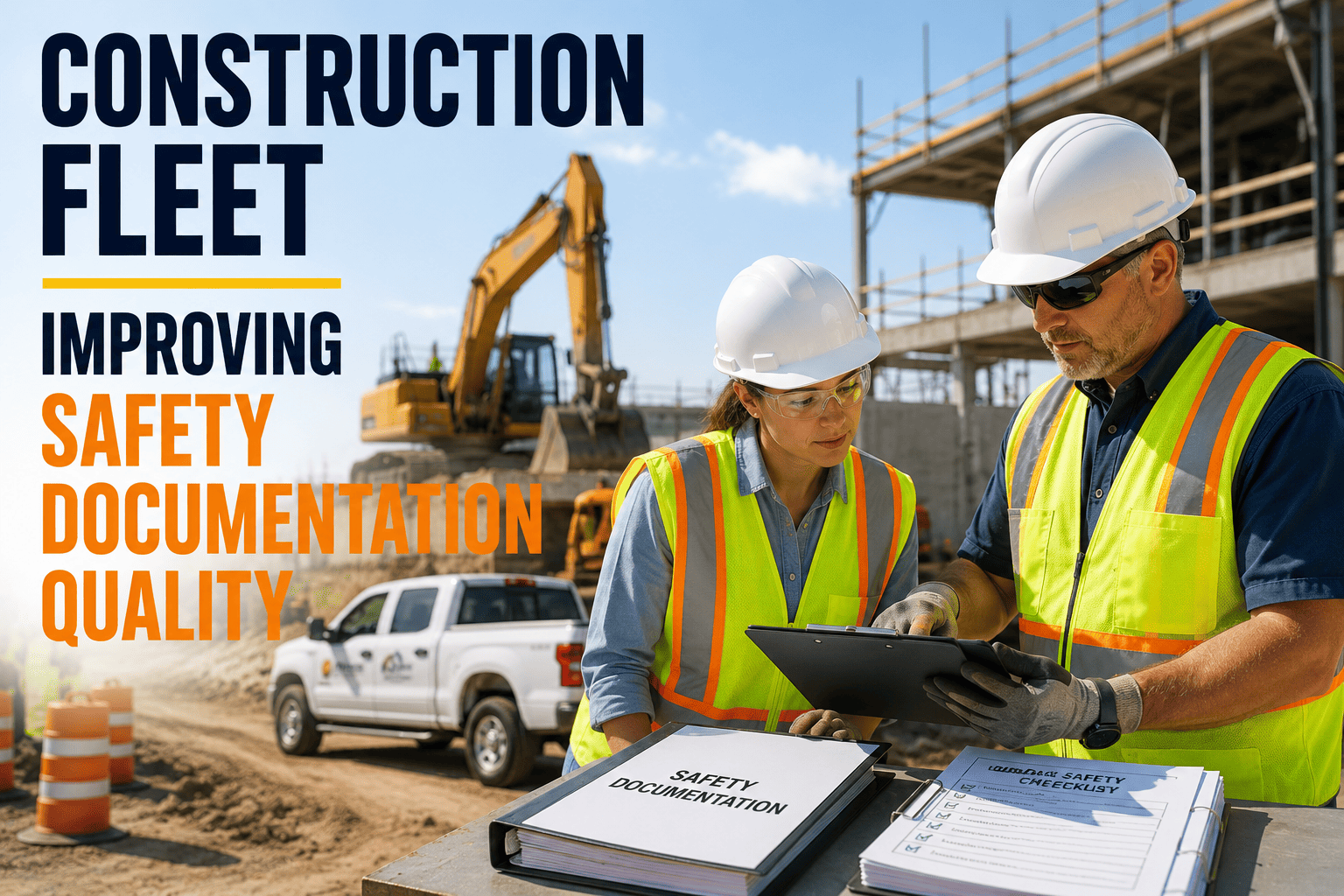
Every pre-use and periodic inspection should be logged digitally with a timestamp, the inspector's name, and any defects found, replacing paper checklists that get lost or filled out after the fact.
Why Timing Matters More Than the Checklist Itself
An inspection completed and logged before the shift began carries far more weight than one filled out from memory afterward. Digital timestamps remove any question about when the check actually happened.
Maintenance History Tracking
Every repair, part replacement, and service interval should be tied to the specific piece of equipment, not scattered across vendor invoices and shop notes that are hard to reassemble later.
Certification and Training Records
Operator certifications, equipment-specific training, and renewal dates should be tracked centrally so there is never a question about whether the person operating the equipment was qualified to do so.
Turning Records Into an Early Warning System
The same records that protect a fleet after an incident can prevent one in the first place. A system that flags an overdue inspection or an expiring certification before the next shift starts closes the exact gap that leads to both injuries and lawsuits. Fleets ready to see this in action can book a demo and walk through a real equipment record from inspection to repair to certification.
Equipment incidents are decided by paperwork long before they reach a courtroom. FleetRabbit gives your team a complete, time-stamped history of every inspection, repair, and certification, so the record already exists the moment anyone asks for it.