The call every contractor wants to get is the one that just came in: you won the bid. A new project is on the books, the schedule is tight, and now someone is staring at the equipment yard wondering if there's enough iron to actually do the job. This is the moment where fleet decisions made in a hurry either protect your margin or quietly destroy it. Buy too much and you're carrying idle machines long after the project wraps. Buy too little and you're renting at premium rates while your own equipment sits underused two counties away. Getting this decision right, before mobilization day, is what separates contractors who scale profitably from contractors who scale into debt.
Most contractors use a 65 percent utilization rule to decide whether to buy or rent for a new project. If a machine will be working more than roughly 65 percent of the calendar over the next 8 months, ownership usually wins. Below that, renting or redeploying an underused unit from another job site is the cheaper path. An idle owned excavator can cost 500 to 800 dollars a day in insurance, storage, and financing even when it earns nothing, which is why fleet visibility matters just as much as the buy or rent decision itself.
Why Winning The Bid Is Only Half The Problem
Landing a new contract feels like the hard part is over. In practice, it's the moment the real work starts, because now your equipment plan has to match a schedule someone else wrote. Mobilization dates don't move for you, and a grading phase that needs three dozers doesn't care that your dozers are currently 200 miles away finishing a different job. Contractors who scale well treat this as a data problem first and a purchasing problem second: they know exactly what they own, exactly how hard it's working, and exactly what a new project actually demands before they call a dealer or a rental house.
That's also where most scaling mistakes happen. Fleet managers under schedule pressure default to buying, because owning feels safer than depending on a rental yard's availability. But rental houses now own more than half of all construction equipment in the country, which tells you something important: a majority of the market has already decided that flexible capacity beats owning everything outright. The smarter question isn't "buy or rent" in the abstract. It's which pieces of this specific project's equipment list deserve a permanent home on your books, and which ones only need to exist for the length of the job.
The Project Runs Longer Than 8 Months
Long timelines push utilization above the 65 percent threshold where ownership starts to beat renting on cost per hour worked.
Existing Machines Sit Idle Elsewhere
A dozer at 40 percent utilization on another site is a redeployment candidate before it's a renting-something-new problem.
The Phase Is Short And Specialized
Tilt-up cranes, remote-site generators, and short grading pushes are classic rent-only phases even for owners with a large core fleet.
The Buy, Rent, Or Redeploy Decision Framework
Contractors who scale efficiently rarely make one big fleet decision. They make dozens of small ones, machine by machine, using the same three questions every time: how long will this piece of equipment actually be working, do we already own something idle that could cover it, and what does it cost us to be wrong. The most successful contractors in 2026 run a hybrid strategy, keeping a core owned fleet for daily, high-utilization work and a context fleet of rented equipment for specific phases like tilt-up days, extra grading capacity, or remote-site generators. That split is what lets a fleet expand during a project boom and contract again without carrying dead weight into the next slow season.
Start With The Utilization Math, Not The Purchase Order
Financial advisors generally recommend the 65 percent rule for 2026: if a piece of equipment will be in use more than roughly 65 percent of the calendar year, buying it usually beats renting it. Below that line, the math flips. Run this number for every major machine category on the new project's equipment list before committing capital, and you'll usually find that only a handful of items clear the ownership threshold, while the rest are better handled through rental or an internal transfer from a job that's winding down.
Core Fleet: Buy When The Work Is Constant
Excavators, backhoes, and dozers that will run daily for the life of a long project belong in the core, owned fleet. These are the machines your operators already know, that carry your branding, and that justify the tax and depreciation planning that comes with a purchase.
Context Fleet: Rent When The Work Is A Phase
Cranes for a two-week tilt-up sequence, extra compaction equipment for a grading push, or generators for a site without permanent power are textbook rental items, even for contractors who own most of their core fleet outright.
Redeploy: Move Idle Iron Before You Rent Anything
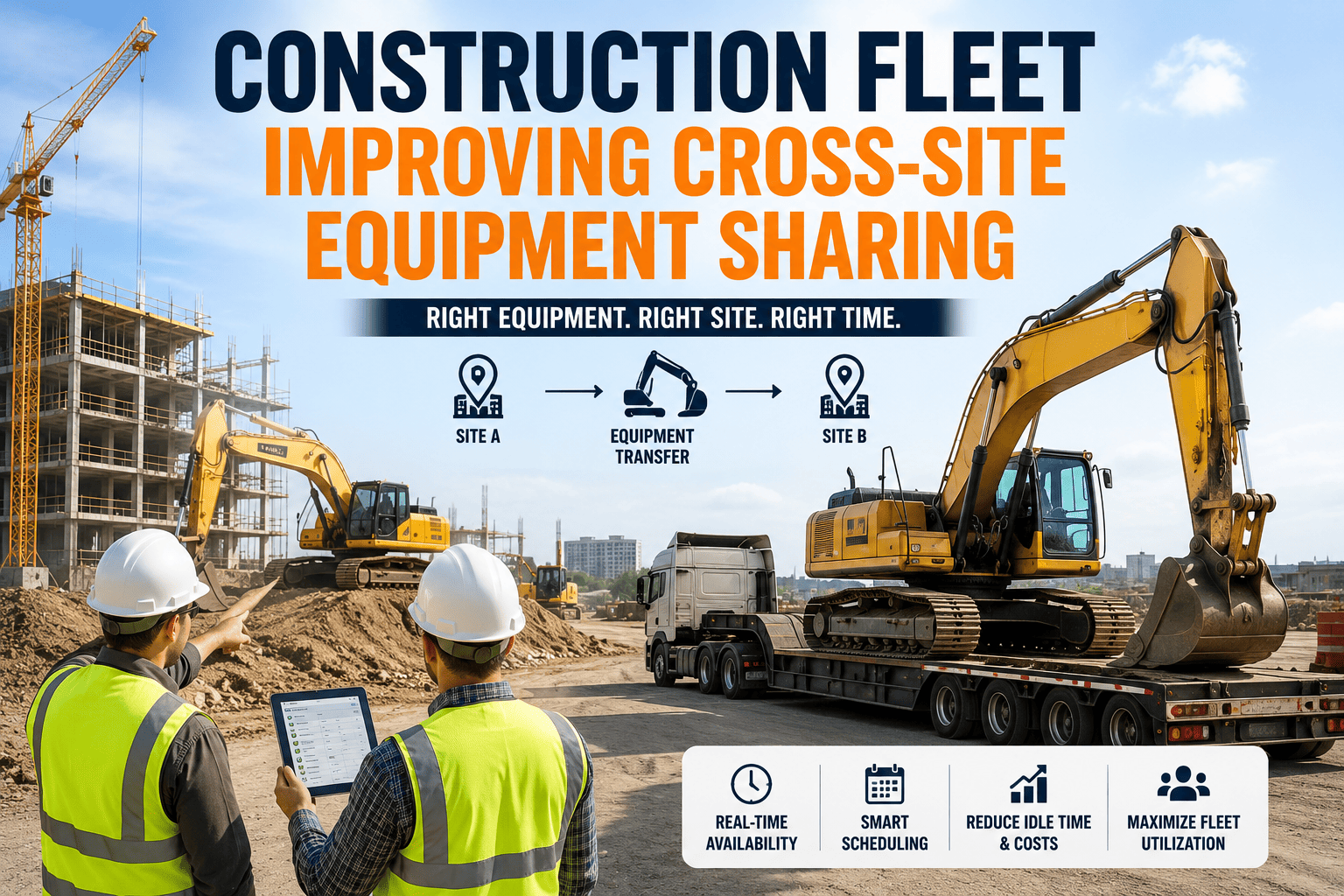
Before either checkbook comes out, check whether an existing asset sitting at low utilization on another site can be transported to the new project instead. This is the step most fleets skip simply because they don't have real-time visibility into where every machine is and how busy it actually is.
| Approach | Best For | Utilization Trigger | Main Risk If Wrong |
|---|---|---|---|
| Buy New Or Used | Long-duration core equipment used daily across multiple future projects | Above 65 percent expected utilization over 8 or more months | Idle carrying cost of 500 to 800 dollars per day per unit once the project ends |
| Rent | Short, specialized phases like cranes, aerial lifts, or remote power | Below 65 percent expected utilization or under 8 months of work | Premium rates during high-demand seasons when yards run tight |
| Redeploy | Existing owned equipment currently underused on another active site | Source site utilization under roughly 55 to 60 percent | Transport cost and downtime if location and status data is inaccurate |
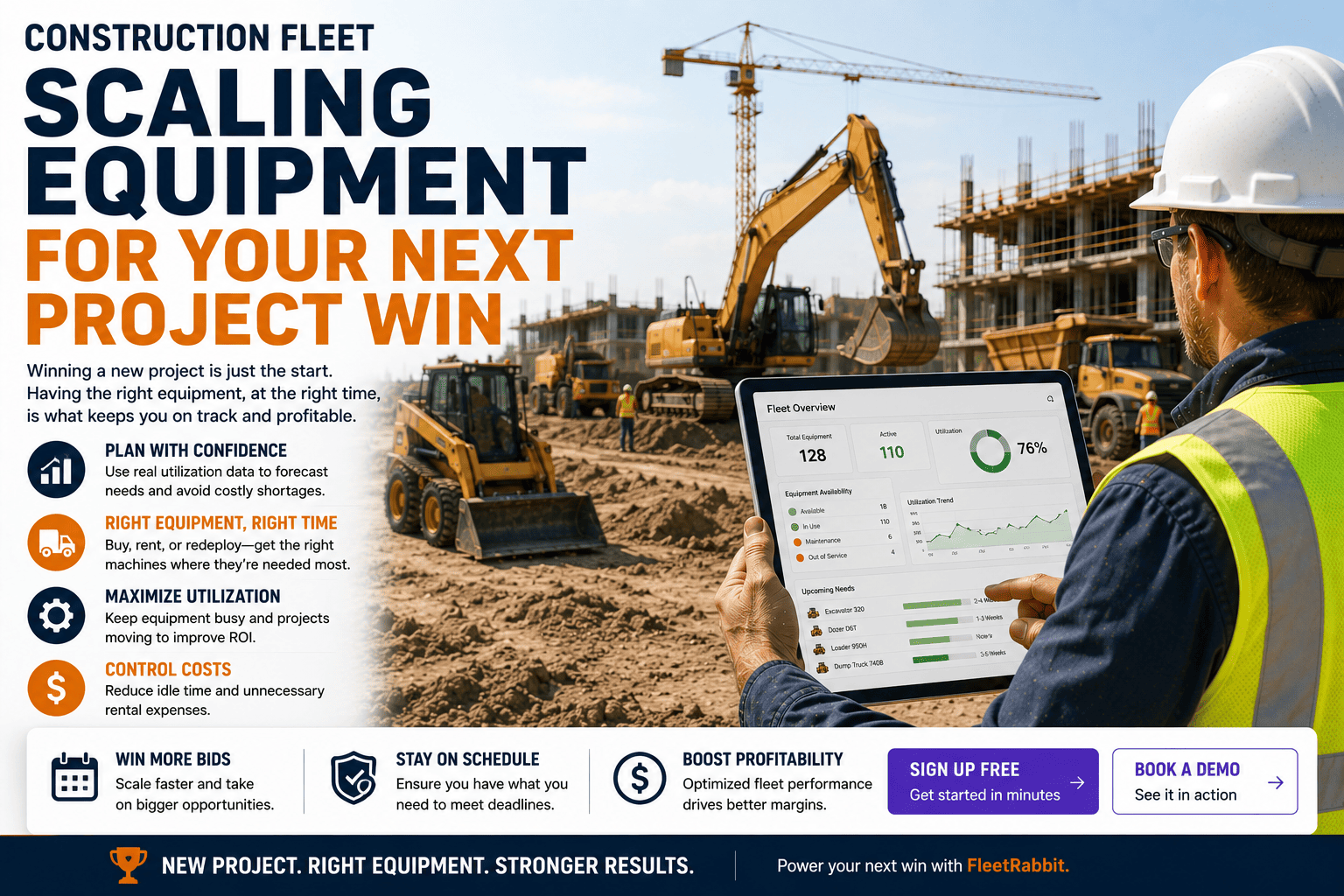
FleetRabbit shows exactly where every machine is and how hard it's working, so you can redeploy idle equipment to a new project before spending a dollar on something new. Sign up free and see your current utilization in minutes, or book a demo to walk through your next project's equipment plan with our team.
What Ghost Assets Cost You When You're Trying To Scale
The single biggest reason contractors over-buy for a new project is that they don't actually know what they already have. A ghost asset is equipment on the books that can't generate revenue because its location or status is unknown, and in fleets that track inventory manually, machines commonly sit idle for days after being returned before anyone realizes they're available. Scale a project on top of that blind spot and you'll rent a compactor you already own, or buy a second skid steer because nobody could confirm the first one was sitting unused across town.
Healthy time utilization for most equipment classes falls between 65 and 75 percent, with consistently below 55 percent signaling an over-fleeted operation and above 85 percent signaling missed opportunities and deferred maintenance. Knowing where your fleet sits on that range, machine by machine, is what turns a new project win into a controlled expansion instead of a scramble.
A mixed general fleet typically benchmarks around 38 to 48 percent annualized dollar utilization, while aerial-heavy or specialty fleets should reach 50 percent or more, giving you a realistic industry yardstick to compare your own numbers against before deciding what a new project actually justifies buying.
Three Questions To Ask Before The Purchase Order Goes Out
Is This Machine Already Sitting Idle Somewhere In Our Fleet?
Check real utilization data across every active site, not a spreadsheet last updated a month ago, before assuming you need to buy or rent anything new.
Does This Project's Timeline Actually Clear The 65 Percent Line?
A 5-month job rarely justifies a purchase, even if the machine will be busy every day it's on site, once the math is run against the full calendar year.
What Happens To This Asset When The Project Ends?
If there's no clear next project for the machine, renting protects you from the 500 to 800 dollar daily carrying cost of an asset with nowhere to go.
Building A Scaling Plan You Can Actually Execute
Turning a project win into a fleet plan doesn't need to take weeks. Most contractors can move from bid award to a locked equipment decision within days if they follow a simple sequence rather than reacting phase by phase as the schedule unfolds.
Step one: pull current utilization for every machine category the new project needs, across all active sites, so you know what's actually available to redeploy.
Step two: run the 65 percent rule against the project's real duration for anything not already covered by an idle asset, splitting the list into buy candidates and rent candidates.
Step three: lock in rentals early for short, specialized phases, since availability tightens fast once a busy season starts and other contractors are making the same calls.
Step four: track utilization through the life of the project so the next scaling decision, whether it's this project or the next one, starts with better data than this one did.
FleetRabbit gives you real-time visibility into every machine's location and utilization, so the next project win turns into a confident equipment plan instead of a guessing game. Start free and see your fleet's real capacity today.