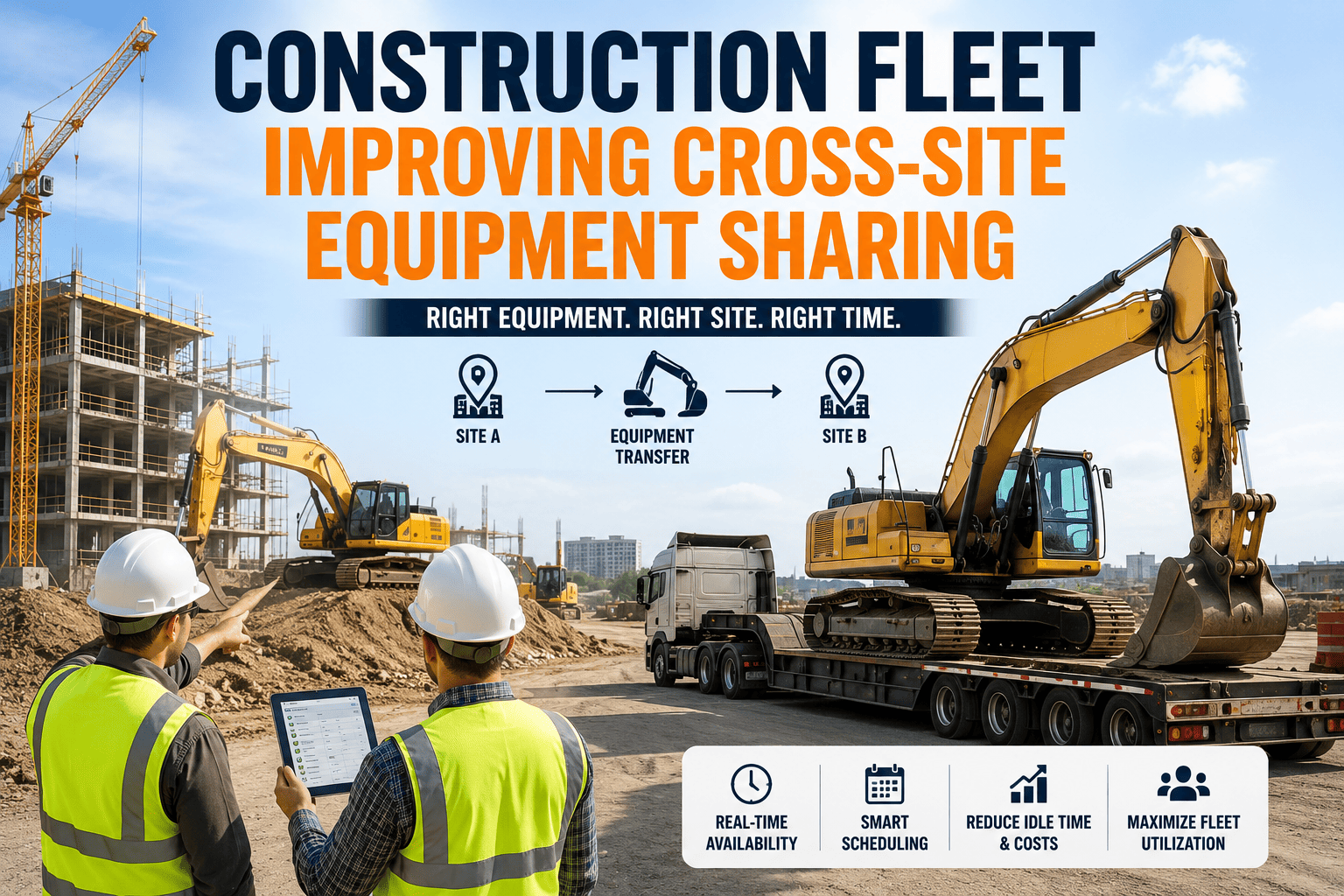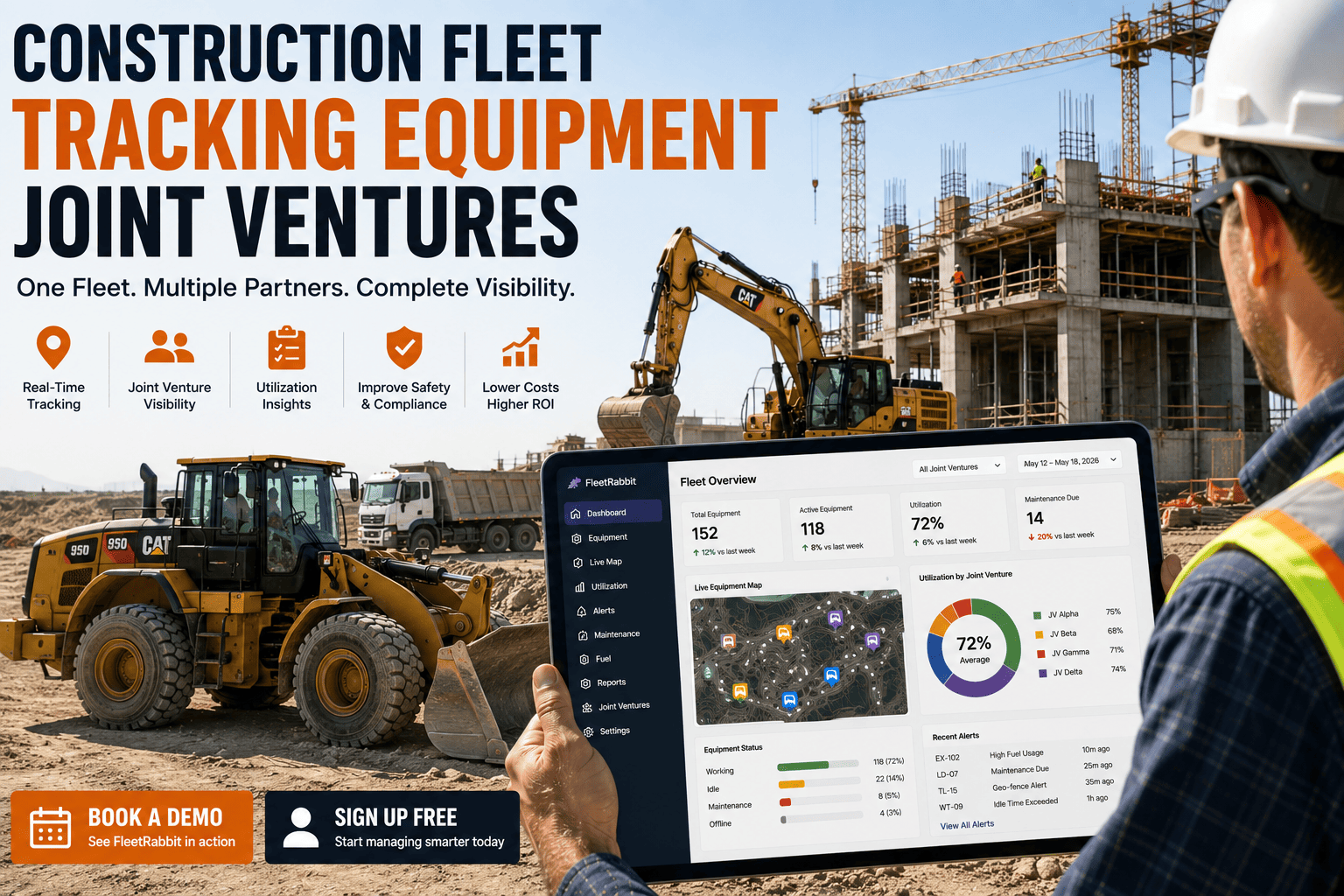
A single dozer, crane, or excavator on a joint venture job site rarely belongs to just one company. It might be owned by Partner A, operated by a crew from Partner B, and billed against a shared budget that three different accounting teams are watching closely. That arrangement works fine on paper. In the field, it quietly turns into one of the biggest sources of disputes, write-offs, and end-of-project arguments in construction. When nobody can say for certain which partner's machine did the work, how many hours it ran, or which entity should absorb the fuel and repair bill, the joint venture starts losing money in places no one budgeted for.
Joint venture equipment tracking means recording ownership, location, operating hours, and costs for every shared asset so each partner is billed and credited accurately. Without it, JVs typically lose 3 to 7 percent of equipment cost to misallocation, disputed hours, and duplicate billing. Sign up for FleetRabbit to bring every partner's equipment data into one shared record, or book a demo to see how JV billing gets simpler.
Why Shared Equipment Breaks Down on Joint Venture Projects
Every construction joint venture agreement spells out ownership percentages, capital contributions, and how profits get split. What it rarely spells out in enough detail is how a wheel loader that moves between three job fronts in one week gets tracked, hour by hour, so the right partner gets billed and the right partner gets credited. Equipment cost allocation assigns rental fees, fuel, maintenance, and depreciation to the project and cost code that generated them, the same way labor and materials already get tracked, but equipment is harder to pin down because a machine can be on one site in the morning and another by afternoon while its fuel card and maintenance invoice keep recording it as a single, undivided asset.
Ownership Gets Blurred in the Field
A machine owned by one partner gets operated by another partner's crew, and nobody logs which entity actually incurred the operating cost that week.
Usage Hours Are Estimated, Not Measured
Without a job and cost code attached at the moment a machine is used, accounting systems default the expense to a general overhead line, disconnecting the cost from the project and the partner who should carry it.
Billing Rates Are Set Once and Forgotten
Standard billing and lease rates are meant to be established upfront to simplify recordkeeping and minimize disputes, but many JVs never revisit them as equipment ages or usage patterns shift.
Reconciliation Happens Too Late
Partners typically only compare notes at monthly close or project wrap-up, by which point disputed hours and missing logs are nearly impossible to verify.
Give Every Partner the Same Equipment Picture
FleetRabbit logs ownership, location, and operating hours for every asset on a joint venture site in real time, so no partner has to take another partner's word for it. Start your free trial and see your shared fleet in one view, or book a 30-minute demo to walk through your specific JV structure.
What a Joint Venture Equipment Record Actually Needs to Capture
Most JV disputes trace back to one thing: partners are working from different versions of the truth. One partner's maintenance log doesn't match the other partner's usage estimate, and reconciling the two after the fact costs more time than tracking it properly would have in the first place. Construction-focused platforms can charge equipment or labor across entities while maintaining clean audit trails, which only works if the underlying data is captured consistently from day one.
| Data Point | Why It Matters in a JV | Consequence If Missing |
|---|---|---|
| Owning Partner | Determines who bills the JV for use of the asset | Wrong partner gets credited or paid |
| Operating Hours by Site | Splits cost fairly when one machine serves multiple job fronts | Cost lands on the wrong cost code or overhead |
| Fuel and Consumables | Feeds into agreed billing or lease rates per hour | Disputed invoices at month-end close |
| Maintenance and Repairs | Confirms which entity is responsible for upkeep cost | Repair bills get contested between partners |
| Real-Time Location | Verifies which project actually used the equipment on a given day | No way to confirm claimed usage |
Ownership, Usage, and Billing: Making the Math Hold Up
Set Ownership Splits Before Equipment Ever Reaches the Site
Parties need to agree on ownership allocations because it affects the degree of control each member has over the joint venture's operations, as well as reporting methods and future distributions of profits, losses and capital. That agreement should extend down to individual assets, not just the JV entity as a whole, so there's a documented answer the moment a dispute comes up.
Track Usage Continuously, Not Retroactively
When a machine moves across multiple job sites, the accurate approach is to split the hours by location and time stamp rather than assigning the entire period to one project. Manual timesheets can approximate this, but telematics-based hour and location logs remove the guesswork entirely.
Reconcile Billing on a Fixed Schedule
Job cost and profit-and-loss reports produced at the JV level and allocated back to partners give everyone a standardized reporting package, improving transparency and reducing disputes. Weekly or biweekly reconciliation catches discrepancies while records are still fresh, instead of unraveling them months later.
A Practical Framework for Multi-Partner Equipment Accountability
Register Every Shared Asset
Log owning partner, make, model, and agreed billing rate for each machine before it lands on site.
Automate Location and Hour Capture
Replace manual estimates with continuous telematics data so usage is recorded as it happens, not reconstructed afterward.
Route Costs to the Right Cost Code
Attach every fuel, maintenance, and rental charge to the specific project and partner that generated it in real time.
Share One Reporting View
Give every partner access to the same dashboard so nobody is reconciling from a separate spreadsheet.
Stop Reconciling Equipment Costs After the Fact
FleetRabbit captures ownership, usage, and cost data for shared equipment as it happens, so every partner works from the same numbers. Create your free account to bring your JV fleet into one shared system, or schedule a demo to see it applied to your project structure.
Frequently Asked Questions
Joint ventures succeed or strain based on trust, and trust is easiest to maintain when every partner is looking at the same equipment data instead of reconciling separate versions of it. A shared, real-time record of ownership, hours, and cost turns equipment from a recurring argument into a routine line item. Sign up for FleetRabbit to get every partner on your next joint venture working from one accurate equipment record, or book a demo to see how it fits your project structure.
Bring Every Partner Onto One Equipment Record
FleetRabbit tracks ownership, location, hours, and cost for shared equipment across every partner on your joint venture, cutting disputes and speeding up billing.