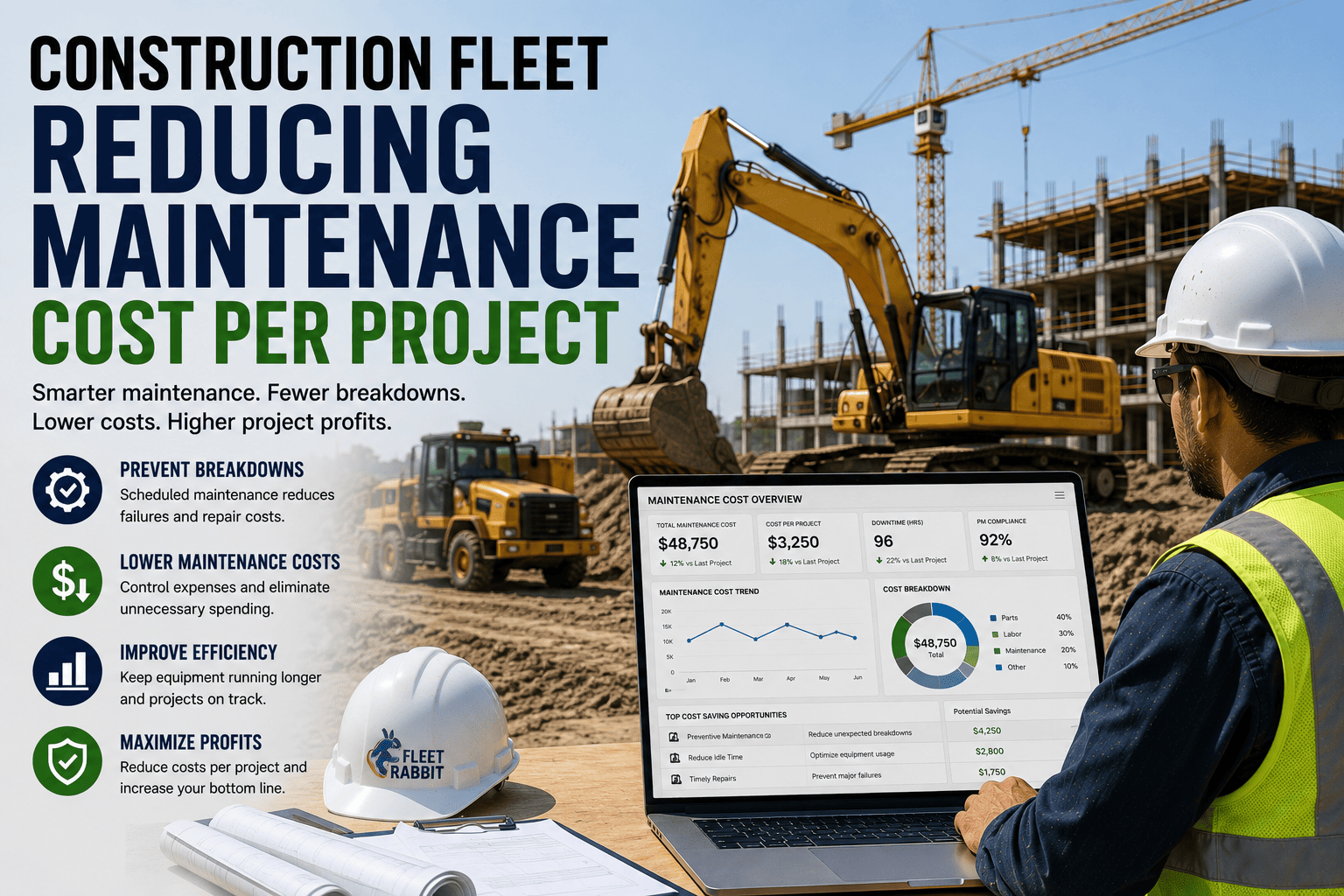
Excavators are the machines that set the pace on every job site. A single mid-size unit represents an investment north of $300,000, racks up engine hours faster than almost any other asset in the fleet, and when it goes down, the whole dig schedule goes down with it. Yet most contractors still run maintenance on a calendar instead of on the machine's actual hour meter, which means low-use units get serviced too often while hard-working units quietly head toward a breakdown nobody saw coming.
Excavator fleet management works best when maintenance is triggered by engine hours instead of calendar dates, hydraulic fluid is sampled every 500 hours, and undercarriage wear is inspected weekly since it drives roughly 50 percent of total operating cost. Hydraulic failures cause 45 percent of excavator breakdowns industry-wide, and 75 percent of those failures trace back to contaminated fluid that routine sampling would have caught. Sign up for FleetRabbit to move every excavator in your fleet onto hour-based scheduling automatically.
Why Excavators Need a Different Playbook
An excavator is not a delivery van that returns to the same depot every night on the same route. It moves between sites, sits idle for weeks between projects, then runs three ten-hour shifts back to back when a job window opens. Treating that machine the same way you'd treat a light vehicle is exactly how developing hydraulic and undercarriage problems stay invisible until they become five-figure repair bills.
Hours, Not Calendar Days
A machine running ten-hour shifts on a busy earthworks job accumulates wear three times faster than the same excavator on a quiet site. Service intervals tied to the hour meter, not the date, match maintenance to actual wear.
Hydraulics Drive Failure Risk
Hydraulic system deterioration is behind 45 percent of excavator breakdowns, and contaminated fluid is responsible for roughly three out of every four of those failures. Fluid discipline is the single biggest lever a fleet manager has.
Undercarriage Is Half the Cost
Tracks, rollers, idlers, and sprockets account for about half of an excavator's lifetime operating cost. A weekly walkaround catches wear patterns long before a mid-project track failure does.
What Skipping a Service Interval Actually Costs
A $50 filter left unreplaced can be the difference between a routine service and a $5,000 component failure. Multiply that logic across a fleet and the numbers stop being small. Fleet managers who move from reactive to hour-based, data-driven maintenance have documented a 45 percent reduction in total excavator maintenance spend, a 73 percent drop in hydraulic failures, and an 18 percent extension in average equipment life. That is the gap between managing excavators and simply reacting to them, and it is exactly the gap FleetRabbit is built to close — book a demo and we'll walk through what that gap looks like for your fleet size.
Stop Guessing When Your Excavators Need Service
FleetRabbit pulls engine hours straight from telematics and turns them into OEM-aligned service triggers for every excavator in your fleet, so nothing gets serviced too early or too late.
The Hour-Based Service Timeline
Manufacturers publish service intervals for a reason. The intervals below reflect the industry-standard pattern used across Cat, Komatsu, Deere, and Volvo excavators, adjusted for typical operating severity.
Basic Service
Engine oil and filter change, air filter inspection, hydraulic filter check.
Extended Inspection
Full 250-hour service plus oil analysis sampling and wear-part inspection.
Complete Servicing
Undercarriage wear check, electrical system evaluation, hydraulic optimization.
Major Overhaul Review
Component-level assessment to decide between rebuild and replacement.
Repair vs. Replace: A Simple Rule of Thumb
When a major component needs attention, the decision usually comes down to one number: if the repair cost exceeds 60 percent of replacement cost, or the component is likely to fail again within 2,000 hours, replacement is the more economical path. The table below shows why getting ahead of these failures matters so much.
| Component | Preventable Failure Signal | Cost If It Fails |
|---|---|---|
| Hydraulic Pump | Low fluid, visible leaks, seal wear | $25,000 – $55,000 |
| Engine | Skipped oil changes, contamination | $45,000 – $125,000 |
| Undercarriage | Excessive track sag, sprocket wear | $35,000 – $85,000 |
| Hydraulic System (incident avg.) | Contaminated fluid, missed sampling | ~$38,000 per incident |
Five Best Practices That Separate Reliable Fleets From Reactive Ones
Run a 15-Minute Daily Walkaround
Undercarriage condition, hydraulic hoses, bucket teeth, and fluid levels take fifteen to twenty minutes to check and can prevent thousands in emergency repairs. This single habit catches roughly 80 percent of the issues that otherwise turn into $15,000 to $85,000 emergency bills.
Sample Oil Every 500 Hours, Without Exception
Oil analysis is the earliest warning system a fleet has. Trend data on wear metals and contamination lets a maintenance team schedule a rebuild on its own terms instead of on the machine's terms.
Inspect the Undercarriage Weekly
Since undercarriage components make up about half of lifetime operating cost, a weekly check of track tension, rollers, idlers, and sprockets protects the single biggest cost center in the machine.
Trigger Service by Engine Hours, Not the Calendar
A machine that logged 40 hours this month and one that logged 240 hours should never be on the identical service date. Hour-based triggers, ideally pulled automatically from telematics, remove the guesswork entirely.
Keep Every Record in One Digital System
Paper logs and scattered spreadsheets make it nearly impossible to spot patterns across a fleet. A centralized digital record turns maintenance history into a forecasting tool instead of an archive.
Where Technology Actually Pays For Itself
Telematics and predictive maintenance platforms typically cost between $3,000 and $8,000 per machine to implement, and fleets running them report 300 to 500 percent ROI through reduced downtime and prevented failures alone. On a fleet of even a dozen excavators, that gap between cost and return is the difference between maintenance being a line-item expense and maintenance being one of the highest-return decisions a fleet manager makes all year.
How FleetRabbit Fits Into Your Excavator Program
FleetRabbit reads engine hours directly from your existing telematics and converts them into OEM-aligned service triggers for every excavator in your fleet, so nobody has to remember which machine is due and when. Oil analysis results get logged against each machine's history automatically, so a slow upward trend in wear metals shows up as an alert weeks before it would show up as a breakdown. Undercarriage inspections move onto a digital checklist with photo evidence, which means the person doing the weekly walkaround and the person planning next quarter's budget are finally looking at the same data. Start a free trial and connect your first excavator in minutes, or book a demo if you'd rather walk through your fleet's specific setup with our team first.
Frequently Asked Questions
Give Your Excavators The Maintenance Program They're Missing
Fleets that switch to hour-based PM and systematic oil analysis cut total maintenance cost by up to 45 percent. See what that looks like for your machines.