Picture this scene, because it plays out on job sites every week. An excavator sits mostly idle on a commercial build across town while a crew on your active site just approved a rental request for the exact same machine. Nobody did anything wrong. The site manager needed equipment and the fastest path was calling a rental yard. But that single decision just cost the company twice: once in idle time on the asset already sitting unused, and again in a rental invoice that didn't need to exist. For enterprise construction fleets managing equipment across multiple sites, this is not a rare mistake. It is the default outcome of not knowing where your own machines are.
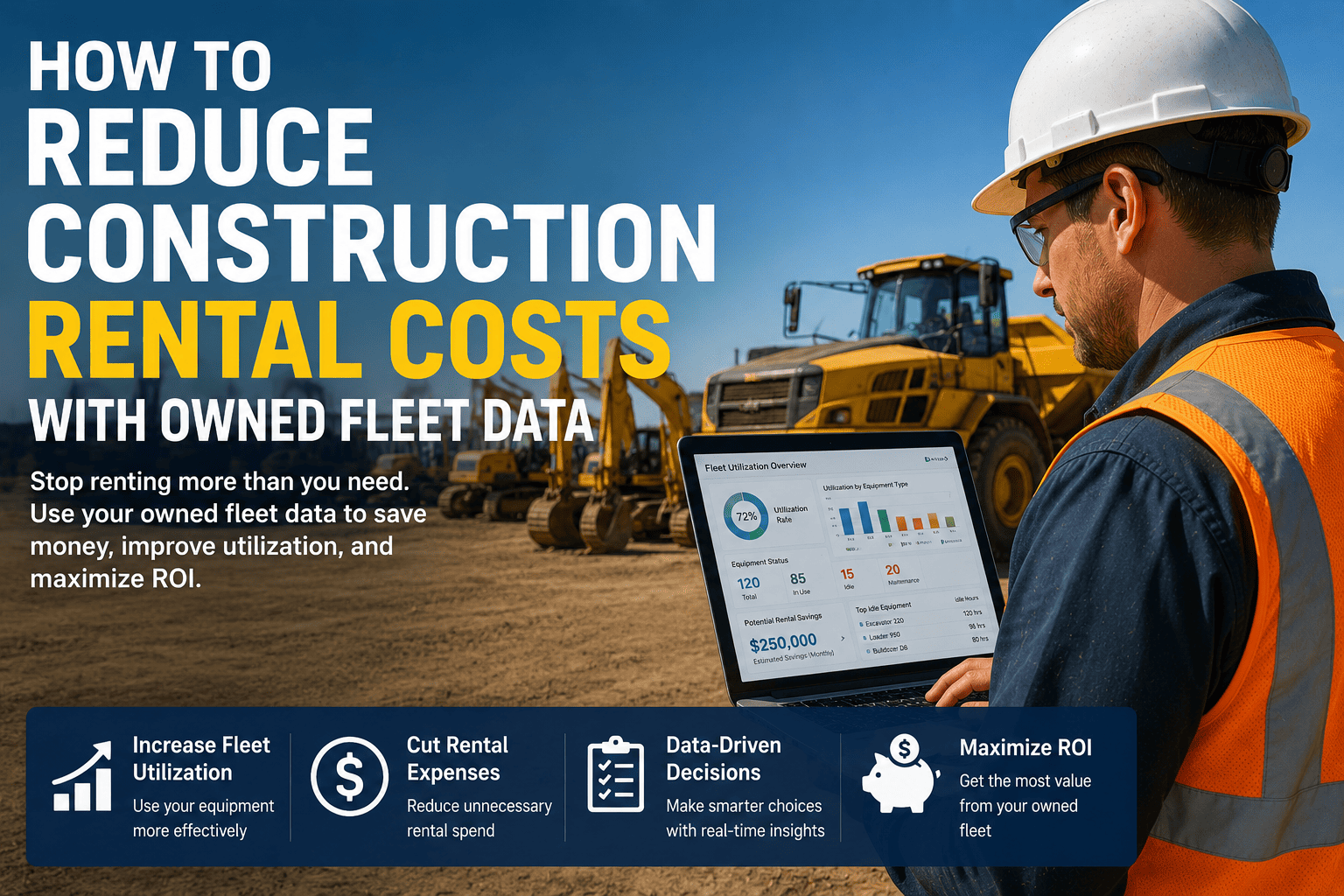
Contractors reduce rental costs by tracking real-time utilization across every job site and redeploying owned equipment before a rental request gets approved. Fleets using cross-site utilization data commonly raise time utilization from 60 to 65 percent up to 75 to 80 percent, and a fleet carrying just a few rental units at $1,200 to $2,400 a day can eliminate $150,000 or more in annual rental spend by redeploying owned assets that are already sitting idle.
The Hidden Cost Hiding In Plain Sight
When you are managing equipment across five job sites, the problem usually isn't that you don't have enough assets. It's that you don't know where they are, what they're doing, or whether they're working at all. Poor asset visibility is the root cause of nearly every unnecessary rental. Without a single source of truth for equipment location and status, fleet managers depend on phone calls, spreadsheets, or intuition, and by the time anyone discovers that three units on one site are idle while another site just approved a rental, the cost has already hit the books.
What Cross-Site Utilization Data Changes
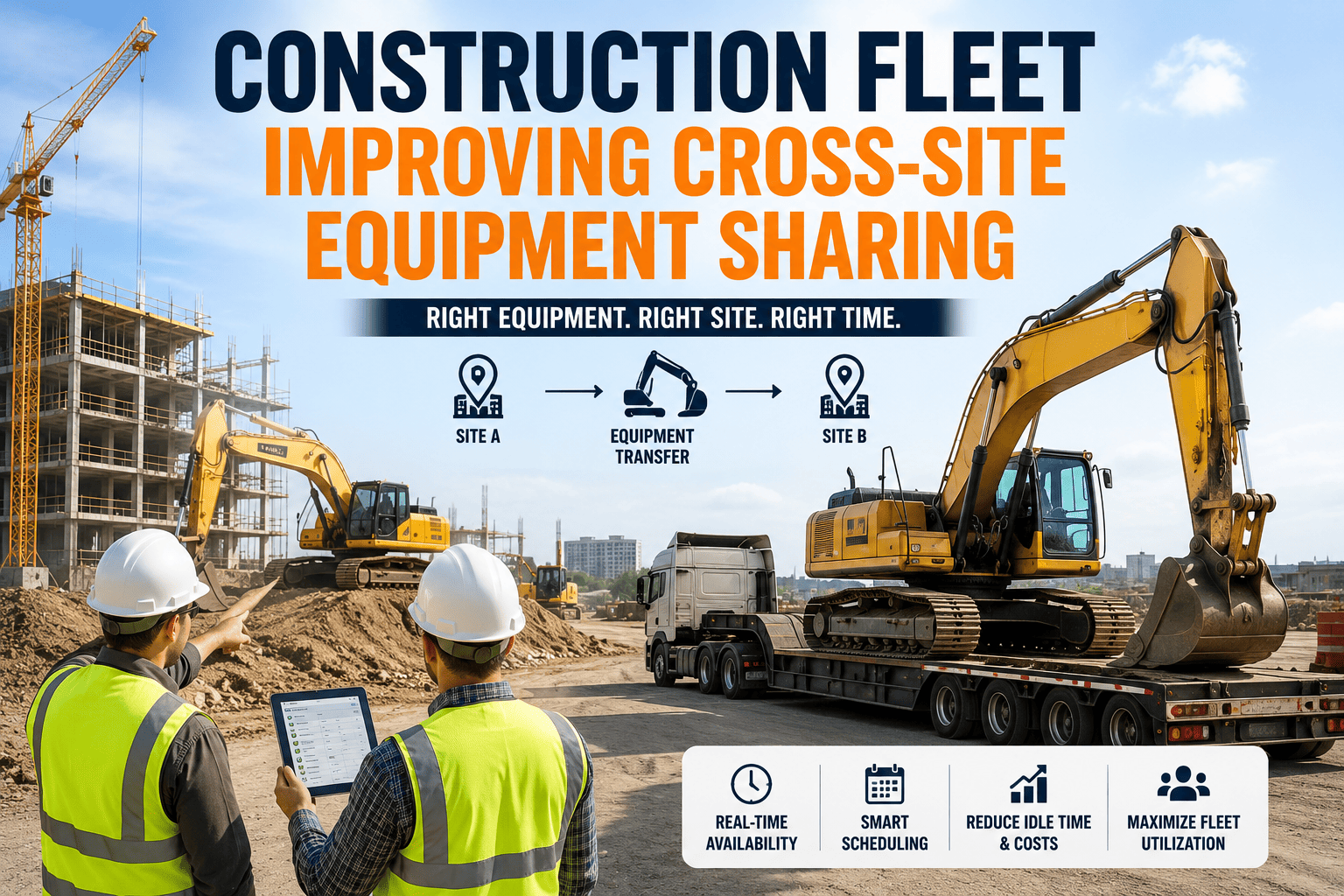
The biggest utilization win available to multi-site fleets is also one of the least used: systematically redeploying underutilized assets from low-demand sites to high-demand ones before a rental request ever gets approved. This requires two things working together. First, real-time visibility into which assets are idle and exactly where they are located. Second, a centralized process that gives someone the authority and the information to move assets across projects proactively, instead of waiting for a site to ask for a rental.
The Math Behind Redeployment
An asset sitting at 40 to 55 percent utilization on one site can often cover the need that would otherwise trigger a rental at another. A fleet carrying five rental excavators at 4,500 dollars a month each is spending 22,500 dollars monthly on rentals, while owned excavators nearby are averaging under 50 percent utilization. Redeploying those owned units instead of renewing rental contracts commonly eliminates 150,000 dollars or more in annual rental spend.
Why the challenge is organizational, not technical
The math here is straightforward once the data exists. The real barrier most fleets face is not technology, it is that nobody has both the visibility and the authority to act on it before a rental gets approved. Closing that gap is what turns utilization data into actual savings.
FleetRabbit's utilization tracking flags machines running below 40 percent productive hours on one site while a nearby project is paying rental rates for the same equipment class. Start your free trial and see your cross-site redeployment opportunities today.
Reading Your Own Utilization Numbers
Utilization data is the most honest input into fleet composition decisions available to a contractor. Most equipment classes should target 65 to 75 percent time utilization. Numbers outside that range point directly to an action.
| Utilization Level | What It Signals | Recommended Action |
|---|---|---|
| Below 40% | Chronically underutilized, likely a ghost asset | Redeploy immediately or flag for disposal |
| 40% to 60% | Underused but recoverable with redeployment | Prioritize for cross-site reassignment before renting |
| 65% to 75% | Healthy, productive utilization | Maintain current deployment and monitoring |
| Above 85% | Fleet is likely under-equipped for demand | Evaluate acquisition or planned rental for peak periods |
Building A Redeployment Workflow That Actually Works
Knowing your utilization numbers is only half the equation. The fleets that actually cut rental spend build a repeatable process around the data instead of reviewing it occasionally.
Centralize Scheduling Instead Of Per-Site Requests
Enterprise fleets need centralized scheduling, not per-site hoarding. When a site manager needs equipment, the request should first check availability across every active project before a rental gets approved, not after.
Set Redeployment Triggers, Not Just Reports
A dashboard that nobody checks is just another report. The fleets seeing the biggest rental reductions set automatic alerts when a machine's utilization drops below a threshold on one site while a similar asset class is being requested elsewhere, so redeployment becomes the default response instead of an afterthought.
What healthy redeployment looks like in practice
Data-driven redeployment decisions commonly raise fleet utilization from the 60 to 65 percent range up to 75 to 80 percent, while also surfacing $200,000 or more in annual savings from selling or retiring machines that are chronically underutilized across every site they've touched.
How FleetRabbit Turns Utilization Data Into Rental Savings
FleetRabbit's fleet dashboard tracks engine hours, location, and productive time for every owned asset across every job site in one place, so a machine sitting idle on one project is never invisible to the site requesting a rental for the same equipment class. Cross-site reallocation recommendations surface automatically, flagging owned equipment that can cover a rental need before the request gets approved, and chronically underutilized machines get flagged for disposal or resale instead of quietly draining insurance and storage costs. To see exactly how much rental spend your fleet could eliminate with better cross-site visibility, you can book a free demo with the FleetRabbit team.
Frequently Asked Questions
The contractors winning in 2026 are not the ones with the biggest fleets. They are the ones whose fleets match their actual work, and that starts with knowing what every owned machine is doing on every site, every day. Rental spend is not always a sign you need more equipment. Often it is a sign that the equipment you already own is sitting somewhere nobody thought to look.
FleetRabbit gives you real-time utilization across every job site, so idle equipment gets redeployed before a rental request ever gets approved. Start your free trial with no credit card required, or book a short demo to see your redeployment opportunities.