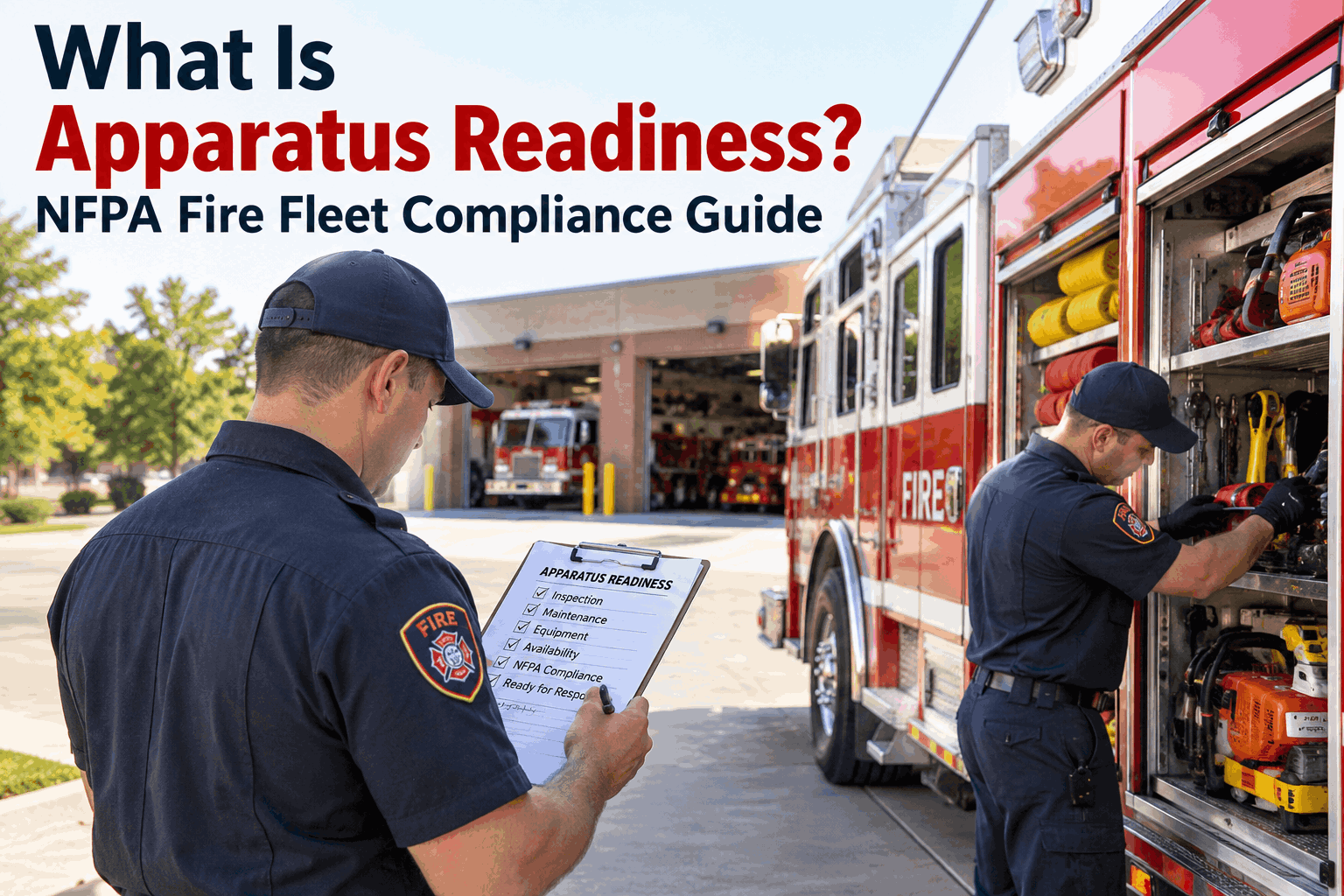
In municipal fire suppression, wildland-urban interface defense, and countywide emergency medical response, apparatus readiness represents the total operational, structural, and mechanical capability of an emergency vehicle to respond instantaneously without mechanical delay. Fire apparatus—including front-line triple-combination pumpers, aerial ladder platforms, heavy rescues, and water tenders—endure extreme duty cycles consisting of cold high-idle starts, full-throttle emergency responses over rough terrain, and hours of continuous stationary hydraulic pumping under maximum thermal strain. When fire departments rely on whiteboard status tallies, grease-stained paper shift sheets, or generic city vehicle spreadsheets, apparatus readiness degrades undetected. A subtle primary air system leak, an uncalibrated pressure relief governor, or an unresolved check-engine diagnostic trouble code can turn a routine structure fire call into a catastrophic scene failure. Adhering to national standards under NFPA 1900 and NFPA 1911 transforms readiness from subjective guesswork into an auditable, quantifiable metric through digital daily company walkarounds, automated EVT work order escalation, and real-time dispatch availability tracking. To evaluate how digital emergency operations intelligence maximizes station readiness, book a live technical demonstration with our emergency fleet specialists or initialize your battalion roster immediately through our free platform sign up.
What Is Apparatus Readiness? NFPA Fire Fleet Compliance Guide
The definitive emergency vehicle operational readiness blueprint for fire chiefs, battalion officers, and emergency vehicle technicians (EVTs). Quantify mission availability, enforce shift inspection discipline, automate hydraulic pump curve evaluations, and maintain audit-defensible ISO PPC records.
Achieve Total Apparatus Availability and Auditable NFPA Compliance
Eliminate paper logbooks, automate daily shift apparatus walkarounds, track certified annual pump and aerial tests, and enforce objective out-of-service decision gating starting from $3/vehicle/month with no hardware lock-in.
The Core Engineering Dimensions of Emergency Apparatus Readiness
Apparatus readiness is not a simple checklist verification; it is a complex engineering state composed of five interrelated mechanical and operational subsystems. When an engine company receives a dispatch for a working commercial fire, every component—from the high-torque diesel powertrain to the centrifugal fire pump and electronic pressure governors—must function synchronously under extreme conditions. A failure in any single subsystem compromises firefighter safety and halts fireground operations. If an engine company rolls out of the station with minor air brake leakage that exceeds NFPA thresholds, air pressure may deplete while powering pneumatic tools on scene, locking the chassis brakes in traffic and preventing quick repositioning. True apparatus readiness requires continuous monitoring across mechanical roadworthiness, hydraulic fire suppression performance, tactical tool staging, electrical system stability, and structural integrity. Emergency service directors can review automated subsystem monitoring by scheduling an interactive apparatus telemetry consultation demo or configure custom battalion checklists directly through our quick platform sign up.
Chassis Mechanical Roadworthiness
Tracks steering system drag links, kingpins, driveline universal joints, suspension spring leaves, and pneumatic air brake stroke clearances. Enforces strict zero-tolerance parameters: air reservoir leakage must not exceed 3 PSI per minute with service brakes applied.
Hydraulic Fire Pump & Plumbing Performance
Monitors midship centrifugal pump transmission engagement, mechanical packing gland drip rates, primer oil levels, tank-to-pump valve flow rates, and electronic pressure relief valve responsiveness across single-stage and two-stage pump architectures.
Aerial & Structural Device Integrity
Validates hydraulic outrigger deployment interlocks, rotation turntable gear bearing play, hydraulic cylinder drift tolerances, ladder section extension cables, and structural non-destructive testing (NDT) certification records for steel and aluminum aerials.
Electrical, Telematics & Optical Systems
Audits dual high-output alternator charging balancing, shoreline auto-eject switches, battery parasitic draw during station dwell, high-visibility NFPA optical warning zones (Zone A, B, C, D), and audible sirens to guarantee emergency scene safety.
Direct Technical Matrix: Manual Paper Station Logs vs. FleetRabbit Readiness Software
Operating a municipal fire rescue fleet with physical logbooks, paper apparatus clipboards, and magnetic station status boards leaves public safety agencies exposed to dangerous mechanical blind spots. A handwritten defect note indicating a stiff discharge valve or dragging brake shoe often sits unnoticed inside a cab pocket until catastrophic failure occurs on the fireground. Review how traditional station logging compares directly against FleetRabbit's automated emergency apparatus readiness software across primary public safety performance criteria. Fire chiefs and fleet managers can evaluate custom defect triage tools by arranging an executive emergency software evaluation demo or explore our mobile station inspection workflows via our self-service sign up.
| Apparatus Readiness Dimension | Paper Clipboards & Manual Station Logs | FleetRabbit Emergency Fleet Engine | Department & Public Safety Advantage |
|---|---|---|---|
| Out-of-Service Decision Protocol | Subjective officer discretion; defects run unaddressed | Automated dispatch lockout on critical mechanical faults | Zero compromised emergency vehicles respond to calls |
| Shift Walkaround Verification | Pencil-whipping common; unverified signatures | Mobile photo-enforced eDVIR walkaround checkpoints | 100% indisputable accountability for driver-engineers |
| Annual Pump & Aerial Test Math | Manual calculations plotted on paper pitot charts | Automated net pump pressure curves & slip calculation | Guarantees maximum ISO PPC credit without audit errors |
| Apparatus Telematics Ingestion | Manual odometer logging during weekly apparatus checks | Real-time J1939 CAN-bus engine hours, DPF, & DTC tracking | Triggers preventative work orders prior to scene failure |
| Certified EVT Sign-Off Chain | Disconnected paper work orders stored in shop binders | Cryptographic digital sign-offs on glass linked to DQ files | Comprehensive legal defensibility during accident audits |
4-Stage Apparatus Readiness Operational Cycle
FleetRabbit standardizes emergency vehicle readiness into an automated, four-stage lifecycle that connects daily morning company checks to certified emergency vehicle technician repairs and long-term capital replacement planning. To explore how this automated cycle keeps your front-line pumpers and ladders in service, book an apparatus readiness walkthrough demo with our public safety team.
Morning Company Inspection (eDVIR)
Incoming driver-engineers complete a guided mobile walkaround, verifying chassis fluids, SCBA brackets, emergency warning lights, primer oil reservoirs, and air brake pressure recovery times.
Objective Defect Triage & Gating
If an inspection reveals a critical safety violation (e.g., an inoperative hydraulic outrigger interlock), the system flags the apparatus as Out of Service and alerts the dispatch CAD board immediately.
Certified EVT Maintenance & Repair
Certified Emergency Vehicle Technicians receive digital work orders with attached walkaround photos, pull parts from digital inventory, execute repairs, and certify mechanical roadworthiness.
Return to Service & ISO Audit Sync
The completed repair certifies the apparatus, clears dispatch lockout status, logs true lifecycle maintenance expenses, and updates the agency's annual ISO PPC fire suppression rating file.
Financial Capital Stewardship: Eliminating Emergency Fleet Budget Drains
Operating an emergency apparatus fleet without connected maintenance software creates compounding operational losses across catastrophic engine failures, unbudgeted overtime for third-party mobile technicians, and premature apparatus retirement. When a municipal pumper or heavy rescue suffers a major mechanical breakdown during an emergency call, the city faces massive towing charges, reserve apparatus rental costs, and severe municipal liability. Analyzing these common operational drains helps fire chiefs and municipal budget directors defend fleet technology appropriations before city councils. Calculate your department's exact cost recovery by booking an apparatus budget assessment demo or get started directly via our rapid platform sign up.
Top Causes of Municipal Emergency Fleet Budget Overruns
Emergency Fleet Engineering Capabilities
Calculates net pump pressure, flow rates, slip tests, and priming curves automatically according to national emergency standards.
Maintains an auditable archive of ultrasonic inspections, magnetic particle tests, and hydraulic drift records for ladder trucks.
Operates seamlessly across standard mobile tablets and connects to open J1939 telematics gateways without expensive vendor lock-in.
ROI & Public Safety Stewardship for Municipal Leadership
When city managers and fire chiefs evaluate emergency fleet software, elected officials must measure financial return across vehicle longevity, risk mitigation, community insurance ratings, and grant funding success. FleetRabbit delivers quantifiable financial return across all primary emergency fleet operating categories. To review your customized apparatus life-cycle forecasting model, schedule an executive public safety briefing demo with our team or start configuring your fire apparatus profiles today with a free account.
Extended Apparatus Service Life
Rigorous preventative maintenance and proactive oil sampling extend the operational front-line service life of structural engines and aerial trucks beyond 15 years, delaying multi-million-dollar capital bond referendums.
ISO PPC Credit Maximization
Maintaining complete, verifiable maintenance and annual service testing records secures maximum credits under the ISO Fire Suppression Rating Schedule, helping lower commercial insurance rates citywide.
Risk & Liability Mitigation
Automated out-of-service gating and EVT digital certifications ensure no compromised vehicle rolls on an emergency response, shielding city leadership from costly post-collision liability lawsuits.
Frequently Asked Questions: Fire Apparatus Readiness and Compliance
What is apparatus readiness in the context of fire department fleet management?
Apparatus readiness is the quantifiable measure of an emergency vehicle's mechanical, structural, and operational fitness to respond to emergency incidents safely and effectively. It encompasses daily vehicle walkaround inspections, certified annual pump performance tests, aerial structural non-destructive testing, and strict compliance with national emergency vehicle out-of-service criteria.
What are the mandatory out-of-service criteria for fire apparatus?
National emergency vehicle standards define non-negotiable out-of-service criteria. An apparatus must be removed from emergency service immediately if it exhibits critical defects such as service air brake leakage exceeding 3 PSI per minute, steering wheel lash exceeding acceptable tolerances, inoperative windshield wipers during inclement weather, hydraulic outrigger interlock failures, or gross fluid leaks in steering or braking systems.
How does apparatus readiness software simplify annual fire pump testing?
During annual pump service testing, technicians enter observed engine RPMs, pump discharge pressures, intake vacuum readings, and nozzle pitot pressures. The software automatically applies atmospheric correction formulas, computes total net pump pressure, and graphs flow curves against OEM rated capacity, identifying pump impeller wear or transmission slippage instantly.
How does maintaining apparatus readiness improve a city's ISO PPC rating?
The Insurance Services Office (ISO) evaluates fire department apparatus maintenance under the Fire Suppression Rating Schedule (FSRS). Agencies must document that pumpers receive certified annual service tests, that aerial devices undergo structural non-destructive testing, and that daily vehicle checks occur consistently. FleetRabbit generates pre-formatted ISO audit dossiers in minutes, ensuring departments receive maximum credit points.
Upgrade Your Department's Emergency Fleet Management Today
Eliminate paper logbooks, automate certified annual pump testing, enforce out-of-service safety gating, and protect frontline firefighters on every call. Deploy FleetRabbit today with zero proprietary hardware lock-in.
Share This Story, Choose Your Platform!
From our blog

What Is Fleet Chargeback? Municipal Fleet Cost Guide 2026

What Is a Government Motor Pool? Fleet Management Guide

What Is NFPA 1911? Fire Apparatus Readiness & Compliance

FTA-Compliant CMMS for Transit: Funding, ROI & Costs

Sanitation Fleet Management Software | Government Guide

SMS Delivery Notification Integration for Fleet Software

OMS Integration Software for Delivery Fleet Management