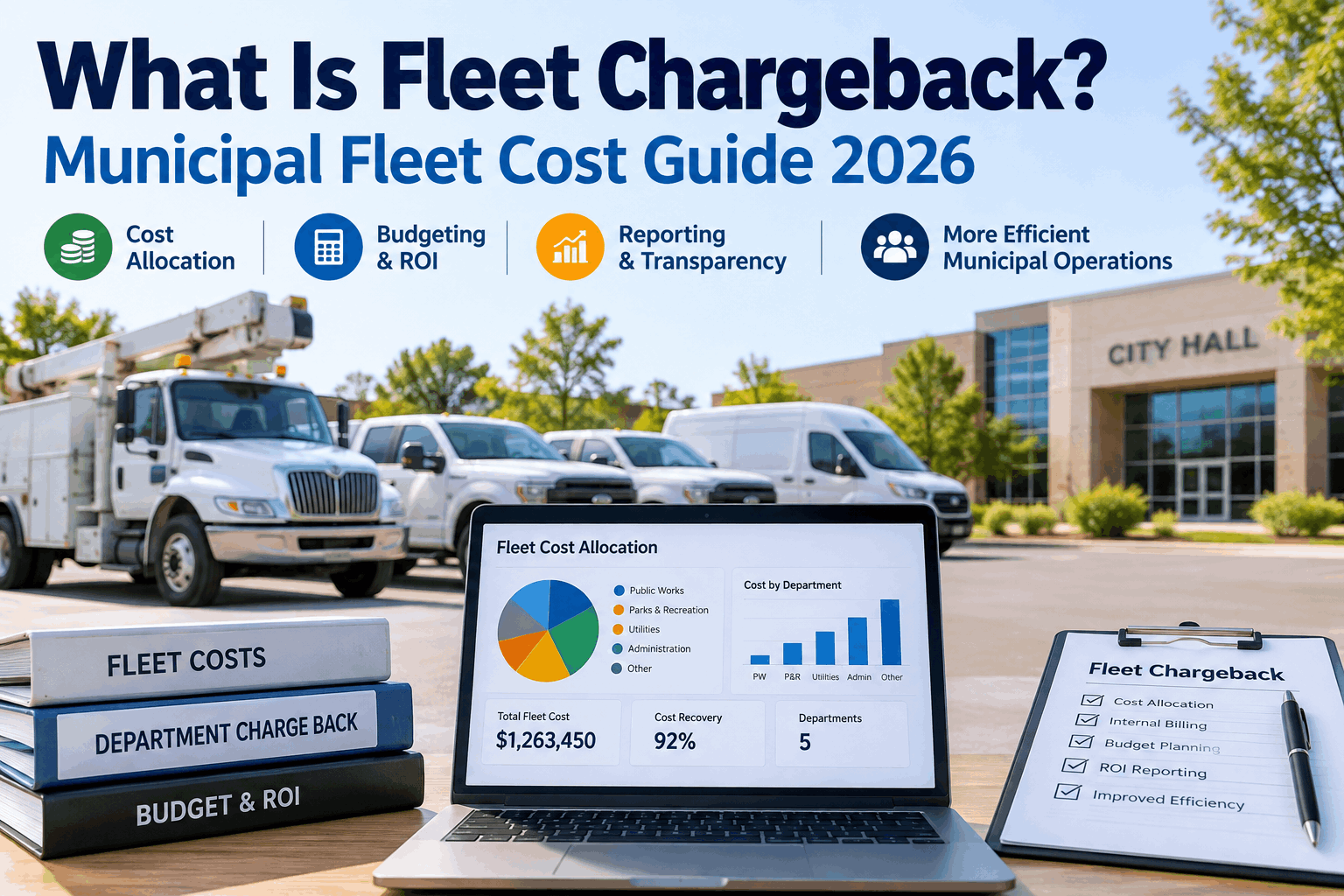
Municipal administrations, county boards of commissioners, and state public works agencies operate within tight public budgeting limits where fleet services must demonstrate complete financial transparency. In government fleet administration, a fleet chargeback system is an internal financial accounting framework that bills operating departments (such as Police, Fire, Water Resources, Parks and Recreation, and Code Enforcement) for the exact capital ownership, maintenance labor, replacement parts, and fuel expenses incurred by the vehicles and heavy machinery assigned to their operational control. When municipal fleet divisions operate merely as overhead cost centers without an automated chargeback structure, using departments treat vehicles as "free" municipal goods, leading to fleet bloating, uncontrolled vehicle idling, and endless inter-departmental budget disputes during annual general fund hearings. Implementing an automated internal service fund (ISF) chargeback platform replaces manual spreadsheets with sub-second general ledger journal entries, calculating composite fixed and variable rates backed by live telematics, mechanic wrench-time logs, and automated fuel island transactions. To explore how an automated chargeback engine establishes full cost recovery and right-sizes municipal capital reserves, book an executive financial demonstration with our municipal fleet specialists or configure your city's vehicle billing rates directly through our free platform sign up.
What Is Fleet Chargeback? Municipal Fleet Cost Guide 2026
An executive municipal finance and fleet operations guide for city managers, finance directors, and fleet superintendents. Master internal rate-setting formulas, full cost recovery modeling, automated ERP journal sync, and multi-fund taxpayer accountability.
Establish Full Municipal Cost Recovery with Automated Fleet Chargebacks
Eliminate departmental vehicle hoarding, fund your future capital equipment replacement reserves automatically, and export audit-ready general ledger journal entries starting from $3/vehicle/month with no hardware lock-in.
The Economics of Municipal Fleet Chargeback: General Fund vs. Internal Service Fund
In municipal governance, how a city structures its fleet accounting determines whether public taxpayer assets are conserved or squandered. Historically, cities operated fleets as centralized "General Fund" overhead line items: the garage paid for all fuel, parts, tires, and vehicle capital acquisitions out of a single municipal budget. Under this legacy model, using departments face zero financial consequence for requesting surplus pickup trucks, ignoring engine idling warnings, or running vehicles hard, knowing the fleet department pays the bill. A municipal fleet chargeback system transitions the fleet division into a self-sustaining Internal Service Fund (ISF). Under an ISF chargeback model, the fleet department acts as an internal rental and maintenance contractor, billing the exact cost of owning and operating each asset back to the specific department utilizing it. This financial transparency forces department heads to weigh operational necessity against real line-item budget constraints. When departments must pay for every vehicle on their roster, unneeded trucks are swiftly returned, municipal mileage drops, and capital equipment sinking funds are systematically replenished. Finance directors can evaluate automated cost allocation models by booking an interactive municipal fleet finance demonstration or configure your city's vehicle asset profiles via our quick platform sign up.
Fixed Capital Lease & Replacement Rate (Sinking Fund)
Recovers the cost of asset acquisition, debt interest, licensing, and insurance. The formula calculates target purchase price minus projected salvage value, divided by planned months in service, establishing an untouchable escrow reserve for future zero-debt vehicle replacement.
Variable Operating Rate: Maintenance & Parts Surcharge
Charges using departments for actual wear and tear. Calculated as total direct technician labor hours (fully burdened with benefits and overhead) plus actual replacement parts, commercial sublet invoices, and preventative maintenance fluids consumed.
Direct Fuel & Kilowatt-Hour (kWh) Consumption Surcharge
Directly ties fuel and EV charging costs to department ledgers. Reconciles municipal automated fuel island ring transactions, commercial fleet card receipts, and depot EV charger telemetry directly to vehicle CAN-bus fuel volume records.
Administrative Overhead & Shop Tooling Recovery
Ensures that garage facility heating, shop equipment depreciation, software licensing, and administrative salary overhead are distributed fairly. Calculated as an equitable percentage mark-up on total direct maintenance billing.
Direct Technical Matrix: Manual Spreadsheet Billing vs. FleetRabbit Automated Chargebacks
Many local governments attempt to calculate fleet chargebacks using disconnected desktop spreadsheets, manual mechanic timesheets, and fuel pump paper receipts. This creates accounting friction: finance teams take weeks to reconcile monthly statements, department directors dispute maintenance markups, and cross-fund transfers violate grant compliance guidelines. Review how legacy manual spreadsheets compare directly against FleetRabbit's automated, telematics-driven municipal chargeback platform. City finance leaders and public works directors can explore automated rate modeling by scheduling an executive municipal fleet software demo or explore our pre-configured municipal accounting templates via our self-service sign up.
| Fleet Accounting Dimension | Manual Excel Spreadsheets & Paper Invoices | FleetRabbit Automated Chargeback Engine | Municipal Taxpayer Advantage |
|---|---|---|---|
| Cost Allocation Timeliness | Reconciled 30 to 60 days late; frequent accounting backlogs | Sub-second real-time transaction ledger capture | Empowers department heads to manage live budgets |
| Mileage & Engine-Hour Capture | Manual driver logbooks; prone to clerical errors | Automated J1939 CAN-bus telemetry polling | 100% indisputable usage billing based on true wear |
| Capital Replacement Sinking Fund | Drained during municipal budget shortfalls; debt-funded | Automated segregated escrow tracking per asset | Eliminates emergency municipal bond debt referendums |
| Municipal ERP Integration | Manual double-entry into city accounting software | Automated general ledger API export (Tyler Munis, SAP) | Saves 40+ administrative finance hours every month |
| Federal & State Grant Compliance | Risk of commingling funds; audit findings common | Restricted fund tracing compliant with 2 CFR 200 | Protects state highway aid and federal transit grants |
4-Stage Municipal Chargeback Workflow: From Garage Wrench to General Ledger
FleetRabbit standardizes public sector fleet billing into an automated, four-stage operational sequence that tracks vehicle activity from the moment a technician turns a wrench to the final journal entry posted in the city general ledger. To explore how this automated workflow simplifies public accounting, book a live walkthrough demo with our municipal fleet engineering team.
Usage & Telemetry Data Ingestion
Telematics gateways capture daily vehicle distance, auxiliary PTO engine hours, and fuel consumption, while garage technicians log digital work orders, replacement parts, and labor hours on mobile tablets.
Dynamic Rate Calculation & Markup
The system applies pre-configured municipal rate schedules: adding monthly capital depreciation, variable per-mile maintenance costs, exact fuel charges, and administrative overhead fees automatically.
Departmental Statement Review & Audit
Department heads receive automated digital monthly billing statements detailing every vehicle transaction, work order photo, and fuel receipt, providing total transparency and eliminating billing disputes.
Automated ERP General Ledger Journal Sync
Approved monthly chargeback batches export directly into municipal accounting software (Tyler Munis, Workday, SAP), executing balanced debits to departmental cost centers and credits to the fleet ISF fund.
Financial Capital Stewardship: Eliminating the True Cost of Unallocated Fleet Expenses
Operating a municipal fleet without an automated chargeback system creates compounding financial losses across untracked vehicle hoarding, premature vehicle replacement, and unrecovered garage overhead. When departments are not held accountable for vehicle costs, fleet divisions bleed thousands annually in unallocated labor and maintenance expenses. Identifying these common operational drains helps fleet superintendents and finance directors build an airtight business case for automated chargeback software before city managers and county commissioners. Calculate your municipality's exact cost recovery by booking an operational budget assessment demo or get started directly via our rapid platform sign up.
Top Causes of Municipal Fleet Budget Waste Under Unallocated Accounting
Municipal Financial Engineering Strengths
Ensures highway aid funds, stormwater enterprise funds, and general funds remain strictly separated according to municipal legal standards.
Diverts fixed monthly capital fees into dedicated, interest-bearing replacement accounts to fund future zero-debt vehicle procurement.
Ingests usage telemetry from existing telematics gateways, fuel island terminals, or manual technician work orders with zero vendor lock-in.
ROI & Capital Stewardship Framework for Municipal Finance Leaders
When municipal leadership evaluates internal service fund chargeback technology, elected officials must measure financial return across capital reserve solvency, operational efficiency, fleet right-sizing, and inter-departmental equity. FleetRabbit delivers quantifiable financial return across all primary public sector fleet accounting categories. To review your customized municipal cost recovery model, schedule an executive briefing demo with our public finance team or start modernizing your municipal fleet chargeback engine today with a free account.
Sinking Fund Capital Solvency
Consistently collecting monthly capital replacement charges ensures future vehicle replacements are fully funded in cash, avoiding municipal bond interest fees that inflate vehicle costs by 30%.
Right-Sizing Surplus Reduction
When operating departments must pay direct monthly line-item charges for every vehicle on their roster, department directors willingly surrender underutilized trucks, shrinking fleet size by up to 20%.
Clerical Billing Automation
Automating journal entry calculations, maintenance billings, and fuel reconciliation eliminates weeks of manual data entry for municipal finance and fleet administrative clerks.
Frequently Asked Questions: Municipal Fleet Chargeback and Cost Allocation
What is a municipal fleet chargeback system and how does it work?
A municipal fleet chargeback system is an internal accounting mechanism where a central fleet management division bills operating departments (Police, Parks, Public Works) for the true cost of owning, operating, and maintaining their assigned vehicles. It combines fixed monthly charges (capital depreciation, insurance, licensing) with variable usage charges (maintenance labor, parts, fuel) to achieve 100% cost recovery.
How does an Internal Service Fund (ISF) differ from General Fund fleet management?
In General Fund fleet management, all vehicle purchases, maintenance, and fuel are paid from a single overhead city account, making vehicles appear "free" to using departments. In an Internal Service Fund (ISF), the fleet operates as an internal business enterprise that must recover all operating and capital costs by billing user departments, ensuring full fiscal transparency and accountability.
How does automated chargeback software calculate replacement sinking fund rates?
The software takes the projected future replacement cost of an apparatus, subtracts estimated end-of-life auction salvage value, and divides the remaining net cost by the planned months in service (e.g., 120 months for a 10-year pumper). This fixed monthly amount is billed to the operating department and deposited into an untouchable escrow reserve for future vehicle replacement.
Can FleetRabbit export chargeback billing directly into municipal ERP accounting systems?
Yes. FleetRabbit features automated API connectors and pre-formatted general ledger export templates compatible with major municipal financial management platforms, including Tyler Technologies (Munis), SAP, Workday, Infor, and Oracle, ensuring balanced journal debits and credits with zero manual data entry.
Upgrade Your Municipal Fleet Financial Management Today
Eliminate departmental vehicle hoarding, ensure 100% cost recovery, and build fully funded capital replacement reserves for your city or county. Deploy FleetRabbit today with zero proprietary hardware lock-in.
Share This Story, Choose Your Platform!
From our blog

What Is a Government Motor Pool? Fleet Management Guide

What Is NFPA 1911? Fire Apparatus Readiness & Compliance

FTA-Compliant CMMS for Transit: Funding, ROI & Costs

Sanitation Fleet Management Software | Government Guide

SMS Delivery Notification Integration for Fleet Software

OMS Integration Software for Delivery Fleet Management

Temperature Sensor & Data Logger Integration for Cold Chain