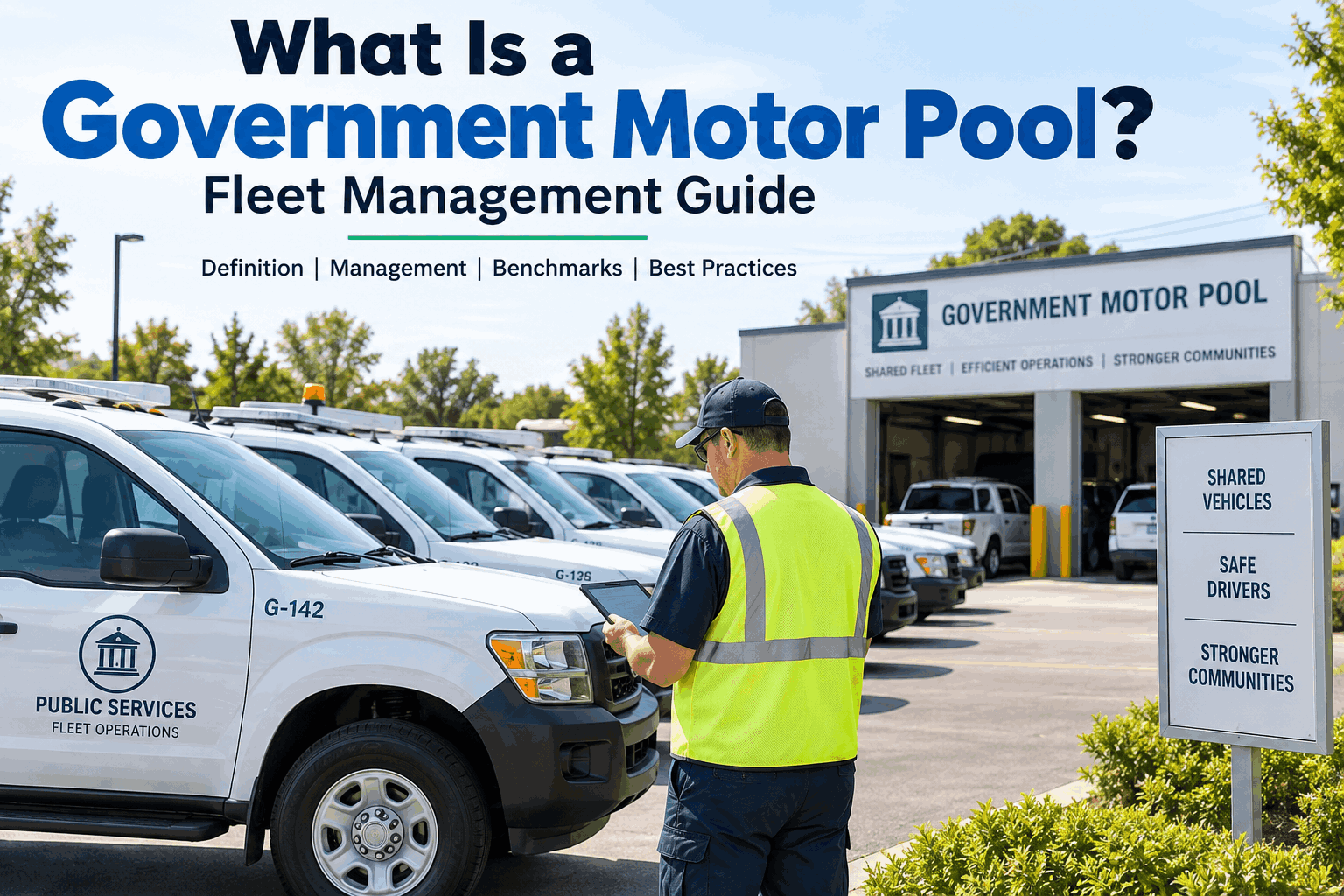
Municipal administrations, state agencies, and regional government entities manage extensive vehicle inventories that require careful fiscal discipline and auditable operational stewardship. In public sector fleet administration, a government motor pool is a centralized, shared reserve of municipal passenger sedans, light-duty work trucks, utility vans, and specialized assets available on-demand to personnel across diverse public departments. Rather than permanently assigning dedicated sedans to individual department heads or leaving utility trucks assigned to single administrative desks, a shared motor pool model pools vehicle resources under a unified dispatch and reservation structure. When government fleet managers lack digital motor pool management software, agencies fall prey to pervasive vehicle hoarding, phantom asset drift, and suppressed fleet utilization rates dropping below 35%. Relying on paper clipboards and manual vehicle sign-out logs drives up taxpayer capital outlays through unnecessary duplicate leasing, unbudgeted municipal maintenance, and contentious city council budget hearings. Modernizing your public sector fleet with an automated government motor pool management platform pairs self-service smart key kiosk integrations, mobile digital reservations, live GPS telematics, and automated inter-departmental general ledger chargebacks. To evaluate how automated motor pool optimization right-sizes your municipal fleet and protects public capital, book a tailored public sector demonstration with our government fleet specialists or begin configuring your agency motor pool inventory directly through our free platform sign up.
What Is a Government Motor Pool? Fleet Management Guide
The comprehensive operational and fiscal reference for municipal fleet directors, city managers, and public works administrators. Explore shared asset pooling architectures, empirical motor pool utilization benchmarks, automated key management, and cross-departmental cost recovery models.
Right-Size Your Municipal Vehicle Fleet and Reclaim Taxpayer Capital
Eliminate departmental vehicle hoarding, automate reservation checkouts with smart key box integration, track live motor pool utilization benchmarks, and streamline municipal general ledger chargebacks starting from $3/vehicle/month with no hardware lock-in.
Dedicated Assigned Vehicles vs. Centralized Government Motor Pools
For decades, local government authorities operated under a decentralized, permanently assigned vehicle framework. Individual departments—such as Community Development, Code Enforcement, Public Works, Parks, and Public Health—maintained independent vehicle sub-fleets purchased through separate departmental budget appropriations. Under this legacy model, vehicles sit stationary in municipal parking lots for days at a time, accumulating depreciation, battery drain, and insurance overhead while logging fewer than 3,000 miles per fiscal year. Concurrently, other municipal departments experience chronic vehicle shortages, resulting in expensive third-party rental car contracts or employee personal mileage expense reimbursements. A shared government motor pool dismantles departmental silos by transforming individual vehicles into a shared municipal resource. Centralized pooling maximizes vehicle operating hours, eliminates redundant capital asset acquisitions, and balances maintenance wear across the fleet. Public sector administrators can examine live pooling utilization analytics by scheduling an interactive public sector motor pool demo or import municipal vehicle inventories through our quick platform sign up.
Self-Service Key Management & Smart Locker Kiosks
Municipal employees reserve vehicles through a responsive web or mobile portal. Upon arrival at the yard, personnel scan their government RFID security badge at an integrated smart key cabinet. The kiosk releases the designated key in seconds while recording driver credentials, mileage, and departure time.
Inter-Departmental General Ledger (GL) Cost Recovery
Every motor pool reservation automatically calculates operational chargebacks based on hourly reservation dwell, actual distance traveled, and fuel/kWh consumption. The software exports certified financial journal entries directly into municipal ERP platforms (Tyler Munis, Workday, SAP).
Automated Vehicle Right-Sizing & Fleet Rotations
The system tracks individual asset utilization rates, highlighting chronically underutilized vehicles (logging fewer than 20 hours per month) as prime candidates for auction or reassignment. Fleet managers rotate vehicles between high-mileage and low-mileage assignments to balance wear evenly.
Digital Pre-Trip Inspections & Fuel Telematics
Before the smart key kiosk confirms reservation start, the employee completes a guided 60-second mobile walkaround, photographing existing body scratches, checking fuel levels, and verifying safety equipment. Returned vehicles with low fuel or open defects are pulled from rotation automatically.
Direct Benchmark Comparison: Assigned Fleet vs. FleetRabbit Managed Motor Pool
Operating a municipal vehicle fleet under dedicated departmental assignments creates compounding operational waste: bloated fleet sizes, untracked fuel burn, and expensive personal mileage reimbursements. Review how decentralized government fleets compare directly against FleetRabbit's automated motor pool platform across essential public sector operational benchmarks. City managers and public works directors can evaluate agency cost recovery potential by scheduling an executive municipal fleet evaluation demo or explore our vehicle reservation workflows through our self-service sign up.
| Fleet Management Dimension | Decentralized Assigned Vehicle Model | FleetRabbit Automated Motor Pool Platform | Municipal Taxpayer Advantage |
|---|---|---|---|
| Average Asset Utilization Rate | 28% - 35% (Vehicles sit idle outside administrative offices) | 70% - 82% (Assets continuously cycled across departments) | Reduces overall municipal fleet size by 20% to 30% |
| Vehicle Key & Dispatch Management | Manual clipboards, paper sign-outs, or pegboards | Automated RFID smart locker & mobile app key release | Eliminates 100% of lost keys and administrative dispatch labor |
| Internal Departmental Cost Allocation | Arbitrary budget estimates; inter-agency disputes | Sub-second billing based on actual miles, hours, & fuel | Provides audit-ready cost recovery for city finance directors |
| Preventative Maintenance Scheduling | Reactive; scheduled only when employees remember | Automated CAN-bus odometer & engine-hour triggers | Cuts catastrophic breakdown expenses by 42% |
| Employee Personal Mileage Reimbursements | High ($0.67/mile IRS payouts due to vehicle unavailability) | Near zero; shared vehicles readily available on-demand | Saves municipal general funds thousands in mileage claims |
4-Stage Shared Vehicle Reservation and Return Lifecycle
FleetRabbit standardizes public sector motor pool administration into an automated, four-stage digital workflow that guides municipal employees from initial calendar booking to post-trip general ledger reconciliation, maintaining complete fiscal transparency on every trip. To see how these automated stages simplify municipal fleet operations, book a technical walkthrough demo with our government fleet engineering team.
Mobile Scheduling & Purpose Gating
Employees reserve a vehicle through the self-service portal, selecting destination, vehicle type (sedan, hybrid, utility pickup), departmental billing code, and required travel window.
Smart Locker Key Access & Mobile eDVIR
The driver arrives at the motor pool yard, scans their municipal RFID security badge at the automated key kiosk, and conducts a 60-second mobile photo inspection before the gate unlocks.
Active Telematics & Mission Monitoring
While en route, integrated GPS telematics track vehicle location, engine diagnostics, and fuel consumption, alerting fleet administrators if the asset breaches city boundary geofences.
Return Kiosk Check-In & GL Chargeback
The driver returns the key to the smart box kiosk, which records final odometer readings. The system updates asset availability and pushes usage charges directly to the department's budget ledger.
Financial Capital Stewardship: Eliminating Hidden Public Fleet Budget Drains
Operating a municipal fleet under dedicated departmental vehicle assignments creates compounding financial losses across unnecessary capital acquisitions, unmonitored fuel burn, and administrative billing overhead. When an agency buys ten administrative trucks for code inspectors who each drive only two hours per week, public funds are tied up in depreciating capital assets that sit idle. Identifying these common operational drains helps fleet superintendents and city managers defend motor pool consolidation before city councils and county commissioner boards. Calculate your agency's exact cost recovery by booking an operational fleet assessment demo or get started directly via our rapid platform sign up.
Top Causes of Municipal Vehicle Budget Waste Under Assigned Fleets
Government Motor Pool Platform Strengths
Pairs seamlessly with leading electronic key lockers (Traka, Keywatcher, Morse Watchmans) to automate physical key checkout 24/7/365.
Exports usage billing directly into public sector enterprise resource planning platforms including Tyler Technologies (Munis), Workday, and SAP.
Automatically gates EV pool dispatch based on battery charge levels, guaranteeing that employees are never assigned an undercharged electric vehicle.
ROI & Capital Stewardship Framework for Municipal Leadership
When municipal leadership evaluates motor pool consolidation technology, elected officials must measure financial return across fleet right-sizing, maintenance efficiency, carbon emission reduction, and internal cost recovery. FleetRabbit delivers quantifiable financial return across all primary public sector fleet operating categories. To review your customized municipal fleet savings model, schedule an executive briefing demo with our government fleet advisors or start modernizing your shared motor pool today with a free account.
Fleet Right-Sizing Savings
Consolidating isolated departmental vehicles into a shared motor pool increases utilization from 30% to over 75%, allowing municipalities to decommission 20% to 30% of their fleet without impacting service delivery.
Employee Mileage Elimination
Making shared motor pool vehicles accessible 24/7 via self-service smart lockers eliminates reliance on employee personal vehicles, cutting municipal travel reimbursement expenses significantly.
Municipal EV Fleet Transition
Centralized motor pools provide the ideal environment for fleet electrification. Automated charging telemetry ensures municipal electric vehicles are dispatched according to battery range and charging schedules.
Frequently Asked Questions: Government Motor Pool Fleet Management
What is the difference between an assigned municipal vehicle and a shared motor pool vehicle?
An assigned vehicle is permanently allocated to a specific municipal employee, department head, or work crew, remaining under their exclusive control regardless of how frequently it is driven. A shared motor pool vehicle is maintained in a central municipal fleet reserve, available on-demand to any authorized city or county employee across different departments based on scheduled reservations.
What is an optimal utilization benchmark for a municipal government motor pool?
While permanently assigned administrative vehicles often operate at utilization rates below 30%, a well-managed public sector motor pool targets an optimal utilization rate between 70% and 85%. Operating above 85% can result in vehicle shortages during peak demand windows, while operating below 65% indicates surplus assets that should be reassigned, rotated, or auctioned.
How does automated motor pool software handle vehicle keys outside of normal office hours?
FleetRabbit integrates directly with automated electronic key control cabinets and smart lockers (such as Traka and Keywatcher). When an employee books a vehicle, the system provisions an access token tied to their government RFID security badge. The employee scans their badge at the yard kiosk 24/7, and the cabinet unlocks the specific key fob assigned to their reservation without requiring human dispatch staff.
How does the software allocate motor pool costs back to specific municipal department budgets?
When an employee reserves a vehicle, they select their department's accounting general ledger (GL) code or project fund. Upon vehicle return, FleetRabbit calculates total trip costs based on duration, mileage, and fuel or electric charging consumption, automatically exporting certified journal entries compatible with municipal ERP platforms such as Tyler Munis, SAP, and Workday.
Upgrade Your Municipal Motor Pool Operations Today
Eliminate vehicle hoarding, maximize shared asset utilization, automate smart key management, and ensure complete fiscal transparency for your city or county. Deploy FleetRabbit today with zero proprietary hardware lock-in.
Share This Story, Choose Your Platform!
From our blog

What Is NFPA 1911? Fire Apparatus Readiness & Compliance

FTA-Compliant CMMS for Transit: Funding, ROI & Costs

Sanitation Fleet Management Software | Government Guide

SMS Delivery Notification Integration for Fleet Software

OMS Integration Software for Delivery Fleet Management

Temperature Sensor & Data Logger Integration for Cold Chain

Thermo King & Carrier Telematics Integration for Reefer Fleets