Internal transfers are the freight nobody owns. A load moving from a supplier to a plant has a buyer, a carrier contract, a delivery window and a scorecard behind it. The same trailer moving a sub-assembly from your plant two to your plant five has none of those — both plants regard it as the other one's problem, the cost lands in an overhead line nobody defends, and when a rack arrives damaged the conversation is between two colleagues who report to the same director and have no evidence. That ownership vacuum is why internal networks quietly accumulate empty running, unmeasured damage and transit stock that appears in nobody's coverage calculation. The fix is not a new fleet. It is applying to internal moves the same three disciplines you already apply to external ones: a named owner per lane, a loaded-leg target, and condition evidence at both ends. Talk to a solutions engineer to map your own internal lanes.
ENTERPRISE GUIDE · INTERNAL NETWORK
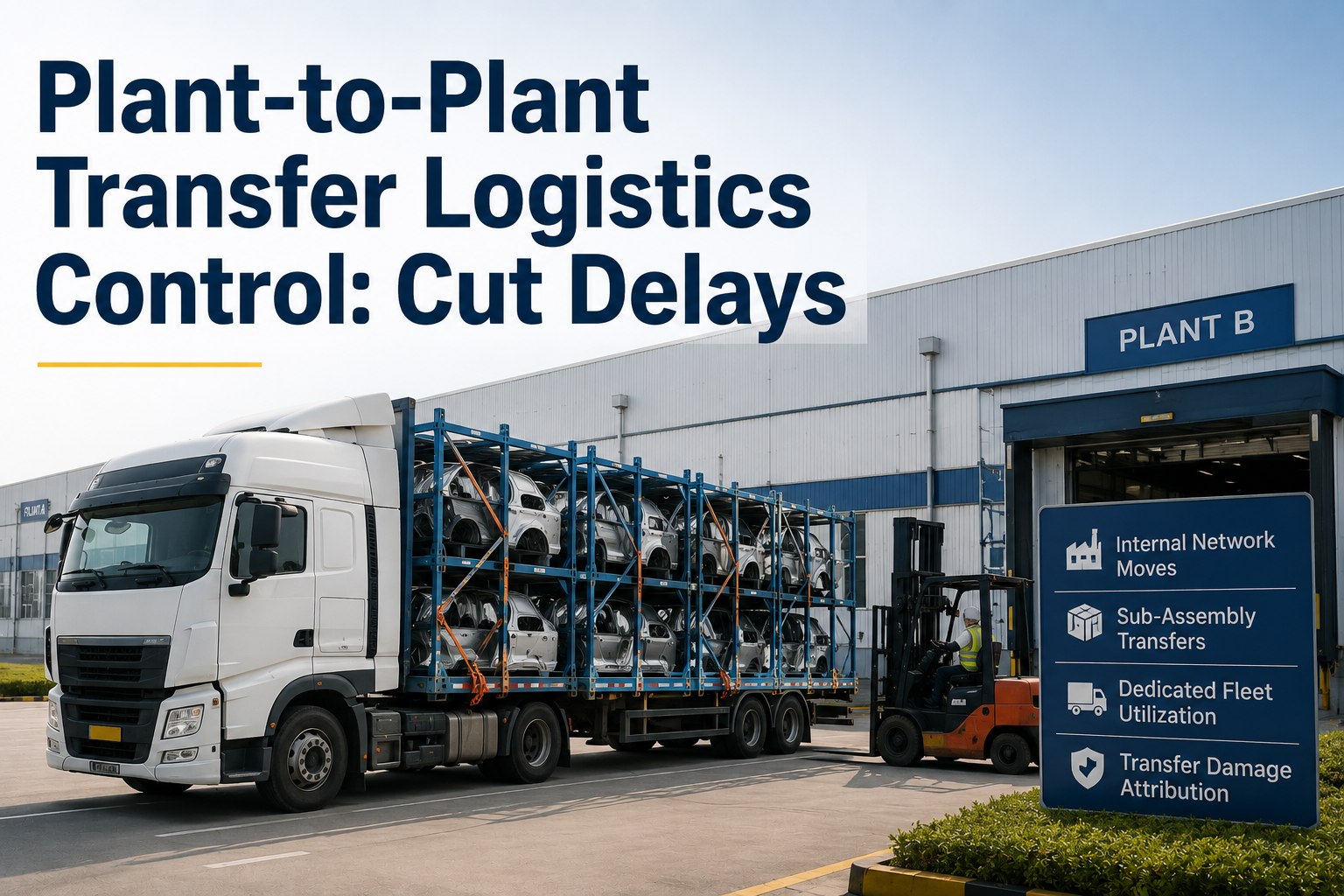
Plant-to-Plant Transfer Logistics Control
Internal moves given an owner, sub-assembly transfers tracked like external deliveries, dedicated fleet utilisation measured on loaded legs rather than truck count, and damage attributed from evidence instead of seniority.
The internal lane problem
Outbound legLoaded
Return legOften empty
External lanes get backhaul attention because someone is paying per mile. Internal lanes rarely do, because the cost sits in an overhead line rather than an invoice.
Five Kinds of Internal Move
They are planned by different people, for different reasons, on different clocks — and most networks treat them as one undifferentiated flow called "transfers". Naming them is the first step to owning them.
Sub-assembly transfer
A module built at one plant and consumed on a line at another. Production-critical, time-bound, and the only category most networks track properly.
Planned byProduction planning, against a build schedule
Component rebalancing
Stock moved to cover a shortage at one site from surplus at another. Reactive by nature, frequently urgent, and almost never planned in advance.
Planned byMaterials planning, usually same-day
Tooling and equipment
Dies, fixtures, test rigs. Low volume, high value, high damage consequence, and typically moved by whoever is available rather than by a specified method.
Planned byEngineering or maintenance, ad hoc
Returnable containers and racks
The natural backhaul, and the flow most often left to accumulate until someone complains. Pools drift between sites permanently in one direction.
Planned byNobody, in most networks
Work in progress and finished units
Partly built units moving between stages held at different sites. Carries the highest value per load and the highest damage exposure.
Planned byProduction control, on the build plan
All five, one network
They compete for the same trucks, drivers and dock slots. Planning them separately is what produces a loaded outbound and an empty return on the same lane in the same hour.
Should be planned byOne internal network owner, across all five
The ownership test
Ask who is accountable when an internal transfer arrives late. If the answer is "it depends", or names two plants, the lane has no owner — and unowned lanes do not improve, because every improvement requires someone to give up something and nobody has standing to decide. Name a network owner before touching routing, fleet or anything else.
Fleet Utilisation Is Not Truck Count
The metric that matters on an internal network is the share of legs running loaded, not how busy the trucks look. A dedicated fleet at high mileage and low loaded-leg ratio is an expensive way to move air, and it is the normal state of an unmanaged internal network.
What to measure on a dedicated internal fleet
Loaded leg ratioLegs carrying freight as a share of all legs run. The headline number, and the one that exposes structural imbalance between sites.
Cube and weight utilisation per loaded legA loaded leg at thirty per cent fill is only marginally better than an empty one. Both figures matter, because different internal flows constrain on different dimensions.
Round-trip cycle timeDeparture to return-and-available. Dwell at the receiving plant is usually the largest and least visible component.
Urgent share of movesRebalancing runs launched same-day. High values mean the fleet is absorbing planning failures rather than executing a plan.
Lane directional imbalanceVolume out against volume back per lane. Structural imbalance is exactly what creates systematic backhaul opportunity — and it is visible in the data long before anyone acts on it.
Cost per loaded legTotal fleet cost divided by loaded legs, not by total legs. The version that makes empty running visible to finance.
Most internal networks can find their first ten per cent in the return legs they already run.
A solutions engineer maps your internal lanes, current loaded-leg ratio and the five move types competing for the same capacity, and shows where returnables and rebalancing could ride legs you are already paying for.
Filling the Return Leg
Directional imbalance between manufacturing sites is structural, not accidental — which means the backhaul opportunity is predictable rather than opportunistic. Four sources, in order of how easy they are to schedule.
1Returnable containers and racksThe most reliable backhaul in any internal network, and the one already flowing in the right direction. If empties are accumulating at the receiving site, the return leg is being wasted twice.
2Scheduled rebalancingMove known surplus on a planned cadence rather than waiting for a shortage to force an urgent run. Converts the most expensive move type into the cheapest.
3Supplier collection en routeWhere a supplier sits near the return path, collecting on the way back turns an internal empty leg into inbound freight you would otherwise have paid for separately.
4Waste, scrap and reverse flowsLow priority and highly flexible on timing, which makes it the ideal filler for legs that would otherwise run empty. Rarely considered because it belongs to a different budget.
Damage Attribution Across an Internal Boundary
This is where internal transfers differ most from external freight. There is no carrier to claim against, no commercial counterparty, and often no condition record — so damage becomes a discussion between two plants with equal standing and no evidence. Fix it with a custody chain, exactly as you would externally.
← Swipe to see all columns →
The row that resolves most disputes is condition images before removal from the trailer. Once a rack is on the dock, damage could have happened at unload — and the receiving plant cannot prove otherwise even when it is blameless. Capturing on the trailer takes seconds and moves the argument from opinion to comparison.
The Transfer Order Discipline
Internal moves need the same document rigour as external ones, and for the same reason: without it, material exists in a state nobody can see. These are the rules worth enforcing.
1No physical move without a transfer order. An informal move creates stock that is at neither site and visible to neither planner.
2In-transit stock is a visible state, not a gap. Both plants should see it, and neither should be able to count it as available.
3The transfer order carries a required-by date, not just a quantity. Without it there is no basis for prioritising against other internal moves.
4Receipt is against the order, with variance recorded as an exception. Silent quantity adjustments at the receiving end destroy the audit trail.
5Tooling and equipment moves use the same mechanism. High value, low volume, and the category most often moved on a verbal agreement.
6Returnable movements are recorded even though they carry no product value. Otherwise the pool position across sites is permanently unknown.
7Urgent rebalancing follows the same process at speed, never a different process. Parallel informal channels become the main channel within a quarter.
8Every transfer order names an owner at both ends. Two names, not two plants.
Dedicated, Contracted or For-Hire
The internal network's capacity model is a live question in 2026, as private fleets set up during disruption reach equipment replacement decisions at materially higher price tags and some operators conclude they no longer want to run a complex truckload network as their supply chains become more time sensitive.
Private fleet
Full control over scheduling, drivers and equipment. Best where lanes are stable, volumes are predictable and response time is genuinely critical.
WatchEquipment replacement cycles now carry a much higher capital bill than when the fleet was established
Dedicated contract carriage
Retain the operational control you want while outsourcing the complexity of managing fleets, drivers and maintenance — with the provider acting as an extension of your operation rather than a vendor.
WatchSpecify loaded-leg targets in the contract, or you buy trucks rather than throughput
For-hire truckload
Lowest commitment, highest variability. Workable for rebalancing and low-urgency flows, poor for time-critical sub-assembly transfers feeding a line.
WatchExposure precisely when you need capacity most, which is when everyone else does
Hybrid
Dedicated capacity on the stable core lanes, for-hire for peaks and one-off moves. The common landing point for multi-plant networks with uneven flows.
WatchFleet maintenance discipline, since downtime on the core lanes now ripples further than it used to
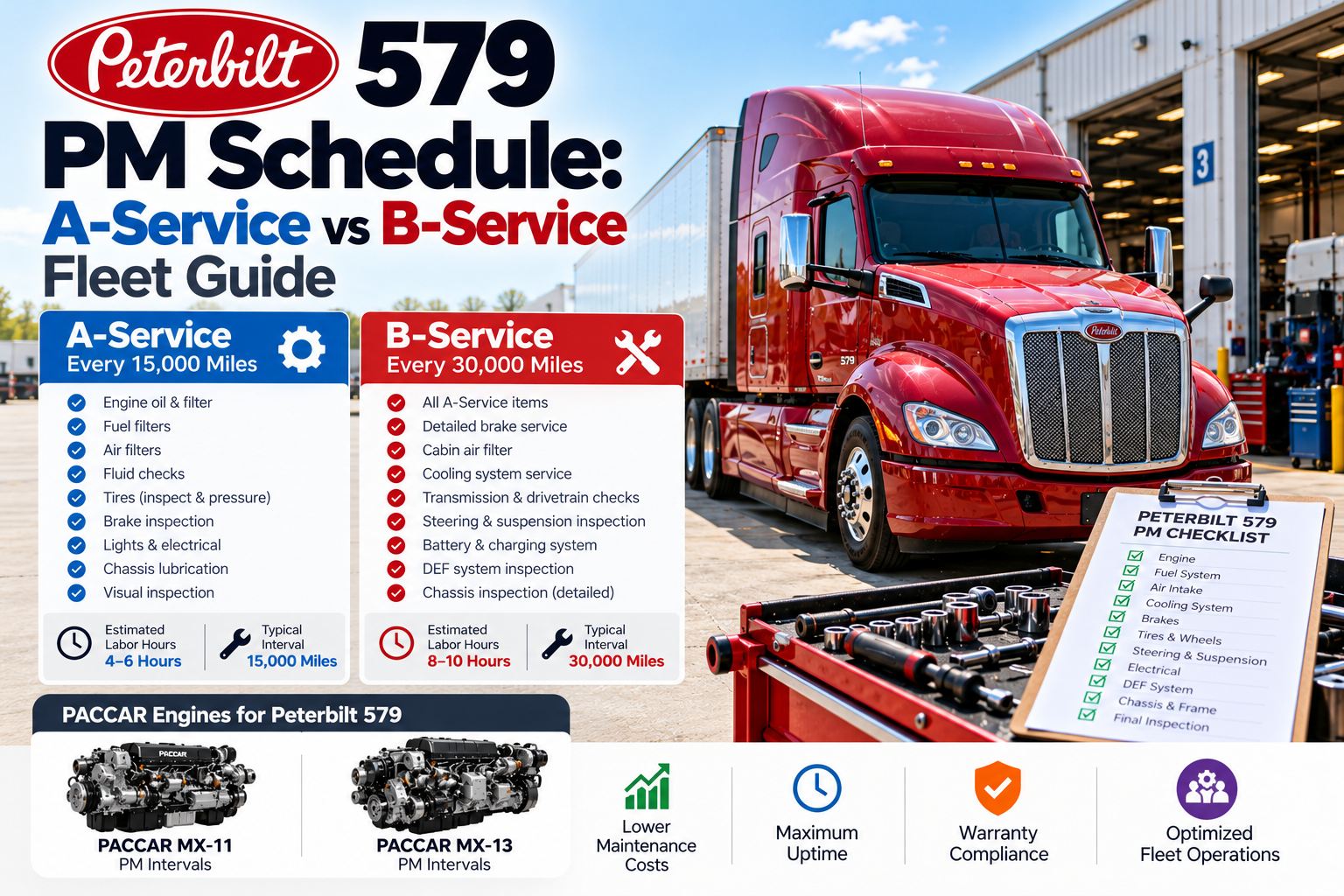
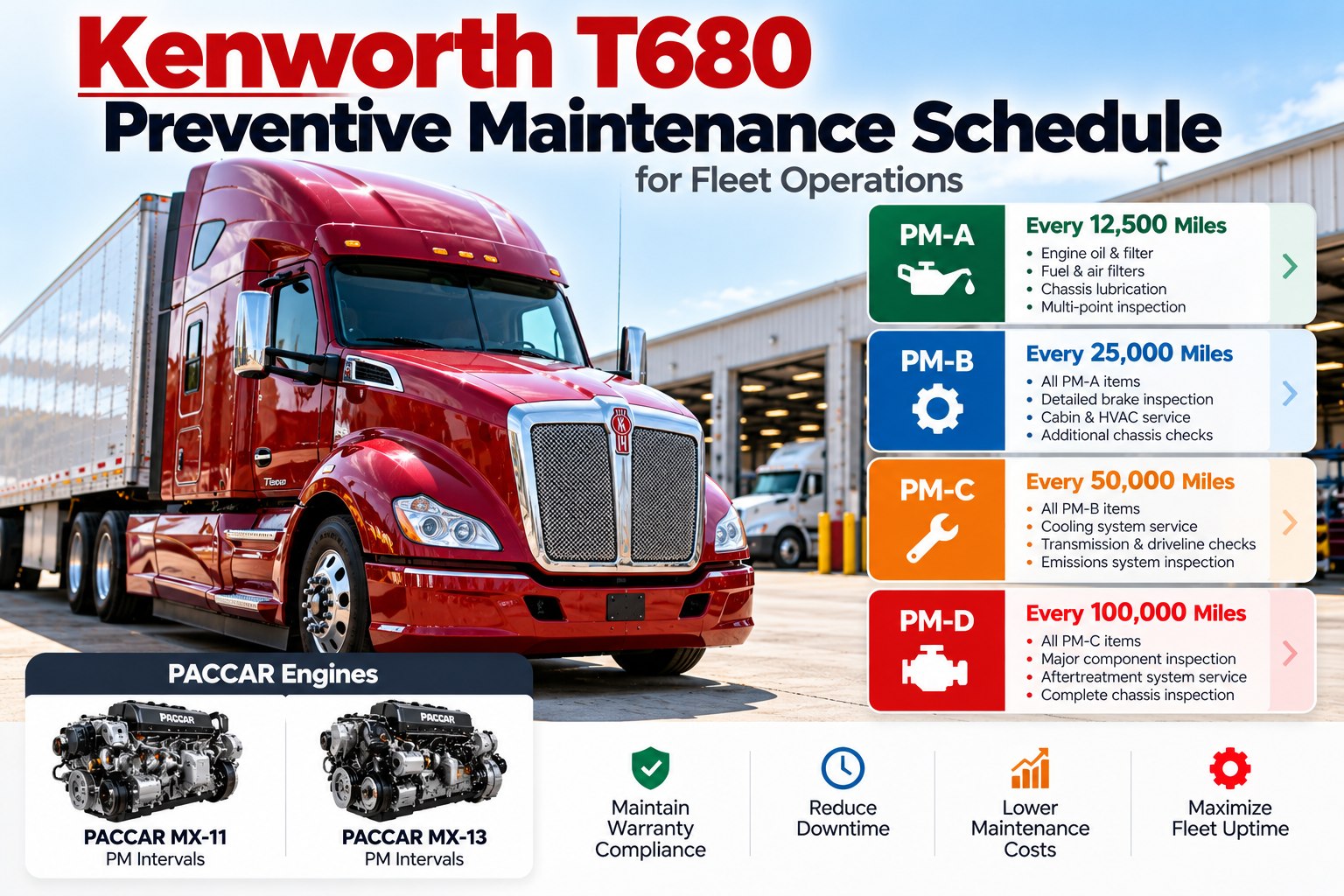
Maintenance is a transfer-network risk, not a garage problem
Rising equipment costs and extended truck lifecycles make proactive maintenance more consequential than it was, and fleet downtime now has a larger ripple effect across the supply chain. On an internal network the ripple is direct: a truck out of service on a sub-assembly lane starves a line at another of your own sites, and the cost lands in production rather than in transport.
What to Measure
Six figures across the network rather than per plant, because per-plant reporting is exactly what lets internal lanes stay unowned. Our analytics and reporting module carries the network view.
Loaded leg ratio by laneThe single most actionable number on an internal network, and the one most often missing entirely.
Transfer on-time to required-by dateMeasured against the date on the order, not against departure. Internal lanes deserve the same service measure as external ones.
Urgent share of internal movesSame-day rebalancing as a share of all moves. A leading indicator of planning quality, not of logistics performance.
Damage rate with attribution splitOrigin, transit or destination, resolved from the custody chain. An unsplit damage rate produces argument rather than improvement.
In-transit stock ageingTransfer orders open past expected transit. Catches material that physically arrived but was never received, which is invisible to both plants.
Returnable pool balance by siteNet drift per lane over time. Persistent one-way drift means the return leg is being wasted and the pool is being bought around.
Give Your Internal Lanes an Owner and a Number
Bring your inter-plant lanes, current fleet arrangement and a month of transfer orders. A solutions engineer maps the five move types competing for the same capacity, calculates loaded-leg ratio by lane, and sets out the custody chain that settles damage attribution between your own sites.
Loaded-leg measurement
Backhaul scheduling
Custody chain evidence
In-transit visibility
Frequently Asked Questions
Why do internal transfers perform worse than external freight?
Because nothing forces them to perform. External freight has a contract, a rate per mile, a service level and a counterparty with an incentive — internal freight has an overhead line and two plants who each consider it the other's responsibility. The absence of a commercial boundary removes both the measurement and the accountability. Naming a network owner with authority over all internal lanes restores both, and it usually costs nothing but a decision.
What is the right utilisation metric for a dedicated internal fleet?
Loaded leg ratio, with cube and weight utilisation per loaded leg alongside it. Truck count and mileage measure activity rather than value — a fleet running at high mileage with half its legs empty looks fully occupied and is moving air at cost. Cost per loaded leg is the version worth taking to finance, because it makes empty running visible in a form that funds the fix. Track directional imbalance per lane as well; structural imbalance is what creates the backhaul opportunity in the first place.
How do we settle damage between two of our own plants?
With a custody chain and condition images captured before material leaves the trailer. Internal damage disputes are unwinnable without evidence because both parties have equal standing and no commercial mechanism — so they resolve by seniority, which resolves nothing and damages the relationship. Capture condition at load and again on the trailer at arrival, with timestamps and a seal check between them, and attribution becomes a comparison rather than an argument. It takes seconds per load.
Should returnables ride the return leg automatically?
Yes, and it should be scheduled rather than opportunistic. Returnable containers and racks are the most reliable backhaul available on an internal network because they are already flowing in the right direction and their timing is flexible. If empties are accumulating at your receiving sites while return legs run empty, you are wasting the same leg twice — once by not loading it, and again by eventually buying containers to replace the ones stranded at the wrong end of the lane.
Is a private fleet still the right answer for internal moves?
Less automatically than it was. Private fleets established during earlier disruption are now facing equipment replacement at considerably higher price tags, and some operators have concluded they no longer want to run a complex truckload network as their supply chains become more time sensitive — with dedicated contract carriage increasingly viewed as a safe haven that retains operational control while outsourcing fleet, driver and maintenance complexity. For stable core lanes a hybrid usually wins: dedicated capacity where predictability matters, for-hire for peaks.
How do we stop urgent rebalancing dominating the fleet?
Measure it as a planning metric rather than a logistics one. A high same-day share means the fleet is absorbing materials planning failures, and no amount of routing improvement fixes that — the answer sits upstream, in scheduled rebalancing against known surplus positions. Publishing the urgent share by originating planner tends to move it faster than any transport intervention, because it relocates the number to where the decision actually gets made.
What about material that arrives but never gets received?
Track in-transit stock ageing — transfer orders still open past expected transit duration. This is the classic internal failure mode: the material physically arrived, sat on a dock, and was consumed or stored without the receipt being posted, so both plants' systems disagree with reality in opposite directions. It is invisible in per-plant reporting and obvious in a network view. Our
integrations overview covers how transfer events connect back to your ERP.
Run Internal Lanes Like External Ones
One owner across all five move types, loaded-leg ratio as the utilisation measure, return legs filled with returnables and scheduled rebalancing, and damage attributed from a custody chain rather than settled by rank.
Works alongside existing ERP transfer orders · Any fleet model · Network-level visibility