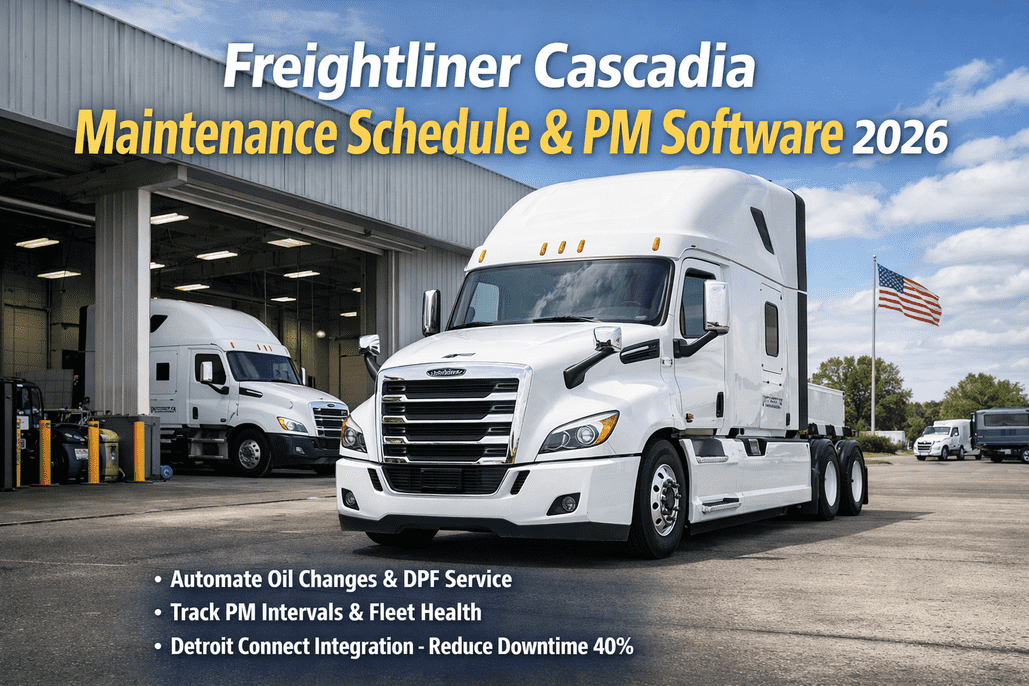
The Freightliner Cascadia dominates American highways for good reason—Detroit Diesel engineering delivers legendary reliability when properly maintained. But tracking maintenance intervals across DD13, DD15, and DD16 engines isn't simple. Oil changes range from 25,000 to 75,000 miles depending on duty cycle. DPF cleaning intervals vary by operation type. Fuel filter schedules differ by fuel economy. Managing these variables manually means missed services, premature wear, and unexpected breakdowns that cost $5,000-$8,000 on average. FleetRabbit automates Cascadia-specific maintenance schedules, integrates with Detroit Connect telematics, and keeps your long-haul fleet running at peak efficiency.
Cascadia Maintenance: Why It's Different
The Freightliner Cascadia isn't just another Class 8 truck—it's America's best-selling heavy-duty truck with maintenance requirements that vary dramatically based on how you operate. Detroit Diesel engineered these powertrains for extended service intervals, but only when conditions allow. Understanding your specific duty cycle is the first step to optimizing maintenance costs.
Detroit Diesel Service Classifications
Maintenance intervals depend on your operation type. Identify your duty cycle to set accurate PM schedules.
Extended intervals for high-efficiency OTR operations
Standard intervals for typical highway operations
Reduced intervals for regional distribution
Aggressive intervals for demanding applications
Need help configuring your Cascadia PM schedules? FleetRabbit automatically adjusts maintenance intervals based on your operation type—no manual calculations required. Start your free trial today.
Complete Cascadia Maintenance Schedule
Below is the comprehensive maintenance schedule for Freightliner Cascadia trucks with Detroit Diesel engines. These intervals follow OEM specifications using CK-4 or FA-4 approved oils with ultra-low sulfur diesel fuel.
Detroit Connect Integration
Modern Cascadias come equipped with Detroit Connect—Daimler's factory-installed telematics platform. When integrated with FleetRabbit, you get the complete picture: OEM diagnostic data feeding directly into your maintenance management system.
Virtual Technician Remote Diagnostics
When a fault code triggers, Detroit Connect captures engine data before, during, and after the event. This diagnostic snapshot feeds into FleetRabbit, automatically creating work orders with recommended repairs and nearest dealer locations with parts in stock.
Predictive Maintenance Alerts
Detroit Connect monitors engine parameters continuously. FleetRabbit translates this data into actionable PM alerts—catching issues like rising soot levels, coolant temperature trends, or oil degradation before they become roadside emergencies.
Track & Trace Fleet Visibility
Real-time GPS location data from Detroit Connect displays in FleetRabbit's dashboard. Know exactly where every Cascadia is, schedule maintenance based on proximity to service locations, and reduce deadhead miles to the shop.
Over-the-Air Updates
Detroit Connect enables remote parameter updates and firmware installations. FleetRabbit tracks which units have received updates, ensuring your entire Cascadia fleet runs the latest software without shop visits.
Connect Your Cascadia Fleet
FleetRabbit integrates with Detroit Connect to pull diagnostic codes, fuel economy data, and engine hours directly into your maintenance workflows.
Common Cascadia Maintenance Challenges
Even the most reliable trucks have weak points. Understanding common Cascadia maintenance issues helps you proactively prevent expensive failures.
DPF/SCR System Issues
The aftertreatment system is the Cascadia's biggest maintenance headache. Frequent regens signal problems. Clogged DPFs cause derates. Replacement costs run $3,800-$4,500+.
Cooling System Failures
Overheating causes 40% of catastrophic engine failures in commercial trucks. The DD15 is particularly susceptible to cooling system issues at high mileage.
Low Oil Pressure
On DD15 engines, hardened O-rings in the oil suction manifold typically cause pressure loss after 500,000 miles. Early detection prevents bearing damage.
Rocker Assembly Wear
The DD15's aluminum rocker assembly housing has no cam bearings—Detroit considers it a wear item. Replacement runs approximately $1,600 plus cam costs if needed.
Cost Comparison: Reactive vs. Preventive Maintenance
Well-maintained Cascadias deliver 30-35% lower total maintenance costs compared to reactively-maintained units
FleetRabbit Cascadia Features
FleetRabbit is purpose-built for managing Freightliner Cascadia maintenance across your entire fleet—whether you run 5 trucks or 500.
OEM-Specific PM Templates
Pre-configured maintenance schedules for DD13, DD15, and DD16 engines. Select your duty cycle—efficient long haul, standard, short haul, or severe—and intervals auto-populate based on Detroit Diesel specifications.
Automated Service Reminders
Never miss an oil change or DPF cleaning. FleetRabbit tracks mileage and engine hours, sending alerts when service is due. Notifications go to drivers, technicians, and fleet managers simultaneously.
Digital Inspection Forms
Mobile DVIR inspections capture pre-trip and post-trip checks with photos. Defects automatically generate work orders. Complete DOT compliance documentation stored digitally.
Work Order Management
Create, assign, and track repair orders from mobile devices. Technicians log parts, labor, and notes. Historical records build a complete service history for each Cascadia.
Parts Inventory Tracking
Track oil filters, fuel filters, DEF, and common Cascadia parts. Set reorder points for automatic alerts. Know exactly what's in stock before scheduling service.
Cost Analysis & Reporting
Track maintenance cost per mile for each Cascadia. Identify problem units. Compare technician productivity. Generate reports for management review or compliance audits.
Built for Cascadia Fleets
Join hundreds of Freightliner operators using FleetRabbit to reduce downtime, control maintenance costs, and keep their Cascadias running past the million-mile mark.
Oil Analysis: Extending Intervals Safely
Detroit Diesel's extended oil drain intervals are achievable—but only with proper monitoring. Oil analysis lets you verify that your Cascadia can safely run 50,000+ miles between changes.
Sample Collection
Pull oil sample at each service interval. Use consistent sampling method and timing for accurate trending.
Lab Analysis
Test for wear metals, contaminants, viscosity, and additive depletion. Results typically return in 24-48 hours.
Trend Monitoring
Compare results over time. Sudden spikes in iron, copper, or silicon indicate developing problems before failure.
Interval Optimization
If oil consistently tests good at current intervals, consider extending. If degradation appears, shorten intervals.
Note: During the first three oil drains on new DD13/DD15/DD16 engines, copper levels may reach 500 ppm as the oil cooler passivates. This is normal and not cause for concern. Levels should decrease with each subsequent change.
Frequently Asked Questions
What's the recommended oil change interval for a Freightliner Cascadia DD15?
Detroit Diesel recommends oil changes every 50,000 miles for long-haul operations achieving 6+ MPG with minimal idle time. Short-haul operations (5.1-5.9 MPG) should change at 35,000 miles, while severe-duty applications require 25,000-mile intervals. These intervals assume use of DFS 93K222 (CK-4) or 93K223 (FA-4) approved oils with ultra-low sulfur diesel fuel. Many experienced operators verify these intervals with oil analysis, which FleetRabbit helps you track. Sign up free to set up automated oil change reminders for your Cascadia fleet.
How often should the DPF be cleaned on a Cascadia?
For over-the-road Cascadias averaging 6+ MPG with moderate idle time, the safe DPF cleaning interval is 350,000-400,000 miles. Severe-duty applications or trucks with lower fuel economy may need cleaning at 200,000-250,000 miles. Monitor your regen frequency—increasing regens signal ash accumulation. Professional DPF cleaning costs $200-$400 versus $3,800-$4,500 for replacement. Don't wait until the DPF triggers a derate.
Does FleetRabbit integrate with Detroit Connect?
Yes. FleetRabbit connects with Detroit Connect to pull diagnostic codes, fault events, and engine data directly into your maintenance management workflow. When Virtual Technician detects an issue, FleetRabbit can automatically create a work order with the diagnostic information and recommended repair. This eliminates manual data entry and ensures nothing falls through the cracks. Book a demo to see the integration in action.
What oil specification should I use in my DD13/DD15/DD16?
Detroit Diesel requires oils meeting DFS 93K222 (API CK-4) or DFS 93K223 (API FA-4) specifications. For maximum drain intervals, use 15W-40 or 10W-30 synthetic diesel engine oil from approved brands like Shell Rotella, Mobil Delvac, or Chevron Delo. FA-4 oils offer slightly better fuel economy but are only approved for 2017+ engines. Always verify oil specification compatibility with your specific engine year and emissions configuration.
How can I reduce maintenance costs on my Cascadia fleet?
The biggest cost savings come from preventing breakdowns—well-maintained Cascadias show 30-35% lower total maintenance costs than reactively-maintained units. Key strategies include maintaining proper PM intervals, using oil analysis to optimize drain intervals, cleaning DPFs before they clog completely, addressing cooling system issues early, and tracking costs per mile to identify problem units. FleetRabbit automates all of this tracking, helping you catch small issues before they become expensive failures. Start your free trial to see how much you could save.
Keep Your Cascadias Running Strong
The Freightliner Cascadia is built to go the distance—but only with proper maintenance. FleetRabbit gives you the tools to track every service interval, automate PM schedules, and catch problems before they sideline your trucks.