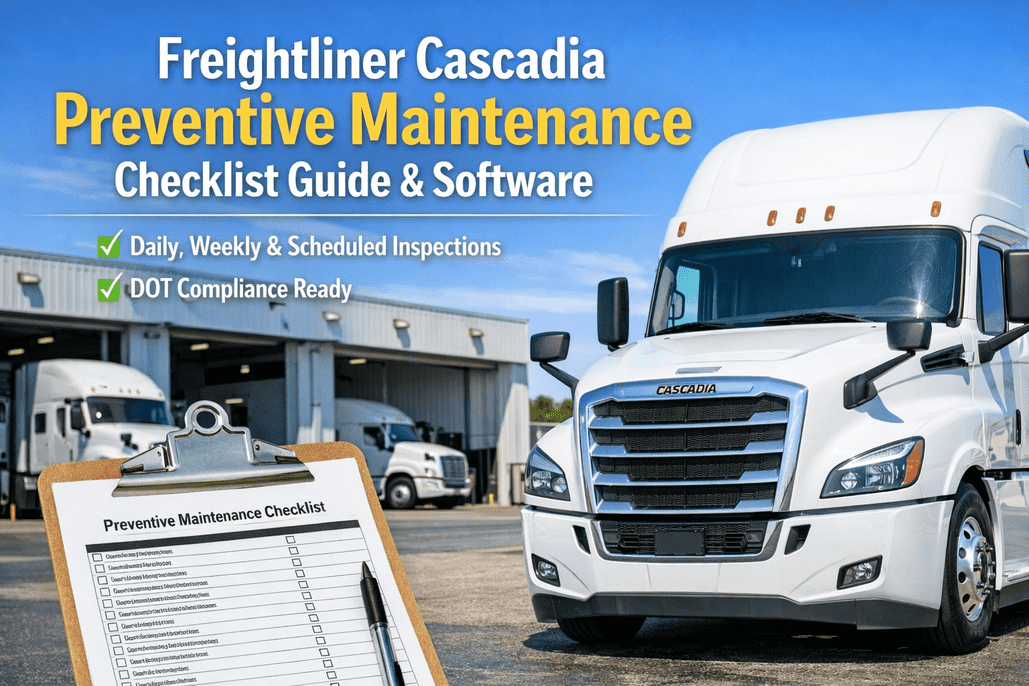
A well-maintained Freightliner Cascadia can easily reach 1 million miles—but only with a systematic preventive maintenance program. Federal regulations require motor carriers to "systematically inspect, repair, and maintain" all commercial vehicles under their control (49 CFR 396.3), yet the FMCSA doesn't specify exactly what your PM program should include. That's where this guide comes in. We've compiled complete Cascadia-specific PM checklists covering daily driver inspections, weekly safety checks, and scheduled service intervals for DD13, DD15, and DD16 engines. FleetRabbit helps you digitize these checklists, automate scheduling, and maintain the documentation needed for DOT compliance.
Understanding PM Service Levels
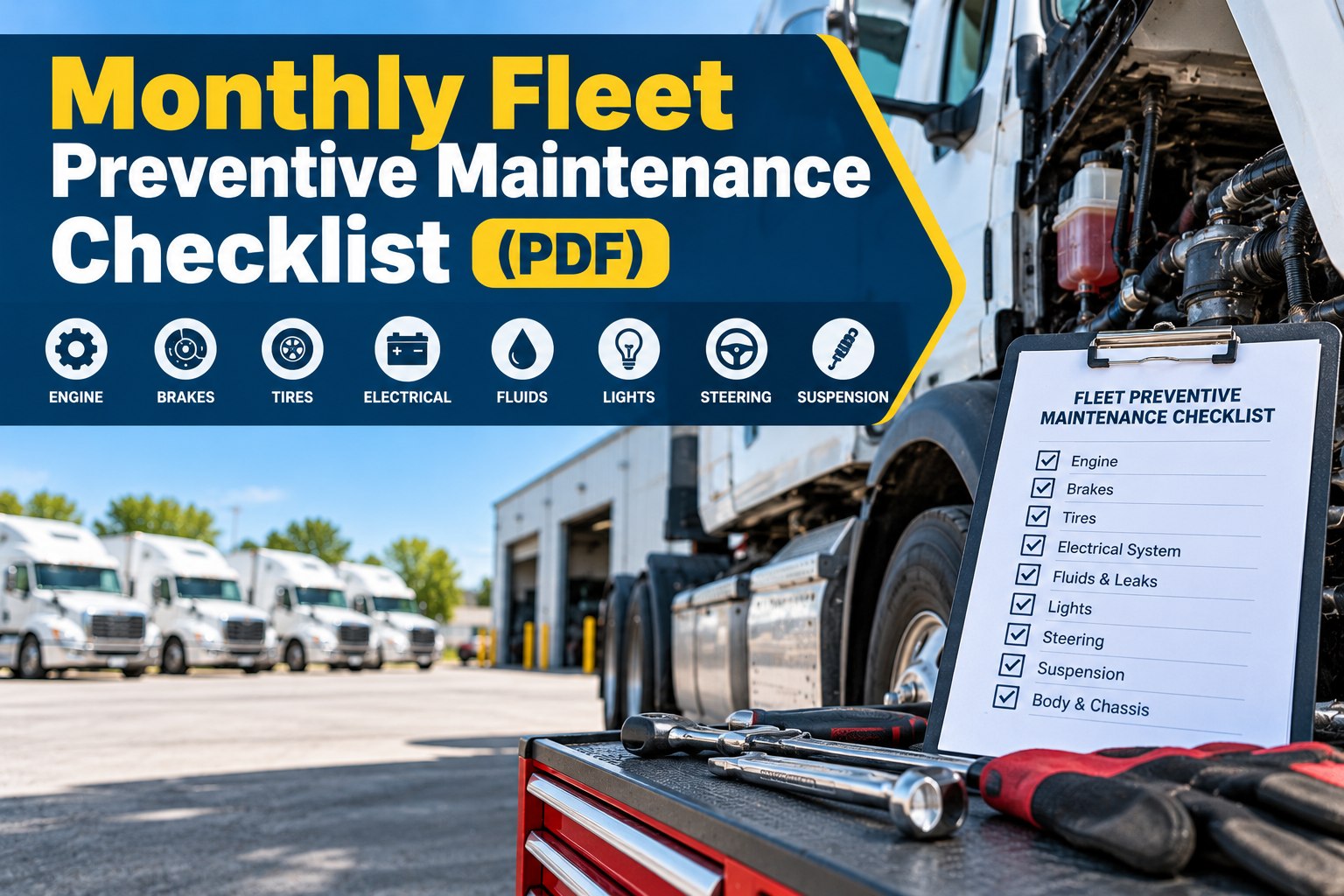
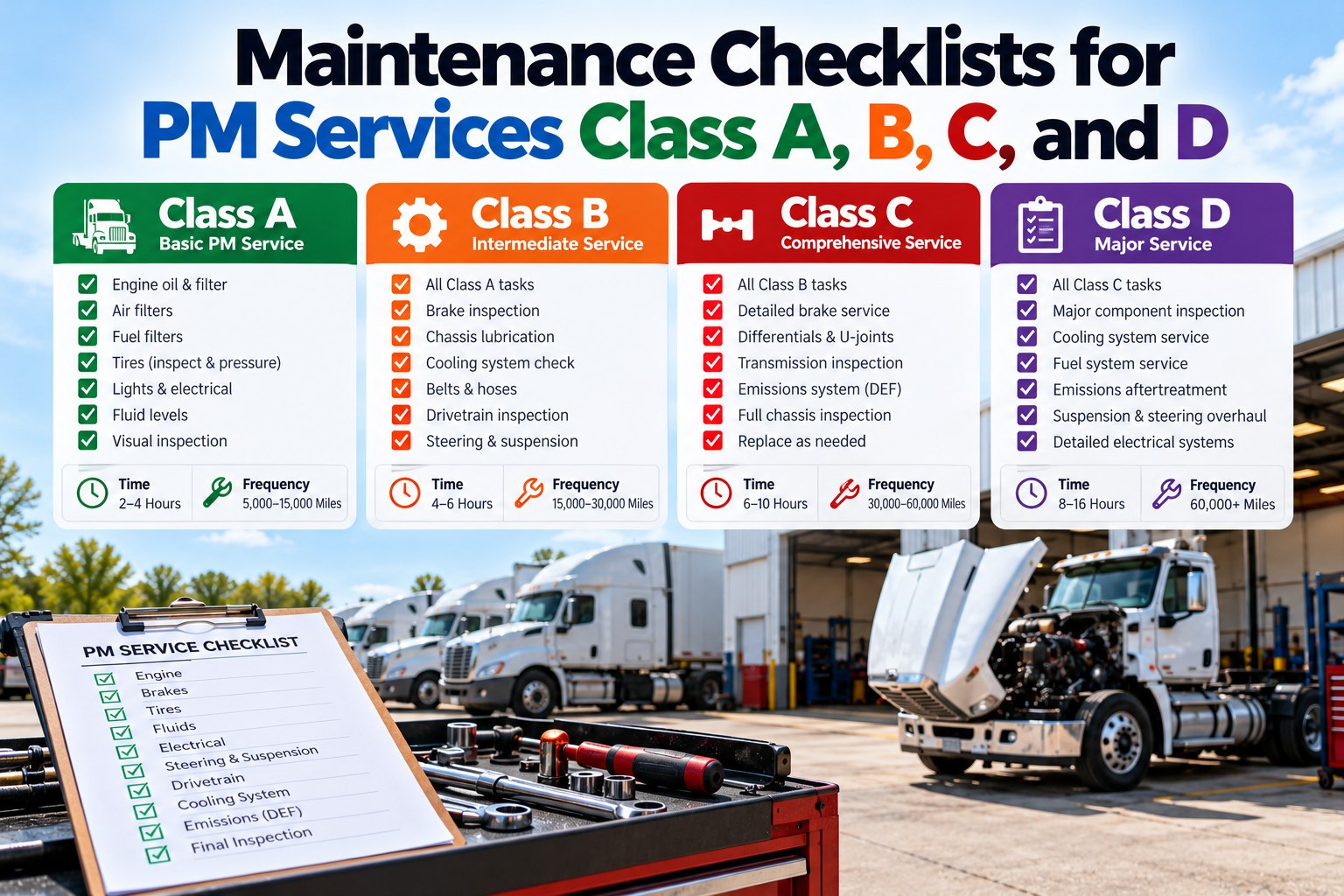
Preventive maintenance programs typically use a tiered service classification—Class A through D—with each level building on the previous one. This structure ensures that routine safety checks happen frequently while more intensive services occur at appropriate intervals. Here's how each level applies to your Cascadia fleet:
Safety Inspection
Daily / Pre-TripDriver-performed inspection focusing on essential safety systems. Required before every trip per FMCSA regulations.
- Brakes, lights, tires
- Fluid levels check
- Air system pressure
- Horn, mirrors, wipers
- Coupling devices
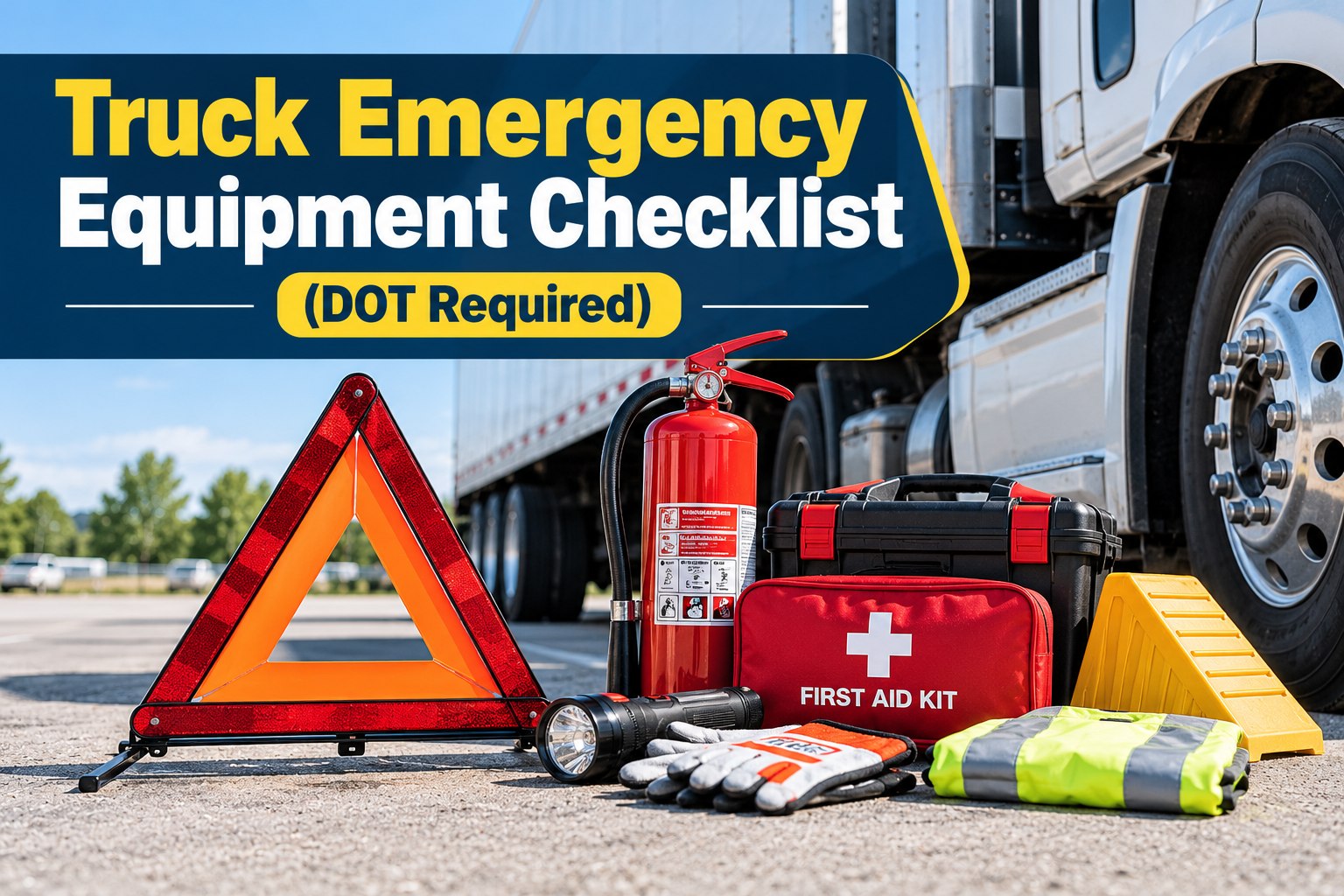
- Emergency equipment
Intermediate Service
10,000-20,000 milesTechnician-performed service including lubrication, adjustments, and more detailed engine/driveline checks.
- Oil and filter change
- Chassis lubrication
- Belt inspection
- Battery check
- Fuel filter inspection
- DTC code review
Comprehensive Service
Annually (11-month cycle)Combines A & B tasks plus extensive service: alignments, component replacement, and DOT annual inspection.
- DOT annual inspection
- Wheel alignment check
- Brake system overhaul
- Transmission service
- Cooling system flush
- A/C system check
Major Overhaul
As ScheduledMajor component rebuilds/replacements or special services like winterization and seasonal prep.
- Engine rebuild
- Transmission overhaul
- DPF replacement
- Differential service
- Winterization
- Summerization
Ready to digitize your PM program? FleetRabbit provides customizable templates for Class A, B, C, and D services with automated scheduling based on mileage or time intervals. Start your free trial and never miss a scheduled service again.
Daily Pre-Trip Inspection Checklist
Federal regulations (49 CFR 396.13) require drivers to be satisfied their vehicle is in safe operating condition before driving. This comprehensive pre-trip checklist covers all required inspection points for Freightliner Cascadia trucks. Document any defects on your Driver Vehicle Inspection Report (DVIR).
Before Starting Engine
Engine Compartment
In-Cab Inspection
Air Brake System Check
Go Digital with Electronic DVIRs
FleetRabbit's mobile app lets drivers complete pre-trip inspections on their smartphones with photo documentation. Defects automatically generate work orders for your maintenance team.
Weekly Maintenance Checklist
Weekly checks catch developing issues before they become safety hazards or cause breakdowns. These inspections go beyond the daily pre-trip to examine components that don't need daily attention but should be monitored regularly.
Fluids & Levels
Tires & Wheels
Brakes & Air
Electrical & Lights
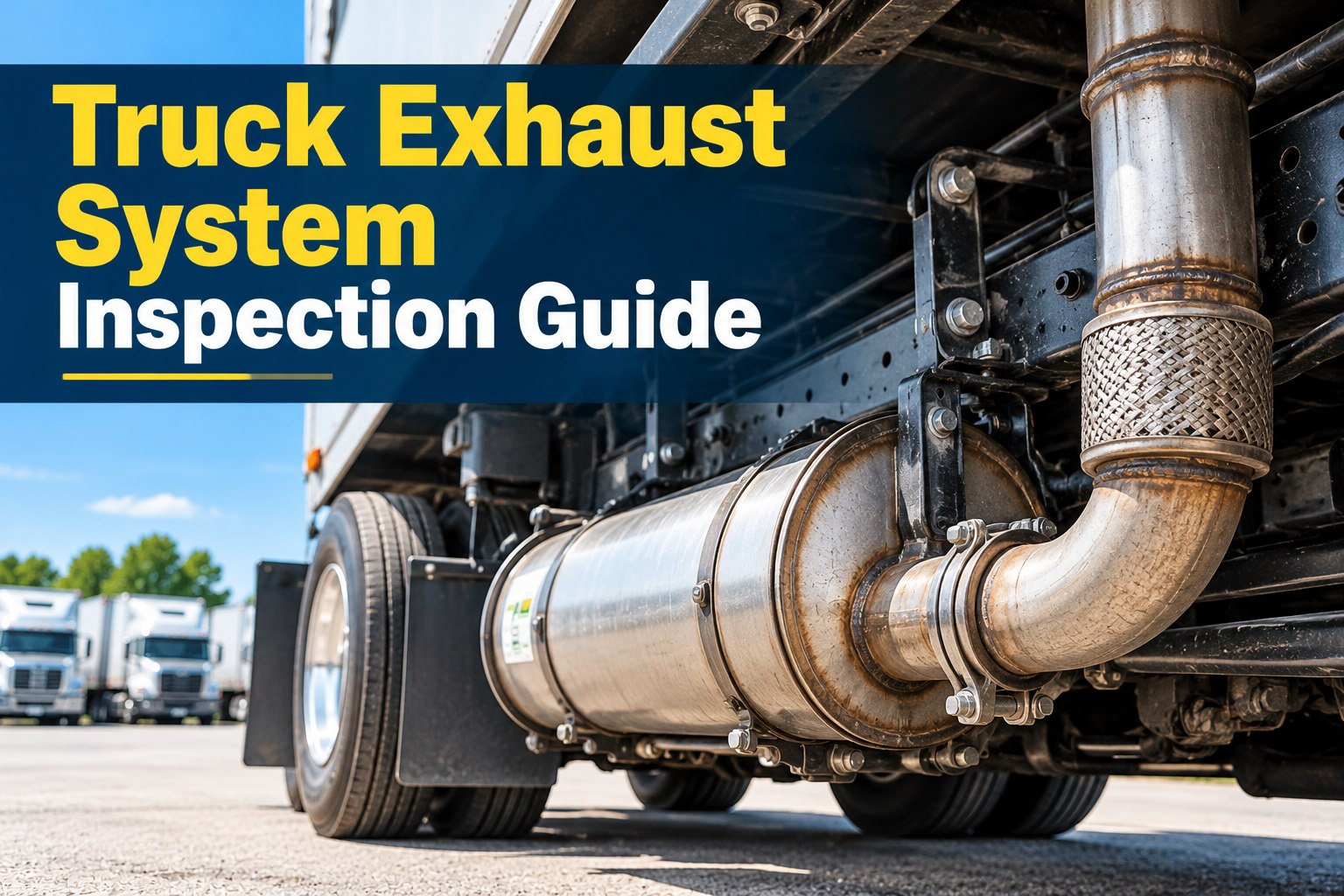
Exhaust & Aftertreatment
Safety Equipment
Scheduled PM Service Intervals
The following table outlines recommended preventive maintenance intervals for Freightliner Cascadia trucks with Detroit Diesel engines. Intervals vary based on your operation type—adjust for severe duty conditions.
DOT Compliance Requirements
Understanding FMCSA record-keeping requirements ensures your PM program meets regulatory standards during audits and investigations.
Systematic PM Program
Motor carriers must "systematically inspect, repair, and maintain" all CMVs. While FMCSA doesn't specify program details, you must have a documented system.
Driver Vehicle Inspection Reports
Drivers must complete a DVIR at the end of each day's work if defects are found. Motor carriers must retain DVIRs for at least 3 months.
Annual Inspections
Every CMV must pass a periodic inspection at least once every 12 months covering all items in Appendix G.
Maintenance Records
Records of all inspection, maintenance, lubrication, and repairs must be retained for one year while in service, plus six months after.
Record-Keeping Best Practice
During an audit, FMCSA investigators will review roadside inspection history, track defects from DVIRs to verify repairs, and confirm inspections are completed on schedule. Digital records make this process faster and demonstrate a systematic approach. Book a demo to see how FleetRabbit simplifies compliance documentation.
FleetRabbit PM Management Features
Managing PM schedules across a Cascadia fleet requires more than spreadsheets. FleetRabbit provides the tools to automate scheduling, digitize inspections, and maintain audit-ready records.
Customizable PM Templates
Pre-built templates for Class A, B, C, and D services tailored to Freightliner Cascadia specifications. Customize inspection points, service items, and pass/fail criteria for your specific operation.
Automated Scheduling
Set PM intervals based on mileage, engine hours, or calendar time. FleetRabbit automatically generates service notifications and ensures no maintenance task is overlooked.
Mobile eDVIR App
Drivers complete pre-trip and post-trip inspections on smartphones or tablets. Photo documentation captures defects. Reports sync instantly to fleet managers and maintenance staff.
Defect-to-Work Order Flow
When a driver reports a defect, FleetRabbit automatically creates a work order and notifies the maintenance team. Track repair status from discovery to completion.
Compliance Reporting
Generate reports showing PM compliance rates, overdue services, inspection history, and maintenance costs per vehicle. Audit-ready documentation at your fingertips.
Detroit Connect Integration
Pull diagnostic codes and fault events from Detroit Connect directly into FleetRabbit. Virtual Technician alerts automatically create work orders with recommended repairs.
Digitize Your Cascadia PM Program
Join thousands of fleet managers using FleetRabbit to automate PM scheduling, digitize inspections, and maintain DOT-compliant records.
Frequently Asked Questions
What PM records does FMCSA require motor carriers to keep?
FMCSA requires several categories of maintenance records: an identification record for each vehicle (kept while in service plus 6 months), records of all inspection, maintenance, lubrication, and repairs (kept for 12 months in service plus 6 months after), DVIRs with noted defects (kept for 3 months), roadside inspection reports (kept for 12 months), and annual inspection reports (kept for 14 months). While no specific forms are required, records must document that maintenance was performed systematically. FleetRabbit stores all these records digitally, making them instantly accessible during audits. Sign up free to start building your digital maintenance history.
How often should I perform a Class A safety inspection on my Cascadia?
Class A safety inspections should be performed daily—before every trip. Federal regulations (49 CFR 396.13) require drivers to be satisfied that their vehicle is in safe operating condition before driving. This pre-trip inspection typically takes 15-30 minutes and covers brakes, lights, tires, fluid levels, air systems, and coupling devices. Post-trip inspections at the end of each day help identify issues that developed during operation.
What's included in a DOT annual inspection for Freightliner Cascadia?
The DOT annual inspection (per 49 CFR 396.17 and Appendix G) covers all safety-critical systems: brake system, coupling devices, exhaust system, fuel system, lighting devices, safe loading, steering mechanism, suspension, frame, tires, wheels, rims, and windshield wipers. For Cascadias, this also includes aftertreatment system inspection. The inspection must be performed by a qualified inspector and documented on a report retained for 14 months. Many fleets schedule this during their Class C comprehensive service. Book a demo to see how FleetRabbit tracks annual inspection due dates.
How do I determine the right PM intervals for my Cascadia fleet?
PM intervals depend on your operation type. Long-haul fleets achieving 6+ MPG with minimal idle time can use extended intervals (50,000-mile oil changes). Regional and short-haul operations (5.1-5.9 MPG) should reduce intervals to 35,000 miles. Severe-duty applications (under 5 MPG, high idle time, vocational work) need the most aggressive intervals at 25,000 miles. Oil analysis helps verify that intervals are appropriate for your specific conditions. Detroit Diesel provides service schedule tables in the Cascadia Maintenance Manual.
Can FleetRabbit help with electronic DVIR compliance?
Yes. FleetRabbit's mobile app supports electronic DVIRs that meet all FMCSA requirements (49 CFR 396.11 and 396.13). eDVIRs must include secure electronic signatures, be accessible to roadside enforcement, and contain the same information as paper DVIRs. FleetRabbit's eDVIR system captures driver signatures, allows photo documentation of defects, automatically notifies maintenance when issues are reported, and maintains a complete digital record for compliance audits. Start your free trial to digitize your inspection process.
Build a PM Program That Keeps Your Cascadias Running
A systematic preventive maintenance program is the difference between proactive fleet management and costly reactive repairs. FleetRabbit gives you the tools to schedule, track, and document every service.