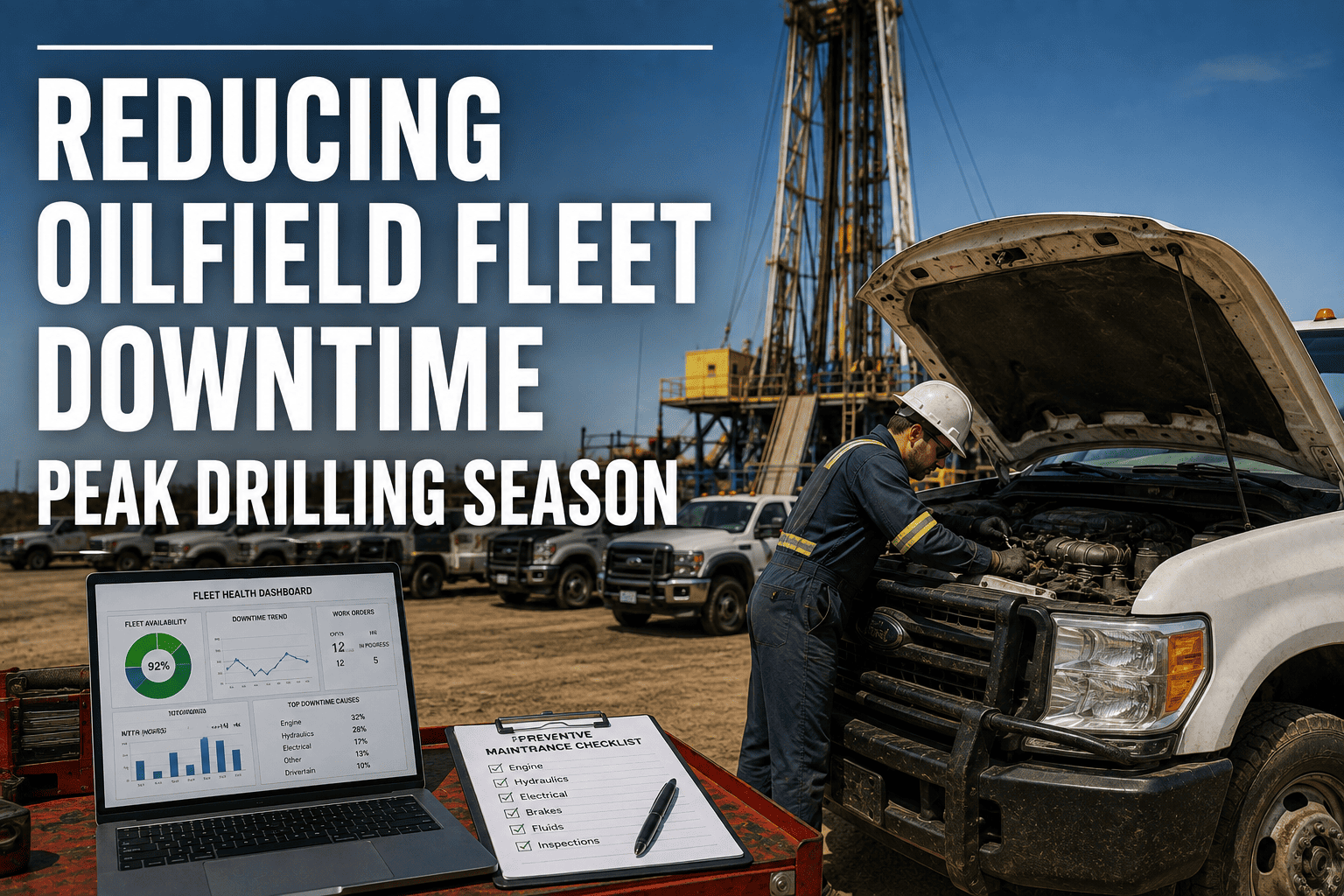
A single stalled workover rig on a remote wellpad doesn't just cost a repair bill. It costs the day's production, the standby contractor rate, and sometimes the client relationship. Oilfield operators running equipment-heavy fleets lose millions of dollars a year to unplanned downtime, and most of that loss traces back to failures that gave warning weeks in advance. This guide breaks down the exact playbook, predictive maintenance, tighter parts management, and faster repair workflows, that operators are using to cut downtime by up to 40 percent in a single operating season. If you'd rather see your own fleet's numbers, sign up for FleetRabbit or book a demo and we'll walk through it together.
Mid-sized oilfield fleets lose an average of 3.2 million dollars a year to unplanned downtime, and 78 percent of those failures show detectable warning signs weeks before they happen. A reactive repair event runs 4,200 to 8,500 dollars against 400 to 800 dollars for the same service done on a planned schedule. Fleets that shift to predictive maintenance, pre-positioned parts, and automated repair workflows typically cut unplanned downtime by 35 to 40 percent within one operating season.
Understanding the True Cost of Oilfield Downtime
Fleet managers who watch the repair invoice usually undercount the real cost of downtime. That invoice typically represents only a fraction of the total impact. The rest builds up in deferred production, contractor mobilization fees, rental equipment brought in to cover the gap, and the schedule cascade that follows when one unit going down pushes work onto every other truck on the pad.
Reactive maintenance also strains the fleet around the failure. When a chemical injection truck goes down mid-run, a nearby unit gets pulled off its own route to cover, extending everyone's hours and accelerating wear on equipment that was already running a full schedule. None of that shows up on the repair order, but all of it shows up in the season's numbers.
FleetRabbit turns engine hours, vibration signatures, and fluid analysis into alerts that flag components weeks before they fail, so repairs happen on your schedule instead of the equipment's.
Where the 40 Percent Reduction Comes From
Hitting a 40 percent drop in one season isn't one fix, it's four disciplines closing different gaps in the maintenance cycle at the same time.
| Lever | What Changes | Typical Impact |
|---|---|---|
| Predictive Maintenance | Condition-based alerts replace fixed-interval servicing, flagging wear before it becomes failure | Unplanned downtime cut 35 to 50 percent |
| Parts Pre-Positioning | High-frequency parts staged near active sites instead of ordered after the fact | Parts-wait time drops from days to hours |
| Automated Work Orders | Alerts trigger scheduling automatically instead of waiting on manual review | PM schedule adherence up from 35-50% to 90-95% |
| Real-Time Visibility | One dashboard replaces scattered spreadsheets for asset health and open repairs | Faster decisions, fewer surprises fleet-wide |
A One-Season Rollout
Fleets that hit the 40 percent mark tend to follow a similar sequence across the season.
Month 1: Baseline and Connect
Every asset gets tagged with engine hours, service history, and current condition data, which is usually when a fleet discovers how much of its preventive schedule has been drifting.
Month 2: Shift to Condition-Based Scheduling
Fixed-interval servicing gives way to alerts triggered by actual equipment condition, and parts inventory rebalances toward the components generating the most flags.
Month 3 and Beyond: Tighten the Repair Loop
Work orders generate automatically from predictive alerts, technicians work from standard checklists, and downtime per incident keeps shrinking as scheduling friction gets removed.
The levers above apply whether you run 40 trucks or 400. Talk to us about your current numbers and where the biggest wins are hiding this season.
Frequently Asked Questions
The fleets hitting a 40 percent reduction all started the same way, by getting a clear view of where downtime was actually coming from. Sign up to connect your fleet, or book a demo and we'll build that view together.