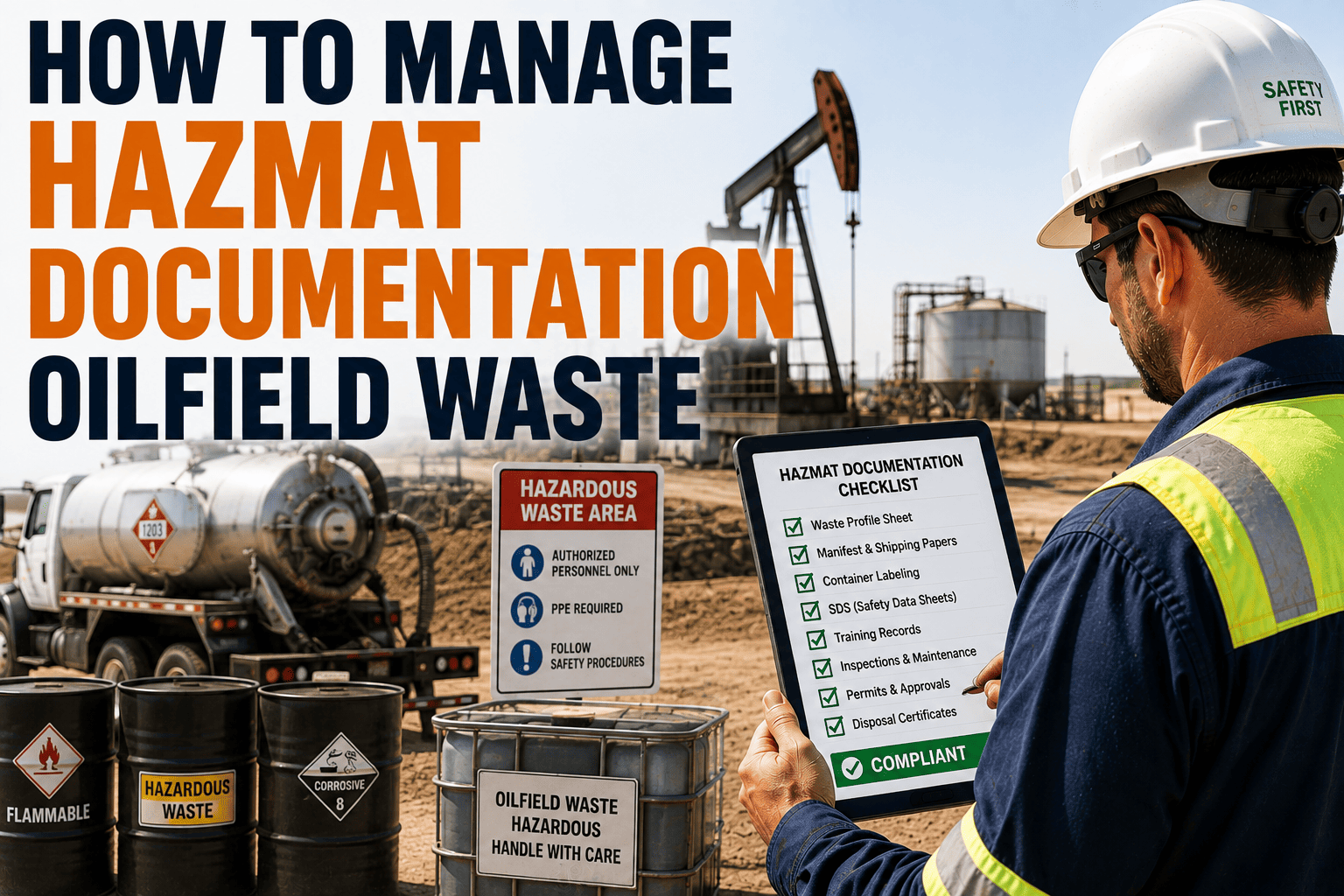
Every load of oilfield waste that leaves a wellsite carries paperwork that matters as much as the load itself. A manifest with a missing signature, a placard that doesn't match what's actually in the tank, or a chain-of-custody record that breaks somewhere between the generator and the disposal facility can turn a routine haul into a liability problem months after the truck has already been unloaded. This guide walks through what documentation an oilfield waste load actually needs, who has to sign what and why, and how to build a workflow that doesn't rely on a folder of paper riding around in a truck cab. If you want to see how this runs digitally on your own fleet, sign up for FleetRabbit or book a demo and we'll walk through your current documentation process together.
Even produced water, classified as non-hazardous oilfield waste, still requires manifest documentation, correct placarding, and driver certification before it can leave a wellsite. Every load needs a chain-of-custody record signed by the generator, acknowledged by the transporter, and closed out by the receiving facility, and federal law requires those manifests be kept for a minimum of three years, longer in practice since liability can follow the generator well past that window.
The Documents Every Oilfield Waste Load Needs
Even loads that never touch a formal HAZMAT classification carry real documentation requirements. Produced water, the highest-volume waste stream in oilfield operations, is classified as non-hazardous, yet it still requires vehicle placarding, load manifests showing origin wellhead and destination disposal facility, and driver certification confirming the crew understands handling protocols, all without a formal HAZMAT endorsement being required. Waste that does cross into regulated hazardous classification adds a heavier layer, EPA identification numbers for the generator, transporter, and disposal facility, RCRA waste codes describing exactly what's in the load, and a driver holding a CDL with an actual hazmat endorsement and current training documentation.
The manifest itself is the legal backbone of the load. It has to correctly identify the waste, name every party handling it, and travel with the shipment from the moment it leaves the wellsite to the moment the disposal facility signs off on receipt. Since 2018, EPA's e-Manifest system has been the standard way this gets tracked, which is part of why paper folders riding in a truck cab increasingly don't hold up against how the record is actually expected to move.
FleetRabbit ties manifest generation, placarding records, and driver certification to the dispatch itself, so every load leaves the wellsite with its documentation already attached and trackable.
The Manifest's Chain-of-Custody Sign-Offs
Every manifest depends on three separate parties certifying their part of the load's journey, and each signature carries its own legal weight.
| Party | What They Sign | What It Certifies |
|---|---|---|
| Generator | Certification before the load leaves the site | Materials are properly classified, packaged, and labeled per DOT and EPA rules |
| Transporter | Acknowledgment at pickup | Custody of the exact load described on the manifest has been accepted |
| Receiving Facility | Closeout upon delivery | The load described on the manifest was received intact at an authorized facility |
Building a Documentation Workflow That Doesn't Slip
Most documentation gaps don't come from ignoring the rules, they come from paperwork living in different places for different people.
Step One: Generate the Manifest at Dispatch, Not After
Attaching the manifest to the load the moment it's scheduled, rather than filling it out after the truck is already moving, closes the gap where details get remembered wrong or filled in late.
Step Two: Confirm Placarding Matches the Load
A placard mismatch is one of the most common findings in field audits. Verifying the vehicle's placard against the actual waste classification before departure catches the error before it's on the road.
Step Three: Capture Each Sign-Off as It Happens
Generator certification, transporter acknowledgment, and facility closeout should each get captured digitally at the moment they occur, not reconstructed from memory during an audit weeks later.
Step Four: Retain Every Record Past the Legal Minimum
Since liability can outlast the three-year federal retention floor, keeping manifests, placarding records, and driver certifications well beyond that window protects the generator long after the load has been disposed of.
From generator certification to disposal facility closeout, every step gets captured where it happens, so nothing depends on a driver remembering to hand over a paper copy later.
Frequently Asked Questions
A manifest that lives in the system instead of a truck cab is one less thing that can go missing during an audit. Sign up to start attaching documentation at dispatch, or book a demo and we'll map your current waste workflow into a digital chain of custody.