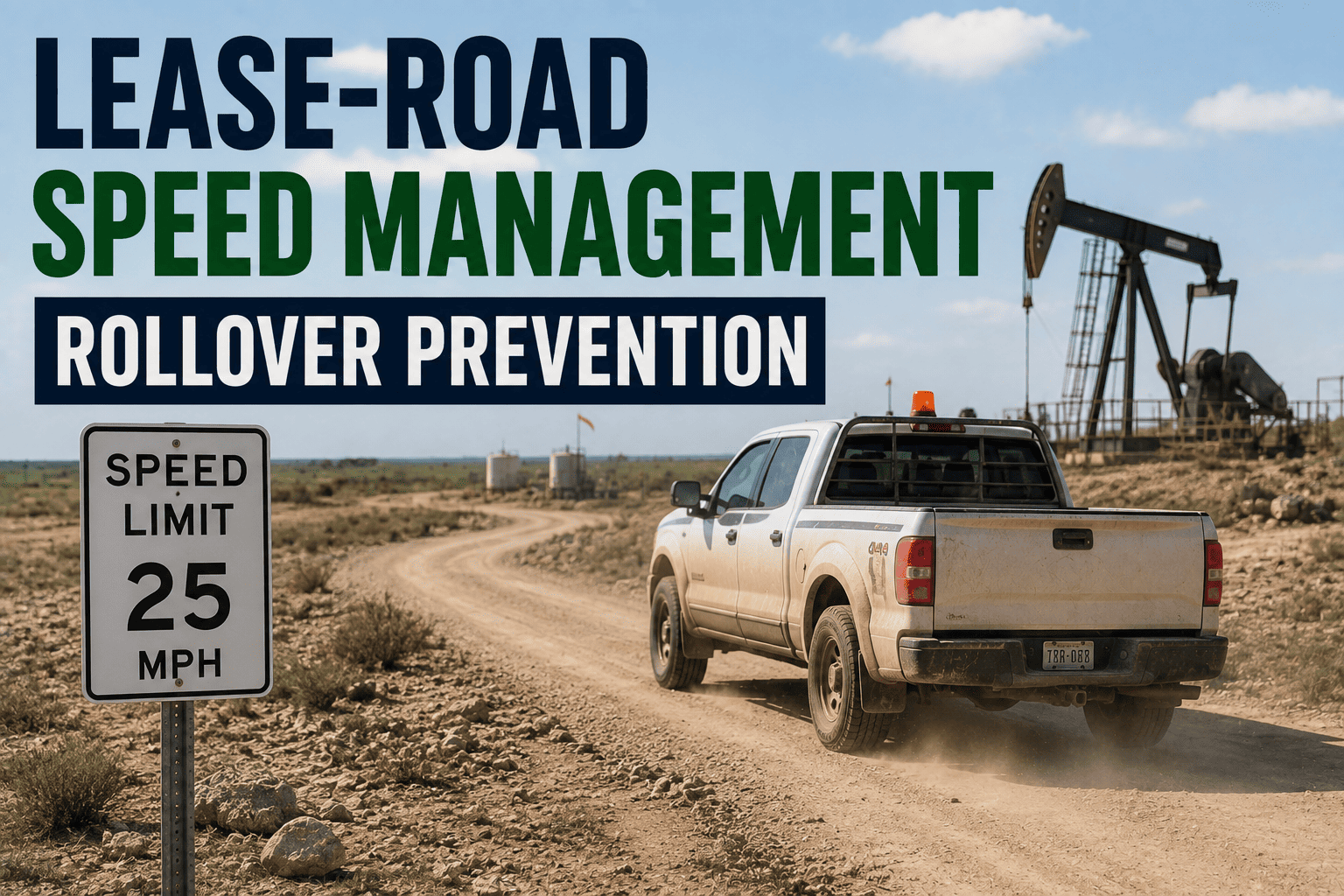
A loaded water hauler doesn't behave like a truck on a highway. It behaves like a truck with a moving lake strapped to its frame, and the surface underneath it is often a graded caliche road that was never engineered to carry that weight at speed. Transportation incidents are consistently among the leading causes of fatalities in oil and gas operations, and rollovers on lease roads are a disproportionate share of them. The physics are unforgiving, the roads are unforgiving, and the only variable a fleet can actually control in real time is speed. Here's what's driving lease road rollovers and how speed management, done right, prevents them before they happen.
Lease road rollovers happen when high center-of-gravity vehicles, especially partially loaded tankers, take curves, crown transitions, or soft shoulders on unpaved caliche roads faster than the surface and load allow. Speed is the one factor a carrier can actively enforce. Geofenced speed zones around well pads and lease roads, real-time speed alerts to dispatch, and in-cab driver monitoring turn a policy on paper into an enforced limit on the ground, which is where rollover prevention actually happens.
Why Lease Roads Are Built For Rollovers
Three factors combine on lease roads in a way that public highways rarely replicate at the same intensity, and understanding each one explains why a "normal" speed on a lease road is often already too fast.
Partially Loaded Tankers Are Less Stable, Not More
It's an easy assumption to make: a full tank is the dangerous one. In practice, a tanker that's roughly a quarter to three-quarters full is often mechanically more unstable than one that's completely full, because the liquid inside has room to slosh and shift the vehicle's center of gravity laterally through a turn or a hard brake. Water haulers running repeated trips between a lease tank battery and a disposal well spend much of their operating life in exactly that partially loaded state.
Caliche Surfaces Weren't Built For The Load
Lease roads are typically graded caliche or compacted dirt, designed for periodic light traffic during drilling, not for dozens of daily round trips from heavy tankers, sand haulers, and equipment trucks. Surface crowning, loose material at the edges, and soft shoulders are common, and none of them behave predictably at speed. A curve that's safe at 20 miles per hour can become a rollover risk at 35 simply because the surface can't hold traction through the turn.
Blind Intersections And No Signage
Public roads have curve warnings, speed advisories, and stop signs. Lease roads frequently have none of that. Drivers approaching an unsignaled intersection or a blind rise have to rely entirely on their own judgment of speed and sightline, and judgment erodes fast over a 20-to-40-trip shift.
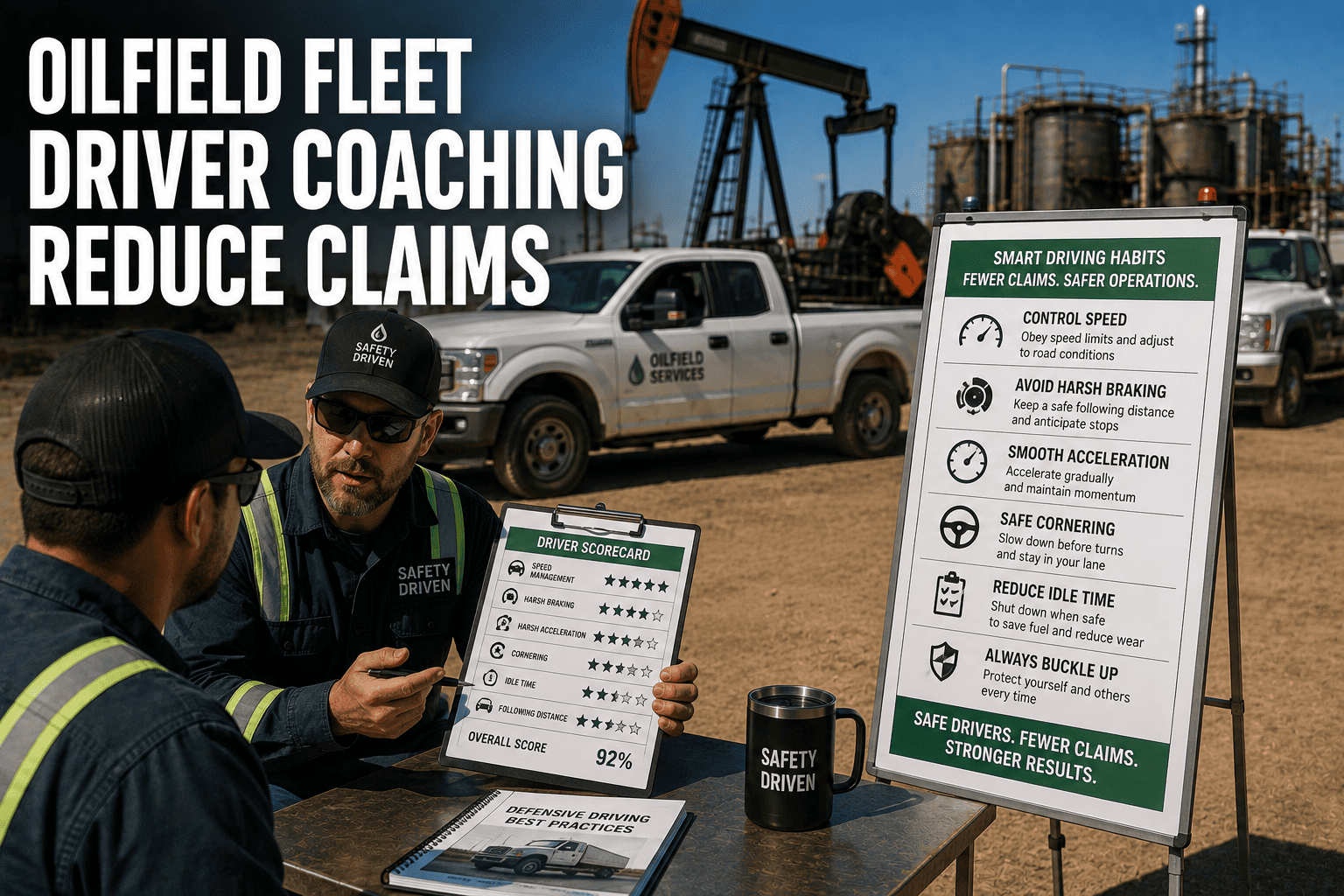
A speed policy in a driver handbook doesn't slow anyone down on a blind caliche curve. FleetRabbit's geofenced speed zones flag every lease-road violation the moment it happens, so dispatch can coach before a rollover, not investigate after one. Sign up free to set up your first geofence today.
Why Speed Is The Variable Worth Controlling
Fleets can't repave a lease road or eliminate liquid slosh from a tanker's physics. What they can control, on every single trip, is how fast the vehicle moves through the sections where those risks compound. On Texas roads broadly, failing to control speed is consistently cited as the single largest contributing factor in crashes, and lease roads amplify that risk because the surface and vehicle dynamics leave far less margin for error than a paved highway does.
| Road Condition | Why Speed Matters More Here | Management Approach |
|---|---|---|
| Blind Curves | Loose caliche surface reduces traction exactly where steering input increases | Geofenced curve zones with automatic speed alerts before entry |
| Well Pad Approaches | Congestion from staging vehicles and personnel increases stopping distance needs | Low-speed geofence around pad perimeter with driver notification |
| Unsignaled Intersections | No advance warning means reaction time depends entirely on approach speed | Speed reduction alerts triggered on approach to known intersections |
| Partial-Load Runs | Elevated rollover risk from liquid movement regardless of road surface | Lower fleet-wide speed ceiling applied to tanker routes specifically |
Building A Lease Road Speed Management Program
Effective speed control on lease roads isn't one tool, it's a layered system that catches risk at three different points: before the trip, during the trip, and after it, so patterns get corrected instead of repeated.
Geofencing The Roads That Matter
Generic fleet speed limits don't account for the specific curves, intersections, and pad approaches that make one lease road riskier than another. Geofencing lets a fleet set tighter speed ceilings around the exact locations where rollover risk concentrates, rather than applying one blanket number across every route a truck travels.
Real-Time Alerts Beat After-The-Fact Reports
A speeding report reviewed at the end of the week tells you about a risk that already passed. A real-time alert to dispatch, or directly to the driver's in-cab device, gives someone the chance to intervene while the trip is still happening. This distinction is often the difference between a coaching conversation and an accident report.
Driver Monitoring That Reinforces, Not Punishes
The goal of monitoring speed on lease roads isn't to catch drivers doing something wrong after the fact, it's to build a feedback loop that helps them recognize risky sections before they've internalized bad habits from months of unmonitored trips. Fleets that pair speed data with direct driver coaching see the behavior change stick longer than fleets that only issue warnings after a violation shows up in a monthly report.
If your fleet runs tankers, sand haulers, or equipment trucks across lease roads and well pad approaches, it's worth confirming whether your current speed policy is actually enforced or just written down. You can sign up for FleetRabbit to see geofenced speed monitoring applied across your specific routes, or book a demo to walk through your highest-risk lease roads with our team.
Frequently Asked Questions
Key Takeaways
Lease road rollovers aren't random. They happen at the predictable intersection of top-heavy or partially loaded vehicles, unengineered caliche surfaces, and speeds that were never actually appropriate for either. Fleets can't change the road or the physics of a sloshing tank, but they can control how fast a vehicle moves through the sections where those risks stack up. Geofenced speed zones, real-time alerts, and consistent driver coaching turn a written policy into a limit that's actually enforced on the ground, which is the only place rollover prevention ever really happens.
FleetRabbit geofences your lease roads, well pad approaches, and known blind curves, then alerts dispatch the moment a driver exceeds the safe speed for that zone. Get set up in minutes with no credit card required.