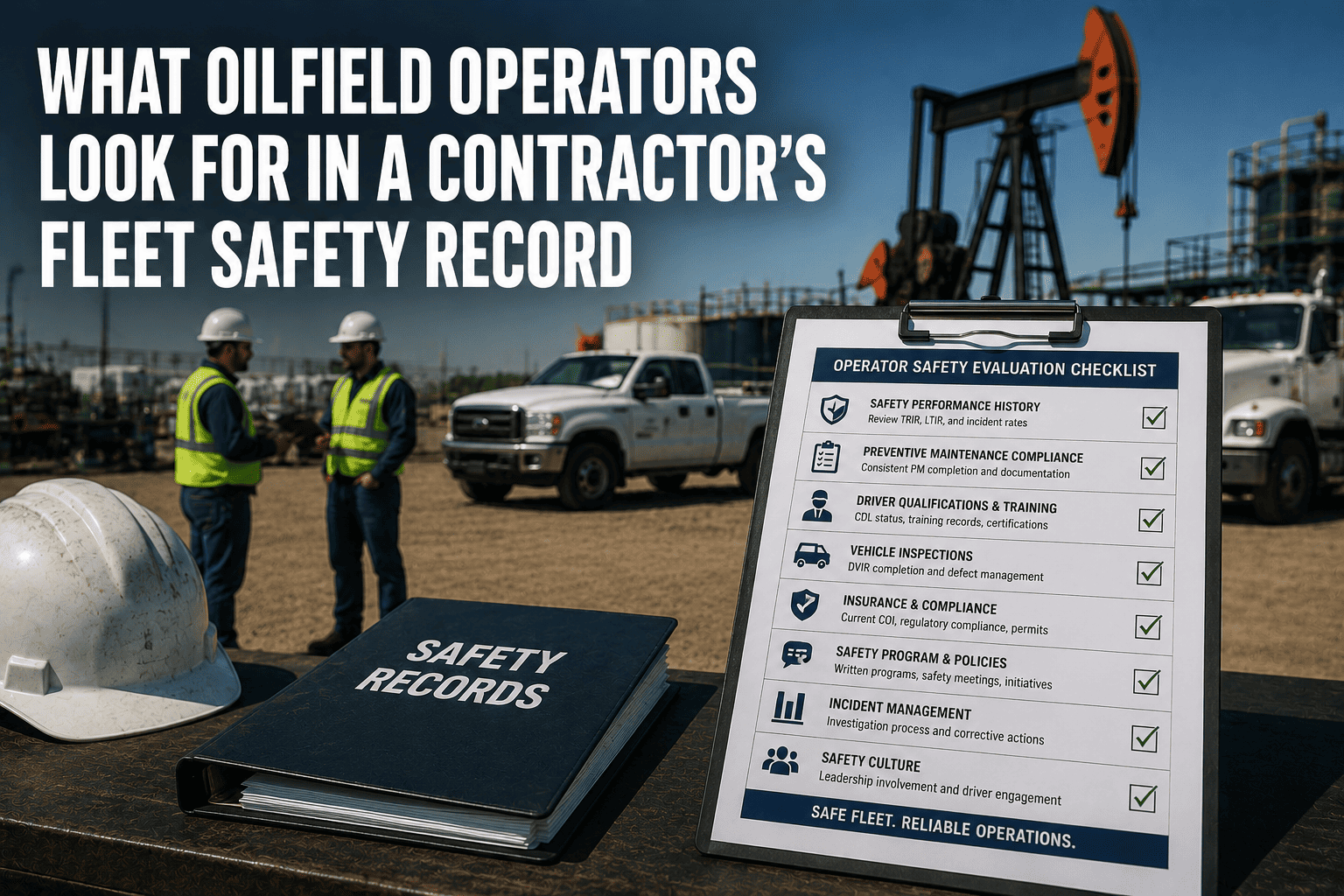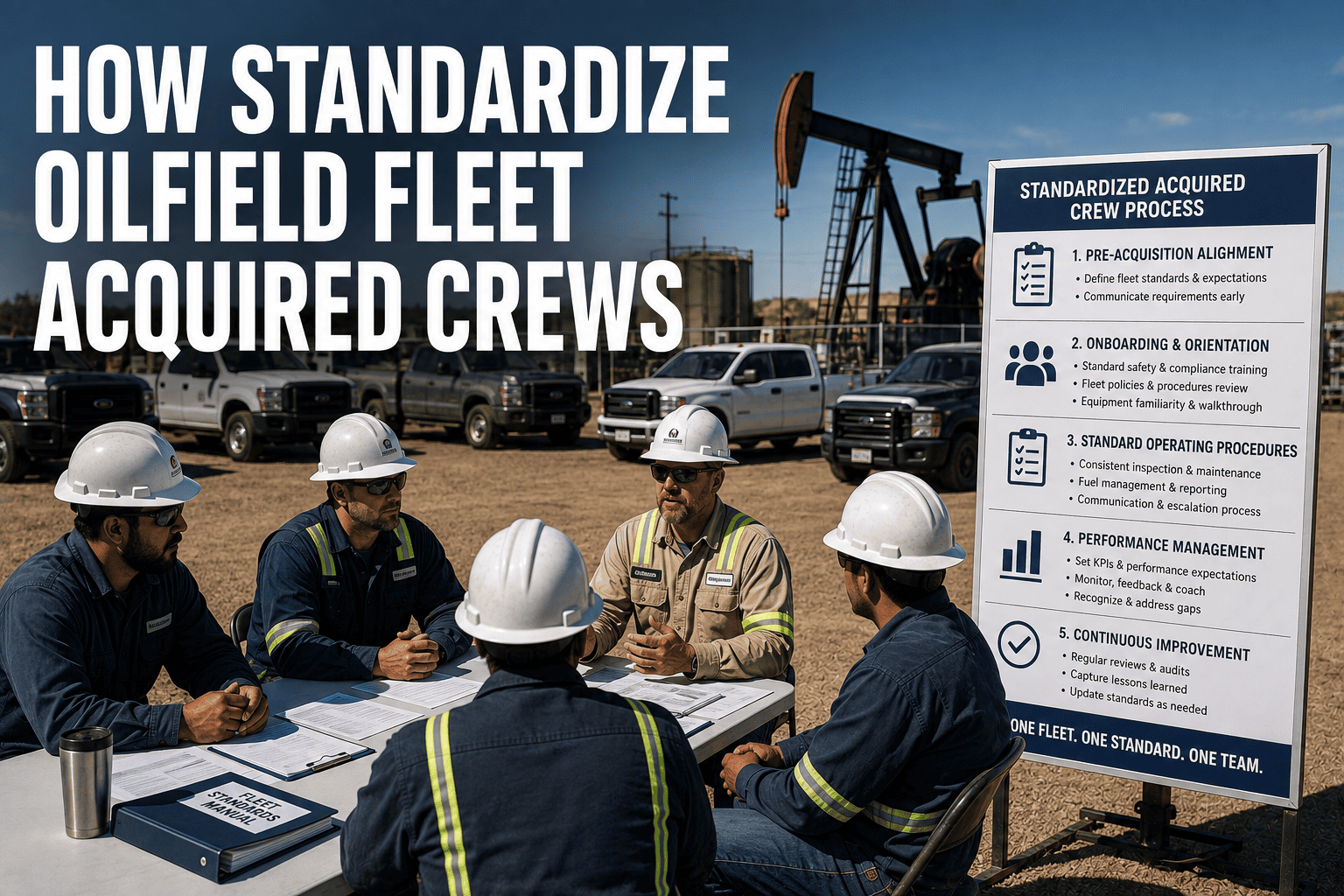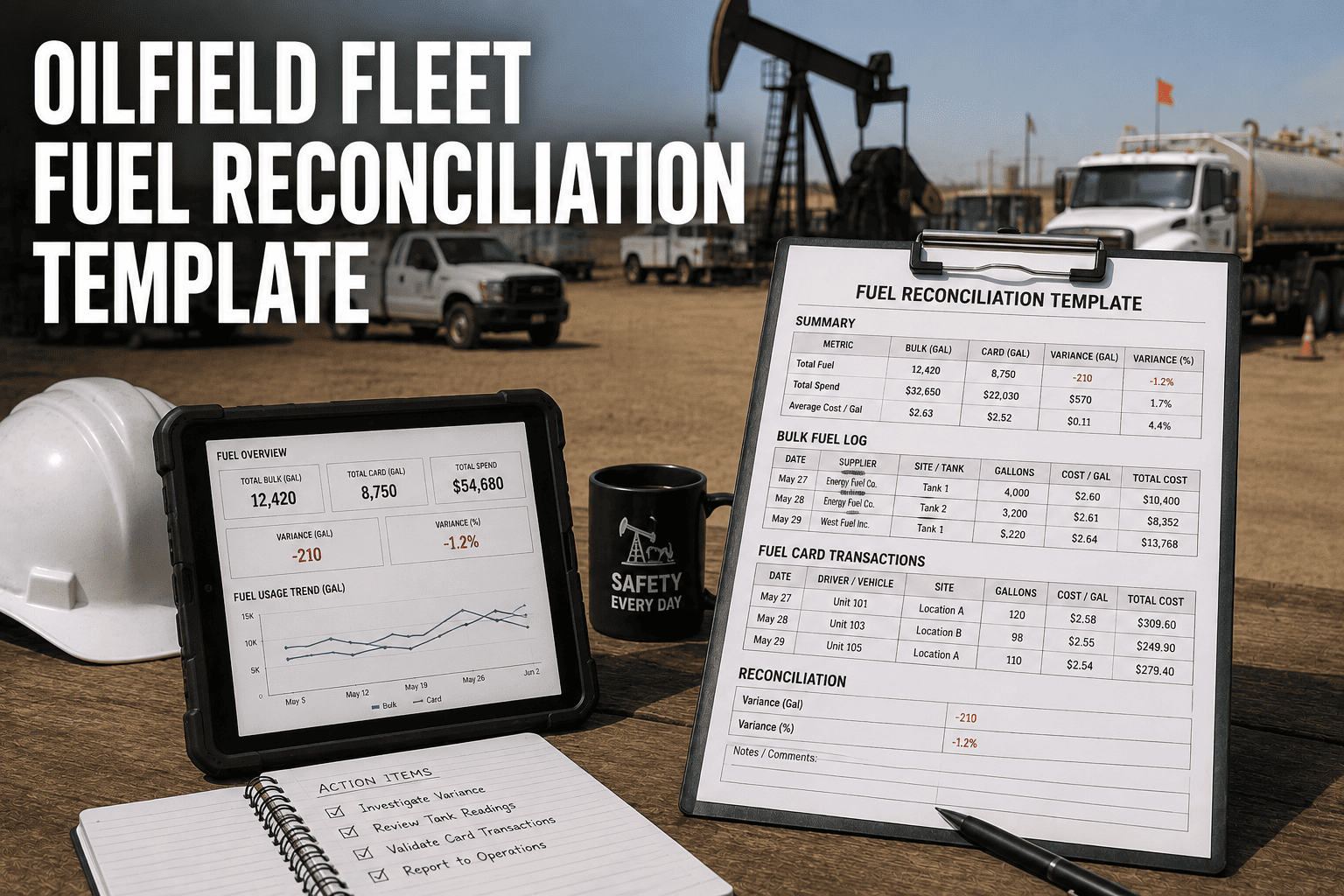
Mergers and acquisitions in the oil and gas sector in 2026 are creating fleet compliance integration challenges that due diligence processes consistently underestimate — because the fleet management compliance infrastructure of an acquired oilfield operator is rarely visible from the financial and reserves data that drive acquisition valuations. An acquirer purchasing a Permian Basin upstream operator with 180 production and service vehicles discovers, in the 90 days following close, that the acquired fleet's maintenance records exist in a legacy CMMS that does not export to the acquiring company's systems, that driver certification files are maintained in 14 separate spreadsheets by different field supervisors across three basin locations, that vehicle registration and insurance documentation is managed by an outsourced fleet administration company whose contract terminates 60 days after close, and that the FMCSA DOT number on the acquired fleet's vehicles must be transferred to the acquirer's operator authority within 30 days or the vehicles are operating out-of-service. None of this appears on the balance sheet that was audited during due diligence. All of it creates immediate regulatory, insurance, and operational risk in the integration window. The fleet compliance integration problem in oilfield M&A is not just a data migration challenge — it is a live compliance continuity obligation that must be maintained without interruption across the transition, because FMCSA, ADNOC, and state regulatory frameworks do not provide a grace period for post-acquisition compliance documentation reconstruction. FleetRabbit's unified fleet compliance platform addresses the M&A integration challenge directly — by providing a single destination for all compliance records, certification data, vehicle documentation, and inspection histories from both acquired and acquiring fleets, configured to the combined entity's regulatory obligations from a single deployment. Book a demo to see how FleetRabbit manages fleet compliance continuity during oilfield M&A integration.
How to Manage Oilfield Fleet Compliance During a Mergers and Acquisitions Integration
M&A activity in oil and gas is surging in 2026. The fleet compliance integration challenge — unifying two operator's maintenance records, driver certifications, vehicle registrations, and HSE documentation under a single platform without compliance gaps — is the hidden operational risk that financial due diligence consistently misses. FleetRabbit solves it from day one of integration.
Six Fleet Compliance Risks That Oilfield M&A Due Diligence Consistently Misses
Financial and reserves due diligence in oilfield acquisitions examines production data, reserve estimates, facility condition, environmental liability, and contractual obligations. Fleet compliance infrastructure is rarely examined in comparable depth — producing a class of post-close surprises that generate immediate regulatory and operational risk in the integration window.
Legacy Maintenance Records in Non-Exportable CMMS
Acquired fleet maintenance histories frequently exist in legacy CMMS platforms — or in paper filing systems — that cannot be exported to the acquirer's systems in a format that satisfies FMCSA or ADNOC audit standards. Without accessible maintenance records, the acquirer cannot demonstrate systematic maintenance management for the acquired fleet in the event of a post-close regulatory inspection.
Driver Certification Files Distributed Across Field Supervisors
Oilfield operators with distributed basin operations frequently maintain driver qualification files — CDL copies, DOT medical certificates, H2S awareness records, site access credentials — in supervisor spreadsheets or local filing systems at each site rather than in a centralised compliance platform. Post-close, these files are difficult to locate, incomplete, and sometimes held by supervisors who have departed with the seller.
DOT Operator Authority Transfer Deadline
Vehicles operating under the seller's FMCSA DOT number must be transferred to the acquirer's operator authority within the regulatory transition window — failing to complete this transfer means the vehicles are operating under an authority that no longer reflects the controlling entity, which is an FMCSA violation at any roadside inspection conducted after the transfer deadline.
Operator Client Prequalification Tied to Seller Entity
Contractor prequalification status in systems like Achilles, ISNetworld, and PICS — and direct client operator prequalification with ADNOC, Saudi Aramco, or major IOCs — is held by the selling entity. Post-close, the acquiring entity must requalify, which typically requires 60–120 days and prevents the acquired fleet from accessing certain client operator sites during the requalification window if site access is conditional on prequalification status.
Inspection Records Not Meeting Regulatory Evidentiary Standards
Pre-acquisition inspection records maintained on paper or in non-compliant digital formats may not satisfy the tamper-evident, timestamped evidentiary standards required by FMCSA, DVSA, or ADNOC. Post-close, when the first regulatory audit or incident investigation requests historical inspection records, the acquirer discovers that the compliance documentation of the acquired period is legally insufficient.
Duplicate Fleet Management Systems Creating Compliance Data Silos
Operating the acquired and acquiring fleets on separate fleet management platforms — even temporarily during the integration period — creates compliance data silos that prevent cross-referencing, disable unified reporting, and require double maintenance of driver certification and vehicle documentation records. Every month of dual-system operation increases the compliance gap between what the combined entity's records show and what a unified regulatory audit would require.
Unified Fleet Compliance from Day One of Integration — Both Fleets, One Platform, Zero Documentation Gap
FleetRabbit provides the unified compliance infrastructure that eliminates each M&A fleet integration risk — consolidating both fleets' maintenance records, driver certifications, vehicle documentation, and inspection histories into a single platform that generates regulator-ready audit packs for the combined entity from the first day of operation.
How FleetRabbit Manages Fleet Compliance Continuity Through an Oilfield M&A Integration
Historical Maintenance Record Import — Converting Legacy Data to Audit-Ready Format
FleetRabbit's data import module accepts maintenance records from legacy CMMS platforms, spreadsheets, and paper-digitisation sources — converting historical records to the tamper-evident, timestamped format that satisfies FMCSA, DVSA, and ADNOC audit standards for the combined fleet's historical period. Post-import, the combined fleet's maintenance history is available in a single compliance database — searchable by asset, date range, and maintenance category — enabling auditors examining the pre-acquisition period to receive complete records from the same system as post-acquisition records.
Centralised Driver Certification Database — Consolidating Distributed Qualification Files
FleetRabbit's driver certification module consolidates distributed driver qualification files from both the acquiring and acquired fleets into a single database — with unlimited certificate types per driver, independent expiry dates, and automated 60/30/7-day renewal alerts. During the integration period, the fleet compliance team can complete the driver qualification file consolidation in FleetRabbit rather than attempting to locate and centralise physical files from distributed field supervisors. Once loaded, the combined fleet's driver certifications are visible and managed from a single dashboard — with dispatch blocking active for expired Critical certifications from the first day of consolidated operation.
Vehicle Documentation Consolidation — Registration, Insurance, and Compliance Certificates
FleetRabbit's asset certification module stores vehicle registration documents, insurance certificates, roadworthiness certificates, MOT/inspection records, and equipment-specific certifications — each with independent expiry dates and renewal alerts — for every vehicle in the combined fleet. During the post-close DOT number transfer process, FleetRabbit maintains a real-time record of which acquired fleet vehicles have completed authority transfer and which remain under the seller's DOT authority — enabling the acquiring entity's compliance team to track the transition without manual spreadsheet management. When insurance certificates transition from the seller's policy to the acquirer's, FleetRabbit flags each vehicle as the certificate is updated — preventing dispatch of vehicles with expired coverage.
Unified Regulatory Audit Pack Generation — Combined Fleet, Any Period, Any Jurisdiction
Following an oilfield acquisition, the first post-close FMCSA or ADNOC audit may examine fleet compliance records across both the pre-acquisition period (under the seller's operator authority) and the post-acquisition period (under the acquirer's authority). FleetRabbit generates complete audit packs covering both periods from a single database — with the historical records imported from the seller's systems alongside the post-close records generated by FleetRabbit's continuous compliance tracking. For multi-jurisdiction operations across FMCSA, DVSA, ADNOC, and DGMS regulatory frameworks, FleetRabbit generates jurisdiction-specific audit packs from the same underlying data without manual reformatting for each regulatory audience.
Fleet Compliance Intelligence for VP and C-Suite Leaders Managing Oilfield Integration
For operations VPs, CFOs, and integration directors managing an oilfield M&A, fleet compliance is a risk management instrument — one that determines regulatory exposure, insurance premium continuity, and operator client relationship status during the most operationally sensitive period of any acquisition.
Combined Fleet Operational Visibility from Day One of Integration
Operations VPs managing the combined entity need real-time visibility across both the acquiring and acquired fleets — vehicle positions, certification status, open maintenance alerts, and compliance flags — from a single dashboard that does not require switching between the seller's legacy platform and the acquirer's existing system. FleetRabbit provides this unified operational view from the first day of deployment, with both fleet assets visible in a single hierarchy and the same compliance standards applied across the combined vehicle register.
Fleet Compliance Liability Quantification for Post-Close Financial Reporting
CFOs responsible for post-close integration reporting need fleet compliance liability quantification — the value of open maintenance backlogs, the cost of expired certification remediation, the penalty exposure from documentation gaps, and the insurance premium implications of the acquired fleet's compliance record. FleetRabbit generates the fleet compliance health report that supports these quantifications within days of deployment, enabling the finance team to identify and provision for integration costs that were not visible in pre-close due diligence.
HSE Compliance Continuity Across Both Fleet Populations Without Documentation Gap
HSE directors are responsible for ensuring that the acquired fleet operates to the acquirer's HSE standards from the first day of combined operations — regardless of what standards the seller maintained. FleetRabbit enables immediate deployment of the acquirer's inspection protocols, driver safety standards, and certification requirements across the acquired fleet — with digital DVIR enforcement, driver certification blocking, and incident reporting workflows active from day one of integration without waiting for the full platform migration to complete.
Integration Timeline and Compliance Milestone Tracking
Integration directors managing the fleet compliance workstream need milestone tracking — DOT number transfer completion status per vehicle, certification file consolidation progress, insurance certificate transition percentage, and operator client requalification submission status. FleetRabbit's compliance dashboard provides these integration milestone metrics in real time — enabling integration directors to report progress accurately and identify workstreams falling behind the integration schedule before they create compliance gaps.
Eliminate the Hidden Fleet Compliance Risks in Your Oilfield M&A Integration — From Day One of Close
FleetRabbit deploys unified fleet compliance across both the acquiring and acquired fleet — historical record import, driver certification consolidation, vehicle documentation management, DOT authority tracking, and combined audit pack generation — in 5–7 working days. At $3/vehicle/month for the combined fleet, the platform eliminates the compliance gaps that would otherwise cost multiples of the platform investment in regulatory penalties, insurance adjustments, and requalification remediation costs.