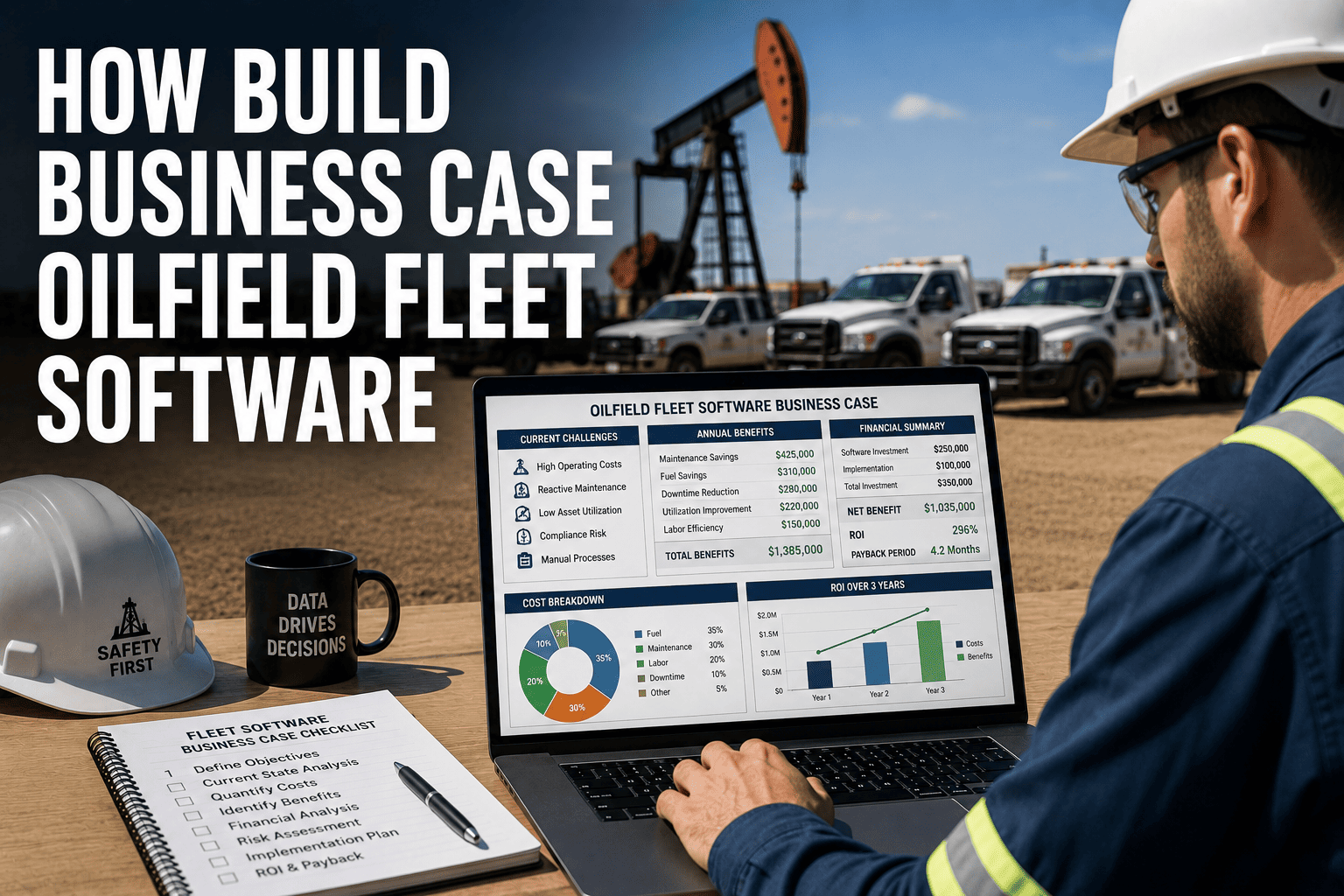
In the oilfield industry, securing budget for new technology can be an uphill battle. Fleet managers know that predictive maintenance saves money, but convincing a CFO to approve the spend requires hard numbers. The challenge is that preventative ROI is invisible—you must prove the cost of breakdowns that did not happen. Justifying predictive maintenance spend requires measuring avoided towing, emergency repair premiums, and recovered downtime. FleetRabbit provides the exact data needed to build an undeniable business case. You can sign up for FleetRabbit to track your maintenance ROI, or book a demo to see our predictive analytics platform.
Predictive maintenance reduces unplanned downtime by 30 to 50 percent, but justifying the spend requires quantifying avoided costs. A single prevented catastrophic engine failure can save 15,000 to 40,000 dollars. Tracking avoided towing, labor premiums, and lost revenue proves a 300 to 500 percent ROI within the first year of implementation.
The Challenge of Justifying Maintenance Budgets
Justifying maintenance budgets in the oilfield industry is uniquely challenging because the primary benefit of the spend is the absence of a negative event. When a fleet manager requests 50,000 dollars for predictive maintenance software, the CFO looks at the cost. The fleet manager must then prove that the software will save more than 50,000 dollars in avoided towing, roadside repairs, and missed delivery penalties. This requires shifting the conversation from cost to value. Without hard data showing the exact financial impact of past breakdowns, the budget request will be denied, and the fleet will remain stuck in a reactive, expensive cycle.
The Problem with Reactive Cost Tracking
Reactive cost tracking only captures the tip of the iceberg. When a truck breaks down, the accounting department logs the tow bill and the mechanic's invoice. However, they rarely log the lost revenue from the missed delivery, the penalty fee from the oilfield operator, or the cost of dispatching a backup truck. Because these secondary costs are not tracked, the true financial impact of reactive maintenance is artificially low. When the total cost of a breakdown is hidden, it is impossible to prove the ROI of preventing it.
Proving the Value of Avoided Breakdowns
To prove the value of avoided breakdowns, you must calculate the Total Cost of Ownership (TCO) for a failure. If a truck breaks down on a lease road, the TCO includes the tow (1,000 dollars), the emergency repair (3,000 dollars), the lost daily revenue (800 dollars), and the operator penalty (500 dollars). That single event cost 5,300 dollars. If predictive software prevents just 10 of these events a year, it saves 53,000 dollars. To calculate your specific savings, you can sign up for FleetRabbit to track your maintenance ROI, or book a demo to see our predictive analytics platform.
FleetRabbit tracks every avoided breakdown, emergency repair premium, and recovered downtime hour. Give your CFO the hard data they need to approve your predictive maintenance budget. Start your free trial today to start measuring your true ROI.
The Financial Impact of Predictive ROI
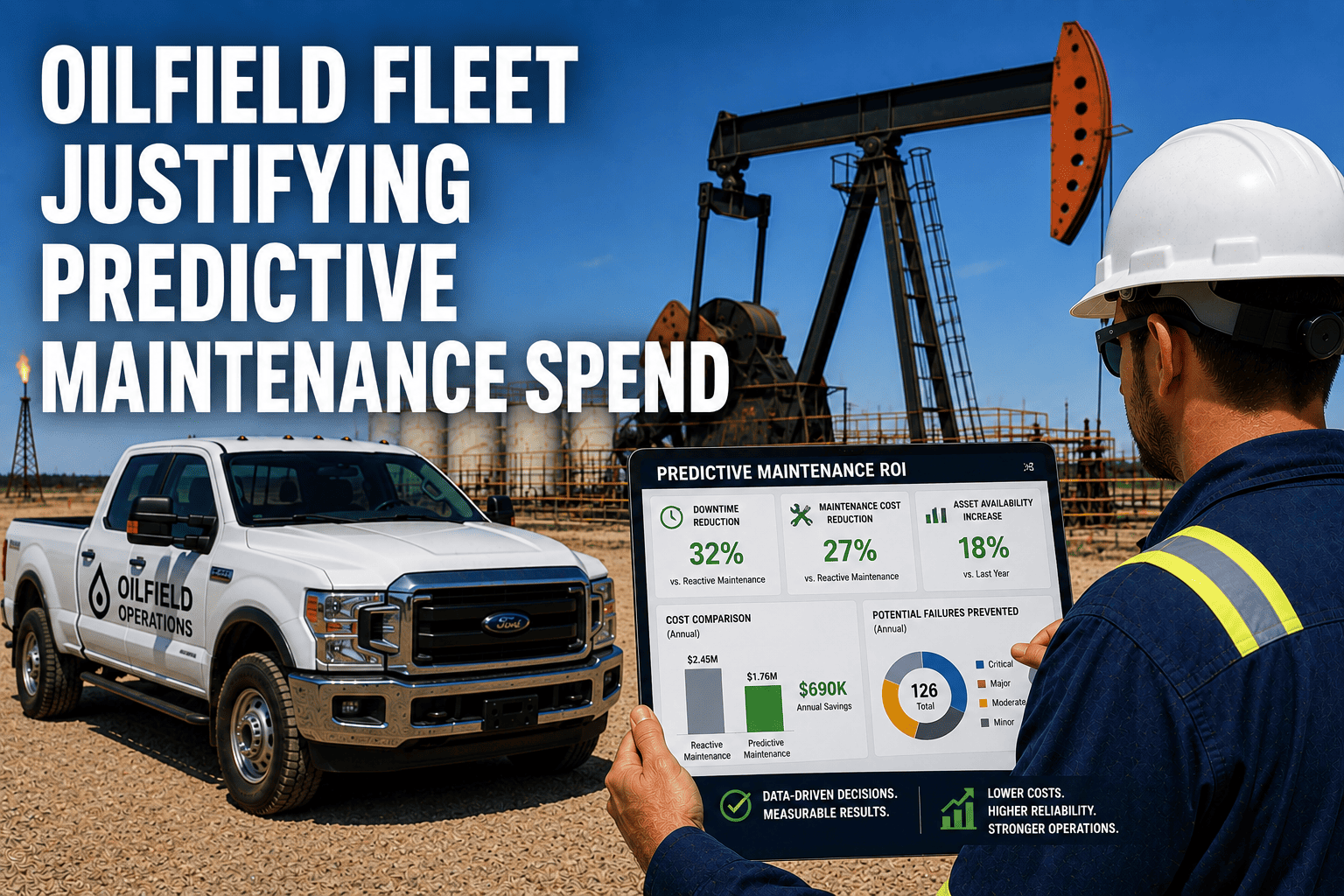
The financial impact of predictive maintenance ROI is massive and measurable. Fleets that shift from reactive to predictive maintenance models see a 30 to 50 percent reduction in unplanned downtime. This translates directly to recovered revenue. A 50-vehicle oilfield fleet running a predictive program can save 150,000 to 300,000 dollars annually in avoided emergency repairs and recovered operational hours. Additionally, predictive maintenance extends vehicle lifecycles by 15 to 20 percent, deferring capital expenditures by a year or more. These savings directly hit the bottom line, turning the maintenance department from a cost center into a profit center.
| ROI Metric | Reactive Cost | Predictive Savings | FleetRabbit Tracking |
|---|---|---|---|
| Roadside Towing | 1,000 to 2,500 dollars | Prevented entirely | Logs avoided tows via PM alerts |
| Emergency Labor | 150 to 200 dollars per hour | Standard 75 dollar shop rate | Compares reactive vs planned labor costs |
| Expedited Parts | 2x to 3x standard pricing | Standard inventory pricing | Tracks parts markup premiums avoided |
| Lost Revenue | 500 to 1,500 dollars per day | Zero downtime during shifts | Calculates recovered operational hours |
| Asset Lifecycle | 8 to 10 years | 10 to 12 years | Tracks deferred capital expenditure ROI |
Strategies to Build the Business Case
Building a business case for predictive maintenance spend requires translating mechanical health into financial terms. The first strategy is calculating avoided downtime. You must quantify how many hours your fleet was down last year due to unplanned failures, and multiply that by your revenue per hour. The second strategy is presenting the Total Cost of Ownership for a breakdown, proving that a 2,000 dollar repair actually cost the company 6,000 dollars in secondary impacts. By presenting these numbers to executives, you transform the conversation from a request for software to a request for profit protection.
Calculating Avoided Downtime
Avoided downtime is the most powerful metric for justifying maintenance spend. If your fleet experienced 500 hours of unplanned downtime last year, and your average revenue per hour is 400 dollars, that downtime cost you 200,000 dollars. If predictive maintenance reduces unplanned downtime by 40 percent, you recover 80,000 dollars in lost revenue. This single calculation often pays for the software multiple times over. FleetRabbit automatically tracks downtime hours and links them to failure types, making this calculation instantaneous.
Presenting the Total Cost of Ownership
Presenting the TCO of a breakdown forces executives to look at the hidden costs. A blown radiator hose might cost 200 dollars to fix in the shop. But if it blows on a remote well site, the TCO includes a 1,500 dollar tow, a 500 dollar hotel for the driver, a 1,000 dollar missed delivery penalty, and 800 dollars in lost daily revenue. The true cost of that 200 dollar hose was 4,000 dollars. By showing how predictive maintenance prevents these 4,000 dollar events, the software spend is easily justified. To build this case, you can sign up for FleetRabbit to track your maintenance ROI, or book a demo to see our predictive analytics platform.
How FleetRabbit Proves Maintenance Value
Modern maintenance management requires technology that connects mechanical health directly to financial outcomes. FleetRabbit's integrated platform combines telematics, work orders, and downtime tracking into a single dashboard. The system monitors engine health, predicting failures before they happen. When a failure is prevented, the system logs the event, calculating the avoided tow, labor premium, and downtime cost. This provides maintenance directors with an undeniable ledger of saved capital, ready to present to the CFO at any moment.
Real-Time Breakdown Prevention
Real-time breakdown prevention means catching a temperature spike or a DTC (Diagnostic Trouble Code) before it strands a truck. FleetRabbit monitors telematics data 24/7. If a truck's transmission temperature rises abnormally, the system alerts the mechanic. Instead of waiting for the transmission to fail on the highway, the mechanic schedules a fluid change during a planned break. This proactive intervention saves the 8,000 dollar cost of a transmission rebuild and keeps the truck generating revenue.
Executive ROI Dashboards
Executive ROI dashboards translate mechanical data into financial reports. Instead of showing the CFO a list of oil changes and brake pads, FleetRabbit shows them a dashboard detailing "Avoided Costs: 45,000 dollars" and "Recovered Revenue: 120,000 dollars." This financial framing is the key to unlocking budget approvals. By presenting maintenance as a financial investment with a quantifiable return, you eliminate the friction between the shop and the front office, securing the capital needed to run a world-class operation.
Key Takeaways for Maintenance Spend
Justifying predictive maintenance spend is the most critical step in modernizing an oilfield fleet. Relying on reactive maintenance drains capital through emergency repairs and hidden downtime costs. A data-driven approach to maintenance ROI proves that predictive software pays for itself many times over by avoiding catastrophic failures and extending asset lifecycles. Fleets that fail to build this business case will remain trapped in a cycle of expensive, reactive chaos.
Implementing a comprehensive predictive tracking system delivers a 300 to 500 percent ROI within the first year. The return is immediate, not just in recovered capital, but in standardized operations, improved safety, and protected contract SLAs. Oilfield operators demand reliable equipment, and FleetRabbit provides the exact digital documentation needed to deliver maximum uptime.
The path forward is clear. Evaluate your current maintenance budget and ask if you can prove the ROI of your last preventative repair. If you are relying on reactive tracking, you are losing capital. Fleet managers who address maintenance ROI systematically protect their profitability and operational reliability. You can sign up for FleetRabbit to track your maintenance ROI, or book a demo to see our predictive analytics platform.
Frequently Asked Questions About Maintenance Spend
Every day you rely on reactive maintenance is a day you lose hidden capital to emergency repairs and downtime. FleetRabbit tracks your avoided costs and proves your ROI, turning your maintenance department into a profit center. See a 300 percent ROI within months. Start your free trial today with no credit card required.