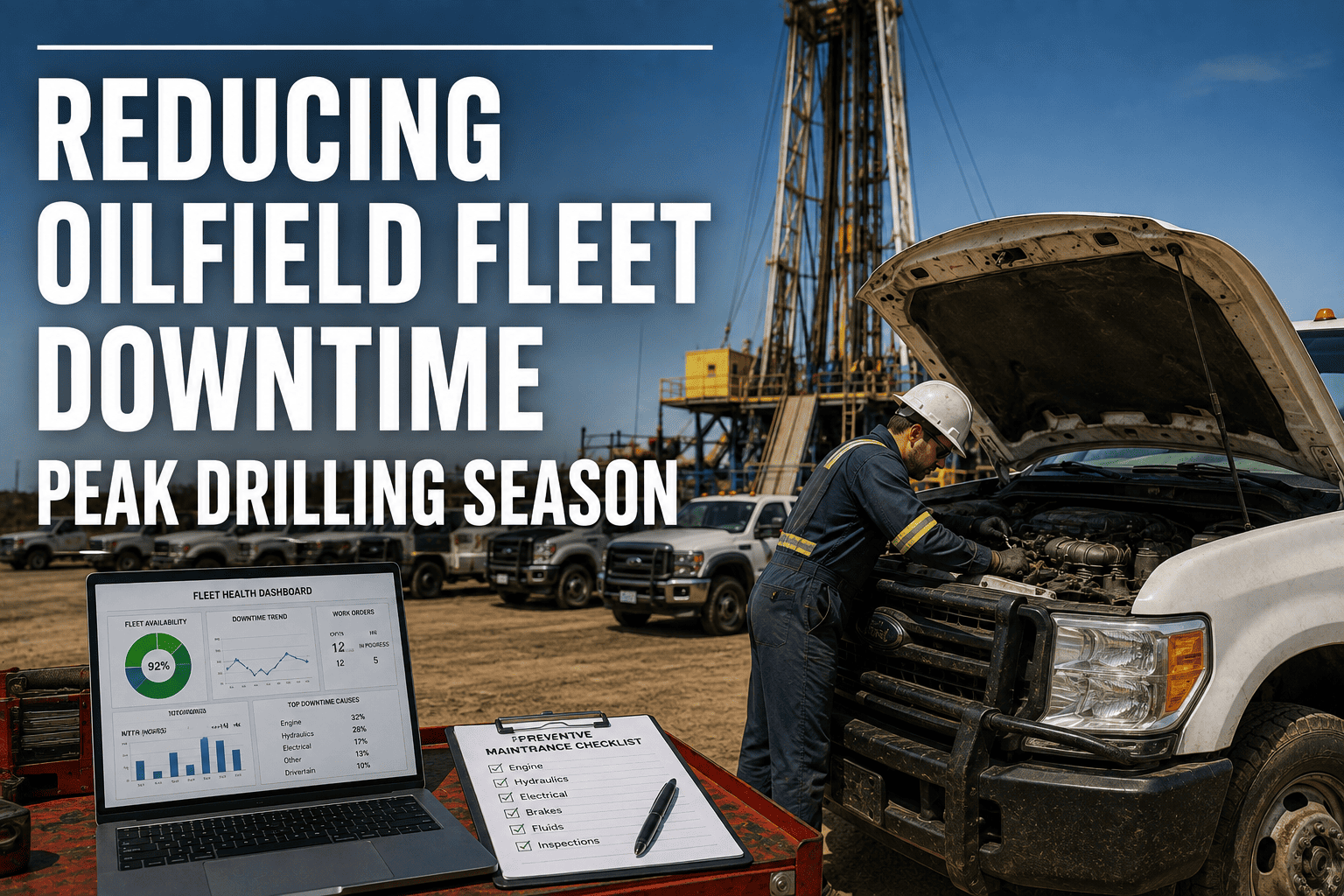
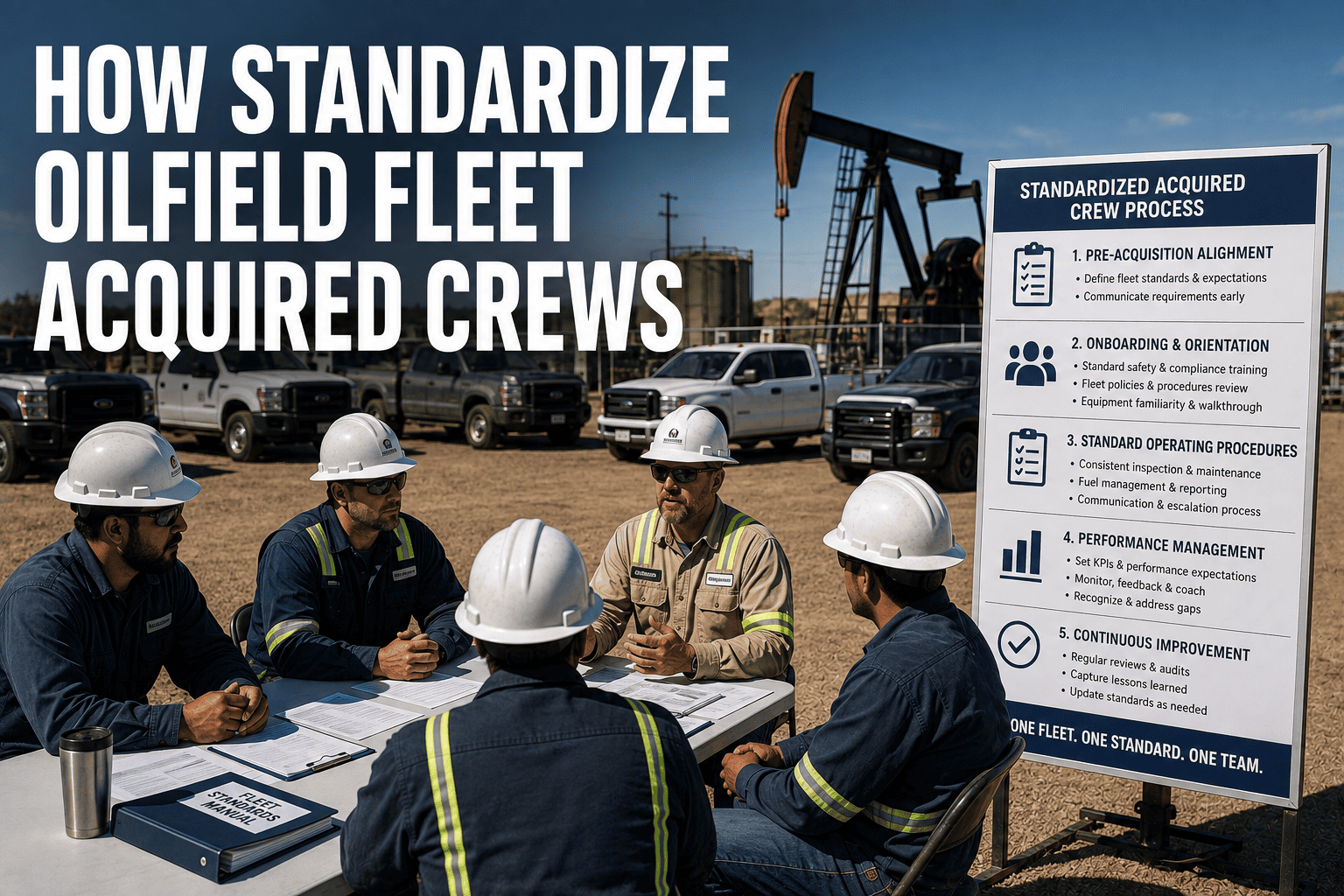
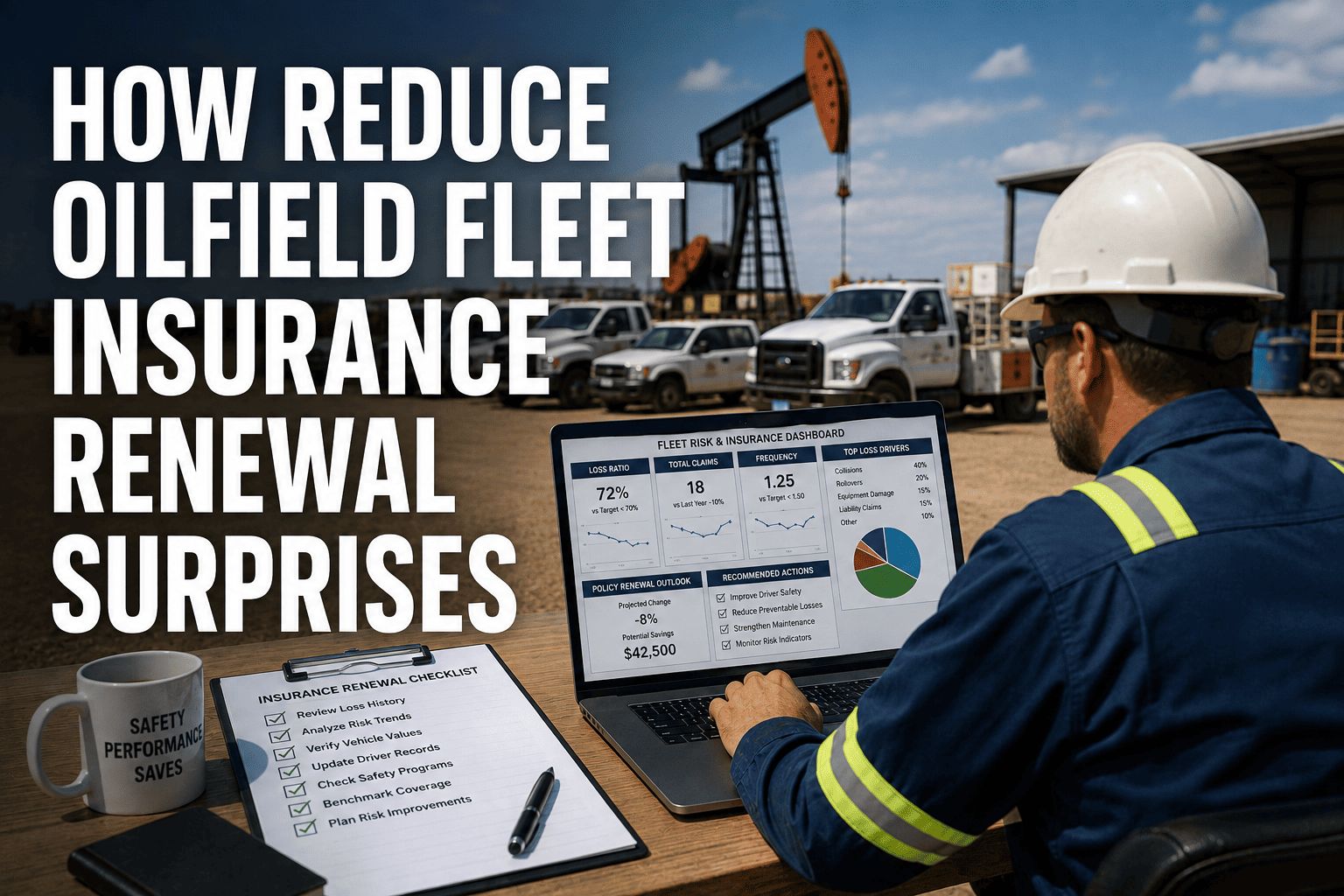
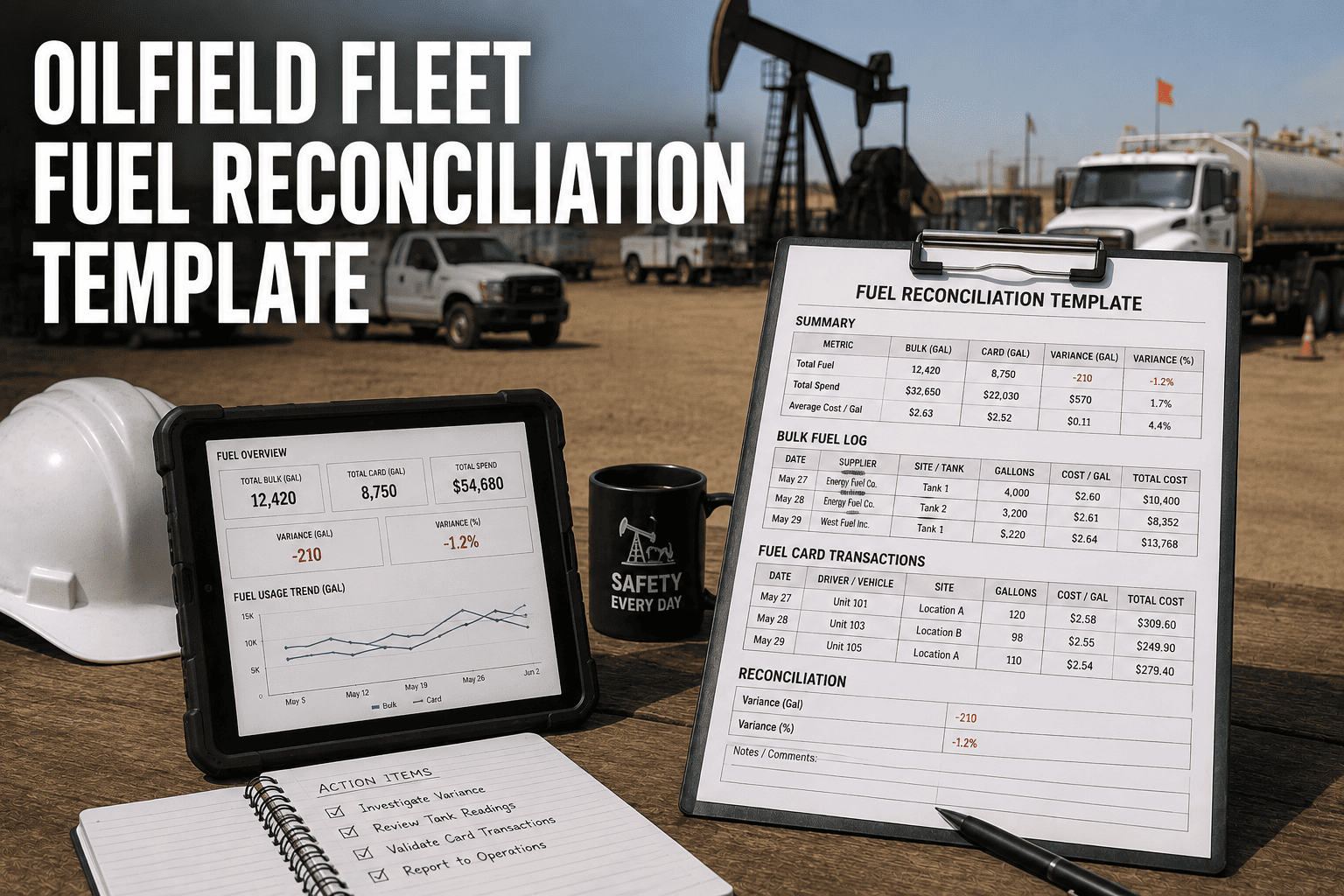
A mid-size Eagle Ford operator managing 180-vehicle fleet supporting drilling, completion, and production maintenance operations across South Texas faced escalating maintenance costs, declining fleet reliability, and compliance documentation failures threatening both operational continuity and regulatory standing. Annual maintenance expenditures reached $2.1 million representing a 28% increase over two years despite flat operational activity, unplanned downtime averaged 9.4% of available fleet hours costing $1.1 million annually in missed service windows and drilling delays, and compliance records fragmented across paper files at four dispersed field offices created significant DOT and OSHA audit exposure. Following a structured FleetRabbit deployment over 14 months, the operator achieved documented results including 38% reduction in maintenance costs, 71% decrease in compliance documentation time, 14% fuel consumption reduction, and fleet availability improvement from 90.6% to 96.8%. Schedule a consultation to discuss how FleetRabbit delivers similar results for your oilfield fleet.
FLEETRABBIT — OILFIELD CASE STUDY
How an Eagle Ford Operator Transformed Fleet Maintenance and Achieved $1.4M Annual Savings
Operator:Mid-size E&P company, drilling and production support
Fleet Size:180 vehicles across South Texas Eagle Ford operations
Timeline:14-month implementation — pilot, deployment, and optimization
$1.4M
Annual Cost Savings
38%
Maintenance Cost Reduction
96.8%
Fleet Availability Achieved
1,847%
Return on Investment
PRE-IMPLEMENTATION CHALLENGES
Four Converging Problems Demanding Digital Transformation
The operator faced escalating costs and declining reliability simultaneously — a combination that traditional reactive fleet management approaches could not address without systematic operational transformation through digital platform deployment.
01
Escalating Maintenance Costs
Annual maintenance spend: $2.1M — up 28% over two years
Unplanned repairs: 71% of total maintenance spend
Emergency repair cost: $3,900 average vs $780 for scheduled service
Catastrophic failures: 39 incidents annually requiring complete replacement
Reactive maintenance approach resulted in preventable catastrophic failures consuming disproportionate budget. Without systematic fault monitoring, underlying mechanical issues went undetected until breakdown — forcing expensive emergency responses at 5x planned maintenance cost.
02
Unplanned Downtime Revenue Impact
Fleet availability: 90.6% baseline — 9.4% unplanned downtime
Average repair duration: 5.1 days from breakdown to return-to-service
Annual revenue impact: $1.1M from missed windows and drilling delays
Customer complaints: 19 formal notifications in 12-month period
Unpredictable breakdowns required emergency vehicle rentals at premium rates, scrambled backup equipment from active job sites, and damaged client relationships through missed service commitments threatening contract renewals.
03
Fuel Cost Without Consumption Visibility
Annual fuel expenditure: $3.4M across 180-vehicle fleet
Idle time: Estimated 38-42% of engine hours — no systematic tracking
Route efficiency: No GPS validation of actual vs optimal routing
Driver behavior: Zero visibility into acceleration, speeding, or idle patterns
Absence of systematic fuel monitoring prevented identification of waste sources. Fleet managers suspected excessive idling and inefficient routing but lacked data to quantify losses or target interventions across dispersed field operations.
04
Compliance Documentation Gaps
DVIR completion rate: 69% — 31% of inspections missing or incomplete
Driver certifications: 21% expired credentials undetected in manual system
Maintenance records: Paper files at 4 field offices — many incomplete
Audit preparation: 16 hours weekly assembling compliance reports
Fragmented compliance records created significant DOT audit risk with potential penalties $1,000-$16,000 per violation. Manual tracking failed to alert supervisors when certifications expired — allowing non-compliant drivers to operate vehicles across active drilling programs.
These operational challenges are common across oilfield fleets relying on manual processes and reactive management. FleetRabbit's integrated platform addresses all four simultaneously — predictive maintenance, GPS tracking, automated compliance, and unified analytics. Start a free trial to assess your fleet's improvement potential.
FLEETRABBIT DEPLOYMENT APPROACH
Phased Implementation — Pilot, Scale, Optimize
The operator adopted a deliberate phased approach — validating capabilities through a 35-vehicle pilot before full deployment, building internal expertise, and using pilot results to secure executive sponsorship for fleet-wide investment.
Months 1–3 — Pilot
35-Vehicle Pilot Validating Core Capabilities
Pilot Scope
GPS telematics installation on 35 representative vehicles across equipment types
Driver mobile app training covering digital DVIR and route logging
Historical maintenance data import for AI baseline model establishment
90-day measurement period with weekly executive progress reviews
Pilot Outcomes
7 potential failures prevented through predictive alerts with 8-16 day advance warning
Driver mobile app adoption reached 91% within 30 days of training
Maintenance costs decreased 22% vs comparable pre-pilot period
Executive approval secured for full fleet deployment
Months 4–9 — Full Deployment
Platform Rollout Across Entire 180-Vehicle Fleet
Deployment Approach
Geographic wave rollout — 35-40 vehicles monthly managing implementation bandwidth
Fleet champions designated at each of four field locations for peer support
Historical compliance records digitized into centralized platform database
Unified DVIR and work order procedures replacing location-specific legacy practices
Deployment Results
All 180 vehicles GPS-equipped and integrated into platform by Month 9
Fleet-wide driver adoption: 87% active mobile app usage
Initial fleet-wide maintenance cost reduction: 19% vs Year-1 baseline
Compliance documentation time decreased 48% through automated DVIR
Months 10–14 — Optimization
Advanced Analytics and Continuous Improvement
Optimization Initiatives
AI model refinement — false positive rate reduced from 24% to 9% through feedback loops
Driver idle coaching program with monthly scorecards and recognition for top performers
Route optimization using GPS data to eliminate unnecessary repositioning mileage
Vendor performance analytics identifying underperforming maintenance contractors
Mature State Performance
Maintenance costs stabilized 38% below pre-implementation baseline
Fleet availability improved to 96.8% from 90.6% baseline
Fuel consumption decreased 14% through idle reduction and route optimization
Compliance documentation achieving 97% completion with 71% time reduction
PROVEN OILFIELD DEPLOYMENT METHODOLOGY
FleetRabbit Deploys in 3-4 Weeks With Measurable ROI Within 30-60 Days
The phased pilot-to-deployment approach used in this Eagle Ford case study is FleetRabbit's standard implementation methodology — validating results with a fleet subset before fleet-wide investment, generating quick wins that build organizational momentum.
QUANTIFIED RESULTS — 14-MONTH IMPLEMENTATION
$1.4M Annual Savings Across Four Benefit Categories
Before
$2,100,000
Annual maintenance spend
→
After
$1,302,000
38% cost reduction
$798,000 Annual Savings
34 catastrophic failures prevented through predictive alerts — avg $16,800 per avoided failure
Planned repair timing eliminating emergency labor premiums and expedited parts costs
19% component life extension through early fault intervention reducing replacement frequency
Before
90.6%
Fleet availability
→
After
96.8%
Fleet availability
$762,000 Revenue Protected
Unplanned failures decreased 71% eliminating majority of multi-day vehicle unavailability events
Average repair duration from 5.1 days to 1.9 days through advance parts pre-positioning
PM scheduling during operational gaps preventing service deferrals cascading into forced downtime
Before
$3,400,000
Annual fuel expenditure
→
After
$2,924,000
14% fuel reduction
$476,000 Annual Savings
Idle time reduced 34% through monitoring and driver coaching — eliminating 82,000 gallons annual waste
Route optimization reduced total miles 7% by eliminating unnecessary repositioning
Driver behavior improvement — 4.2% fuel efficiency gain through acceleration and speed coaching
Before
16 hrs/wk
Compliance documentation
→
After
4.6 hrs/wk
71% time reduction
$318,000 Annual Labor Value
Digital DVIR processing eliminating paper collection, transcription, and multi-office filing
Automated certification expiration alerts replacing manual spreadsheet tracking across 180 drivers
1.8 FTE redeployed from manual fleet administration to value-added operational roles
TOTAL RETURN ON INVESTMENT
$1.4M Annual Benefits Against $64,800 Platform Investment
Platform Investment
$64,800
180 vehicles × $3/vehicle/month × 12 months
Total Annual Benefits
$1,354,000
Maintenance + Revenue + Fuel + Admin savings
Net Annual ROI
1,847%
($1,354,000 − $64,800) ÷ $64,800 × 100
17 Days
Investment payback period — platform cost recovered in first 17 operational days
This Eagle Ford case study demonstrates the transformative financial impact of integrated digital fleet management. FleetRabbit delivers measurable ROI within weeks of deployment for oilfield fleets through predictive maintenance, GPS tracking, automated compliance, and unified analytics. Schedule a consultation to model your fleet's improvement potential.
KEY IMPLEMENTATION INSIGHTS
Lessons Learned From Successful Fleet Digital Transformation
01
Pilot Programs Build Organizational Confidence
The 35-vehicle pilot validated platform capabilities and generated objective ROI evidence that secured executive approval for full deployment. Pilot metrics provided justification that internal advocacy alone could not achieve — transforming a technology discussion into a documented financial decision.
02
Change Management Determines User Adoption
Designated fleet champions at each field location drove 87% driver mobile app adoption within 60 days. Peer-to-peer training and recognition programs for early adopters prevented the resistance that undermines platform value realization when implementation focuses exclusively on technology deployment without behavioral change management.
03
Data Quality Enables Predictive Accuracy
Dedicated historical maintenance data validation ensured AI algorithms trained on accurate vehicle history producing reliable fault predictions. Operators who skip data quality investment during implementation consistently report higher false positive rates that erode user trust in system recommendations and reduce proactive maintenance response rates.
04
Optimization Phase Compounds Initial Gains
Post-deployment model refinement reduced false positives from 24% to 9% while driver coaching and route optimization generated compounding benefits. Mature state performance exceeded pilot projections significantly — the improvement trajectory continues beyond the 14-month measurement window as fleet managers develop sophisticated analytics utilization for strategic decisions.
FREQUENTLY ASKED QUESTIONS
Common Questions About FleetRabbit Implementation and ROI
How quickly can oilfield fleets expect measurable ROI after FleetRabbit deployment?
Most operators see initial maintenance savings within 30-60 days as predictive alerts prevent first catastrophic failures. Fuel savings from idle reduction typically emerge within 45-75 days as driver coaching takes effect. Full platform ROI for fleets of 100+ vehicles typically achieved within 90 days — this Eagle Ford case demonstrates 17-day payback through early optimization focus.
Can FleetRabbit operate in remote oilfield locations without reliable cellular connectivity?
Yes. The mobile application operates fully offline — storing inspection data, GPS coordinates, and service records locally on devices. When connectivity restores, data synchronizes automatically with original timestamps preserved. Optional satellite telemetry modules provide real-time alerting for critical assets in cellular dead zones common across South Texas and Permian Basin lease road networks.
What internal resources are required to manage FleetRabbit after deployment?
Minimal ongoing resources required. Typical commitment is 2-4 hours weekly for alert review and workflow management plus 1-2 hours monthly for reporting and optimization planning. Platform automated alerting, reporting, and PM scheduling eliminate the manual administrative burden that previously consumed 16 hours weekly in this case study — the net resource requirement decreases significantly versus pre-implementation baseline.
Can FleetRabbit integrate with existing maintenance and accounting systems already deployed?
Yes. FleetRabbit provides API integration with major CMMS platforms, ERP systems including SAP, Oracle, and Microsoft Dynamics, and fuel card providers. Integration enables automatic work order creation, parts consumption tracking, and cost allocation without duplicate data entry — consolidating operational data into existing financial reporting frameworks without requiring system replacement.
Does FleetRabbit support compliance documentation beyond DOT vehicle inspections?
Yes. FleetRabbit covers DOT FMCSA commercial vehicle compliance, OSHA PSM mechanical integrity inspection documentation for pressure vessels and process equipment, EPA SPCC environmental monitoring records, and customizable client HSE prequalification packages for ISNetworld and Avetta — all within a single platform producing GPS-verified audit trail documentation.
Can we start with a subset of capabilities before deploying the full platform?
Yes. FleetRabbit supports phased capability deployment starting with highest-priority modules — predictive maintenance for immediate cost savings, GPS tracking for dispatch optimization, or compliance automation for audit risk reduction. This phased approach mirrors the pilot methodology used in this Eagle Ford case study and generates quick wins that build organizational support for full platform deployment.
READY TO TRANSFORM YOUR OILFIELD FLEET OPERATIONS?
Achieve Similar Results With FleetRabbit's Integrated Fleet Management Platform
This Eagle Ford operator's documented experience demonstrates what systematic digital fleet management achieves when implemented with clear objectives and phased deployment. FleetRabbit's predictive maintenance AI, real-time GPS tracking, automated compliance documentation, and unified analytics deliver measurable ROI through maintenance cost reduction, uptime improvement, fuel efficiency gains, and administrative efficiency — with typical payback periods under 30 days and annual returns exceeding 1,800% for mid-size oilfield fleets.
180-vehicle Eagle Ford implementation documented
$1.4M annual quantified savings across four categories
1,847% ROI with 17-day investment payback
38% maintenance cost reduction through predictive AI
96.8% fleet availability from 90.6% baseline
14% fuel consumption reduction via idle management
97% compliance documentation rate achieved
3-4 week standard deployment timeline
May 13, 2026
By David
All Posts