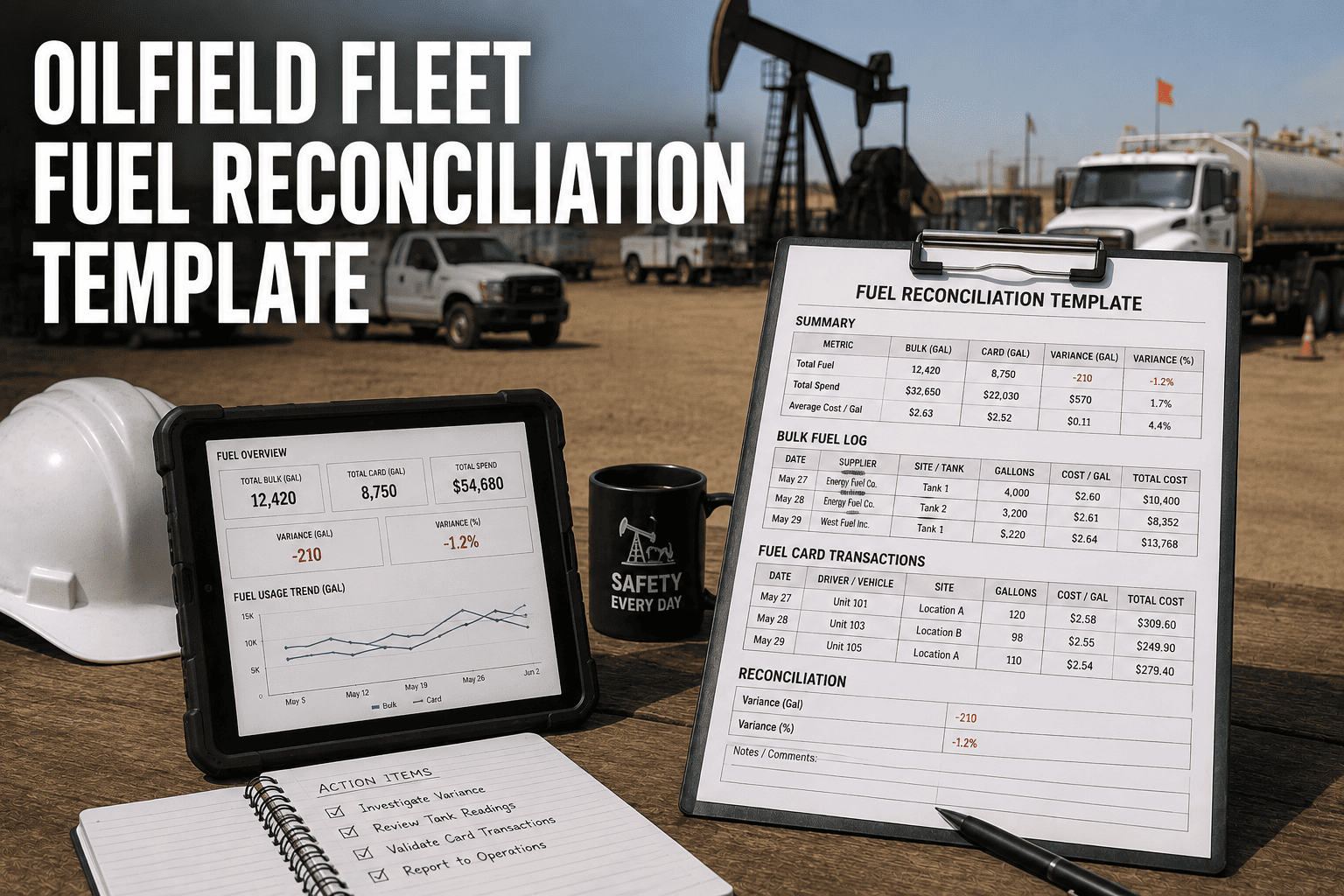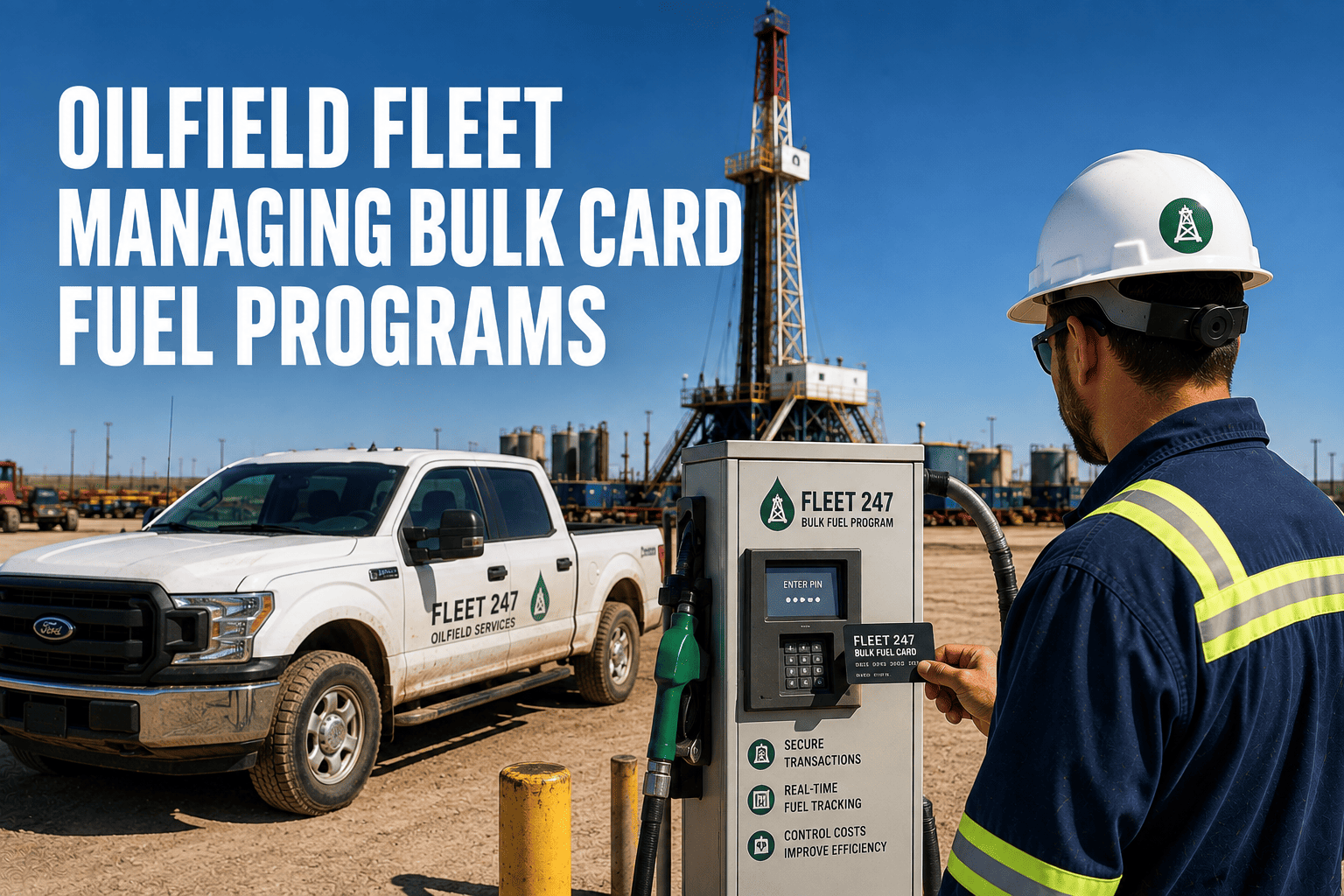
Most oilfield fleets do not run on one fuel system. They run on two. A bulk tank sits at the yard or the wellsite, feeding trucks and equipment before the day even starts, while a fuel card rides in every driver's wallet for the fill-ups that happen out on the road. Each system generates its own records, its own totals, and its own version of what happened to a gallon of diesel. When those two versions do not match, and they rarely do without help, fleet managers are left guessing whether the gap is a bad meter, a long idle period, or something that walked off the lot. Sign up free to bring both fuel streams into one dashboard, or book a demo to see how FleetRabbit reconciles bulk and card data automatically.
Oilfield fleets typically fuel 80 to 90 percent of volume from bulk tanks at the yard or wellsite, with fuel cards covering the remaining road trips and out-of-area stops. Card programs return 2 to 8 cents per gallon in rebates, while bulk delivery accounts save 35 to 70 cents per gallon on the same volume. Without a unified tracking system, fleets typically cannot explain 5 to 10 percent of total fuel spend, which is where most unmonitored loss hides.
Two Fuel Systems, One Confusing Picture
Bulk tanks and fuel cards were never designed to talk to each other. The bulk tank tells you how much fuel left the storage vessel. The fuel card tells you how much a driver paid for at a retail pump. Neither one tells you how much fuel actually reached an engine, and neither one flags the difference on its own. For an oilfield fleet running haul trucks, water trucks, generators, and light vehicles across scattered wellsites, that gap compounds fast because so much of the fueling happens off-grid, away from any retail terminal that could otherwise create a paper trail.
Why the Two Systems Drift Apart
Bulk tank readings depend on manual dips, delivery tickets, and dispenser logs that are easy to skip during a busy shift. Card data depends on drivers entering odometer readings correctly and using the card only for the vehicle it is assigned to. Both processes rely on people doing the same tedious task correctly every single time, and both break down the same way: quietly, a little at a time, until the monthly numbers no longer line up with what the trucks actually did.
FleetRabbit pulls bulk tank readings and fuel card transactions into a single view, matched against GPS and engine hours, so discrepancies surface the same day instead of the same month. Sign up free and connect your first tank or card feed in minutes.
Bulk Fuel vs Fuel Cards: What Each One Is Actually Good At
Neither system is wrong for oilfield use. Each one solves a different fueling problem, and most oilfield fleets need both running at the same time. The mistake is treating them as two separate budgets instead of one fuel program that happens to have two delivery methods.
| Factor | Bulk Fuel Tank | Fuel Card |
|---|---|---|
| Best Use Case | High-volume fueling at a fixed yard or wellsite | On-road trips, remote stops, out-of-area travel |
| Typical Savings | 35 to 70 cents per gallon versus retail pricing | 2 to 8 cents per gallon in rebates |
| Order Commitment | Usually a 500 to 1,000 gallon minimum per delivery | No minimum, pay-as-you-go at the pump |
| Loss Risk | Siphoning, over-dispensing, unlogged draws | Card sharing, personal use, inflated fill-ups |
| Visibility Without a System | Manual dips and delivery tickets only | Monthly statement, days after the fact |
The Hybrid Model Most Oilfield Fleets Land On
The fleets that control fuel cost best rarely pick one system over the other. They run bulk delivery for the routine, high-volume fueling that happens at the yard every day, and keep a fuel card on each vehicle for the exceptions: a job that runs longer than expected, a truck stranded away from base, or a route that never comes back to the wellsite. That combination captures the bulk discount on most of the volume while keeping drivers covered wherever the work takes them.
A Simple Way to Split the Two
A useful starting rule is to route anything fueled on your own property through the bulk tank, and reserve the card strictly for fuel purchased somewhere else. Once that line is drawn clearly and enforced through card controls, most of the ambiguity in monthly fuel reports disappears on its own.
Building One Fuel Picture Instead of Two
Unifying bulk and card data is less about buying new hardware and more about giving both systems a common reference point: the vehicle, the driver, and the job. Once every gallon is tagged to those three things, regardless of which system dispensed it, the comparisons that used to take a full afternoon of spreadsheet work happen automatically.
FleetRabbit was built for fleets that fuel off-grid as often as they fuel on the road. Tank sensors, card feeds, and GPS data land in one report so nothing gets lost between systems. Book a demo to walk through your own bulk and card data with our team.
What to Track Every Week, Not Just Every Month
Weekly checkpoints catch small gaps before they turn into a real loss. These five checks take a few minutes once the two systems are unified, and they tend to be where the earliest warning signs show up.
Frequently Asked Questions
Stop treating your tank and your fuel cards like two separate businesses. FleetRabbit unifies both into a single, real-time view so every gallon is accounted for, no matter where it was dispensed. Sign up free with no credit card required, or book a demo to see it running on your own fleet data.