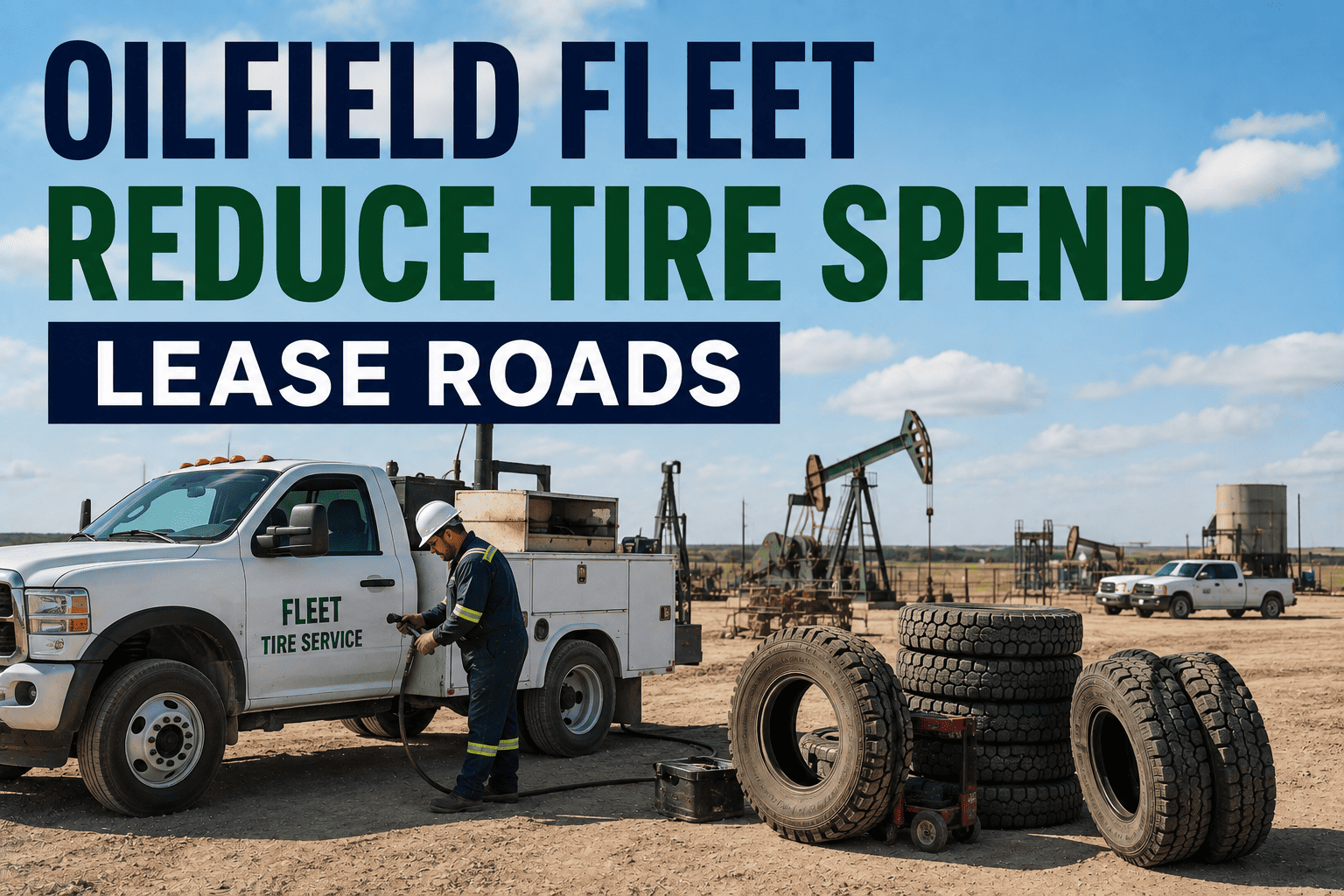
Controlling tire spend is one of the most frustrating challenges for an oilfield fleet manager. Lease roads are unforgiving, covered in sharp rocks, scoria, and extreme heat that shred standard rubber. When a heavy-duty truck tire fails on a remote well pad, the costs extend far beyond the seven hundred dollar replacement fee. You have to factor in the towing, the lost labor hours of the crew, and the delayed production. FleetRabbit provides the data-driven tire management tools necessary to track wear, identify route-specific hazards, and drastically reduce your oilfield tire budget. You can sign up today to get a handle on your fleet's tire expenses.
Tires represent up to twenty percent of an oilfield fleet's total maintenance budget. A single premature blowout on a lease road costs over fifteen hundred dollars when accounting for downtime and towing. Tracking tread depth and route conditions reduces tire spend by twenty five percent. You can sign up for FleetRabbit to transform how you manage your tire assets.
The Hidden Financial Drain of Lease Road Tires
In oilfield logistics, tires are consumed at an alarming rate. The combination of heavy loads, high ambient temperatures, and crushed rock surfaces creates a perfect storm for rubber degradation. When a tire blows out on a CTU or a water tanker, the financial impact cascades. The E&P operator is losing production time waiting for the crew, the service company is paying for emergency towing, and the fleet manager is buying a replacement tire at a markup. A single failed steer tire can cost over two thousand dollars when all secondary expenses are calculated.
Why Standard Highway Tires Fail in the Oil Patch
Highway rib tires are designed for smooth asphalt and constant speed. When subjected to the jagged edges of a freshly graded lease road, the sidewalls flex and overheat, leading to zipper ruptures. Furthermore, oilfield trucks frequently transition from paved highways at seventy miles per hour to crawling over rocky terrain. This transitional friction shears tread blocks off standard tires. To understand how specialized route tracking highlights these failures, you can book a demo with our team.
The True Cost of a Blowout
A blowout is never just the cost of the rubber. It involves the service call, the downtime of the vehicle, and the potential safety liability if the driver loses control. By the time a truck is towed back to the yard and patched up, a single fifteen hundred dollar tire has cost the operation over three thousand dollars. FleetRabbit digitizes your tire inventory, tracking the exact mileage and hour cycles of every piece of rubber on your truck. To stop paying for reactive blowouts, sign up for FleetRabbit today.
| Wear Factor | Impact on Oilfield Tires | FleetRabbit Tracking Feature |
|---|---|---|
| Scoria and Sharp Rock | Punctures and severe tread cutting | Route condition logging and geofenced hazard alerts |
| High Ambient Heat | Sidewall flexing and pressure overloads | Integration with tire pressure monitoring systems (TPMS) |
| Heavy Hauling Loads | Accelerated shoulder wear and cupping | Load weight tracking and axle distribution analysis |
| Mixed Surface Transition | Tread shearing from speed differential | Driver behavior monitoring and speed limit enforcement |
Stop throwing money at reactive tire replacements. FleetRabbit tracks tread wear, route hazards, and cost-per-mile to extend the life of your rubber. You can sign up now or book a demo to see the platform in action.
Implementing a Data-Driven Tire Program
The extreme environment of the oil patch demands a rigorous, proactive tire strategy. Simply buying the most expensive tire does not solve the problem if your drivers are speeding over rocky terrain or running under-inflated. Maintenance teams must transition from reactive replacements to condition-based interventions, tracking the actual lifecycle of every tire in the fleet.
Tracking Pressure and Tread Depth Digitally
Under-inflation is the leading cause of premature tire failure on lease roads. When a heavy truck tire runs low on air, the sidewall flexes excessively, generating immense heat that degrades the rubber compounds. FleetRabbit allows maintenance teams to log digital tread depth readings and integrate directly with TPMS sensors. If a tire is losing pressure slowly over several days, the system generates an alert to pull the truck into the shop before a blowout occurs on the well pad. To streamline your pressure tracking, sign up for FleetRabbit.
Route-Based Wear Analysis
Not all lease roads are created equal. A route covered in fresh, sharp scoria will destroy tires three times faster than a packed dirt path. FleetRabbit utilizes GPS tracking and geofencing to analyze route-specific wear. If a particular well pad is causing an abnormal spike in tire failures, fleet managers can identify the root cause and instruct drivers to take an alternate route or reduce their speed in that specific zone. If you want to analyze your route hazards, book a demo to explore our mapping features.
Do not let harsh lease roads shred your maintenance budget. FleetRabbit equips your fleet with the digital tread tracking, route analysis, and pressure monitoring needed to maximize tire life. Sign up today or book a demo to see how we can transform your operations.