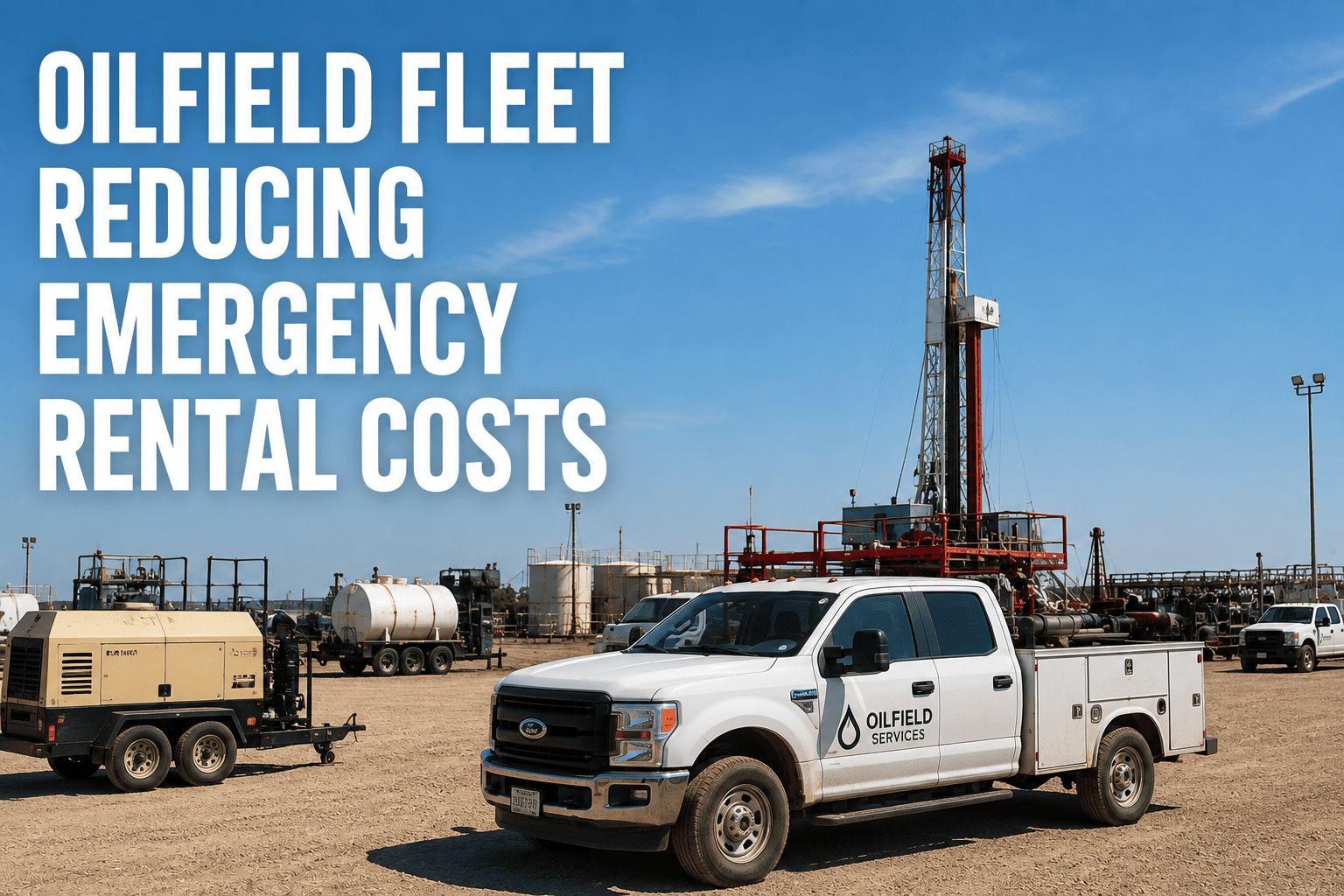
Nobody budgets for an emergency equipment rental. It shows up the moment a pump fails, a compressor seizes, or a service truck breaks down on a critical job, and suddenly the only option is calling a rental yard and paying whatever rate is available that day. That single phone call often costs more than the repair itself, and it is almost always avoidable with enough warning.
Oilfield fleets can reduce emergency rental costs by improving preventive maintenance, tracking vehicle health, and identifying potential breakdowns before they disrupt operations. Regular inspections, timely repairs, and accurate maintenance records help keep critical vehicles available and reduce the need for last-minute rentals. With better fleet planning and proactive maintenance, oilfield companies can lower unexpected expenses while maintaining reliable field operations.
Emergency oilfield equipment rentals typically run 800 to 2,500 dollars a day depending on equipment class, with surge pricing of 25 to 40 percent added during peak demand periods. Predictive maintenance that catches developing failures 5 to 15 days in advance gives fleets time to plan repairs or arrange standard-rate rentals instead, cutting emergency rental spend significantly.
The Anatomy of an Emergency Rental Bill
An emergency rental invoice rarely shows a single clean number. It stacks several cost layers on top of each other, and most fleet managers only see the full total after the equipment has already been returned.
A Worked Example of How Fast This Adds Up
Consider a critical service unit that fails unexpectedly and needs a replacement while repairs are completed. A comparable rental at 1,400 dollars a day for an eight-day repair window already reaches 11,200 dollars before adding surge pricing or mobilization fees. Layer in a 30 percent peak season premium and delivery charges, and a single emergency rental can easily clear 15,000 dollars, on top of the original repair bill and any lost production from the vehicle being unavailable in the first place.
FleetRabbit's predictive monitoring flags developing equipment failures 5 to 15 days in advance, giving you time to schedule repairs instead of scrambling for emergency rentals. Explore it with a free sign up or see it applied to your own fleet data.
Reactive Rentals vs Planned Alternatives
The equipment does not change, but the cost profile changes dramatically depending on whether the need was foreseen or forced. Comparing the two paths side by side shows exactly where the savings potential lives.
| Cost Factor | Emergency Reactive Rental | Planned Predictive Approach |
|---|---|---|
| Rental Rate | Peak surge pricing, 25 to 40 percent above standard | Standard negotiated rate booked in advance |
| Equipment Availability | Limited to whatever is left in the yard | Right-fit equipment reserved ahead of time |
| Mobilization | Rush delivery fees to a remote site | Standard delivery scheduling with no rush premium |
| Repair Duration | Extended by waiting on expedited parts | Shortened with parts pre-positioned in advance |
| Production Impact | Immediate disruption while a replacement is sourced | Repair scheduled during a planned operational gap |
How to Cut Emergency Rental Spend
Fleets that shift away from reactive rentals generally follow the same four-step path, regardless of fleet size or equipment mix.
Step 1: Monitor Equipment Health Continuously
Condition data from telematics and sensors flags bearing wear, pressure changes, and temperature anomalies weeks before they become a failure that forces an emergency rental.
Step 2: Rank Assets by Breakdown Risk
Not every unit needs the same attention. Ranking equipment by risk lets maintenance teams focus limited time on the assets most likely to fail and force a costly rental.
Step 3: Schedule Repairs Before Failure, Not After
Once a developing issue is flagged, repairs get scheduled during a planned gap in operations, removing the need for a same-day rental to keep work moving.
Step 4: Negotiate Standard-Rate Rental Agreements in Advance
For the rare cases where a rental is still needed, having a standing agreement at standard rates avoids surge pricing entirely, since the request is planned rather than urgent.
Why Prevention Beats Even the Best Rental Deal
No rental negotiation can match the savings of avoiding the rental altogether. Fleets that adopt predictive maintenance typically reduce unplanned breakdown frequency by more than half, which means the emergency rental scenario simply happens far less often in the first place.
FleetRabbit helps you catch failures early, rank risk across your fleet, and schedule repairs before a breakdown forces a costly rental. Get started with a free sign up, or book a demo to see it applied to your fleet.
Frequently Asked Questions
Every emergency rental is a cost you paid because a failure caught you off guard. FleetRabbit gives you the warning window to plan repairs instead of scrambling for surge-priced equipment. Start with a free sign up or book a short demo to see it on your own fleet.