Selecting fleet management software for oilfield operations requires evaluating capabilities that extend far beyond basic GPS tracking — energy companies must assess predictive maintenance integration, regulatory compliance automation, offline functionality for remote basins, ESG reporting readiness, and total cost of ownership across dispersed multi-site fleets. Traditional evaluation frameworks built for highway commercial transport miss the operational realities that define oilfield fleet management: equipment-hour based maintenance scheduling, wellsite idle monitoring, fuel theft detection at remote bowsers, and production-phase resource allocation that drives true operational efficiency. FleetRabbit's oilfield-optimized platform addresses these domain-specific requirements through a unified architecture that delivers fuel intelligence, predictive maintenance, digital inspections, and automated ESG reporting within a single cloud-native system — enabling fleet managers and executives to evaluate software investments against measurable outcomes rather than feature checklists. This selection guide details the evaluation criteria that matter most for oilfield fleet operations, the capability gaps that create operational risk, and the FleetRabbit differentiators that enable confident software selection for upstream and midstream energy companies. Book a demo to review FleetRabbit's selection framework for your fleet operation.
Oilfield Fleet Software Selection Guide for Energy Companies
Evaluate fleet management platforms against the operational realities that define oilfield success: equipment-hour maintenance scheduling, wellsite fuel intelligence, remote basin connectivity, and automated ESG reporting — all within a single architecture built for upstream and midstream operational complexity.
Critical Selection Criteria for Oilfield Fleet Software — Beyond Generic Feature Checklists
Oilfield-Specific Operational Capabilities
Generic fleet platforms calibrated for highway commercial transport miss the operational patterns that drive oilfield fleet costs: wellsite idle accumulation consuming 40–60% of engine hours without odometer advancement, fuel theft vulnerability at remote bowsers during non-supervised hours, and maintenance scheduling based on equipment hours rather than calendar dates. Evaluation must prioritize domain-specific functionality over generic feature counts.
Remote Basin Connectivity Architecture
Oilfield fleets operating across remote well pads, unpaved lease roads, and basin environments with limited cellular infrastructure cannot rely on cloud-only architectures that fail when connectivity drops. Data gaps compromise predictive modeling, delay incident response, and undermine compliance documentation — creating operational risk that generic platforms cannot mitigate.
Compliance Automation With Audit-Trail Verification
Investor ESG covenants, operator client Scope 3 requirements, and SEC climate disclosure rules demand emission metrics with audit-trail linkage to source records — not spreadsheet estimates or manual assembly. Platforms that cannot provide verifiable data create compliance risk and reporting burden that undermines the value of technology investment.
Transparent Pricing With Predictable Scaling
Many platforms advertise low monthly subscriptions but recover margin through mandatory implementation fees, integration consulting charges, hardware replacement requirements, and tier-gating for advanced capabilities. A $5/vehicle/month platform can exceed $15/vehicle/month in year one when hidden costs are included — creating budget variance that finance teams cannot forecast at procurement.
Evaluate Against Measurable Outcomes — Not Feature Checklists
FleetRabbit enables oilfield operators to evaluate software investments against verified operational outcomes: fuel cost reduction, downtime prevention, compliance efficiency, and ESG reporting accuracy. Selection frameworks built on measurable ROI deliver confident procurement decisions that strengthen operational performance across dispersed basin environments.
FleetRabbit Selection Framework for Finance, Operations, and Strategy Leadership
Total Cost of Ownership Analysis With Verified ROI Trajectory
FleetRabbit enables precise first-year cost calculation: monthly rate × vehicle count × 12 months. No implementation fees, no hardware costs, no training charges, no tier upgrades. ROI dashboards project savings timelines based on documented fuel reduction, downtime prevention, and compliance efficiency metrics — enabling confident capital allocation decisions across volatile energy markets.
Technology Roadmap Alignment With Evolving Operational Requirements
FleetRabbit's cloud-native architecture enables continuous capability expansion without infrastructure replacement. New AI models, regulatory reporting formats, and connectivity options deploy via platform updates — ensuring technology investments remain current with evolving oilfield operational requirements, regulatory frameworks, and energy market dynamics without disruptive system migrations.
Portfolio Intelligence Without Manual Data Consolidation
Live dashboards aggregate fuel efficiency, equipment health, safety metrics, and ESG performance across dispersed oilfield operations — updated continuously without field supervisor consolidation. Operations leaders identify underperforming assets, validate contractor compliance, and prioritize interventions based on correlated risk deviation from baseline.
ESG-Integrated Operational Reporting for Stakeholder Confidence
FleetRabbit's verified Scope 1 emission metrics integrate with financial and operational reporting for ESG covenant compliance and investor disclosure requirements. Idle reduction achievements appear simultaneously in cost savings reports and carbon reduction documentation — strengthening stakeholder confidence through transparent, verifiable performance metrics.
FleetRabbit Features That Distinguish Oilfield-Optimized Platforms From Generic Alternatives
Engine-Hour Consumption Baselines Replace Flawed Mileage Models
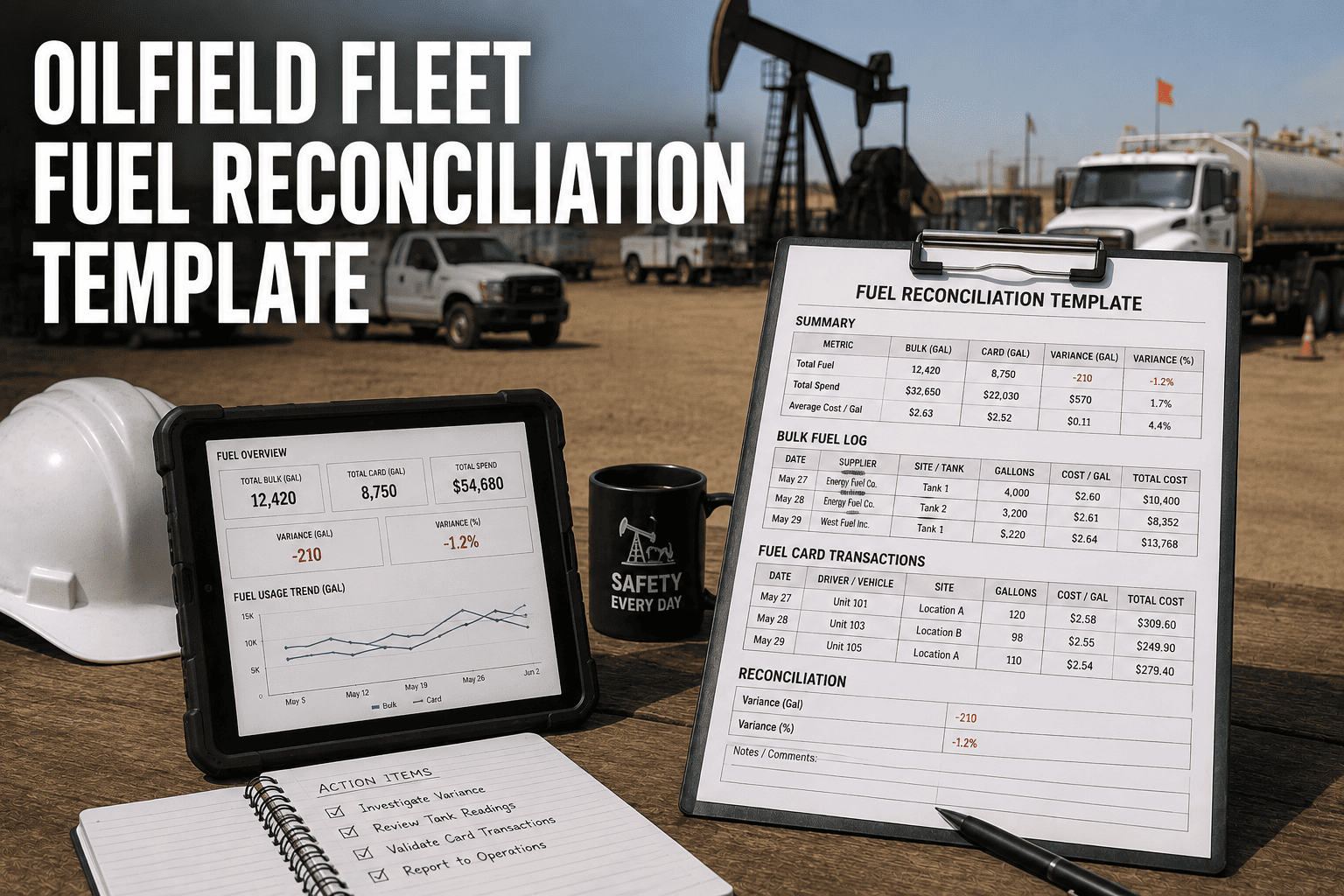
Oilfield fleet fuel budgets built on mileage-based consumption models produce systematic 25–40% variance because they ignore the reality that most fuel consumption occurs during wellsite idle and high-load pump operation, not transit. FleetRabbit builds accurate per-vehicle consumption baselines from engine-hour data within 30 days of deployment — enabling budget accuracy under 5% and providing the verifiable before/after comparison required to measure ROI from any efficiency initiative.
- 30-day baseline establishment from actual operational data
- Budget variance reduced from 25–40% to under 5%
- Above-baseline alerts identify vehicles with developing mechanical issues
Multi-Variable Fuel Anomaly Detection Prevents Theft Loss
Standard fuel monitoring systems check tank levels at fixed intervals — missing unauthorised drain events that occur between readings. FleetRabbit cross-references tank telemetry simultaneously with GPS position, engine status, shift schedule, and route corridor — detecting fuel level anomalies consistent with unauthorised drain within 8 minutes of occurrence. First drain event detection at deployment has been documented within 7 minutes of system activation, converting hidden 3–8% budget exposure into prevented loss.
- Under 8-minute detection time for drain anomalies
- False positive rate under 3% — alerts are actionable events
- Forensic evidence package auto-generated for incident investigation
Predictive Maintenance Forecasting With Equipment-Hour Scheduling
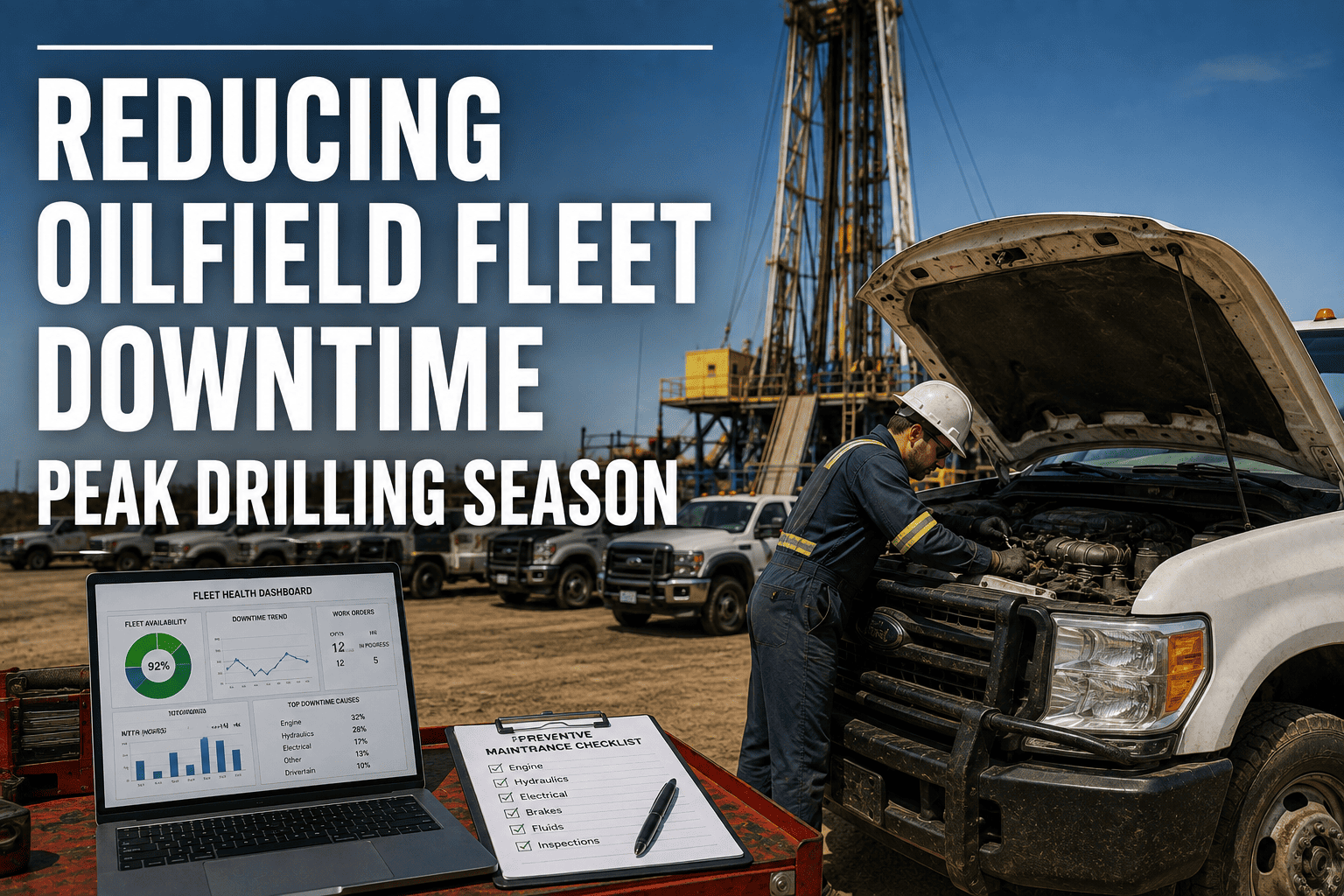
Calendar-based maintenance budgets misalign with oilfield equipment's highly variable duty cycles — pump units running 16 hours daily require dramatically different PM timing than vehicles on 10-hour dispatch rotations. FleetRabbit's equipment-hour PM scheduling ensures maintenance budget allocation occurs at the right mechanical interval rather than at administratively convenient calendar dates that create either premature or overdue service events.
- Predictive parts demand forecasting reducing emergency procurement premiums
- Technician scheduling coordination compressing total repair cycle time
- Maintenance budget variance reporting distinguishing planned from unplanned spend
Automated ESG Reporting With Audit-Trail Verification
FleetRabbit converts verified fuel consumption data into Scope 1 carbon metrics using standard emission factors, with direct linkage from reported figures to source telemetry records. Reports export in CDP, GRESB, and SEC formats without manual reformatting — satisfying third-party assurance standards while reducing compliance assembly time from weeks to hours.
- GHG Protocol, DEFRA, and EPA emission factor integration
- Audit-trail linkage from reported metrics to source vehicle telemetry
- Idle reduction quantified as verified emission reduction outcome
Select Fleet Software Against Verified Operational Outcomes — Not Generic Feature Checklists
FleetRabbit transforms routine telematics data into integrated operational intelligence that respects oilfield realities while delivering measurable improvement across multiple domains. With AI-powered anomaly detection, satellite-backed telemetry, automated ESG reporting, and predictive maintenance forecasting generated automatically from operational data, oilfield operators can deploy selection criteria that capture immediate value through fuel savings, downtime prevention, and compliance efficiency while building the operational foundation required for evolving energy market demands.