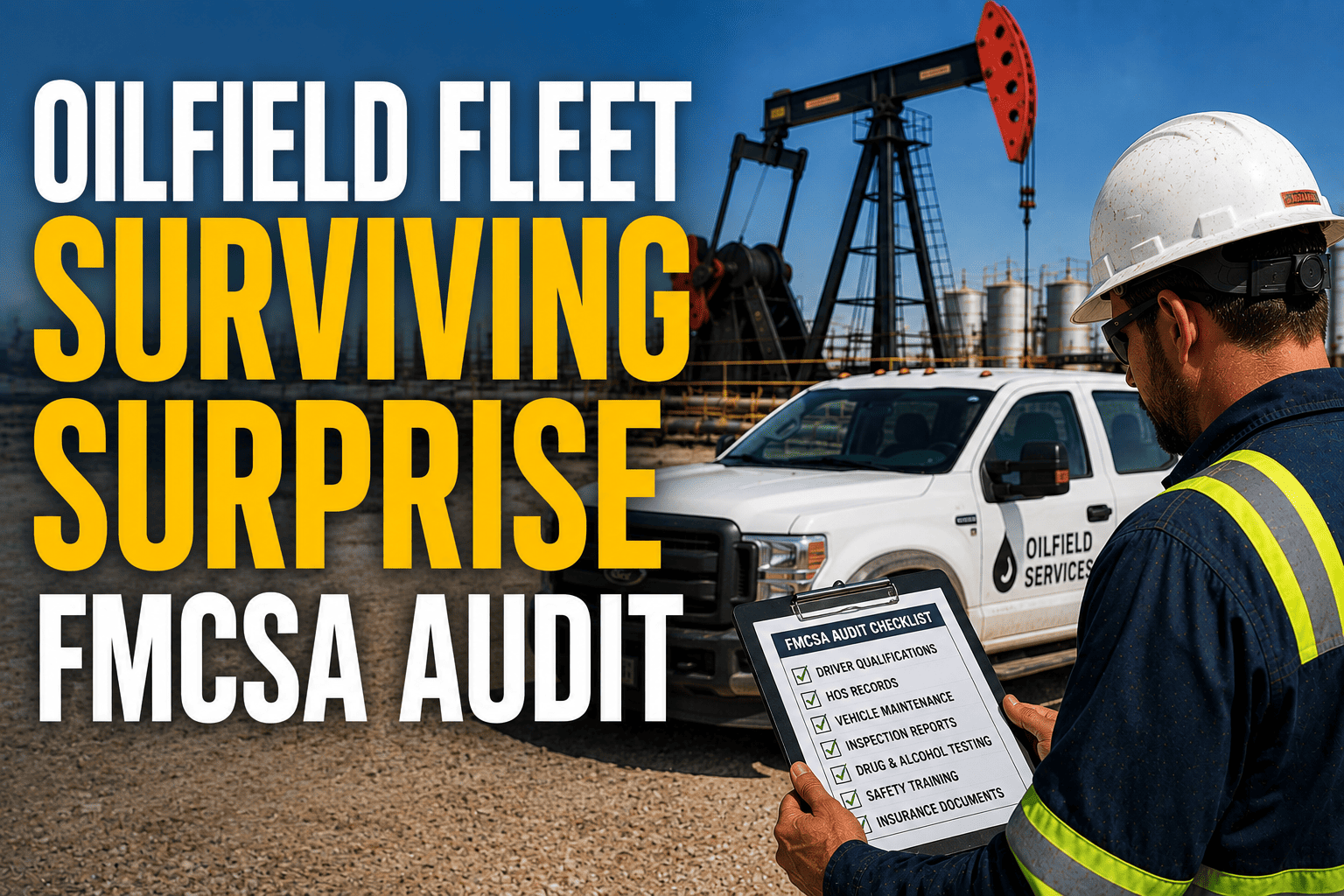
The letter shows up with no warning. FMCSA has scheduled a compliance review, and you have a matter of days to prove your oilfield fleet is running clean. For fleets hauling to remote lease sites, this moment separates operations that keep their authority from ones that get parked mid-route. The good news is that a surprise audit is only scary if your records are scattered across filing cabinets, driver glove boxes, and half-updated spreadsheets.
Auditors are not looking for perfection. They are looking for organization, current documentation, and proof that safety-sensitive positions are staffed by qualified, tested drivers. Get those three things right and most oilfield fleets walk out of a review with minor notes instead of major violations. This guide breaks down exactly what auditors check, in what order, and how FleetRabbit keeps every one of those records audit-ready before the letter ever arrives.
The Six Areas Every FMCSA Auditor Checks
Every compliance review, surprise or scheduled, works through the same six factors. Knowing the order they get reviewed in tells you exactly where to focus first.
FleetRabbit keeps every driver qualification file, HOS record, and maintenance log in one searchable system, ready to hand over the moment an auditor asks. Sign up free to get your fleet audit-ready, or book a demo to walk through your current compliance gaps.
What Triggers a Surprise Audit for Oilfield Carriers
Audits rarely happen at random. FMCSA increasingly runs focused reviews aimed at specific weak points its data already flagged, which means auditors often arrive already knowing where your fleet is exposed.
Common Triggers Worth Watching
Weak CSA Safety Measurement System scores, an above-average crash rate, a high-profile roadside incident, or a driver or customer complaint can all trigger a review. New motor carriers automatically receive a New Entrant Safety Audit within their first 18 months of operating under a USDOT number.
Why Oilfield Fleets Face Extra Scrutiny
Remote lease routes, extended shifts around rig schedules, and hazmat cargo put oilfield carriers under closer watch than typical regional fleets. Hours of service violations and vehicle maintenance findings are consistently the largest violation categories by volume, and both are especially easy to trigger on long, irregular oilfield routes.
The Real Cost of Getting Caught Unprepared
The numbers behind a failed review are steep enough to justify fixing your records before the letter arrives, not after.
Your Pre-Audit Readiness Checklist
Run through this list on a recurring basis, not just when a review is announced. Fleets that treat this as routine maintenance rarely scramble when the notice finally comes.
Building an Audit-Ready System Instead of a Filing Cabinet
The carriers who pass a surprise audit are not necessarily the safest ones on the road. They are the ones whose records were already organized before the letter arrived. Manual, paper-based systems make that nearly impossible once a fleet grows past a handful of trucks operating across scattered oilfield locations.
Centralize Every Record in One System
Driver qualification files, HOS logs, maintenance history, and Clearinghouse status should all live in a single platform, not four separate ones. A digital system also makes it possible to produce a complete file within the 48-hour window auditors expect.
Run Your Own Mini-Audit Quarterly
Reviewing every driver file and vehicle record against the checklist above once a quarter catches gaps while they are still easy to fix, well before an auditor finds them for you. You can create a free account and run this review directly inside FleetRabbit, or book a walkthrough to see how the platform flags expiring documents automatically.
FleetRabbit organizes driver qualification files, HOS records, maintenance history, and Clearinghouse status in one place, so a surprise FMCSA audit never catches your oilfield fleet off guard.