Fuel is quietly becoming the biggest line item on an oilfield fleet's balance sheet. Between remote well-site idling, harsh basin terrain, and diesel prices that have climbed past $4.50 a gallon in 2026, a 50-truck operation can bleed anywhere from 80000 to 250000 dollars a year without a single broken part or missed delivery. The frustrating part is that almost none of this waste shows up until the monthly fuel card statement lands, and by then the leak has already repeated itself for weeks. Fleet managers who get ahead of it treat fuel the same way they treat maintenance: as a metric to monitor daily, not a bill to absorb monthly.
Oilfield trucks idle 2.8 to 4.5 hours daily at well sites, burning 45 to 65 dollars per vehicle per day in pure waste. A 50-truck fleet loses 80000 to 250000 dollars annually to idling, poor routing, speeding, and undetected fuel theft. Fleets that adopt real-time fuel monitoring cut this waste by 20 to 30 percent within 90 days.
Where Oilfield Fleets Actually Burn Their Fuel Budget
Fuel waste in oil and gas operations rarely looks like one obvious problem. It is a combination of small, repeated leaks spread across every truck, every shift, and every well pad. Understanding exactly where the money goes is the first step toward getting it back, and most fleet managers are surprised by how much sits in categories they assumed were already under control.
Excessive Well-Site Idling
Trucks left running during wellhead setup, authorization waits, and cab comfort breaks account for the single largest share of oilfield fuel waste, often exceeding 40 percent of total consumption on a given route.
Inefficient Basin Routing
Long detours around lease roads, repeated backtracking between pads, and poor sequencing of stops add unnecessary miles that compound quickly across a fleet running the same basin every day.
Speeding And Harsh Acceleration
Every 5 mph driven over 50 mph adds roughly 0.29 dollars per gallon in fuel consumption. Aggressive acceleration and braking on remote access roads compounds this loss further.
Theft And Reconciliation Lag
Manual dip-stick checks and end-of-month card reconciliation mean unauthorized siphoning or dispenser drift can continue undetected for weeks before anyone notices the pattern.
FleetRabbit tracks tank telemetry, idle time, and route efficiency across every truck in your fleet, flagging waste the moment it happens instead of weeks later. Sign up free and see your first fuel report within days.
Idle Time: The Cost Hiding In Plain Sight
Idling feels harmless because the truck isn't moving and nothing appears to be going wrong. In reality, it is the single most expensive habit in oilfield operations, and it is almost entirely preventable once it becomes visible to a fleet manager rather than just the driver.
Why Oilfield Trucks Idle More Than Other Fleets
Unlike long-haul trucking, oilfield work involves frequent stops at wellheads where drivers keep engines running for cab comfort, equipment power, or simply because turning the truck off and on repeatedly feels inconvenient. Waiting for site access authorization and overnight engine-on periods during remote operations add even more idle hours that never show up as productive work.
The Real Dollar Impact Per Truck
At 4.50 dollars per gallon and 0.8 gallons burned per idle hour, a truck idling 3 to 4 hours daily costs between 45 and 65 dollars per day in pure waste, before a single mile is driven. Multiplied across a 50-truck fleet operating 300 days a year, that single habit alone can account for well over 150000 dollars in annual losses.
| Idle Scenario | Daily Idle Hours | Daily Fuel Cost | Annual Cost, 50 Trucks |
|---|---|---|---|
| Well-Managed Fleet | 1 to 1.5 hours | 15 to 22 dollars | 22500 to 33000 dollars |
| Typical Unmonitored Fleet | 2.8 to 4.5 hours | 45 to 65 dollars | 67500 to 97500 dollars |
| Overnight Engine-On Fleet | 6 to 8 hours | 72 to 96 dollars | 108000 to 144000 dollars |
Fleets that install real-time idle alerts, configured to flag any stop beyond 20 continuous minutes, typically see idle time drop by 20 to 30 percent within the first three months simply because drivers know the number is being tracked and coached against.
Route And Speed: Two Levers Most Fleets Still Ignore
Fuel efficiency conversations tend to focus entirely on idling, but routing and speed management often hold savings that are just as large and considerably easier to fix once the data is visible.
Basin-Aware Route Optimization
Lease roads, pad sequencing, and access restrictions make oilfield routing far more complex than standard delivery logistics. Fleets that use telematics to audit actual driven routes against the shortest viable path frequently discover 10 to 15 percent of miles driven are avoidable, translating directly into recoverable fuel spend without adding a single new vehicle.
Speed Discipline Adds Up Fast
Every 5 mph driven above 50 mph adds approximately 0.29 dollars per gallon in fuel burned. On remote basin roads where speeding is common and rarely enforced internally, this single behavior can quietly erase a large share of the savings a fleet gains from fixing idle time.
FleetRabbit ranks drivers by idle time, speed, and route efficiency so coaching conversations are backed by data instead of guesswork. Ready to see where your fleet stands? Book a free demo and walk through your own fuel report with our team.
Fuel Theft And The Reconciliation Lag Problem
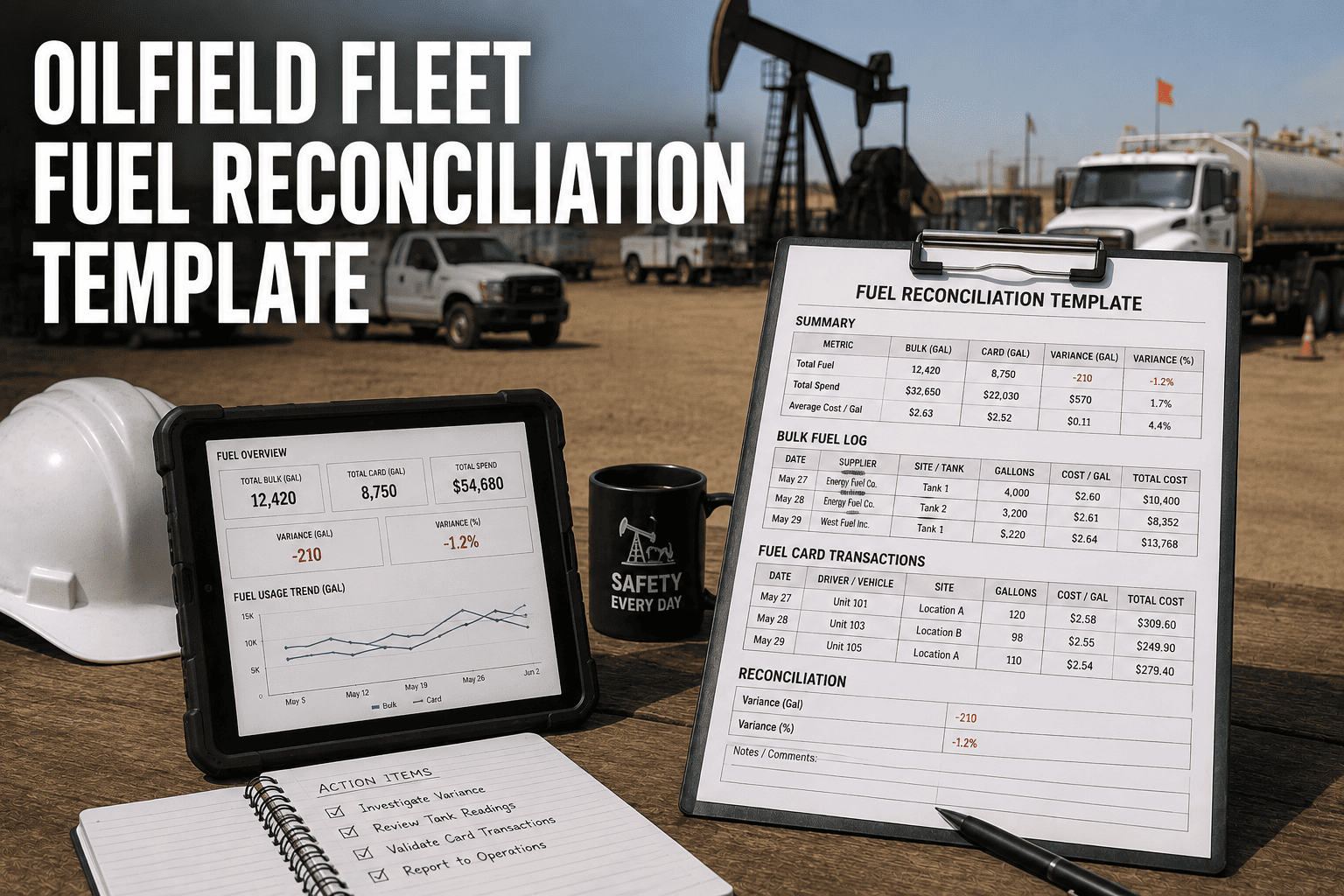
Most oilfield fleets still rely on end-of-month fuel card reconciliation or manual dip-stick checks to catch discrepancies. This approach has a fatal flaw: latency. By the time a shortage is noticed, the fuel is gone, the pattern has repeated for weeks, and the responsible party has moved on or covered their tracks.
Dispenser Drift Is More Common Than Fleets Realize
Fuel dispensers are calibrated annually, but drift happens between calibrations. A dispenser over-reading by just 2.3 percent can charge a fleet for fuel that was never actually delivered. On 500000 gallons purchased annually, that drift alone costs roughly 47000 dollars, and it is only caught when engine data is compared directly against receipts rather than trusting the pump reading.
Mechanical Waste Disguised As Normal Fuel Use
Leaking fuel injectors, clogged air filters, and under-inflated tires all increase consumption gradually rather than all at once, which is exactly why they go unnoticed for so long. A truck with two leaking injectors can burn 8 to 14 percent more fuel than normal, adding 3200 to 5600 dollars in excess cost per year before the injectors are even flagged for repair. Tracking MPG trends catches this decline within 2 to 3 weeks instead of months.
Benchmarking Your Oilfield Fleet's Fuel Performance
Knowing your numbers only matters if you can compare them against something meaningful. These benchmarks give oilfield fleet managers a realistic target range based on current 2026 diesel pricing and typical basin operating conditions.
| Performance Metric | Underperforming | Industry Average | Optimized Fleet |
|---|---|---|---|
| Daily Idle Hours | Above 4.5 hours | 2.8 to 4.5 hours | Below 1.5 hours |
| Avoidable Route Miles | Above 15 percent | 10 to 15 percent | Below 5 percent |
| Annual Fuel Waste, 50-Truck Fleet | Above 200000 dollars | 80000 to 250000 dollars | Below 50000 dollars |
| Detection Time For Discrepancies | 30 plus days | 7 to 14 days | Same day |
Fleets that fall in the underperforming column are typically running on manual reconciliation and paper-based idle tracking. Moving to real-time monitoring is usually enough to shift a fleet into the average range within one quarter, and into the optimized range within two to three quarters of consistent driver coaching.
Fuel does not have to be the operating expense you simply accept every quarter. The strategies above, idle control, smarter routing, speed discipline, and real-time theft detection, are the same levers oilfield fleets already have access to. What separates a fleet that saves 200000 dollars a year from one that keeps losing it is visibility, and getting that visibility in place is far simpler than most managers expect.
Every idle hour, every avoidable mile, and every gallon of dispenser drift is recoverable money. FleetRabbit gives oilfield fleet managers the real-time visibility needed to catch waste before it compounds. Start your free trial today, no credit card required.