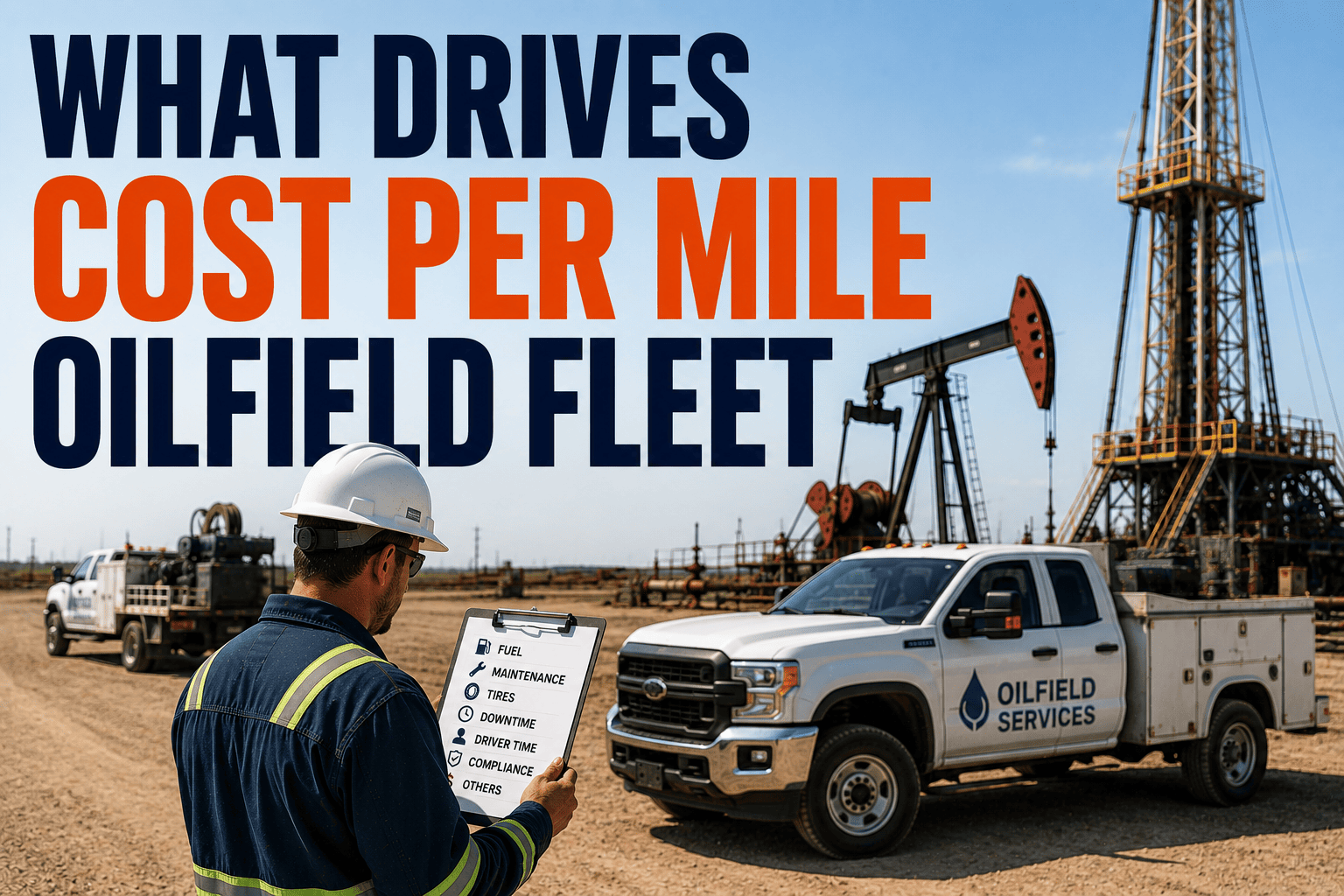
Every fleet manager knows their cost per mile, or thinks they do. Most are only tracking fuel and maybe a rough maintenance estimate, which means the number they're reporting to ownership is quietly wrong, sometimes by 30 cents a mile or more. Industry-wide, the average cost to run a truck hit an all-time high of 2.34 dollars per mile in 2025, and that's for fleets running normal, predictable routes. Oilfield operations run neither normal nor predictable, and every one of the usual cost drivers behaves differently when a truck spends half its day idling at a well site instead of covering ground.
Cost per mile is built from six line items: fuel, maintenance and repairs, tires, insurance, equipment payments, and labor. Industry averages run 1.85 to 2.34 dollars per mile depending on what's included, but oilfield fleets typically run higher because heavy idle time, harsh terrain, and remote service calls inflate every category at once, while low revenue mileage spreads fixed costs across fewer productive miles.
The Number Most Fleets Get Wrong
Fixed Costs Versus Variable Costs, The Real Split
Variable costs, fuel, maintenance, tires, and road expenses, move with how much a truck actually runs. Fixed costs, insurance, equipment payments, and permits, show up whether the truck moves ten miles or a thousand. The trap is that fixed costs get divided across revenue miles to calculate CPM, so any month with fewer productive miles makes every fixed dollar look more expensive per mile, even though nothing about the truck itself changed.
Why Oilfield Miles Cost More Than The National Average
A support truck that spends six hours idling at a wellhead and only drives sixty miles that day is burning fuel, wearing an engine, and accumulating insurance and payment costs the entire time, but only sixty miles are available to divide those costs across. The same truck on a predictable delivery route would rack up ten times the mileage against the same fixed costs. That's the core reason oilfield CPM runs meaningfully above the general trucking average.
FleetRabbit pulls fuel, maintenance, and downtime data into one live cost-per-mile figure for every asset, so you're pricing contracts against reality instead of a guess.
The Six Line Items That Build Your CPM
Why Oilfield CPM Runs Above The Industry Average
Idle Time Burns Fuel Without Adding Miles
A truck idling for hours at a well site still burns roughly a gallon of fuel per hour, adding real cost to the fuel line item without a single mile to divide it across. Fleets that don't separate idle fuel burn from driving fuel burn end up with a CPM figure that hides exactly where the money is going.
Harsh Terrain Accelerates Maintenance And Tire Wear
Lease roads, well pads, and unpaved terrain put far more stress on brakes, suspension, and tires than highway miles do. Fleets budgeting maintenance and tire costs off national averages routinely underestimate both line items for oilfield-specific routes.
Remote Locations Turn Small Problems Into Expensive Ones
A breakdown near a well site often means a tow, a service call, and hours of downtime before a truck is even back on the road, and every one of those costs lands on top of the base repair bill. You can start a free trial to see how much of your current CPM is coming from exactly this kind of hidden cost.
How To Calculate Your Own Break-Even CPM
Cost Per Mile Snapshot
| Line Item | National Average | Typical Oilfield Range |
|---|---|---|
| Fuel | $0.48 - $0.65 / mile | $0.60 - $0.90+ / mile with idle time |
| Maintenance | $0.15 - $0.20 / mile | $0.20 - $0.30 / mile |
| Tires | $0.03 - $0.05 / mile | $0.05 - $0.09 / mile |
| Insurance | $0.08 - $0.12 / mile | $0.12 - $0.22 / mile with HAZMAT coverage |
| Total CPM | $1.85 - $2.34 / mile | Often 15-30% higher without full cost tracking |
Frequently Asked Questions
FleetRabbit brings fuel, maintenance, tires, and downtime together into one accurate cost-per-mile figure for every truck, so pricing decisions are based on data instead of a rough guess.