Motive is a genuinely good ELD platform. Drivers rate the app around 4.5 stars, the log editing workflow and roadside inspection mode are consistently described as easier than the alternatives, setup runs under an hour, and more than 120,000 customers rely on it for hours-of-service compliance and IFTA. None of that is in question here. What brings people to this page is narrower and more specific: maintenance management inside Motive is fault code alerts and basic service reminders, while structured work order management, parts inventory and multi-interval preventive scheduling are not part of it. If your bottleneck is the workshop rather than the logbook, you are running a compliance platform and doing maintenance somewhere else — usually in a spreadsheet, and always by retyping. Show us how those two systems currently talk to each other and we'll map what the integration removes.
Integration · Motive ELD
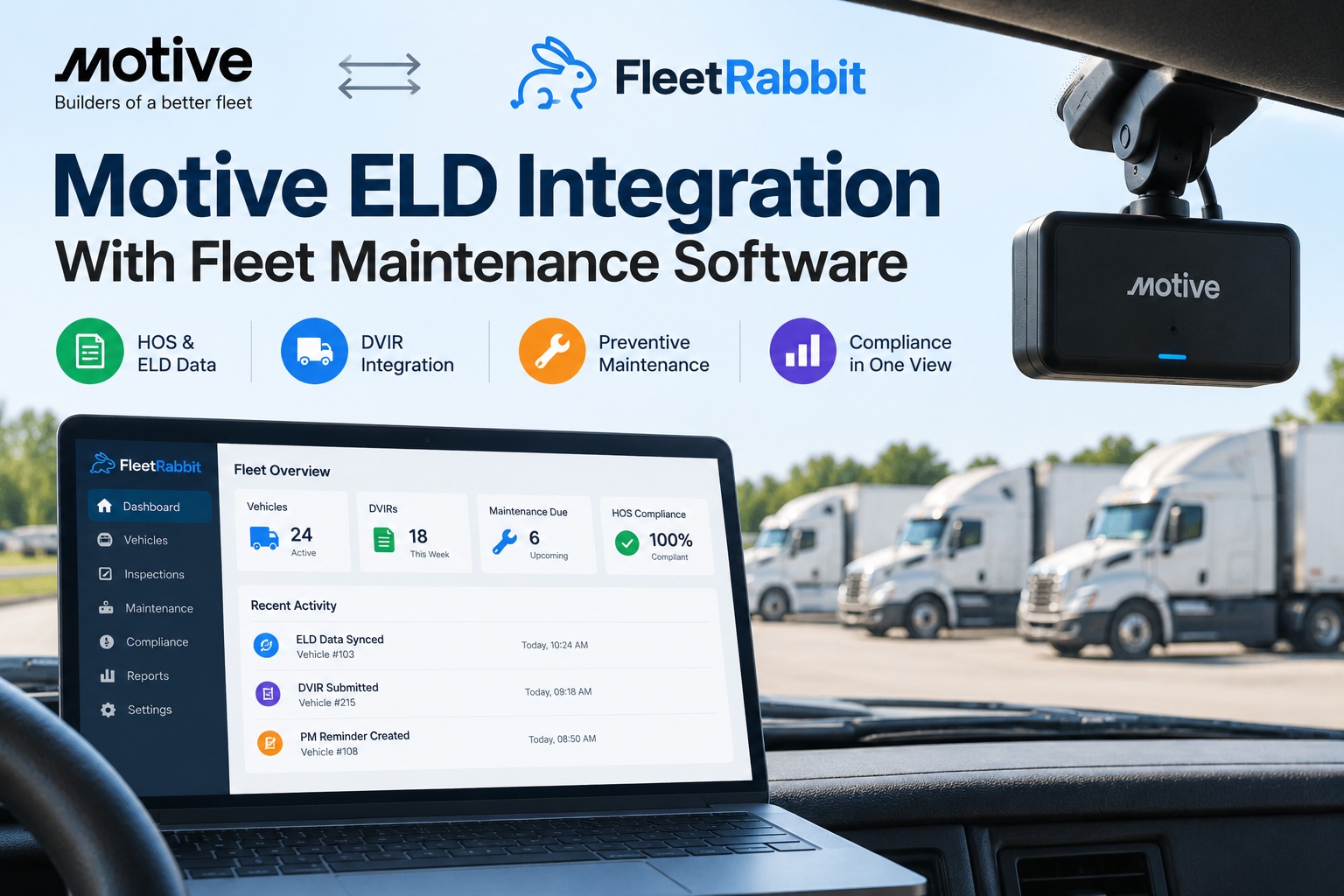
Motive ELD Integration With Fleet Maintenance Software
Keep Motive for compliance, hours of service and telematics. Put work orders, parts and preventive scheduling where they actually belong.
Is This Actually Your Problem?
Worth checking before you read further, because this integration solves one specific thing and there is no point in the rest of this page if it is not yours.
This is for you if
You run maintenance in-house — construction, utilities, field service, government or trucking with a workshop
Your DVIR defects reach a maintenance manager by someone telling them
Work orders, parts and labour live in a spreadsheet alongside Motive
You want odometer data driving PM schedules automatically rather than by manual entry
You run mixed assets — trucks, trailers, plant — not just DOT-regulated vehicles
Probably not for you if
Compliance is your only concern and maintenance is outsourced entirely
You have under five vehicles and no scheduled service programme
You are already running a full maintenance platform you are happy with
Your pain is dispatch or routing rather than the workshop
Published guidance on who this suits is unusually direct: maintenance-first fleets in construction, utilities, field service and government — and any fleet running Motive for compliance and telematics that lacks structured maintenance management. It is described as particularly strong where fuel card data needs to reach per-vehicle cost tracking and where telematics odometer data should be driving preventive scheduling automatically.
What Motive Does Well, and Where It Stops
Being precise about this matters, because the answer is not "Motive is weak at maintenance" — it is that Motive does some maintenance things and not others.
Swipe to see all columns
The pattern in that middle column is worth naming. Motive is excellent at detecting and reporting, and thinner at resolving. That is an entirely reasonable place for an ELD platform to draw the line — its expansion from compliance into broader fleet management is comparatively recent, and the depth shows most in non-trucking workflows like plant, trailers and yellow iron.
The DVIR Handoff Is Where It Hurts
Three steps in a defect's life, and the second is the one that breaks.
WorksThe driver submits the inspectionDigital DVIR through the driver app, quick to complete, with the compliance record satisfied. This part genuinely works well and drivers do not resist it.
BreaksThe defect has to reach a maintenance managerAutomatic defect routing to maintenance is described as handled less cleanly here than at comparable platforms. In practice that means somebody notices, or somebody mentions it, or the driver repeats it in person — and on a busy morning one of those three fails.
MissingDefect to work order to closure, evidencedA closed loop where a reported defect becomes an assigned job with parts and labour against it, and the next inspection can see whether it was actually fixed. That loop is what a DOT auditor is really examining, and it is what a spreadsheet cannot demonstrate.
This is the single most common reason a Motive fleet ends up here. The compliance record exists and the repair record does not connect to it — so you can prove an inspection happened and cannot prove the defect it raised was resolved.
Walk us through your last month of DVIR defects and we'll show you how many are traceable to a completed repair today.
What Crosses Over
Four data flows, and the second one quietly fixes a problem most fleets have stopped noticing.
01Fault codes, as they fireEngine and diagnostic codes from the Motive gateway arrive as candidate work orders with the asset already identified, rather than as an alert somebody reads and then retypes.
02Live odometer and engine hoursContinuous usage data driving preventive intervals, which removes the manual readings that cause services to fire early or late. Most fleets running manual entry are doing some services too soon and some too late without knowing which.
03DVIR defects, routedInspection defects arriving as assignable jobs with the reporting driver, the date and the item attached — closing the handoff that currently depends on somebody remembering.
04Fuel and spend dataFuel card transactions feeding per-vehicle cost alongside parts and labour, so cost per mile is one figure rather than two reports somebody reconciles at month end.
2
portals
→
1
view
Count how many times a day someone reads one screen and types into another
Fault code to maintenance sheet. DVIR defect to job list. Odometer to service schedule. Fuel receipt to cost tracker. Each one is small and each one is a chance to lose something. Tell us which handoffs your team does manually and we'll show you which disappear on the first day.
You Are Probably Mid-Contract. That Is Fine.
A practical point, because it is the objection most people raise before they raise any other.
Nothing here touches your Motive agreement
No hardware changes, no gateway swaps, no ELD reconfiguration, no conversation with your account manager. The integration runs through the API alongside what you already have, which means the decision is reversible in a way that a platform migration is not.
Which matters, given how these contracts work
Motive terms typically run a twelve-month minimum with auto-renewal, and multiple customers report the renewal terms were not clearly explained at signing. Whatever you think of that, the practical consequence is the same — adding a capability should not require reopening the agreement, and here it does not.
And it gives you a real option at renewal
A fleet that has been running maintenance properly for a year arrives at its renewal knowing exactly which Motive modules it actually uses. That is a considerably better negotiating position than renewing the whole bundle because unpicking it feels risky.
One concrete suggestion regardless of what you decide:
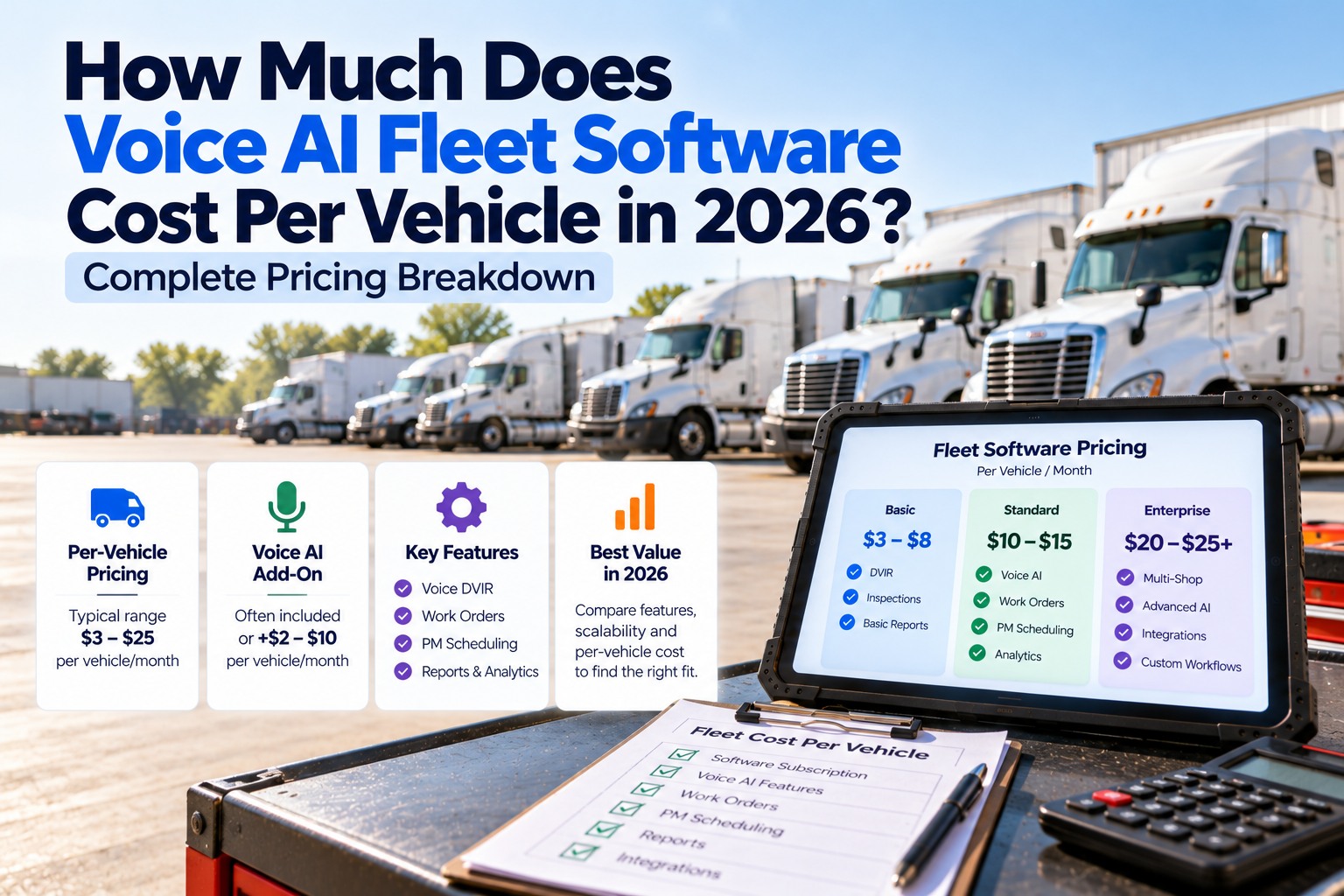
find out your own per-vehicle rate and your renewal date before you evaluate anything. Motive does not publish pricing, so every comparison starts with a number only you have. Reported tiers run roughly $20–25 for entry, $30–40 mid, and $45–50 or more at the top, with hardware around $150 per vehicle — but yours is yours.
Bring that number to a call and we'll do the arithmetic together rather than quoting you a generic saving.
Inside Fleet Rabbit: The Maintenance Half
Six capabilities that sit downstream of everything Motive already does well.
Work ordersStructured from creation to closureRaised from a fault code, a DVIR defect or a schedule, with assignment, parts, labour, approval and a recorded completion — rather than an alert somebody deals with and remembers to note.
PM schedulingMulti-interval, on live Motive dataTime, mileage and engine hours together, per asset class, driven by odometer data flowing continuously from your gateways. Trucks on mileage, plant on hours, trailers on date — running simultaneously rather than as one rule applied to everything.
PartsInventory, consumption and reorderStock levels, what was fitted to which asset, and what needs reordering — the capability that turns a maintenance record into a cost record.
InspectionsDefects that close, provablyEvery DVIR defect becomes a job with an owner and an outcome, so the next inspection and any audit can see the loop was closed rather than logged.
CostPer asset, including downtimeParts, labour, outsourced repairs and out-of-service hours attributed to a specific vehicle — with Motive fuel card data alongside, which is what makes a genuine cost-per-mile figure possible.
Mixed assetsTrailers and plant on the same systemNon-DOT assets managed alongside regulated vehicles, which matters for construction, utilities and field service fleets whose yellow iron needs the same scheduling discipline as their trucks.
The division is intentional. Motive keeps compliance, hours of service, IFTA, tracking and the driver app that your drivers already like. Nothing about this integration asks them to change how they log hours or complete an inspection — the change happens entirely on the maintenance side of the wall.
Connecting It
Four steps, and none of them involves a vehicle.
1Authorise API accessFrom your Motive account, scoped to vehicles, fault codes, inspections and usage data. No hardware touched, no driver app changes, no downtime.
2Match your asset listMotive vehicles mapped to maintenance records so data lands on the right unit immediately. This is also the point to add the trailers and plant that were never in Motive to begin with.
3Set what creates a jobWhich fault codes raise a work order automatically, which DVIR defect categories route to whom, and what your PM intervals are per asset class. An hour of thought here decides whether the system helps or generates noise.
4Run it alongside for two weeksKeep your spreadsheet going while the integration runs in parallel. Compare at the end of the fortnight, then retire whichever one lost.
Put three Motive vehicles on it and judge for yourself
Free, no card, no time limit, nothing to unwind. Connect three of your Motive-equipped units and watch real fault codes, real DVIR defects and real odometer readings flow into work orders and schedules on your own data. Two weeks of that tells you more than any demonstration, and if it does not fit, you have changed nothing on the Motive side.
Frequently Asked Questions
Do we have to leave Motive?No. Motive keeps hours of service, IFTA, ELD compliance, tracking and the driver app — all things it does well, and the driver app in particular scores highly with the people using it daily. Fleet Rabbit connects through the API and handles the maintenance side: work orders, parts, multi-interval preventive scheduling and cost per asset. No hardware changes, no gateway swaps, and no need to touch your Motive agreement.
Motive has maintenance features. What is actually missing?Fault code alerts and basic service reminders are present, including preventive triggers based on ELD usage data. What is not present is structured work order management, parts inventory and multi-interval PM scheduling across time, mileage and engine hours. The distinction is between detecting a problem and running the repair — Motive is strong on the first and thinner on the second, which is a reasonable line for an ELD platform to draw.
Why do our DVIR defects keep getting missed?Because automatic defect routing to maintenance managers is specifically noted as handled less cleanly in Motive than at comparable platforms. The inspection itself submits fine — the problem is the handoff, which in practice depends on somebody noticing or somebody mentioning it. The fix is routing each defect straight into an assignable job with an owner, so the loop from defect to repair to closure is evidenced rather than remembered.
What data actually moves across?Four flows. Fault codes as they fire, arriving as candidate work orders with the asset identified. Live odometer and engine hours driving preventive intervals, which removes the manual readings that cause services to fire early or late. DVIR defects routed as assignable jobs. And fuel card transactions feeding per-vehicle cost alongside parts and labour, so cost per mile becomes one figure rather than two reports reconciled monthly.
We are mid-contract. Does that matter?Not for this. The integration runs through the API alongside your existing setup, so there is nothing to renegotiate and nothing to unwind. It is worth knowing your own per-vehicle rate and renewal date though — Motive does not publish pricing, with reported tiers running roughly $20–25 at entry through to $45–50 or more at the top, plus around $150 per vehicle for hardware. Arriving at renewal knowing which modules you actually use is a far better position than renewing the bundle by default.
Can we manage trailers and plant too?Yes, and this is often the deciding factor for construction, utilities and field service fleets. Non-DOT assets sit on the same system as regulated vehicles, with their own intervals — plant on engine hours, trailers on date, trucks on mileage, all running simultaneously. Motive's expansion beyond trucking is comparatively recent and the depth shows most in exactly these non-trucking workflows.
How do we try it without committing?Connect three Motive-equipped vehicles free, with no card and no time limit, and run it in parallel with whatever you do now for two weeks. You will see your own fault codes and your own DVIR defects becoming work orders rather than a demonstration on sample data. Set it up in a few minutes, or have someone configure the rules with you if you would rather not work out the routing alone.
Compliance Platform, Meet Maintenance Platform
Motive already knows the fault code fired, the inspection was submitted and the odometer reads what it reads. What it does not do is turn any of that into an assigned job with parts against it and a recorded closure — and that gap is currently being bridged by somebody reading one screen and typing into another. Connect the two, leave the driver app exactly as it is, and let the workshop run on data it no longer has to re-enter.
Motive pricing tiers, contract terms and feature descriptions are drawn from published third-party reviews and reported customer figures, since Motive does not publish per-vehicle pricing. Capabilities change — verify current features and your own contract terms with Motive directly before making any commercial decision.