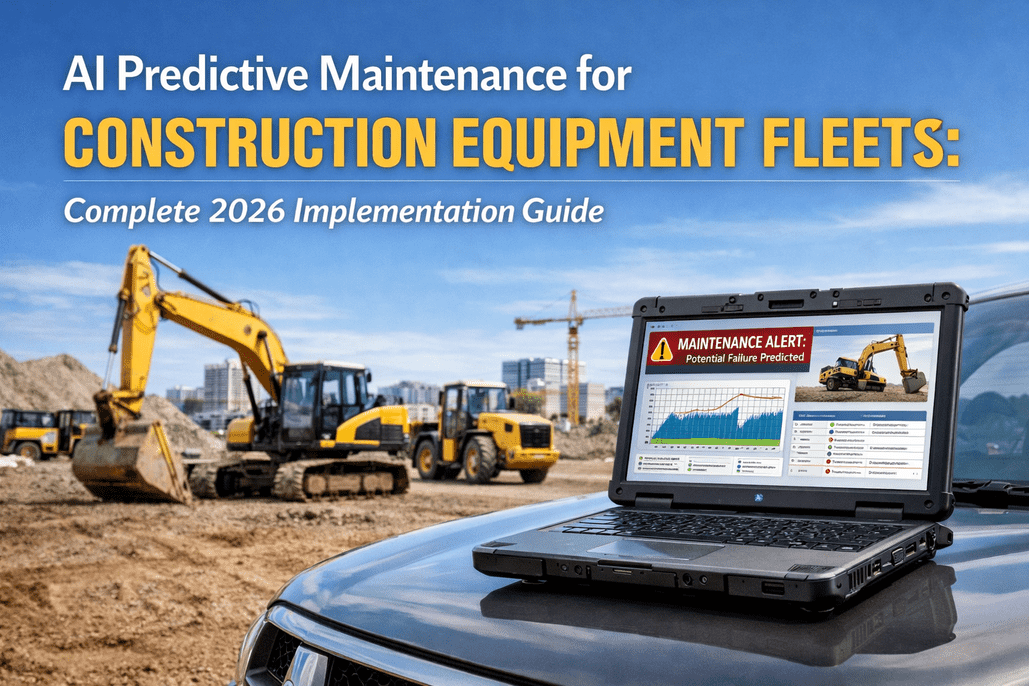
Unplanned equipment failure is the single largest controllable cost in construction today. In 2025, the average heavy equipment fleet lost 14% of its annual operating hours to breakdown repairs—time that directly delayed project milestones and eroded profit margins. As we enter 2026, the industry is pivoting from "reactive" to "predictive" strategies. By leveraging Artificial Intelligence (AI) and IoT sensors, forward-thinking fleets are forecasting component failures weeks before they happen. This shift isn't just about saving parts cost; it's about guaranteeing uptime. Early adopters are already seeing equipment downtime drop by 45%. This guide provides a complete roadmap for implementing AI predictive maintenance in your fleet.
2026 Implementation Guide
AI Predictive Maintenance for Construction Equipment Fleets
Reduce downtime by 45% and extend asset life with machine learning.
The Cost of Doing Nothing: Maintenance Strategy Showdown
Most fleets operate in a mix of "Reactive" (fixing things when they break) and "Preventive" (fixing things based on calendar hours). However, the data for 2026 is clear: these traditional models are bleeding cash. Reactive maintenance costs 3-5x more due to overtime labor, expedited parts shipping, and project delay penalties. Even Preventive maintenance is inefficient, often leading to the replacement of parts that have 40% useful life remaining.
Reactive
Run-to-Failure$125 / hr
High variability. Breakdowns happen during critical path activities.
Preventive
Calendar-Based$45 / hr
Predictable but wasteful. Good parts are often thrown away.
Predictive
AI-Driven$18 / hr
Optimal. Service is performed only when actually necessary.
The Shift to Autonomous Maintenance in 2026
The old model of "run to failure" or even "scheduled preventive maintenance" is becoming obsolete. Preventive maintenance often results in replacing perfectly good parts just because a calendar said so. Predictive maintenance changes the game by listening to the machine. In 2026, the trend is moving toward Autonomous Actions, where the software doesn't just alert a human—it automatically orders the part, schedules the technician, and notifies the project manager of the upcoming planned downtime window.
The Anatomy of a Prediction
IoT Sensors
Vibration & Temp data collected in real-time.
AI Analysis
Algorithm detects deviation from baseline.
Anomaly Alert
"Hydraulic Pump Failure likely in 48 hours."
Auto-Action
Work order created & part drafted.
Step-by-Step Implementation Roadmap
Implementing AI predictive maintenance doesn't require replacing your entire fleet. It requires a strategic integration of software and existing telemetry data. Here is the proven 4-week roadmap for heavy civil and construction fleets.
Data Audit & Sanitation
AI is only as good as the data it feeds on. The first step is consolidating your telematics feeds (CAT VisionLink, John Deere JDLink, etc.) into a central platform like FleetRabbit. Identify assets with missing or erratic data streams.
Baseline Establishment
The system needs to know what "normal" looks like. During this phase, the AI analyzes historical work cycles, idle times, and fluid analysis reports to build a unique health profile for each asset class (Excavators, Dozers, Graders).
Threshold Configuration
Set your "Action Levels." You don't want an alert for every minor variance. Configure the system to flag only critical anomalies, such as a 15% spike in hydraulic temperature combined with a drop in pressure.
Workflow Integration
Connect the alerts to your people. Ensure that a "High Severity" prediction automatically triggers a notification to the Shop Foreman's mobile device. Sign up for FleetRabbit to start connecting your workflows.
Essential "Vital Signs" to Monitor
Just as a doctor checks pulse and blood pressure, AI needs specific data streams to be effective. Ensure your telematics hardware is capturing these five essential data categories.
High-Frequency Vibration
Critical for detecting bearing wear and rotational friction before heat is generated.
Fluid Pressures (Hydraulic & Oil)
Sudden drops indicate leaks; gradual declines indicate pump wear or filter clogging.
Thermal Deltas
Comparing intake vs. exhaust temperatures to identify cooling system inefficiencies.
Duty Cycle & Load
Engine load % vs. fuel burn rate reveals engine stress and efficiency drops.
Deep Dive: What AI Detects by Component
Modern predictive models don't just give you a "Check Engine" light. They analyze specific sub-systems to pinpoint the exact root cause of failure. Here is what 2026-era AI models are detecting on heavy yellow iron.
Hydraulics
Cavitation & Seal Blowouts: By analyzing high-frequency vibration and pressure drops (50x/sec), AI detects pump cavitation weeks before audible noise starts. It also spots micro-leaks in cylinder seals through "drift" patterns in position sensors.
Engine Health
Injector Degradation: AI correlates fuel burn rate, exhaust temp, and torque output to identify a single failing injector. This prevents "cylinder wash" events that can destroy an engine block, saving $35,000+ in rebuild costs.
Undercarriage
Tension & Wear: On tracked machines, sensors measure drive motor torque vs. ground speed. "Slippage" patterns indicate improper track tensioning or uneven roller wear, allowing for adjustment before expensive rail damage occurs.
Top 5 Implementation Pitfalls to Avoid
Many fleets fail because they treat AI as a "Magic Wand" rather than a tool. Here are the common traps to avoid in your rollout.
1. Dirty Data
Feeding the AI inconsistent naming conventions (e.g., "CAT D6" vs "Dozer 6") breaks the model.
2. Alert Fatigue
Setting thresholds too low creates 100 alerts a day. Start with only "red" alerts enabled.
3. Culture Gap
Failing to train master mechanics on why the software is helping them, not replacing them.
Real-World ROI: Why It Pays Off
The investment in predictive technology pays dividends rapidly. Beyond the obvious reduction in catastrophic failures, the secondary savings—fuel efficiency, extended asset life, and higher resale value—often outweigh the primary benefits.
Extended Lifespan
Increase in useful engine life by avoiding overheat events.
Fuel Efficiency
Reduction in fuel waste by fixing degrading injectors early.
Resale Value
Higher auction value for assets with complete digital health history.
Frequently Asked Questions
Future-Proof Your Fleet Today
Don't wait for the next breakdown to start thinking about predictive maintenance. Join the top 15% of construction fleets using AI to maximize uptime.
Start Your Free Trial Schedule Expert Demo