Administrative heavy-lifting is the silent killer of fleet profitability. In 2025, the average fleet manager spent 28 hours per week on manual data entry, phone tag, and paperwork retrieval—time that should have been spent optimizing routes and reducing fuel burn. As we head into 2026, the gap between automated fleets and manual fleets is widening. "Pen and paper" operations are seeing administrative costs swell by 12% annually as compliance becomes more complex and labor costs rise. Meanwhile, automated fleets are slashing those same costs by nearly 40% through intelligent workflows. This guide explores the best fleet automation software strategies to eliminate the "admin drain," streamline compliance, and recover thousands of dollars in wasted operational spend per vehicle. Start automating your fleet today with FleetRabbit free.
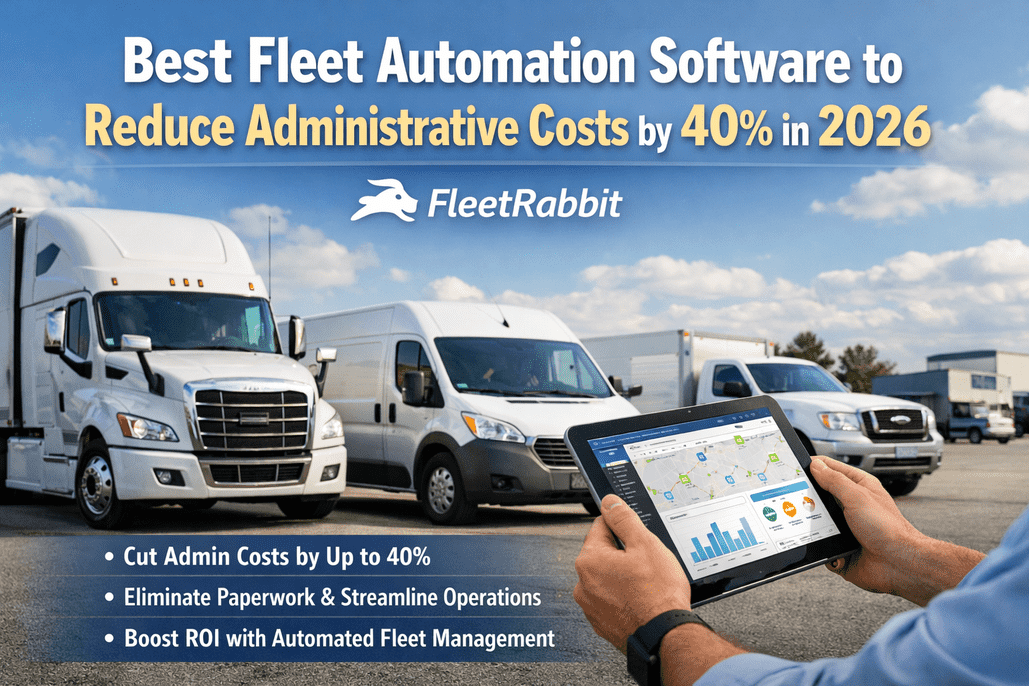
Best Fleet Automation Software to Reduce Administrative Costs by 40% in 2026
Stop paying for paperwork. Start paying for performance.
The Hidden Cost of "Manual" Fleet Management
Most fleets underestimate their administrative burden because it doesn't show up as a single line item. It's hidden in the 15 minutes spent chasing a missing fuel receipt, the 45 minutes comparing paper logs to timesheets, and the hours spent building monthly maintenance reports. In 2026, these inefficiencies are compounding.
Manual Processes
- Paper DVIRs: Illegible handwriting leads to missed repairs and compliance risks.
- Phone Dispatch: Endless call loops to verify driver location and status.
- Spreadsheet Chaos: Data is obsolete the moment it's entered.
- Reactive Maintenance: Fixing breakdowns costs 4x more than preventive work.
Automated Workflows
- Digital Inspections: Photo-verified, instant upload from mobile app.
- GPS Dispatch: Real-time visibility eliminates check-in calls.
- Live Dashboards: Single source of truth updated instantly.
- Predictive Alerts: Scheduled service notifications before failures occur.
3 Core Pillars of Fleet Automation in 2026
To achieve the projected 40% reduction in administrative overhead, modern fleet software must do more than just track vehicles. It needs to automate the decision-making loop. Here are the three critical areas where 2026 automation technology is making the biggest impact.
Automated Compliance & Safety
Gone are the days of manual logbook auditing. Modern software integrates ELD data directly with payroll and compliance reports. If a driver is approaching an HOS limit, the system flags dispatch automatically—preventing violations before they happen.
Predictive Maintenance Scheduling
Instead of relying on whiteboard calendars, automation uses real-time odometer reads and engine hours to trigger service workflows. When a truck hits 9,500 miles, the system auto-emails the shop manager and schedules the oil change, ordering parts automatically.
Intelligent Dispatching
AI-driven dispatch tools analyze traffic history, customer windows, and driver availability to build the most efficient routes in seconds. It replaces hours of manual route planning with "one-click" optimization.
2026 Industry Trends: The Shift to "Touchless" Operations
As we look toward 2026, the definition of "fleet management" is evolving. It's shifting from "managing drivers" to "managing exceptions." Automation handles the 90% of routine operations, allowing managers to focus only on the 10% of issues that require human intervention.
AI-First Maintenance
65% of maintenance teams plan to implement AI by 2026 to predict failures before a Check Engine light even turns on.
Mobile-First Admin
Back-office tasks are moving to the field. Drivers now initiate workflows (PO requests, leave requests) directly from their phones.
Integrations Ecosystem
Silos are dying. The best software in 2026 connects seamlessly with fuel cards, accounting (QuickBooks), and ERP systems.
5 Warning Signs Your Fleet Has Outgrown Manual Processes
If you catch yourself or your team saying "it's just faster to do it by hand," you are likely already losing money to inefficiency. These are the five most common red flags that indicate your current administrative processes are effectively broken.
Missing Fuel Receipts
Drivers lose paper receipts, forcing your accounts team to chase them down or simply write off the expenses without verification. This lack of audit trail is a primary source of fuel theft and tax overpayment.
Repair Delays
Maintenance requests written on paper DVIRs get buried on a desk or lost in an email chain. The result is minor issues turning into major execution failures and unscheduled downtime.
Audit Panic
When the DOT or an insurance auditor calls, your team scrambles for 3 days to locate missing files, leading to high stress, potential fines, and a complete halt to normal operations.
Double Data Entry
Your team is manually typing the same driver and load information into a spreadsheet, then into QuickBooks, and again into a dispatch tool. This triples the workload and the error rate.
Billing Lag
Invoices don't go out until days after the job is done because you're waiting for messy paperwork to return to the office. This hurts cash flow and creates disputes with customers.
Why FleetRabbit is the Best Choice for 2026
FleetRabbit isn't just a GPS map—it's an automated operating system for your entire fleet. We've built workflows specifically designed to eliminate the administrative headache of running a modern fleet. Schedule a demo to see these features in action or Sign up for FleetRabbit to start immediately.
Frequently Asked Questions
Ready to Automate Your Fleet's Success?
Join the future of fleet management. Reduce admin costs, improve compliance, and reclaim your time with FleetRabbit's 2026-ready automation platform.
Trusted by 1,000+ Fleets • No Credit Card Required