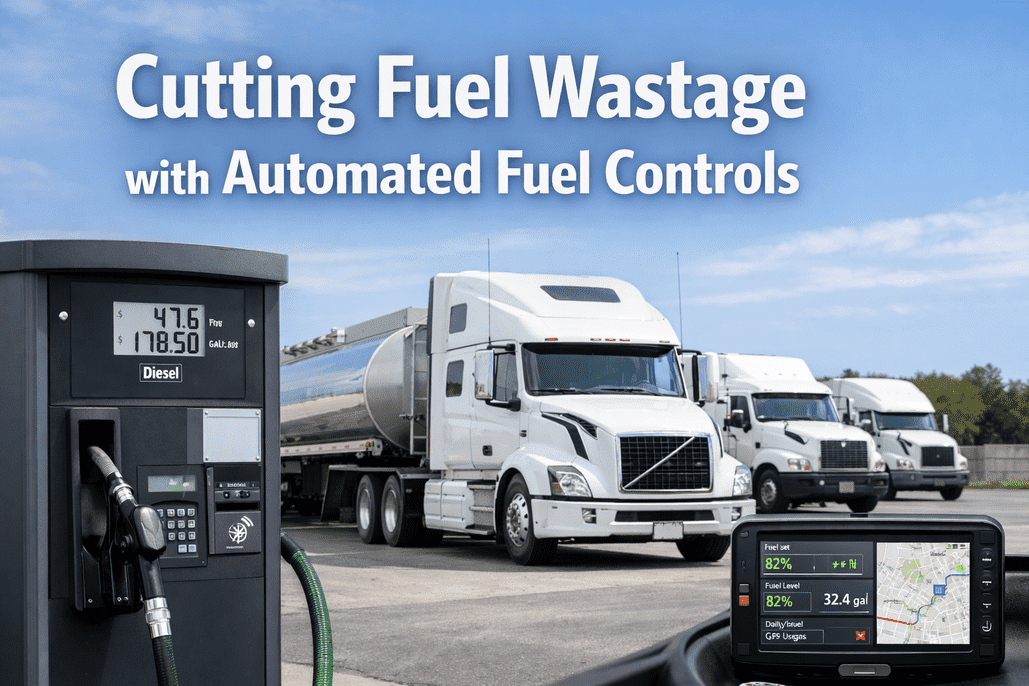
Cutting Fuel Wastage with Automated Fuel Controls—a real-world case study showing how data-driven fuel and oil strategies improved fleet performance and reduced costs. Discover how Heartland Distribution Services eliminated unauthorized fuel use, reduced idle waste, and optimized consumption across their entire operation through integrated automated controls and real-time monitoring. Learn the strategies that delivered measurable results and transformed their largest expense into a competitive advantage.
27%
Fuel Wastage Reduction
$1.2M
Annual Savings
100%
Theft Elimination
4 Months
Payback Period
Automated fuel controls represent a fundamental shift from manual oversight to intelligent, system-enforced fuel management. By integrating RFID-authenticated dispensing, automated idle management, real-time consumption monitoring, and driver behavior tracking, fleets can eliminate unauthorized fuel use while optimizing legitimate consumption. This case study examines how Heartland Distribution Services—a 280-vehicle regional fleet—implemented comprehensive automated fuel controls that eliminated theft, reduced idle waste by 68%, and achieved industry-leading fuel efficiency through data-driven automation.
Client Background: Heartland Distribution Services
Heartland Distribution Services operates a large regional distribution network requiring precise fuel management across multiple terminals, routes, and driver shifts.
Company Profile
Heartland Distribution Services is a regional logistics provider operating 280 vehicles including 185 Class 8 tractors, 65 straight trucks, and 30 delivery vans across 12 Midwestern states. The fleet covers approximately 26 million miles annually from 8 terminal locations with on-site fueling infrastructure. Pre-implementation fuel costs exceeded $7.2M annually—representing 38% of total operating expenses—with suspected waste and theft estimated at 8-12% of total consumption.
Fleet Profile Overview
| Category | Details | Annual Impact |
|---|---|---|
| Fleet Size | 280 vehicles (mixed fleet) | 26M miles annually |
| Terminal Locations | 8 distribution centers | On-site fueling at all locations |
| Service Area | 12 Midwestern states | Regional distribution network |
| Pre-Implementation Fuel Spend | $7.2M annually | 38% of operating costs |
| Estimated Fuel Waste | 8-12% of consumption | $576K-$864K annually |
The Challenges: Uncontrolled Fuel Consumption
Before implementing automated fuel controls, Heartland Distribution Services relied on manual oversight and honor-system fuel management that couldn't prevent waste, detect unauthorized use, or optimize consumption patterns.
Key Challenges Identified
- No Dispensing Authentication: Anyone with access to terminal fueling stations could dispense fuel without vehicle or driver verification
- Uncontrolled Idle Time: Fleet averaged 32% idle time vs. industry benchmark of 15%, wasting approximately 320,000 gallons annually
- Manual Reconciliation Failures: Paper-based fuel logs were incomplete, inaccurate, and reconciled weeks after transactions occurred
- No Real-Time Visibility: Management couldn't monitor consumption patterns or detect anomalies until monthly reports revealed unexplained variances
- Driver Behavior Blind Spots: No data on speeding, harsh acceleration, or other fuel-wasting behaviors to guide coaching efforts
Pre-Implementation Performance Baseline
| Metric | Heartland | Industry Benchmark | Gap |
|---|---|---|---|
| Fleet Average MPG | 5.8 MPG | 7.0+ MPG | -17% |
| Idle Time Percentage | 32% | 15% | +113% |
| Fuel Shrinkage Rate | ~10% | <2% | +400% |
| Fuel Reconciliation Accuracy | ~82% | 99%+ | -17% |
Is your fleet experiencing uncontrolled fuel waste? Sign up for Fleet Rabbit to implement automated fuel controls.
Solution Implemented: Integrated Automated Fuel Controls
Heartland Distribution Services deployed a comprehensive automated fuel control system combining RFID-authenticated dispensing, automated idle management, real-time telematics, and driver behavior monitoring across all terminals and vehicles.
Implementation Approach
The 14-week phased implementation upgraded all 8 terminal fueling stations with automated dispensing controls while simultaneously deploying telematics and idle management systems across the entire fleet. The integration ensured that fuel could only flow to authorized vehicles operated by authorized drivers, with every transaction automatically logged, reconciled, and analyzed.
Implementation Timeline
| Phase | Timeline | Activities | Quick Wins |
|---|---|---|---|
| Phase 1: Infrastructure Upgrade | Weeks 1-4 | RFID controllers at all 8 terminals, vehicle/driver tag deployment | 100% authenticated dispensing |
| Phase 2: Telematics Integration | Weeks 5-8 | GPS tracking, fuel consumption monitoring, baseline establishment | Real-time visibility achieved |
| Phase 3: Idle Management | Weeks 9-12 | Automated idle systems, driver training, policy enforcement | 42% idle reduction in 30 days |
| Phase 4: Behavior Optimization | Weeks 13-14+ | Driver scorecards, coaching programs, incentive launch | 27% total waste reduction |
Automated Control Components
RFID Dispensing Control
Authentication: Vehicle + driver verification
Enforcement: No ID, no fuel flow
Logging: Every transaction recorded
Limits: Tank capacity enforcement
Automated Idle Management
Function: Automatic engine shutdown
Threshold: 5-minute idle limit
Override: Climate protection modes
Reporting: Idle time tracking
Real-Time Telematics
GPS Tracking: Location verification
Consumption: Live MPG monitoring
Alerts: Anomaly detection
Integration: Fuel card matching
Eliminate Fuel Waste Automatically
Deploy comprehensive automated fuel controls and eliminate unauthorized use while optimizing legitimate consumption.
Get Started Free →Results & Metrics: Measurable Impact
The automated fuel control implementation delivered results that transformed Heartland's fuel economics, with theft eliminated immediately and consumption optimization continuing to improve over 12 months.
7.4 MPG
New Fleet Average (+28%)
10%
New Idle Rate (-68%)
0%
Fuel Shrinkage (-100%)
412%
First-Year ROI
Before vs. After Comparison
| Performance Metric | Before | After | Improvement | Annual Savings |
|---|---|---|---|---|
| Fleet Average MPG | 5.8 MPG | 7.4 MPG | +28% | $612K |
| Idle Time Percentage | 32% | 10% | -68% | $298K |
| Fuel Shrinkage/Theft | ~10% | 0% | -100% | $245K |
| Annual Fuel Spend | $7.2M | $6.0M | -17% | $1.2M |
| Reconciliation Accuracy | 82% | 99.8% | +22% | Admin savings |
| Total Annual Impact | - | - | - | $1.2M saved |
Savings Breakdown by Category
| Savings Category | Annual Amount | % of Total | Primary Driver |
|---|---|---|---|
| Driver Behavior Improvement | $418,000 | 35% | Speed management, smooth acceleration |
| Idle Time Reduction | $298,000 | 25% | Automated idle shutdown systems |
| Theft Elimination | $245,000 | 20% | RFID-authenticated dispensing |
| Route Optimization | $156,000 | 13% | GPS-enabled efficient routing |
| Administrative Efficiency | $83,000 | 7% | Automated reconciliation and reporting |
| Total Annual Savings | $1,200,000 | 100% | Automated fuel intelligence |
ROI Analysis
- Total Implementation Cost: $292,000 (hardware, software, installation, training)
- Annual Ongoing Cost: $78,000 (subscriptions, maintenance, support)
- First Year Net Savings: $830,000 ($1.2M savings - $292K implementation - $78K ongoing)
- First Year ROI: 412% return on investment
- Payback Period: 4 months to full cost recovery
- 5-Year Projected Savings: $5.6M+ with continuous optimization
Ready to eliminate fuel waste? Book a free consultation with our fuel optimization experts.
Key Takeaways: Lessons for Your Fleet
The success of Heartland's automated fuel control implementation offers valuable lessons for fleets seeking to eliminate waste and optimize consumption.
Critical Success Factors
- Authentication Eliminates Theft: "No ID, No Fuel" policy enforced by RFID controls eliminated 100% of unauthorized fuel use—the system physically prevents fuel from flowing without proper authorization
- Automation Beats Policy: Written idle policies achieved minimal compliance; automated shutdown systems reduced idle time by 68% without relying on driver behavior
- Real-Time Visibility Enables Action: Instant alerts for anomalies—like impossible fuel fills or off-route fueling—allowed immediate investigation rather than weeks-late discovery
- Integration Multiplies Value: Connecting dispensing controls with GPS, fuel cards, and telematics revealed patterns that no single system could identify alone
- Data-Driven Coaching Works: Driver scorecards based on actual consumption data transformed fuel efficiency from abstract goal to measurable, incentivized performance metric
Automated Control Best Practices
Secure Every Dispense Point
Requirement: RFID authentication
Verification: Vehicle + driver match
Limits: Tank capacity enforcement
Result: Zero unauthorized fuel
Automate Idle Management
Technology: Automatic shutdown systems
Configuration: Climate-aware thresholds
Override: Driver comfort options
Result: 68% idle reduction
Enable Real-Time Monitoring
Tracking: GPS + consumption data
Alerts: Anomaly notifications
Matching: Purchase verification
Result: Instant issue detection
Common Pitfalls to Avoid
- Incomplete Coverage: Controlling on-site fuel while ignoring fuel card purchases at retail stations leaves major gaps—secure ALL fuel access points
- Rigid Idle Policies: Zero-tolerance idle limits without climate consideration create driver pushback—use intelligent systems that protect comfort while minimizing waste
- Data Without Action: Collecting consumption data means nothing without processes to investigate anomalies and coach drivers—establish clear response protocols
- Siloed Systems: Dispensing controls that don't integrate with telematics and fuel cards miss cross-reference opportunities—ensure full data integration
- Punitive-Only Approach: Using data solely to punish creates resistance—balance accountability with incentives for fuel-efficient performance
Want to implement automated fuel controls? Get started with Fleet Rabbit and eliminate fuel waste today.
Your Path to Automated Fuel Control
Based on this case study and industry benchmarks, fleets implementing comprehensive automated fuel controls typically achieve 15-30% fuel savings and 100% theft elimination within 6 months.
Expected Results Timeline
| Timeframe | Expected Results | Primary Drivers | Key Actions |
|---|---|---|---|
| Week 1 | Theft eliminated | RFID authentication active | Deploy dispensing controls |
| 30 Days | 10-15% waste reduction | Idle management, basic monitoring | Establish baselines, set alerts |
| 90 Days | 20-25% improvement | Driver coaching, route optimization | Launch incentive programs |
| 6 Months | Full optimization achieved | Complete system integration | Continuous improvement culture |
Industry Benchmarks for Automated Fuel Controls
According to industry research, fleets implementing RFID-authenticated fuel dispensing achieve 100% theft elimination in most cases. Automated idle management systems reduce idle time by 40-70%, saving $4,000-$6,000 per truck annually at current fuel prices. Telematics-enabled fleets achieve up to 20% better fuel efficiency through visibility into consumption patterns. Most fleets recover their fuel control investment within 4-6 months through theft prevention and idle reduction alone, with driver behavior improvements providing additional ongoing savings.
Don't let uncontrolled fuel drain your profits. Schedule a demo to see how Fleet Rabbit's automated controls can transform your fuel management.
Conclusion: From Honor System to Intelligent Automation
Heartland Distribution Services' automated fuel control implementation demonstrates that eliminating fuel waste requires removing human discretion from fuel access while providing intelligent systems that optimize legitimate consumption. Their 27% waste reduction and $1.2M annual savings were achieved by replacing manual oversight with automated enforcement—proving that the most effective fuel policy is one that enforces itself.
Key Takeaways for Fleet Executives
- Automated controls deliver massive ROI—412% first-year return with 4-month payback
- RFID authentication eliminates theft completely—"No ID, No Fuel" is 100% enforceable
- Automated idle management reduces waste 68%—without relying on driver compliance
- Real-time visibility enables immediate action—catch anomalies in seconds, not weeks
- Integration multiplies value—connected systems reveal patterns single solutions miss
- Balance accountability with incentives—data should coach as well as control
The path to fuel optimization is clear: remove the opportunities for waste through automated controls, provide real-time visibility into consumption, and create positive incentives for efficient performance. Fleets that rely on honor systems and manual oversight will continue losing 8-12% of fuel spend to waste, while those embracing automation capture those savings as competitive advantage.
Your fleet's fuel represents your largest controllable expense and your biggest opportunity for improvement. Automated controls transform fuel management from reactive cost tracking to proactive waste elimination. The technology is proven, the ROI is documented, and every day without controls is money lost to preventable waste.
Ready to Eliminate Fuel Waste Automatically?
Join fleet leaders achieving 27%+ fuel savings through automated fuel controls. Get your customized assessment and implementation roadmap today.