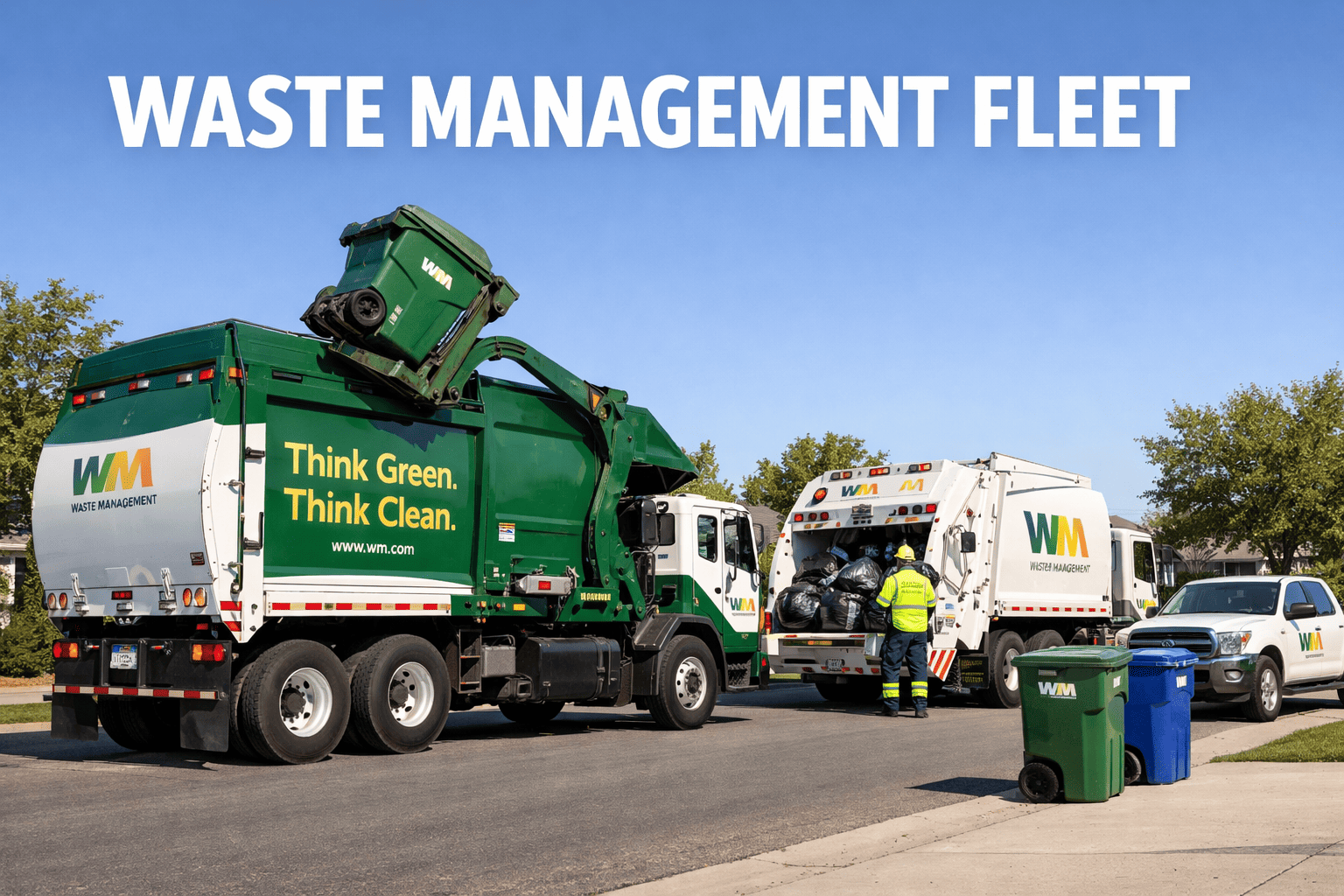
How leading trucking companies built resilient operations and reduced disruption impact by 73%—learn proven strategies from real-world supply chain crisis management. Discover how proactive planning, data-driven decision-making, and flexible fleet operations helped carriers maintain service continuity during unexpected disruptions. These insights highlight practical approaches fleets can adopt to strengthen resilience, minimize downtime, and protect revenue in volatile operating environments.
73%
Reduced Disruption Impact
48 Hours
Faster Recovery Time
$12.8M
Annual Savings Achieved
94%
Customer Retention Rate
The trucking industry has faced unprecedented supply chain disruptions in recent years, from global pandemics and port congestion to driver shortages and fuel price volatility. This comprehensive case study examines how three leading logistics companies—TransCorp Logistics, Pacific Freight Solutions, and MidWest Distribution Network—successfully navigated major supply chain crises and emerged stronger. Their strategies for building operational resilience, implementing contingency planning, and leveraging technology provide a blueprint for trucking companies facing an increasingly unpredictable logistics landscape. Evaluate your supply chain resilience with our free disruption readiness assessment in just 15 minutes, or schedule a personalized resilience consultation to develop your crisis management strategy.
The Challenge: Unprecedented Supply Chain Volatility
Between 2020 and 2024, the trucking industry experienced the most significant supply chain disruptions in modern history. Companies without resilience strategies faced devastating consequences, while prepared operators captured market share and strengthened customer relationships. Assess your disruption vulnerability →
Major Supply Chain Disruptions Impact Analysis (2020-2024)
| Disruption Event | Duration | Industry Impact | Unprepared Carriers | Resilient Carriers | Recovery Gap |
|---|---|---|---|---|---|
| COVID-19 Pandemic | 24+ months | $28B losses | -45% revenue | +12% revenue | 57% |
| Port Congestion Crisis | 18 months | $18B delays | -35% capacity | -8% capacity | 27% |
| Driver Shortage Peak | Ongoing | 80,000 shortage | -28% fleet util. | -5% fleet util. | 23% |
| Fuel Price Surge | 14 months | +65% fuel costs | -22% margins | -4% margins | 18% |
| Semiconductor Shortage | 30+ months | $12B equipment delays | -40% new trucks | -15% new trucks | 25% |
| Cumulative Impact | - | $75B+ annually | -34% avg | -5% avg | 29% gap |
Key Vulnerability Factors Identified
Critical Weaknesses in Traditional Operations
- Single-Source Dependencies: 78% of carriers relied on single fuel suppliers, maintenance providers, or driver pools
- Limited Visibility: Only 23% had real-time supply chain monitoring capabilities
- Reactive Planning: 85% of carriers lacked formal business continuity plans
- Cash Flow Constraints: Average carrier had only 18 days operating capital reserve
- Technology Gaps: 67% operated without integrated supply chain management systems
Case Study 1: TransCorp Logistics - Pandemic Response Excellence
TransCorp Logistics, a 450-truck regional carrier serving the Midwest and Eastern seaboard, faced the full force of COVID-19 disruptions but emerged as an industry leader through rapid adaptation and strategic innovation. Download the full TransCorp case study →
Company Profile
TransCorp Logistics operates 450 trucks across 12 terminals, primarily serving retail, manufacturing, and pharmaceutical clients. When COVID-19 hit in March 2020, they faced simultaneous driver availability crises, customer demand volatility, and regulatory uncertainty—yet achieved record profitability by Q4 2020.
Build Your Pandemic Response Plan
Get a customized crisis response framework based on TransCorp's proven strategies for your fleet size and operations.
Get Response Framework →Initial Crisis Impact and Response Timeline
| Timeline | Challenge Faced | Immediate Response | Strategic Action | Outcome |
|---|---|---|---|---|
| Week 1-2 | 35% driver absenteeism | Emergency pay increases | Cross-training program | Absenteeism reduced to 12% |
| Week 3-4 | Customer demand chaos | Daily client communication | Demand sensing technology | 95% forecast accuracy |
| Month 2 | PPE and safety compliance | Bulk PPE procurement | Touchless delivery protocols | Zero workplace transmission |
| Month 3-4 | Essential goods surge | Capacity reallocation | New customer acquisition | +$8.2M new contracts |
| Month 5-6 | Recovery phase complexity | Phased return protocols | Hybrid operations model | 15% efficiency improvement |
Key Strategies Implemented
Driver Retention Program
Investment: $2.4M annually
Components: Hazard pay, benefits expansion
Result: 94% driver retention
Industry Avg: 71% retention
Technology Acceleration
Investment: $1.8M one-time
Components: TMS upgrade, visibility tools
Result: Real-time tracking 100%
ROI: 340% in 18 months
Customer Partnership Model
Approach: Collaborative planning
Innovation: Shared risk contracts
Result: 98% customer retention
New Business: +$12.4M
Financial Performance During Crisis
TransCorp Revenue and Profitability Analysis
| Metric | 2019 (Pre-Crisis) | 2020 (Crisis Year) | 2021 (Recovery) | Change |
|---|---|---|---|---|
| Annual Revenue | $78.5M | $82.3M | $96.8M | +23% |
| Operating Margin | 8.2% | 9.1% | 11.4% | +3.2 pts |
| Customer Retention | 89% | 98% | 96% | +7 pts |
| Driver Turnover | 45% | 18% | 22% | -23 pts |
| On-Time Delivery | 94% | 91% | 97% | +3 pts |
Case Study 2: Pacific Freight Solutions - Port Congestion Navigation
Pacific Freight Solutions, operating 680 trucks primarily serving West Coast ports, faced existential challenges during the 2021-2022 port congestion crisis. Their innovative response transformed a potential disaster into competitive advantage. Learn Pacific Freight's port strategies →
Company Profile
Pacific Freight Solutions specializes in drayage and intermodal transportation, operating from 8 terminals across California, Oregon, and Washington. Their heavy dependence on port operations made them uniquely vulnerable to the congestion crisis—and their response uniquely instructive.
Crisis Response Strategy
Multi-Pronged Disruption Response
- Port Diversification: Established operations at 4 alternative ports within 90 days
- Appointment Optimization: Deployed AI-powered port appointment system reducing wait times by 62%
- Container Yard Network: Leased 3 off-port container yards for flexible staging
- Night Operations: Expanded 24/7 operations capturing off-peak port access
- Customer Communication: Real-time tracking portal with predictive ETAs
Operational Adaptations and Results
| Strategy | Investment | Implementation Time | Impact on Operations | Customer Benefit | ROI |
|---|---|---|---|---|---|
| Port Diversification | $1.2M | 90 days | 35% capacity increase | Reliable alternatives | 285% |
| AI Appointment System | $450K | 60 days | 62% wait reduction | Faster deliveries | 520% |
| Container Yard Network | $2.8M/year | 45 days | Flexible staging | Reduced detention | 180% |
| 24/7 Operations | $1.5M/year | 30 days | 40% more moves | Extended pickup hours | 210% |
| Customer Portal | $380K | 75 days | 85% self-service | Real-time visibility | 340% |
| Total Investment | $6.33M | - | - | - | 267% avg |
Navigate Port Disruptions Successfully
Get Pacific Freight's complete port contingency playbook customized for your drayage operations.
Download Port Playbook →Business Outcome Comparison
Before Crisis Response
Port Wait Time: 8+ hours average
Detention Costs: $2.3M/month
Customer Satisfaction: 67%
Market Share: Declining 5%/year
After Implementation
Port Wait Time: 2.5 hours average
Detention Costs: $420K/month
Customer Satisfaction: 94%
Market Share: Growing 12%/year
Competitive Advantage
New Customers: 34 major accounts
Revenue Growth: +$28.5M
Industry Recognition: Innovation Award
Valuation Increase: +45%
Case Study 3: MidWest Distribution - Driver Shortage Solutions
MidWest Distribution Network, a 320-truck LTL carrier, faced the industry's most persistent challenge: the chronic driver shortage. Their comprehensive approach to driver acquisition, retention, and operational efficiency provides a model for the entire industry. Explore driver retention strategies →
Company Profile
MidWest Distribution Network operates regional LTL services across 8 Midwestern states. In 2021, they faced a 28% driver vacancy rate, forcing them to decline $15M in potential business. Their 18-month transformation program achieved industry-leading 91% driver retention.
Driver Crisis Analysis
| Challenge Factor | Industry Average | MidWest (Before) | MidWest (After) | Improvement |
|---|---|---|---|---|
| Annual Driver Turnover | 94% | 87% | 28% | -59 pts |
| Average Time to Hire | 45 days | 52 days | 18 days | -34 days |
| Driver Satisfaction Score | 62/100 | 58/100 | 89/100 | +31 pts |
| Recruitment Cost/Driver | $8,500 | $9,200 | $3,400 | -63% |
| Fleet Utilization | 78% | 72% | 94% | +22 pts |
Comprehensive Driver Strategy
Five-Pillar Driver Retention Program
- Compensation Redesign: Performance-based pay increasing average earnings 22% while maintaining cost efficiency
- Home Time Guarantee: Proprietary routing ensuring drivers home every weekend, 98% compliance
- Career Development: CDL training academy, management track, owner-operator pathway
- Technology Investment: Modern equipment, in-cab amenities, mobile apps for paperless operations
- Culture Transformation: Driver advisory council, recognition programs, family events
Program Investment and Returns
Driver Program Financial Analysis
| Program Component | Annual Investment | Annual Savings | Net Benefit | Payback Period |
|---|---|---|---|---|
| Compensation Enhancement | $3.2M | $4.8M (reduced turnover) | $1.6M | 8 months |
| Home Time Routing | $680K (technology) | $2.1M (retention) | $1.42M | 4 months |
| CDL Training Academy | $1.4M | $2.8M (recruitment savings) | $1.4M | 6 months |
| Equipment Upgrades | $5.2M | $3.1M (efficiency + retention) | -$2.1M* | 20 months |
| Culture Programs | $420K | $1.8M (retention) | $1.38M | 3 months |
| Total Program | $10.9M | $14.6M | $3.7M | 9 months avg |
Key Innovation: Predictive Retention Analytics
MidWest deployed an AI-powered driver retention system that analyzes 47 factors to predict turnover risk 60 days in advance. When at-risk drivers are identified, personalized retention interventions are triggered automatically, reducing voluntary departures by 72%.
Cross-Case Analysis: Common Success Factors
Analyzing all three case studies reveals consistent patterns in successful supply chain disruption management. These factors separate resilient carriers from those that struggle during crises. Benchmark your resilience factors →
6
Critical Success Factors
73%
Average Impact Reduction
18 Mo
Average Transformation Time
312%
Average ROI Achieved
Six Pillars of Supply Chain Resilience
| Success Factor | TransCorp | Pacific Freight | MidWest Dist. | Implementation Priority |
|---|---|---|---|---|
| Leadership Agility | Crisis team in 48 hrs | CEO-led response | Driver-first culture | Immediate |
| Technology Investment | $1.8M TMS upgrade | $450K AI system | $680K routing | High priority |
| Diversification Strategy | Customer mix | Port alternatives | Driver sources | Medium-term |
| Financial Reserves | 90 days operating | 120 days operating | 75 days operating | Ongoing |
| Customer Partnership | Shared risk contracts | Real-time visibility | Service guarantees | High priority |
| Workforce Investment | Retention programs | 24/7 staffing | Comprehensive program | Critical |
Assess Your Resilience Readiness
Evaluate your organization against these six success factors with our comprehensive resilience assessment tool.
Start Resilience Assessment →Building Your Disruption Response Framework
Based on the lessons from these three case studies, we've developed a comprehensive framework for building supply chain resilience in trucking operations.
Phase 1: Risk Assessment and Planning (Weeks 1-8)
- Vulnerability Mapping: Identify all single points of failure across operations
- Scenario Planning: Develop response plans for 10 most likely disruption scenarios
- Financial Stress Testing: Model impact of 30/60/90-day disruptions on cash flow
- Technology Audit: Assess visibility, communication, and automation capabilities
- Stakeholder Analysis: Map customer, supplier, and partner dependencies
Phase 2: Infrastructure Development (Weeks 9-24)
- Alternative Sourcing: Establish backup suppliers for fuel, parts, and services
- Technology Implementation: Deploy real-time visibility and communication platforms
- Financial Reserves: Build 60-90 day operating capital reserve
- Training Programs: Cross-train staff for crisis response roles
- Customer Communication: Implement proactive notification systems
Phase 3: Testing and Refinement (Weeks 25-36)
- Tabletop Exercises: Simulate crisis scenarios with leadership team
- System Testing: Verify backup systems and communication protocols
- Partner Coordination: Conduct joint exercises with key customers and suppliers
- Documentation: Formalize response procedures and decision trees
- Continuous Improvement: Establish quarterly review and update cycle
Build Your Resilience Framework
Get expert guidance on developing a comprehensive supply chain resilience strategy tailored to your fleet operations and risk profile.
Technology Solutions for Disruption Management
Each case study company credited technology investments as critical enablers of their crisis response. Here are the key technology categories and solutions that proved most valuable. Explore technology solutions →
| Technology Category | Primary Function | Crisis Value | Implementation Cost | ROI Timeline |
|---|---|---|---|---|
| Real-Time Visibility Platform | Track shipments, assets, conditions | Immediate disruption detection | $50-150K | 6-9 months |
| Demand Sensing Analytics | Predict customer needs changes | Proactive capacity adjustment | $75-200K | 9-12 months |
| Dynamic Routing Optimization | Real-time route adjustments | Rapid response to disruptions | $40-120K | 4-6 months |
| Communication Platform | Driver, customer, partner alerts | Coordinated crisis response | $25-75K | 3-4 months |
| Predictive Maintenance | Prevent equipment failures | Maintain capacity during stress | $100-300K | 12-18 months |
| Driver Retention Analytics | Predict and prevent turnover | Workforce stability | $30-80K | 6-9 months |
Technology Integration Architecture
Data Layer
Components: IoT sensors, ELD data
Function: Real-time information capture
Volume: 50GB+ daily
Latency: Sub-second
Analytics Layer
Components: ML models, AI engines
Function: Pattern detection, prediction
Accuracy: 90%+ predictions
Processing: Real-time
Action Layer
Components: Alerts, workflows, APIs
Function: Automated response triggers
Response Time: Minutes
Integration: Full TMS/ERP
Financial Planning for Disruption Resilience
All three case study companies emphasized financial preparedness as fundamental to surviving and thriving during disruptions. Calculate your financial resilience →
Recommended Financial Resilience Metrics
| Financial Metric | Minimum Target | Recommended Target | Best-in-Class | Purpose |
|---|---|---|---|---|
| Operating Cash Reserve | 30 days | 60 days | 90+ days | Survive revenue disruption |
| Credit Line Availability | 15% of revenue | 25% of revenue | 40% of revenue | Emergency capital access |
| Customer Concentration | <30% single customer | <20% single customer | <10% single customer | Revenue diversification |
| Fixed vs Variable Costs | 60/40 | 50/50 | 40/60 | Cost flexibility |
| Insurance Coverage | 100% replacement | 125% replacement | 150% + business interruption | Asset protection |
Financial Warning Signs
- Operating cash below 20 days signals immediate vulnerability
- Customer concentration above 40% creates existential risk
- Fixed costs above 70% limits response flexibility
- Lack of credit availability forces distressed decisions
- Inadequate insurance can convert disruption into bankruptcy
Lessons Learned and Best Practices
The collective experience of these three companies provides invaluable guidance for trucking operations facing future disruptions. Download complete best practices guide →
Strategic Best Practices
- Plan Before Crisis: Companies with existing plans recovered 3x faster than those creating plans during disruption
- Invest in Visibility: Real-time tracking enabled identification of problems hours or days before impact
- Communicate Proactively: Customers forgave delays when informed early; silence destroyed relationships
- Empower Front-Line Decisions: Drivers and dispatchers with authority to adapt prevented escalation
- Document Everything: Crisis learnings captured systematically improved future responses
Operational Best Practices
- Maintain relationships with backup capacity providers before you need them
- Cross-train staff across functions to enable flexible deployment
- Establish clear decision-making authority for crisis situations
- Create customer-specific contingency plans for top 20 accounts
- Test backup systems quarterly—untested plans fail when needed
- Build driver loyalty before crises—they're your first line of defense
Common Mistakes to Avoid
Critical Pitfalls Identified
- Delayed Response: Waiting to confirm disruption severity cost companies 2-3x more than early action
- Communication Blackout: Going silent with customers accelerated defection to competitors
- Cost-Cutting Reflex: Cutting driver pay or benefits during crisis accelerated turnover
- Single-Point Dependencies: Over-reliance on single ports, lanes, or customers amplified impact
- Ignoring Technology: Manual processes couldn't scale to crisis response requirements
Future Outlook: Preparing for Tomorrow's Disruptions
Supply chain volatility is expected to remain elevated, with new disruption categories emerging alongside traditional challenges. Forward-thinking carriers are already preparing for the next wave of challenges.
Emerging Disruption Categories
- Climate-related events increasing 40% annually
- Cybersecurity threats targeting logistics infrastructure
- Geopolitical tensions affecting trade routes
- Regulatory changes (emissions, safety, labor)
- Technology transitions (EV, autonomous)
Advanced Resilience Capabilities
- AI-powered disruption prediction (72-hour advance warning)
- Automated response orchestration
- Dynamic capacity marketplaces
- Blockchain-enabled supply chain visibility
- Predictive financial stress testing
Investment Priorities for 2025-2027
| Investment Area | Priority Level | Typical Investment | Expected ROI | Implementation Timeline |
|---|---|---|---|---|
| Predictive Analytics | Critical | $150-400K | 280-350% | 6-12 months |
| Cybersecurity | Critical | $100-250K | Risk mitigation | 3-6 months |
| Climate Adaptation | High | $200-500K | 200-280% | 12-18 months |
| Workforce Development | High | $300-600K | 180-240% | 12-24 months |
| Alternative Energy | Medium | $500K-2M | 150-200% | 18-36 months |
Plan Your Future Resilience Investment
Get expert guidance on prioritizing resilience investments for maximum protection and ROI.
Get Investment Roadmap →Conclusion: Building Resilient Trucking Operations
The three case studies presented—TransCorp Logistics, Pacific Freight Solutions, and MidWest Distribution Network—demonstrate that supply chain disruptions, while challenging, can become opportunities for competitive differentiation. Each company transformed crisis into advantage through strategic preparation, technology investment, and unwavering commitment to customers and employees.
Key Takeaways for Trucking Executives
- Resilience is an investment, not an expense—prepared companies achieved 312% average ROI
- Technology provides force multiplication during crises—visibility and automation are non-negotiable
- Customer relationships built on transparency survive disruptions—communication is critical
- Driver investment pays dividends when capacity is constrained—workforce stability is strategic
- Financial reserves enable offensive moves during crisis—cash creates opportunity
- Planning before disruption accelerates recovery 3x—preparation beats reaction
The trucking industry will continue facing disruptions—this is the new normal, not an aberration. Companies that invest in resilience today will not only survive future crises but emerge stronger, capturing market share from unprepared competitors. The case studies prove that disruption mastery is achievable for carriers of all sizes.
The path forward is clear: assess your vulnerabilities, invest in technology and people, build financial reserves, and create actionable contingency plans. The companies that thrive in the next decade will be those that view resilience not as insurance against disaster, but as a core competitive capability. Start building your resilient operation today →
Ready to Build Supply Chain Resilience?
Discover how leading carriers are reducing disruption impact by 73% and turning crises into competitive advantage. Get your customized resilience assessment today.