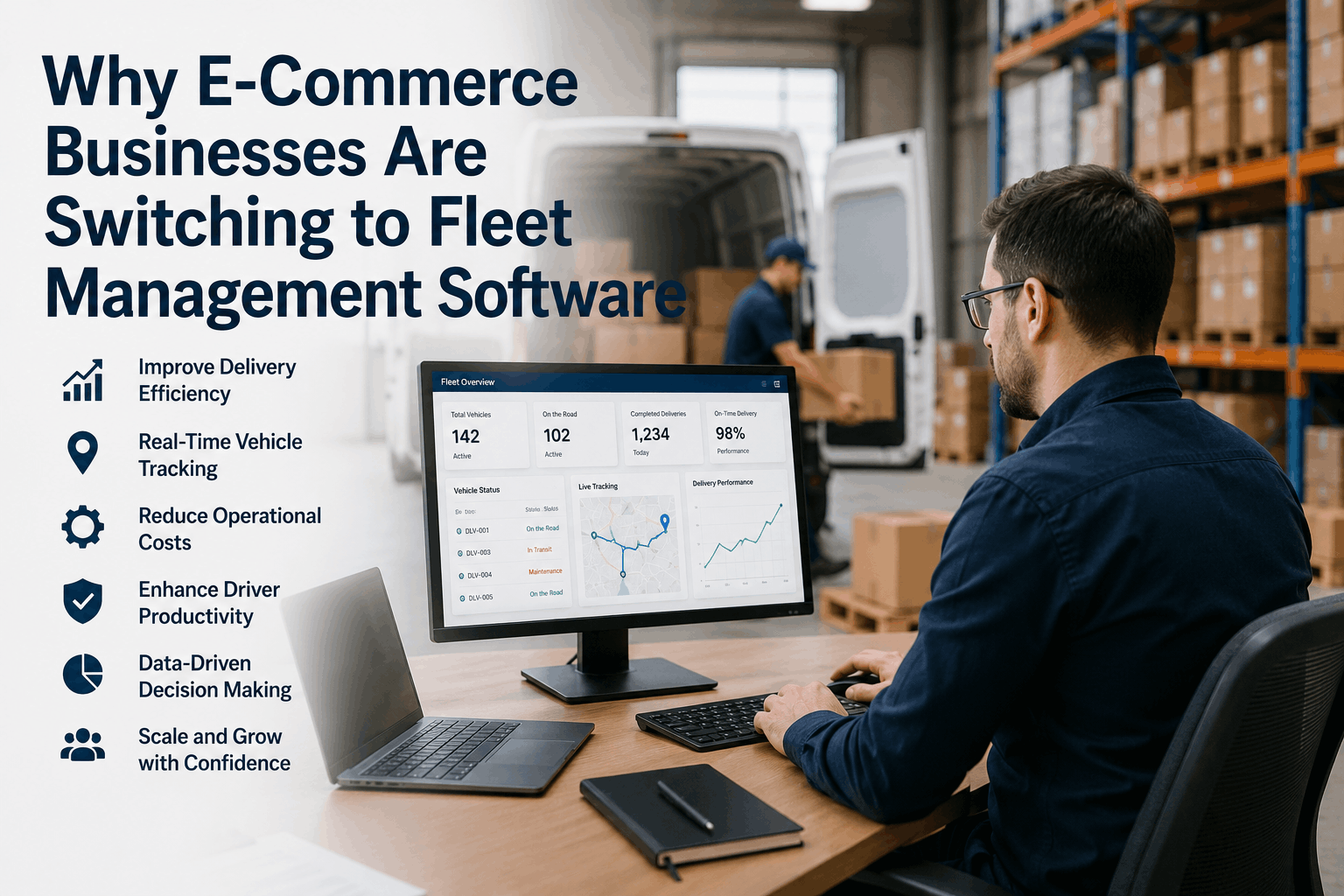
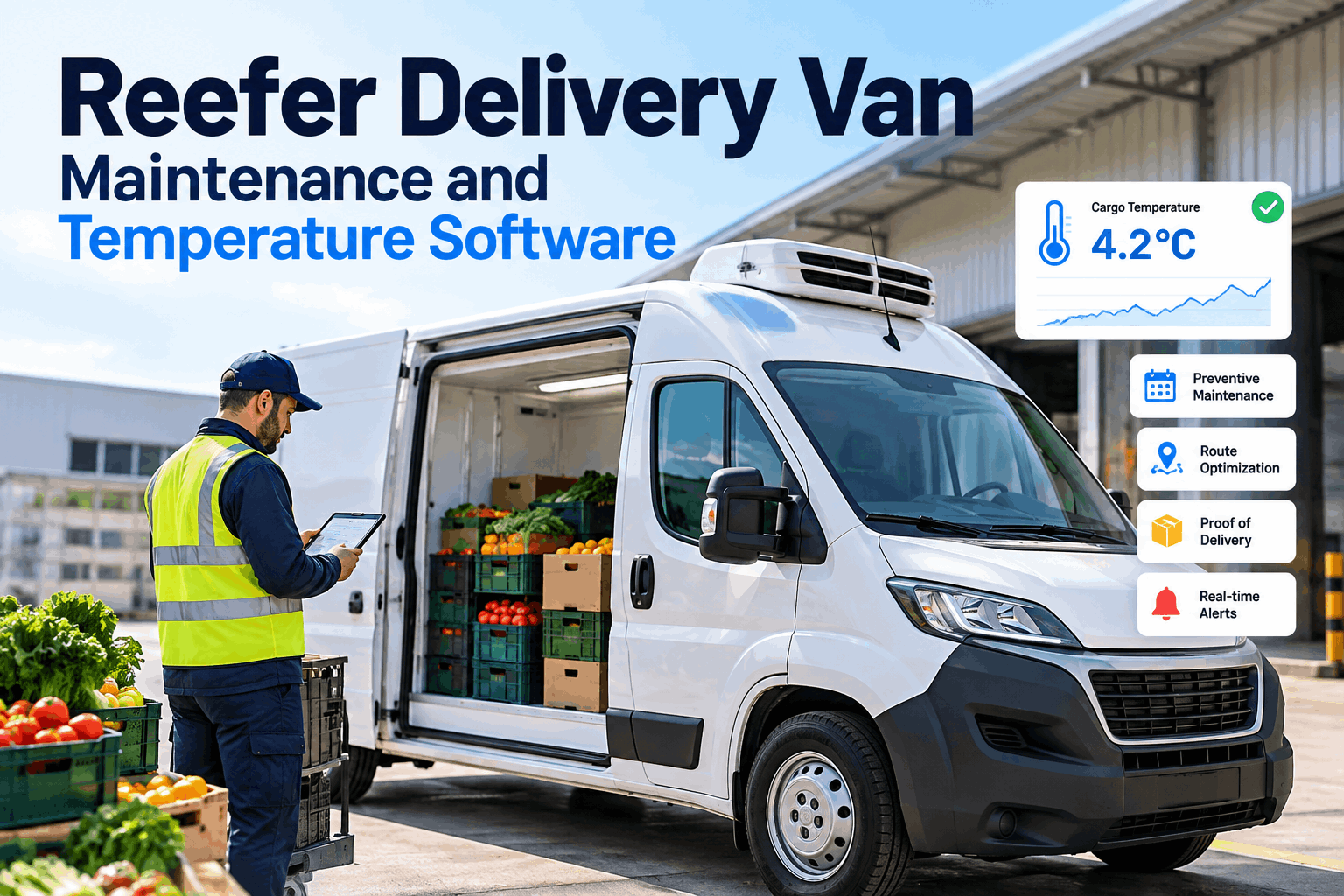
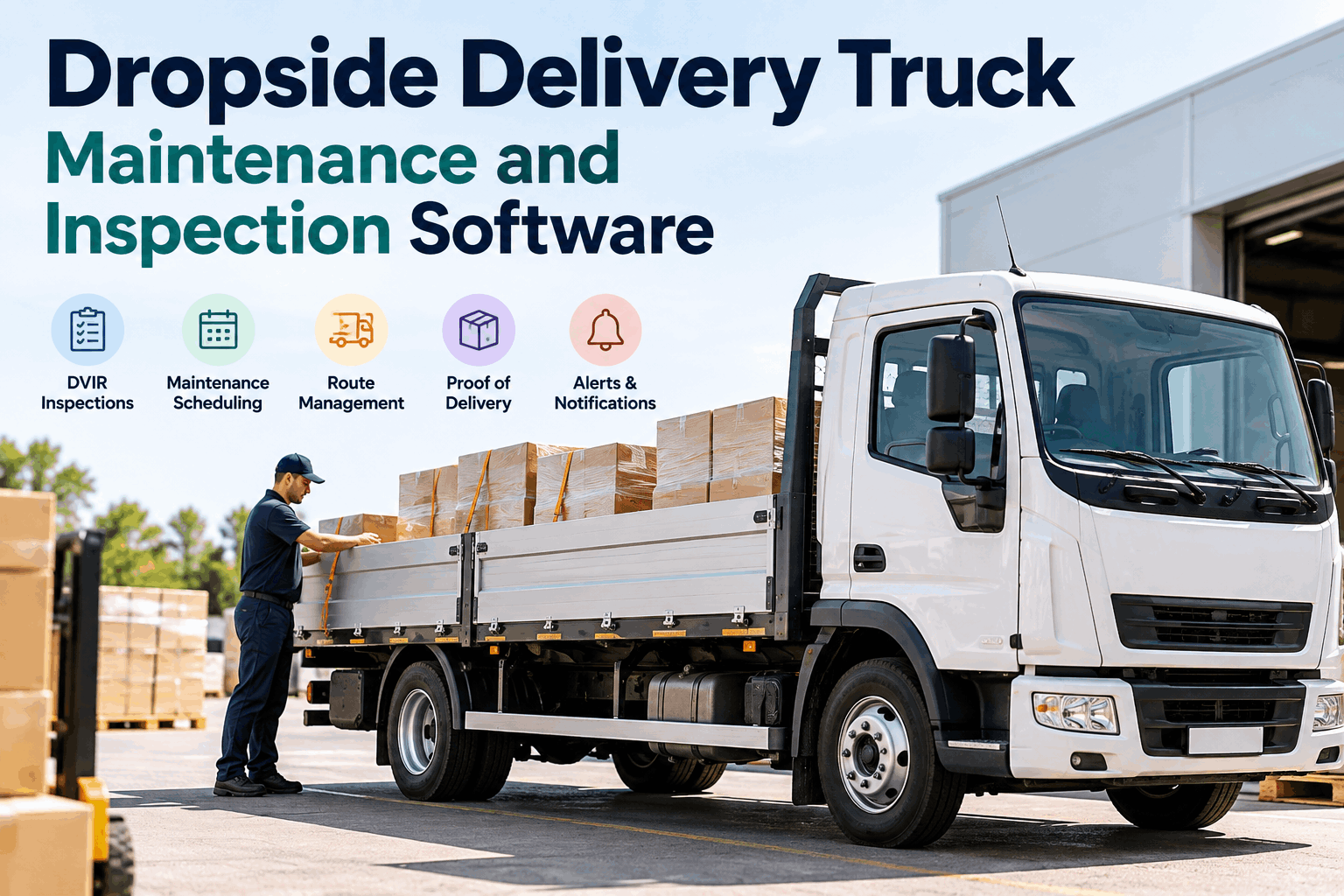
E-commerce logistics across North America and Europe is at an inflection point. Order volumes are surging, customer expectations for same-day and next-day delivery have never been higher, and the cost of running a last-mile fleet manually — dispatchers with spreadsheets, drivers choosing their own routes, supervisors managing by phone call — is compounding faster than revenue growth can absorb it. The result: e-commerce brands that built logistics operations on manual processes are hitting a wall where cost per delivery climbs even as volume grows, on-time rates stagnate, and fleet visibility remains too limited to make meaningful operational decisions. Fleet management software — specifically AI-powered platforms that integrate GPS tracking, route optimization, real-time dispatch, and delivery analytics — is the operational upgrade that breaks this pattern. Fleet Rabbit's fleet management platform is purpose-built for e-commerce last-mile operations, delivering measurable cost reduction and delivery performance improvement within 30–60 days of deployment. Book a demo to see Fleet Rabbit applied to your delivery operation.
Quick Answer
E-commerce businesses are switching to fleet management software for seven core reasons: manual dispatch can't scale with order volume growth, route inefficiency inflates per-delivery cost 18–25% above optimized equivalents, failed deliveries at 8–12% failure rates consume 10–15% of last-mile budget, real-time visibility gaps make proactive management impossible, driver accountability without data produces inconsistent performance, vehicle downtime from reactive maintenance disrupts delivery commitments, and customer experience scores directly reflect fleet operational quality. AI-powered fleet management platforms like Fleet Rabbit eliminate all seven pain points simultaneously — reducing last-mile cost 18–25%, improving on-time delivery 18–24%, and delivering full ROI within 45–60 days.
Reason #1: Manual Dispatch Breaks Down at Scale — Route Optimization Fixes It
The most common trigger for e-commerce businesses switching to fleet management software isn't a single catastrophic failure — it's the gradual realization that manual dispatch, which worked at 500 orders/day, becomes operationally untenable at 2,000 orders/day. The dispatchers aren't getting worse. The problem is combinatorial: routing complexity grows exponentially with volume while human planning capacity grows linearly.
The Scaling Problem in Numbers
A 25-stop route has 25! possible sequences. Human dispatchers approximate a reasonable solution in 15–20 minutes per route. At 50 vehicles, that's 10–16 hours of dispatcher time daily — before handling mid-day exceptions, failed deliveries, or traffic incidents. Fleet Rabbit's optimization engine produces superior routes for 50 vehicles in under 90 seconds, freeing dispatchers to manage exceptions rather than create route plans.
Cost of Staying Manual
Manual routes run 15–25% longer than AI-optimized equivalents — every extra kilometer costs fuel, driver time, and vehicle wear. On a 50-vehicle fleet averaging 110 miles/day, a 20% distance inefficiency wastes 1,100 miles daily. At $0.65–$0.90/mile all-in operating cost, that's $11,500–$16,000 wasted per day — $2.9M–$4.0M annually from route planning alone, before accounting for overtime, failed deliveries, or idle time.
What AI Optimization Delivers
Fleet Rabbit's route optimization accounts for real-time traffic, delivery time windows, vehicle load capacity, and driver constraints simultaneously — producing routes that human dispatch can't match on any metric. E-commerce operations report 15–20% distance reduction, 22–30% fuel savings, and 15–20% more stops per vehicle per shift within 30 days of deployment. The same delivery volume, fewer vehicles, lower cost per delivery.
Reason #2: Failed Deliveries Are Destroying Margin — and Customer Loyalty
Failed delivery attempts are the silent margin killer in e-commerce last-mile operations. At 8–12% failure rates typical of urban residential routes in cities like New York, London, and Berlin without time-window optimization, failed deliveries consume 10–15% of total last-mile budget — while simultaneously damaging the customer experience that determines whether buyers return or churn to competitors.
1
The True Cost of a Failed Delivery Attempt
Each failed attempt costs $8–$15 in direct re-dispatch cost, redelivery fuel, customer service handling, and delayed revenue recognition. But the indirect cost — customer dissatisfaction, negative reviews, and increased churn probability — multiplies the damage. An e-commerce brand spending $45 to acquire a customer loses that acquisition investment entirely when a failed delivery drives the customer to a competitor with better delivery reliability.
50-vehicle fleet at 40 deliveries/day with 10% failure rate: 200 failed attempts daily × $12 average re-delivery cost = $2,400 wasted daily = $720,000 annually on failed delivery attempts alone.
2
How Fleet Management Software Reduces Failures 28–35%
Fleet Rabbit's time-window matching assigns deliveries to routes where planned arrival aligns with customer availability — not random vehicle arrival. Real-time ETA notifications sent to customers when vehicles are 30–45 minutes away dramatically reduce not-home failures. Delivery analytics identify which address types, zones, and time windows generate the highest failure rates, enabling systematic route redesign that attacks failure concentration at its source.
28–35% failure reductionTime-window matchingReal-time ETA alerts
3
Customer Experience as a Fleet Operations Output
Every Fleet Rabbit delivery generates customer-facing data: accurate arrival windows, real-time tracking, and proof-of-delivery confirmation. Customers who receive accurate ETA notifications and on-time deliveries have 34% higher repeat purchase rates in e-commerce studies. Fleet management software transforms delivery from a pure cost function into a customer retention mechanism — making the fleet operation directly measurable against revenue outcomes, not just logistics cost.
Failed delivery reduction from 10% to 6.5–7% rate on 50-vehicle fleet saves $190,000–$270,000 annually. Customer retention improvement from better delivery experience generates additional revenue that dwarfs platform cost.
Fleet Management + Delivery Analytics
Cut Failed Deliveries 28–35% and Reduce Last-Mile Cost 18–25% — Starting Week One
Fleet Rabbit's AI-powered platform combines route optimization, real-time ETA alerts, and delivery performance analytics to reduce failed attempts and per-delivery cost simultaneously — with measurable results from the first week of operation.
28–35%
Fewer Failed Deliveries
18–25%
Lower Cost Per Delivery
Reasons #3–6: The Four Operational Gaps Manual Management Can't Close
Beyond route inefficiency and failed deliveries, e-commerce logistics operations running without fleet management software face four structural gaps that compound cost and limit growth capacity.
Reason #3: Zero Real-Time Fleet Visibility — Managing by Phone Call
The problem: Without GPS fleet tracking, dispatchers manage vehicle status through driver phone calls — reactive, inaccurate, and impossible to scale. When a customer calls asking where their delivery is, the dispatcher calls the driver, who estimates a time that may be wrong by 45 minutes. Supervisor decisions — reassigning stops, sending backup vehicles, managing afternoon exceptions — are made on incomplete information that's already 20 minutes out of date.
What fleet management software delivers: Fleet Rabbit provides live vehicle positions, real-time ETA accuracy for every active delivery, and instant exception alerts when vehicles deviate from route or fall behind schedule. Dispatchers see the entire fleet on one dashboard — no phone calls, no guesswork, no reactive surprises.
Operational impact: Real-time visibility enables proactive management: stop reassignment before windows close, customer communication with accurate ETAs, and exception resolution 20–30 minutes faster than phone-based coordination.
Reason #4: Driver Performance Without Data Is Unmanageable
The problem: Without delivery analytics and driver behavior monitoring, fleet managers can't distinguish between drivers whose routes genuinely run long and drivers who are inefficient, idle, or deviating from optimized sequences. "Driver 7 is always late" isn't an actionable insight — it's an accusation without evidence. Without data, coaching is vague, accountability is impossible, and performance gaps persist indefinitely.
What fleet management software delivers: Fleet Rabbit records stop dwell time, on-time status, idle events, harsh braking, and route adherence for every driver on every shift. Driver scorecards turn performance management from subjective conversation to data-driven coaching: "Your average apartment dwell time is 7.2 minutes versus the 2.5-minute fleet average — here's where the time is going."
Operational impact: Driver behavior improvement from scorecard coaching reduces fuel consumption 12–18% and improves on-time rates 15–20% within 60 days of consistent data-driven management.
Reason #5: Reactive Maintenance Causes Mid-Route Breakdowns
The problem: E-commerce delivery vehicles maintained reactively — serviced when something breaks rather than when wear data predicts failure — break down during peak delivery windows. A vehicle stranding 12 undelivered packages at 3 PM costs $800–$1,400 in emergency towing, repair at premium rates, same-day redelivery, and customer service. At 3–4 breakdowns annually per unmonitored vehicle, a 50-vehicle fleet absorbs $1.2M–$2.8M in avoidable breakdown cost.
What fleet management software delivers: Fleet Rabbit monitors engine health indicators, fault codes, and battery status continuously — identifying developing mechanical issues 1–3 weeks before they cause roadside failures. Maintenance is scheduled during off-hours, not discovered at peak delivery time. Vehicles arrive at maintenance appointment running; they don't get towed from mid-route.
Operational impact: 40% reduction in breakdown events. Each prevented breakdown saves $800–$1,400 in direct and indirect cost — plus the customer experience damage that no redelivery budget can fully recover.
Reason #6: Under-Utilized Vehicles Inflate Fixed Cost Per Delivery
The problem: Manual dispatch assigns delivery volume to vehicles without optimizing load capacity — some vehicles leave the depot at 60–65% capacity while others are overloaded. Load inefficiency means operating more vehicles than the actual delivery volume requires, inflating fixed fleet cost per delivery. A fleet running at 68% average load utilization is effectively paying for 32% of vehicle capacity it isn't using.
What fleet management software delivers: Fleet Rabbit's load optimization matches daily delivery volume to vehicle capacity — maximizing fill rate per vehicle while respecting weight limits and delivery sequencing. Utilization analytics show exactly which vehicles are systematically under or over-loaded, enabling fleet right-sizing decisions based on data rather than dispatcher intuition.
Operational impact: 12–18% improvement in average load utilization. Optimization to 85%+ fill rate may eliminate 2–4 vehicles from daily dispatch requirements on equivalent volume — saving $290–$1,160/day in vehicle operating cost.
Reason #7: Customer Experience Scores Are a Fleet Operations Output
The final — and often most strategically significant — reason e-commerce brands switch to fleet management software is the direct relationship between delivery operational performance and customer lifetime value. Every delivery interaction is a brand touchpoint that either strengthens or erodes customer loyalty.
Delivery Performance Directly Drives Repeat Purchase Rate
E-commerce research consistently shows that on-time delivery with accurate pre-arrival notification produces 28–34% higher repeat purchase rates versus late or failed deliveries. Fleet management software that improves on-time delivery from 78% to 94% isn't just an operational metric — it's a customer retention investment generating revenue that compounds across every subsequent order from retained customers. The fleet operation is a customer experience function, not just a logistics cost center.
Accurate ETAs Replace the "Where Is My Order?" Support Ticket
Fleet Rabbit's real-time vehicle tracking enables accurate customer notifications at 60-minute, 30-minute, and 10-minute arrival windows — generated from actual vehicle position, not static schedule estimates. Operations using accurate ETA notifications report 35–45% reduction in inbound customer service contacts about delivery status, directly reducing support cost while improving customer satisfaction. The customer who knows exactly when their delivery arrives doesn't call. The one who received a "by 6 PM" window that's already been missed calls three times.
Delivery Data Closes the Loop Between Operations and Customer Experience
Fleet Rabbit records proof-of-delivery, dwell time, on-time status, and failure reason for every stop — creating an operational data set that connects fleet decisions to customer outcomes. Which routes have the highest failure rates? Which time windows produce the most customer complaints? Which drivers generate the most escalations? Pattern identification turns customer experience improvement from reactive complaint management into proactive operational intervention. The data shows exactly where to fix the operation before customers churn.
The Complete Picture: What E-Commerce Brands Gain by Switching
15–20%
Distance Reduction Per Route
22–30%
Fuel Cost Reduction Per Vehicle
28–35%
Fewer Failed Delivery Attempts
15–20%
More Stops Per Vehicle Per Shift
18–24%
On-Time Delivery Rate Improvement
45–60 Days
Typical Full Platform ROI Timeline
Frequently Asked Questions: Fleet Management Software for E-Commerce
QHow long does it take to implement fleet management software on an existing e-commerce delivery operation?
Fleet Rabbit deploys within one week for most e-commerce delivery operations. The implementation team completes OMS integration for automated delivery data import, GPS hardware installation on the fleet, and dispatcher training in the first 5–7 days. Optimized routes are generated from day one using delivery addresses, vehicle specs, and depot locations. Optimization quality improves progressively as Fleet Rabbit accumulates historical dwell time data and traffic patterns for your specific service geography — reaching full optimization accuracy by week 3–4. Most operations see measurable fuel and failed-delivery savings in the first week.
QDoes fleet management software work for e-commerce operations with mixed two-wheeler and four-wheeler fleets?
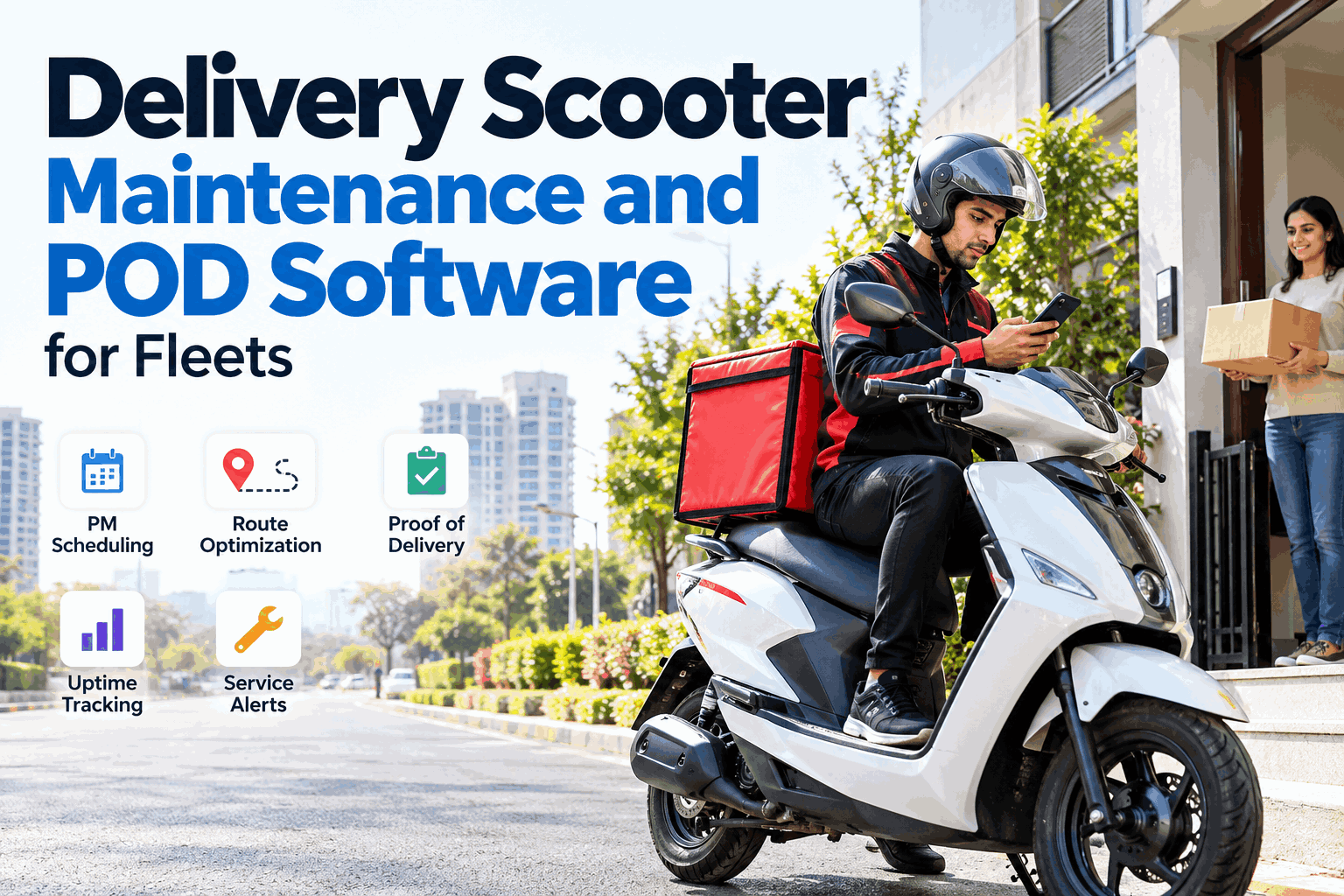
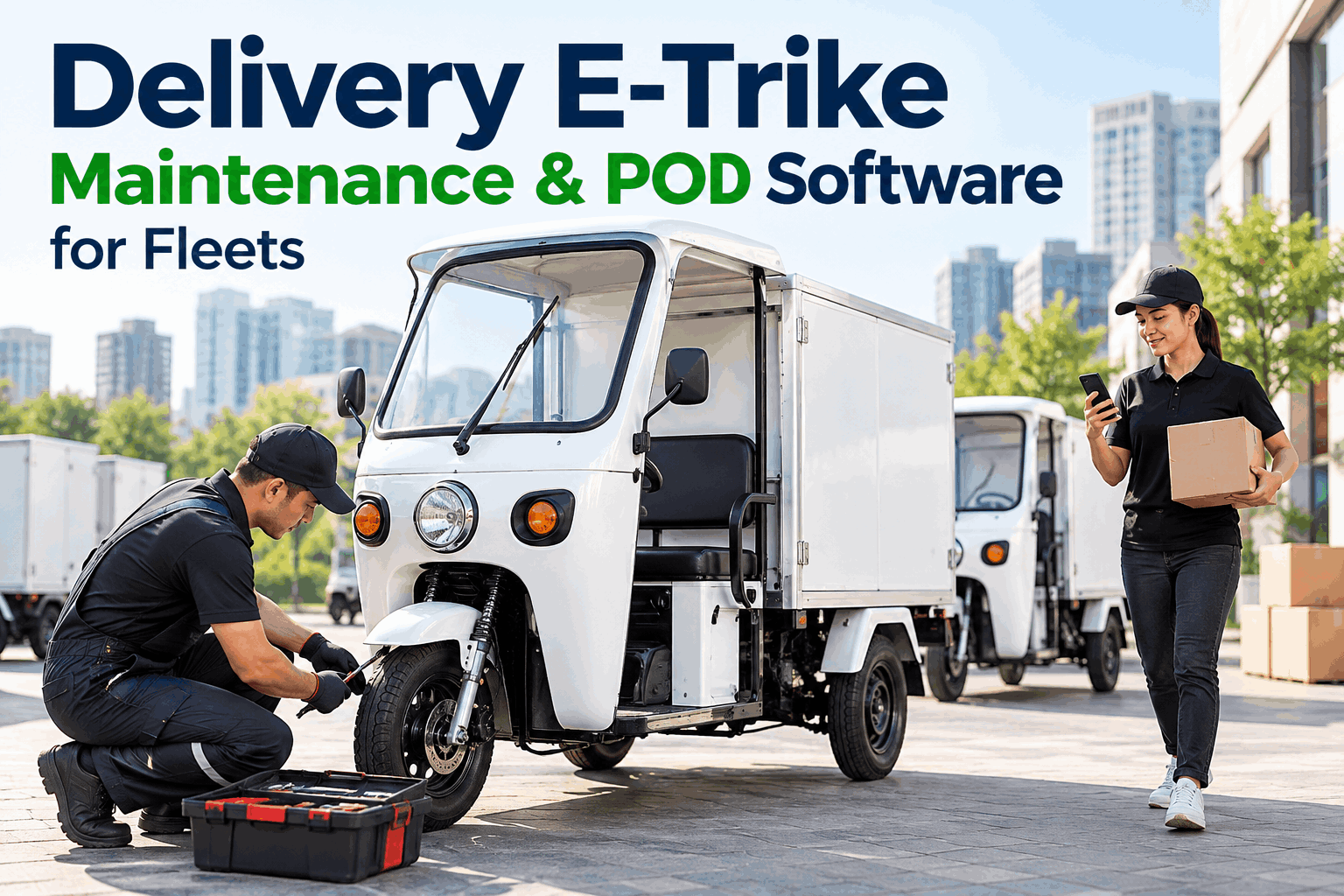
Fleet Rabbit optimizes mixed delivery fleets — two-wheelers, three-wheelers, vans, and larger delivery vehicles — with vehicle-class-specific constraints including load capacity, speed profiles, route access restrictions, and fuel consumption. Mixed fleet operations benefit from optimal vehicle-to-delivery matching: high-density urban micro-zones go to two-wheelers that navigate narrow urban streets efficiently, while bulk or high-value deliveries route to four-wheelers with appropriate load capacity. Vehicle-class-aware assignment typically produces 8–12% additional efficiency over single-class optimization on equivalent volumes.
QHow does Fleet Rabbit handle peak volume periods like sale events and festive seasons?
Fleet Rabbit's optimization engine scales without performance degradation on 2–5x normal delivery volume — processing peak-day route sets at the same optimization quality and speed as regular operations. For sale-event planning, capacity analysis shows exactly how many vehicles and shifts are required to complete projected volume within delivery window commitments, identifying the breakeven point where additional vehicle rental is more cost-effective than extended shift hours. Pre-event route templates for high-volume zones reduce morning dispatch time on peak days when speed matters most. Post-event analytics improve future peak planning accuracy by showing which zones overperformed or underdelivered against projections.
QWhat is the typical ROI timeline for fleet management software investment in e-commerce delivery?
Most e-commerce delivery operations recover full Fleet Rabbit platform investment within 45–60 days through fuel savings and failed delivery cost reduction alone — before accounting for overtime elimination, vehicle utilization improvement, or maintenance cost reduction. The calculation is straightforward: a 50-vehicle fleet saving $4.80/vehicle/day in fuel (15% distance reduction) generates $240/day in fuel savings. Failed delivery reduction from 10% to 7% on the same fleet saves an additional $190,000 annually. These two mechanisms alone typically exceed annual platform subscription cost by 3–5x — making the investment decision a math exercise, not a risk assessment.
Related Fleet Rabbit Resources for E-Commerce Logistics
The four AI capabilities transforming e-commerce fleet operations — real-time GPS visibility, predictive vehicle health monitoring, dynamic route optimization, and delivery performance analytics — with ROI data for each capability layer.
AI-driven fault prediction and automated maintenance scheduling that prevents the mid-route breakdowns disrupting delivery windows — the vehicle reliability foundation that route optimization depends on to function as planned.
How real-time utilization tracking, idle reduction analytics, and fleet right-sizing data reduce total fleet operating cost — applicable to delivery vehicle fleets alongside construction equipment operations.
How GPS hardware, IoT vehicle data, and cloud analytics combine to deliver real-time fleet visibility, predictive maintenance, and performance analytics — the technology infrastructure behind every fleet management capability.
Switch to AI-Powered Fleet Management — Cut Last-Mile Cost 18–25% Within 60 Days
Fleet Rabbit's fleet management platform eliminates every operational gap that manual dispatch creates — route inefficiency, failed deliveries, visibility gaps, driver accountability failures, vehicle downtime, and customer experience inconsistency — through one integrated system purpose-built for e-commerce last-mile delivery.
22–30% Fuel Savings
28–35% Fewer Failed Deliveries
15–20% More Stops Per Shift
Real-Time Fleet Visibility
45–60 Day Full ROI
May 25, 2026
By Michael Finn
All Posts