Government Procurement System Integration for Fleet Management
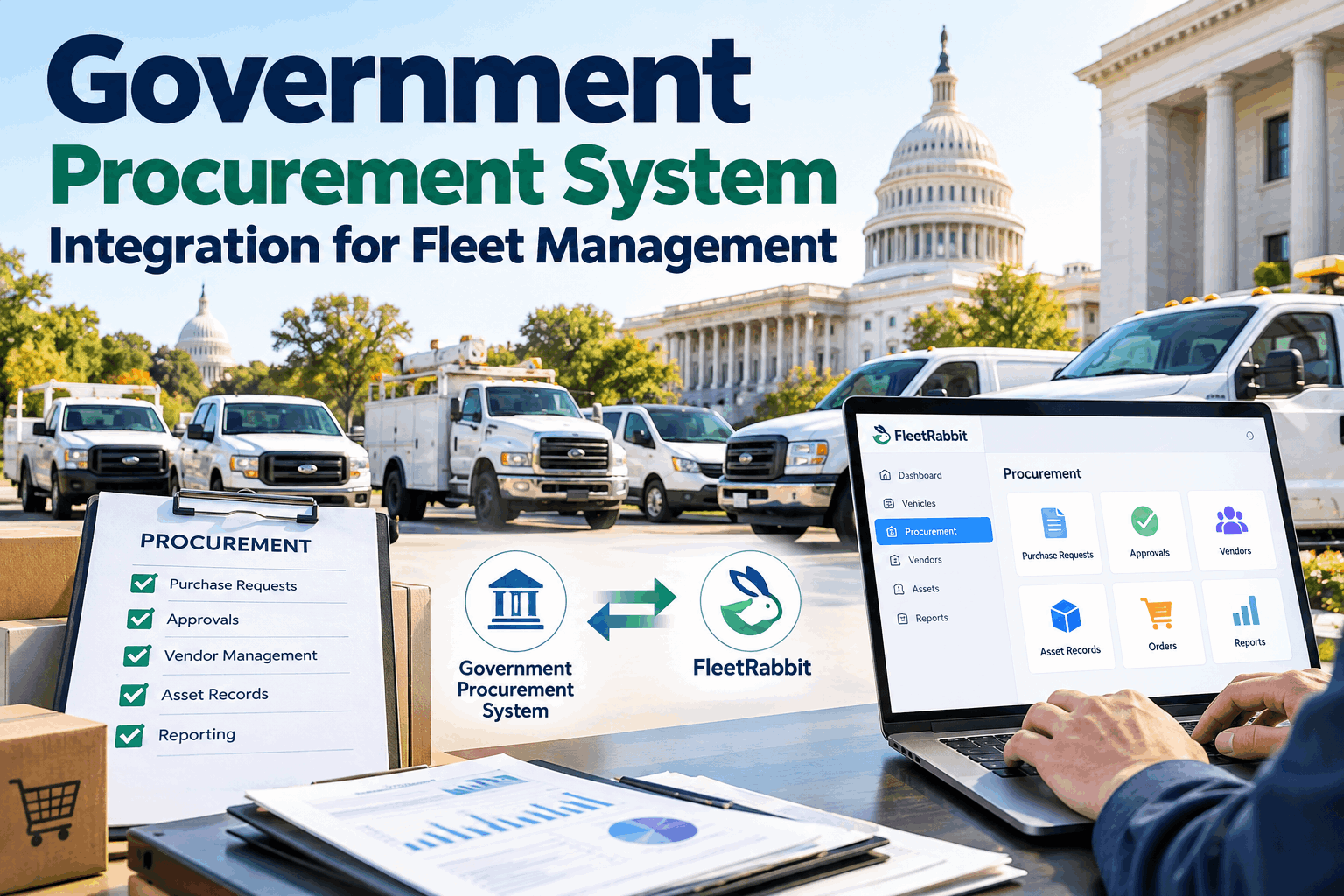
Municipal purchasing agents, county procurement officers, and public works directors operate inside a rigid labyrinth of statutory spending thresholds, formal sealed bid invitations, cooperative purchasing schedules (such as Sourcewell, Omnia, and NASPO ValuePoint), and strict public disclosure rules. When local government entities acquire heavy equipment, emergency response vehicles, utility trucks, replacement chassis, and storeroom spare parts, procurement workflows frequently clash with fleet maintenance management. Purchasing data remains trapped inside legacy municipal enterprise resource planning (ERP) platforms or paper purchase order (PO) approval folders, completely detached from actual vehicle maintenance histories, life-cycle wear benchmarks, and garage inventory stock. This operational silo forces garage supervisors to wait weeks for simple parts PO clearances, leads to redundant emergency spot buys at inflated retail rates, complicates capital asset depreciation under GASB 34, and obscures true total cost of ownership (TCO). Government procurement system integration software bridges municipal purchasing with active fleet operations through bi-directional data synchronization. Automatically match garage work order requisitions to active cooperative contracts, streamline electronic PO approvals, eliminate double-data entry across general ledger systems, and maintain tamper-proof procurement audit trails for city councils and state oversight bodies. Fleet Rabbit provides public sector fleet and procurement integration software built specifically for local government governance. Accelerate municipal purchasing velocity, enforce statutory compliance, and protect taxpayer funds across every public department. Book a Demo to see our government procurement integration software in action.
Government Procurement System Integration for Fleet Management
An authoritative technical implementation and financial governance guide for municipal purchasing officers, city managers, and fleet superintendents: unify municipal ERP purchase orders, cooperative contract schedules, and garage work order parts requisitions into an automated, audit-proof lifecycle.
Automated PO routing replaces paper signature folders across city hall offices.
100%
Cooperative Contract Compliance
Parts and chassis buys link to pre-competed contracts, eliminating non-compliant spot buys.
0
Manual ERP Double-Entries
Real-time bi-directional sync eliminates bookkeeping errors between fleet and finance.
$5
Per Civic Asset / Month
Predictable SaaS subscription with zero expensive enterprise consulting fees.
Bridge Municipal Procurement with Active Fleet Asset Management
Stop losing weeks to manual purchase order approvals and fragmented spreadsheets. Connect your city ERP, cooperative contracts, and fleet maintenance workflows for just $5/asset/month.
The Costly Disconnect Between Municipal Purchasing and Fleet Operations
Local government agencies operate under strict statutory accountability that commercial private fleets never face. State procurement statutes mandate competitive sealed bids for expenditures exceeding specific thresholds (typically $25,000 to $50,000), while smaller purchases must align with cooperative purchasing agreements or multi-vendor quotes. When fleet maintenance operations run on disconnected systems from municipal purchasing, operational friction compounds rapidly. Sign up to automate government procurement workflows across your fleet.
Friction 01
Unplanned Vehicle Downtime Caused by PO Bottlenecks
When a municipal tandem snowplow or police interceptor requires an emergency transmission rebuild or axle replacement, mechanics cannot order parts until a formal purchase order is manually routed, approved by purchasing agents, and encumbered in the ERP. Critical public safety equipment sits idle in service bays for weeks waiting on bureaucratic paperwork. Book a demo to inspect our automated emergency PO routing workflows.
Frustrated by procurement delays, shop supervisors frequently make unauthorized off-contract spot purchases using departmental p-cards at retail auto parts stores. These unbudgeted emergency buys trigger formal audit deficiencies from state comptrollers and forfeit negotiated volume discounts available through pre-competed cooperative contracts.
Friction 03
Capital Replacement Blindness & Inaccurate Budget Forecasting
City councils and finance directors often evaluate vehicle replacement purely by calendar age rather than real total cost of ownership. Because fleet maintenance repair costs live in garage logs while original capital purchase data sits in the general ledger, cities replace well-maintained low-hour units while retaining high-maintenance money-pit assets. Sign up to centralize vehicle lifecycle cost analytics.
Friction 04
Double-Data Entry Errors and Fund Allocation Clashes
Clerks waste dozens of hours each month re-entering invoice data from vendor paper bills into the fleet maintenance software and then again into municipal accounting packages (such as Tyler Munis, BS&A, or SAP). Inevitable account code misallocations between the General Fund and Enterprise Water Funds trigger contentious internal disputes during annual fiscal closeouts.
The 4 Diagnostic Pillars of Public Sector Fleet Procurement Integration
Bi-Directional Municipal ERP & General Ledger Sync
Integrate directly with municipal enterprise financial packages—including Tyler Technologies (Munis, Incode), BS&A Software, CentralSquare, SAP, and CGI Advantage—via secure REST APIs and automated flat-file SFTP pipelines. Work order parts requisitions automatically generate pending purchase requisitions in the general ledger, and approved PO numbers flow back to garage work orders without manual clerk entry.
Connect fleet parts and asset purchasing directly to nationally recognized cooperative purchasing contracts—such as Sourcewell, OMNIA Partners, NASPO ValuePoint, and state master contracts. When garage mechanics requisition heavy equipment attachments, tires, or replacement chassis, the system links the purchase to pre-vetted master agreements, verifying statutory competitive compliance. Sign up to link cooperative contract catalogs to fleet requisitions.
Pillar 03
Life-Cycle TCO Scoring & Capital Replacement Modeling
Combine original capital procurement acquisition costs with cumulative telematics run-hours, fuel consumption, and routine maintenance labor into an objective vehicle life-cycle TCO score. City managers receive data-backed capital replacement recommendations, enabling municipal councils to fund vehicle replacements before maintenance costs exceed depreciated asset value.
Pillar 04
Multi-Fund General Ledger Allocation & GASB 34 Compliance
Automatically distribute vehicle procurement and maintenance expenses across appropriate municipal fund codes: General Fund for police and administration, Enterprise Funds for water and wastewater utilities, and Special Revenue Funds for transit and highway grants. Generate 1-click capital asset balance sheets compliant with GASB 34 reporting mandates. Book a demo to inspect our automated GASB 34 reporting tools.
The Closed-Loop Municipal Requisition-to-Asset Lifecycle
Follow the streamlined procurement journey that eliminates paper approval delays, ensures statutory bidding compliance, and automatically creates asset records upon vehicle delivery. Sign up to test our automated procurement lifecycle.
Phase 01
Work Order Requisition
A garage supervisor flags a depleted parts bin or capital equipment replacement, initiating an electronic requisition inside Fleet Rabbit tied to specific departmental fund codes.
Phase 02
Cooperative Matching & ERP Encumbrance
The software verifies available cooperative contracts (Sourcewell/NASPO) for competitive pricing, transmitting the requisition to the city ERP where funds are officially encumbered.
For newly acquired vehicles, the software automatically builds the asset master file—capturing VIN, chassis specifications, depreciation schedule, and initial telematics sync—for instant deployment.
Platform Comparison: Fragmented Municipal Purchasing vs. Fleet Rabbit
Evaluate the clear operational differences, statutory compliance safeguards, and administrative labor savings between disconnected legacy practices and Fleet Rabbit’s connected platform. Sign up now to explore all platform features.
Procurement & Fleet Dimension
Fleet Rabbit Integrated Suite
Disconnected Municipal ERP & Paper
Generic Commercial Fleet GPS Trackers
Subscription Rate
$5 / asset / month
High administrative payroll & off-contract spend
$25 – $45 / vehicle / month
Municipal ERP Integration
Native bi-directional sync (Tyler, BS&A, SAP)
Manual dual-entry from paper forms
Not supported (telematics tracking only)
Cooperative Contract Linking
Automated Sourcewell, OMNIA & NASPO catalog match
Manual catalog lookups by purchasing staff
Not available
Requisition Approval Velocity
Instant mobile routing; hours instead of weeks
Physical signature routing folders
Not supported
Capital Asset TCO Analytics
Combines acquisition, fuel, labor & run-hours
Fragmented across separate spreadsheets
Odometer miles only
GASB 34 Balance Sheet Dossiers
1-click audit-ready exportable reports
Weeks of manual spreadsheet reconciliation
Not compliant for government accounting
Procurement & Deployment
14-day free trial, self-serve in 14 days
9 to 18-month consultant implementation
1 to 3-year auto-renewing contract
Municipal Case Study: City of Grandville Public Works & Purchasing
City Eliminates Purchase Order Backlogs and Enforces Contract Compliance Across 82 Assets
Managing 82 diverse vehicles across Public Works, Water Utilities, Parks, and Police divisions, the City of Grandville struggled with painful purchasing delays. Maintenance garage supervisors waited an average of 11 business days for routine replacement parts purchase orders to be signed, approved, and keyed into the city's financial ERP. Critical snowplow trucks and police patrol sedans sat deadlined in repair bays while paperwork moved between city hall offices. Frustrated mechanics frequently made emergency spot purchases on departmental credit cards at retail stores, costing the city an estimated $45,000 annually in forfeited cooperative volume discounts.
By implementing Fleet Rabbit at $5/asset/month, the city integrated its maintenance work order system directly with its financial ERP and cooperative purchasing catalogs. Work order parts requisitions generated pre-encumbered purchase orders routed to department heads electronically, slashing approval times from 11 days to under 24 hours. The software automatically flagged available Sourcewell contract pricing for heavy equipment attachments and replacement chassis, eliminating off-contract spending. Over 12 months, vehicle out-of-service turnaround times dropped by 42%, cooperative contract compliance reached 100%, and the city saved $92,000 in reduced parts markups, eliminated expedited shipping fees, and optimized staff administration time.
Frequently Asked Questions
Which municipal ERP and accounting platforms integrate with Fleet Rabbit?
Fleet Rabbit features pre-built integration connectors and open REST APIs that connect seamlessly with leading public sector ERP and accounting packages—including Tyler Technologies (Munis, Incode), BS&A Software, CentralSquare Technologies, SAP Public Sector, Infor Public Sector, CGI Advantage, and Microsoft Dynamics 365. We also support automated flat-file SFTP synchronization for custom municipal databases.
How does cooperative contract integration help municipal fleet procurement?
Cooperative purchasing organizations (such as Sourcewell, OMNIA Partners, and NASPO ValuePoint) competitively solicit and award master contracts on behalf of public agencies, satisfying local and state competitive bidding requirements. Fleet Rabbit links garage parts requisitions and equipment requests directly to awarded cooperative contract catalogs, allowing public works and purchasing officers to purchase compliant vehicles, heavy equipment attachments, and maintenance parts without undergoing costly 90-day formal sealed bid procedures.
How does the software handle multi-fund billing and inter-departmental chargebacks?
Municipalities maintain separate accounting funds: the General Fund (tax-funded police, fire, and streets) and Enterprise Funds (ratepayer-funded water, sewer, and electric utilities). Fleet Rabbit automatically links every vehicle, work order, and purchase requisition to its designated fund code. When parts are purchased or repair labor is expended, the system calculates exact inter-departmental chargebacks, exporting ready-to-post general ledger journal entries to eliminate manual fiscal reconciliation.
How does the platform assist with GASB 34 capital asset reporting?
Under Governmental Accounting Standards Board (GASB) Statement 34, state and local governments must report all capital assets—including infrastructure, rolling stock, and heavy machinery—depreciated over their useful economic lifespans. Fleet Rabbit records initial acquisition costs, capitalized additions, salvage values, and depreciation schedules alongside active telematics engine run-hours, generating 1-click balance sheet reports ready for external auditors.
What are the pricing details and procurement contract terms for Fleet Rabbit's software?
Fleet Rabbit is priced at a flat rate of $5 per active civic asset per month billed annually. This gives complete access to government procurement integration, municipal ERP bi-directional sync, cooperative contract matching, life-cycle TCO analytics, and GASB 34 capital asset reporting. We provide a 14-day free live trial on up to 3 assets with zero setup fees or long-term locked RFP contracts.
Ready to Integrate Government Procurement Across Your Fleet?
Eliminate purchase order approval bottlenecks, enforce cooperative contract compliance, and streamline capital asset tracking for just $5/asset/month.