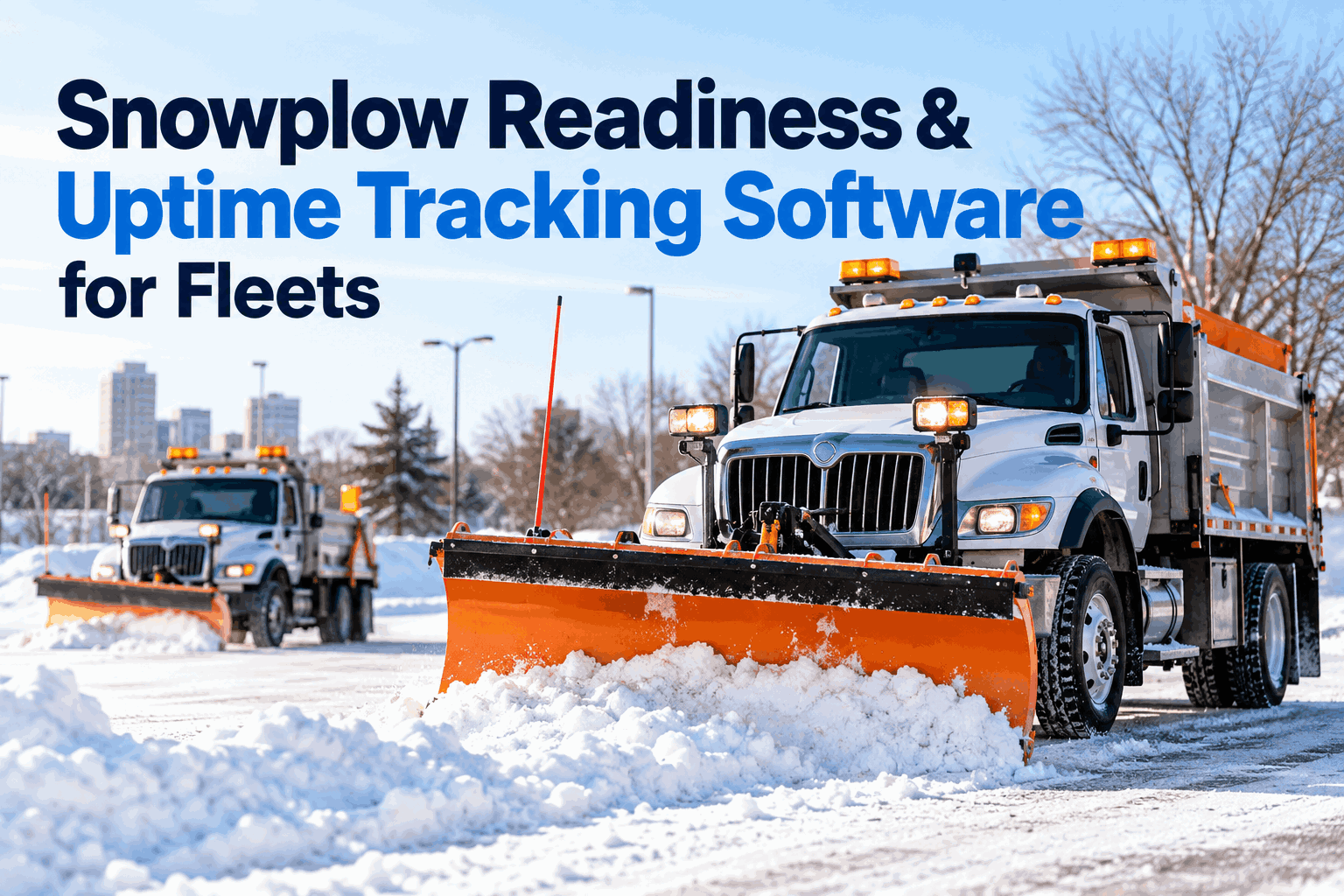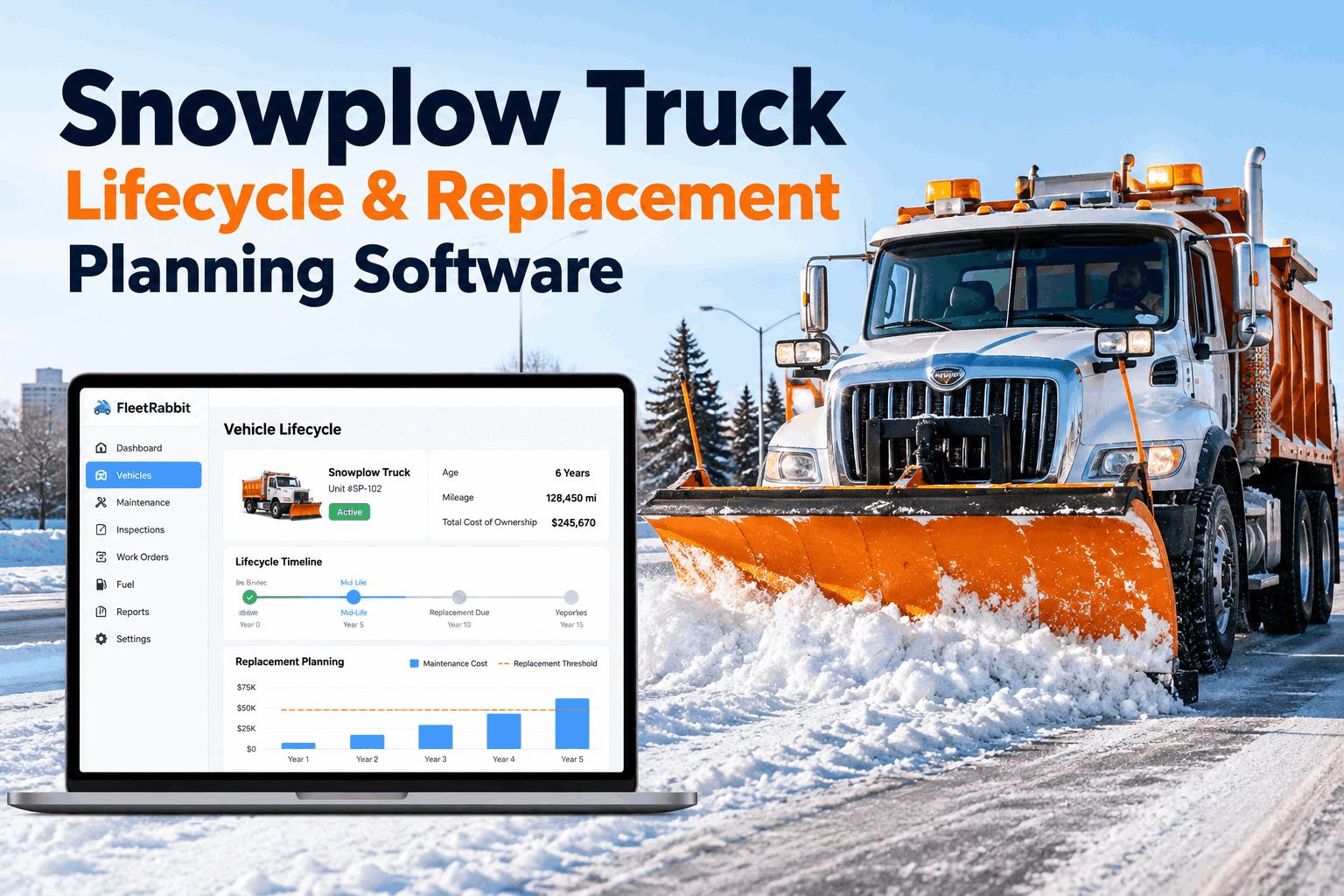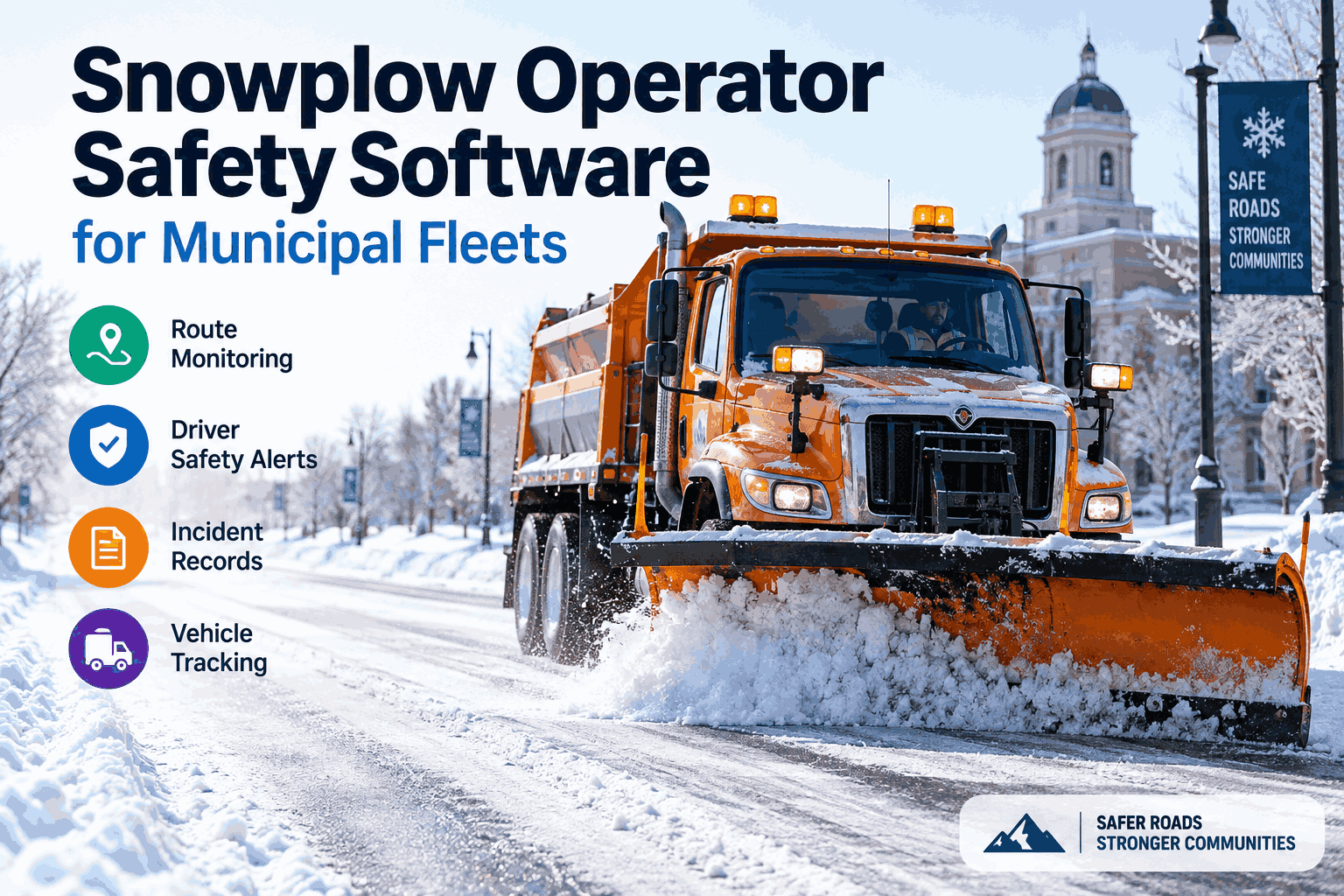
Municipal public works departments, county highway authorities, and state departments of transportation execute high-consequence winter storm maintenance under severe weather conditions where driver safety directly dictates public mobility and municipal liability. Heavy tandem-axle plow trucks, wing-plow motor graders, and salt-spreader rigs operate in whiteout snow squalls, over unbanked black ice, through narrow residential streets with concealed curbs, and alongside erratic civilian commuter traffic. In winter maintenance operations, snowplow drivers face extreme sensory fatigue, severe blind spots, and the perpetual hazard of catching raised manhole castings, bridge expansion joints, or buried road obstructions with lowered plow cutting edges. When cities manage winter operations using verbal two-way radios, manual paper salt-application logs, or basic consumer GPS trackers, dispatchers remain blind to operator fatigue cycles, hydraulic spreader malfunctions, and wing-blade collisions. Purpose-built snowplow operator safety software unifies auxiliary blade-down telematics, spreader material application tracking, real-time in-cab obstacle hazard alerts, automated fatigue monitoring, and electronic shift walkarounds into an integrated winter operations command deck. By providing live driver guidance, tracking blade engagement, and logging salt distribution rates, public fleet superintendents prevent vehicle rollover wrecks, eliminate slip-and-fall tort liability, and safeguard operators throughout multi-day blizzards. To evaluate how our snowplow fleet safety platform protects your operators during critical winter storm events, book an executive technical demonstration with our winter operations specialists or register your municipal winter maintenance fleet immediately through our free platform sign up.
Snowplow Operator Safety Software for Municipal Fleets
An enterprise winter road maintenance and fleet safety guide for public works directors, highway superintendents, and street operations leads. Track auxiliary blade-down telemetry, monitor spreader material distribution, prevent obstacle strikes, and automate driver safety logging across storm shifts.
The Multi-Faceted Hazards of Winter Municipal Road Maintenance
Operating a municipal snowplow involves complex physical dynamics that far exceed standard commercial trucking operations. Snowplow operators pilot 40,000-to-60,000-pound vehicles equipped with twelve-foot front steel scraper blades and ten-foot extending wing plows through whiteout conditions, zero-visibility blowing snow, and active freezing rain. The mechanical challenges are severe: when a heavy steel cutting edge traveling at 25 MPH strikes an unyielding obstacle—such as an unbanked curb, a raised sanitary sewer manhole casting, or a railroad crossing flange—the kinetic energy transfers directly through the moldboard trip springs into the vehicle chassis and the operator's cab. These sudden deceleration events cause operator whiplash, steering wheel rebound wrist fractures, and major front suspension shearing. Simultaneously, operators must continuously monitor hydraulic plow angles, adjust salt spreader gate openings, watch for inattentive tailgating motorists, and manage severe shift fatigue during emergency 12-hour blizzard rotations. Dedicated snowplow operator safety software mitigates these risks by combining digital obstacle geofences, intelligent speed governors, automated hydraulic circuit monitoring, and driver fatigue tracking into a single operations engine. Public works leaders can explore interactive winter telematics by scheduling a tailored winter maintenance fleet software demonstration or configure custom storm route profiles directly via our quick platform sign up.
Auxiliary Blade-Down & Wing Telematics
Standard vehicle GPS only tracks where a truck drove, not whether it plowed. FleetRabbit integrates auxiliary digital sensors that monitor hydraulic pressure switches on the front hoist, reversible swivel, and side wing circuits. The operations console maps exactly where blades were engaged versus deadheading in transport mode.
Geofenced Obstacle & Manhole Strike Alerts
Municipal GIS layers of raised manhole castings, bridge expansion joints, narrow lane curbs, and low-clearance utility overpasses are uploaded to the platform. As the plow approaches an obstacle, in-cab audio alarms warn the driver 500 feet in advance, prompting them to raise the blade slightly.
Spreader Material Application Telematics
Connects directly to onboard electronic spreader controllers (Cirus, Certified Power, Force America). The software records precise application rates (dry salt, pre-wet brine, sand) correlated with road surface infrared temperatures, preventing over-salting and protecting watershed ecology.
Tort Defense & Slip-and-Fall Protection
When civilian motorists slide into guardrails or pedestrians file slip-and-fall claims months after a blizzard, cities face major liabilities. FleetRabbit exports indisputable time-stamped proof showing the exact minute a street was plowed, what plow equipment was down, and how much de-icing material was laid.
Direct Technical Matrix: Legacy Radio Dispatch vs. FleetRabbit Snowplow Intelligence
Managing winter road maintenance with paper route clipboards, two-way radio chatter, and disconnected standalone spreaders creates major operational vulnerabilities. Dispatchers cannot verify which secondary subdivisions have been plowed, drivers are forced to juggle radio microphones while wrestling heavy hydraulic levers in slippery traffic, and public complaints overwhelm municipal phone lines. Review how legacy winter operations compare directly against FleetRabbit's automated snowplow operator safety platform. Public works directors and city engineers can evaluate custom storm management consoles by scheduling an executive winter fleet software demo or explore driver safety profiles through our self-service sign up.
| Winter Maintenance Dimension | Paper Route Sheets & Radio Check-ins | FleetRabbit Snowplow Safety Engine | Municipal & Taxpayer Advantage |
|---|---|---|---|
| Plow Blade Engagement Verification | Unverified; assumes truck plowed if miles were driven | Hydraulic sensor tracking (Blade-Down vs. Deadheading) | Indisputable proof that roads were actively cleared |
| Concealed Obstacle Collision Defense | Driver relies on memory; frequent manhole/curb strikes | In-cab geofenced obstacle alarms (500ft early warning) | Reduces blade breakage and operator whiplash injuries |
| Salt & Chemical Spreader Tracking | Manual volumetric bin estimates at shift end | Automated controller integration (lbs/lane-mile) | Saves up to 25% in municipal salt and de-icer budgets |
| Operator Fatigue & Shift Compliance | Drivers push through 16+ hour shifts undetected | Automated HOS fatigue clocks and rest-break prompts | Prevents catastrophic late-shift fatigue collisions |
| Public Inquiries & Citizen Tracking | Dozens of angry phone calls to city hall | Automated public-facing "Where's My Plow" GIS feed | Slashes citizen call volume by over 80% during blizzards |
4-Stage Winter Storm Operational Sequence
FleetRabbit operationalizes municipal winter maintenance into an automated, four-stage workflow that connects pre-storm equipment preparation, active blizzard route execution, and post-storm tort claim archives into a seamless sequence. To explore how this automated workflow protects emergency crews on freezing roads, schedule an operational storm readiness walkthrough demo with our team.
Pre-Storm Inspection & Calibration
Operators complete mobile eDVIR walkarounds, verifying plow cutting edge wear, trip spring tension, wing-blade lock pins, hydraulic hose lines, spreader augers, and warning strobes before winter weather strikes.
Priority Route Allocation & Telematics
Dispatch allocates dynamic routes based on storm severity (Priority 1 arterials, hospital corridors, school bus lines, secondary subdivisions). Telematics sensors initialize automatic blade and spreader state polling.
Active Storm Guidance & Hazard Interception
While clearing snow, operators receive in-cab alerts for approaching bridge expansion joints, narrow curb chicanes, and raised manholes. Real-time speed monitoring prevents excessive-speed spinouts on icy roads.
Material Reconciliation & Tort Archive
Upon shift completion, the platform reconciles total tons of salt distributed against planned lane-miles, logs auxiliary engine hours for maintenance, and archives immutable blade-down breadcrumb files for insurance defense.
Financial Capital Stewardship: Eliminating Winter Fleet Budget Waste
Operating a municipal winter maintenance fleet without connected telematics and safety software creates compounding financial losses across damaged plow blades, bent push frames, sheared wing towers, wasted chemical de-icer, and expensive pedestrian slip-and-fall tort settlements. When an operator catches a concealed catch-basin casting with a high-speed steel plow blade, replacing the sheared moldboard and repairing the truck's front frame rails can cost upwards of $18,000 in parts and labor, taking a vital front-line truck out of service during the worst storm of the year. Analyzing these systemic cost drivers helps public works directors and highway superintendents build an airtight business case for dedicated snowplow safety software before city councils and county commissioner boards. Calculate your department's exact cost recovery by booking an operational winter fleet assessment demo or get started directly via our rapid platform sign up.
Top Causes of Municipal Winter Fleet Budget Overruns
Winter Safety Platform Capabilities
Connects directly to plow lift cylinders, reversing valves, and wing hoists to confirm active road scraping block by block.
Extracts granular material application rates (dry salt, pre-wet brine) directly from leading spreader microprocessors.
Runs on open telematics modems and standard mobile tablets, protecting municipal budgets from proprietary black-box markups.
ROI & Public Safety Stewardship for Municipal Leadership
When municipal leadership evaluates winter fleet safety software, elected officials must measure financial return across equipment preservation, risk mitigation, chemical material savings, and community satisfaction. FleetRabbit delivers quantifiable financial return across all primary public sector winter maintenance categories. To review your customized municipal storm operations savings forecast, schedule an executive briefing demo with our team or start configuring your snowplow fleet safety platform today with a free account.
Blade & Frame Preservation
In-cab proximity alerts for concealed curbs, raised bridge joints, and manholes cut apparatus front-end damage by over 70%, keeping frontline plows in service during severe blizzards.
Salt & Chemical Efficiency
Automated spreader tracking matches application rates to pavement surface temperature and vehicle ground speed, cutting salt consumption by up to 25% without compromising road safety.
Tort Claim Immunity
Maintaining indisputable, sub-minute records of blade-down status, material spread rates, and vehicle timestamps provides an airtight legal defense against citizen slip-and-fall lawsuits.
Frequently Asked Questions: Snowplow Operator Safety and Route Tracking
How does the software track whether a snowplow is actively plowing or just driving?
FleetRabbit connects to auxiliary digital sensor inputs or pressure switches installed on the snowplow’s hydraulic lift and wing circuits. When the driver drops the blade to the pavement, the sensor signals the telematics gateway, which logs the route segment as "Active Plowing" on the live map. When the blade is raised to navigate over dry pavement or clear obstacles, the system switches the status to "Deadheading".
How does the system warn drivers about hidden manhole covers and road obstacles?
Municipal infrastructure layers—including known raised manhole castings, storm drains, bridge expansion joints, and narrow concrete curbs—are mapped into the FleetRabbit platform as spatial hazard geofences. As a plow truck approaches a mapped obstacle at plowing speed, the in-cab tablet or telematics interface issues a distinctive audio alarm 500 feet in advance, giving the operator time to ease the blade over the hazard.
Can FleetRabbit integrate with our existing electronic spreader controllers?
Yes. FleetRabbit integrates directly with leading winter maintenance spreader controllers (such as Cirus Controls, Certified Power, Force America, and Rexroth) via standard serial or CAN-bus communication protocols. The software continuously reads and records real-time granular salt, brine, and sand application rates per lane-mile.
How does verified route tracking defend municipalities against slip-and-fall lawsuits?
When a civilian motorist or pedestrian files a lawsuit alleging that a municipal roadway or sidewalk was neglected during a winter storm, municipalities must prove due diligence. FleetRabbit generates timestamped historical playback dossiers proving the exact minute a plow truck cleared the street, confirming the blade was fully down and documenting the exact pounds of de-icing chemical applied.
Share This Story, Choose Your Platform!
From our blog

Public Works Near-Miss and Hazard Reporting Software Across Every Department

Electric Delivery Van Proof-of-Delivery Software Guide

What Is Apparatus Readiness? NFPA Fire Fleet Compliance Guide

What Is Fleet Chargeback? Municipal Fleet Cost Guide 2026

What Is a Government Motor Pool? Fleet Management Guide

What Is NFPA 1911? Fire Apparatus Readiness & Compliance

FTA-Compliant CMMS for Transit: Funding, ROI & Costs