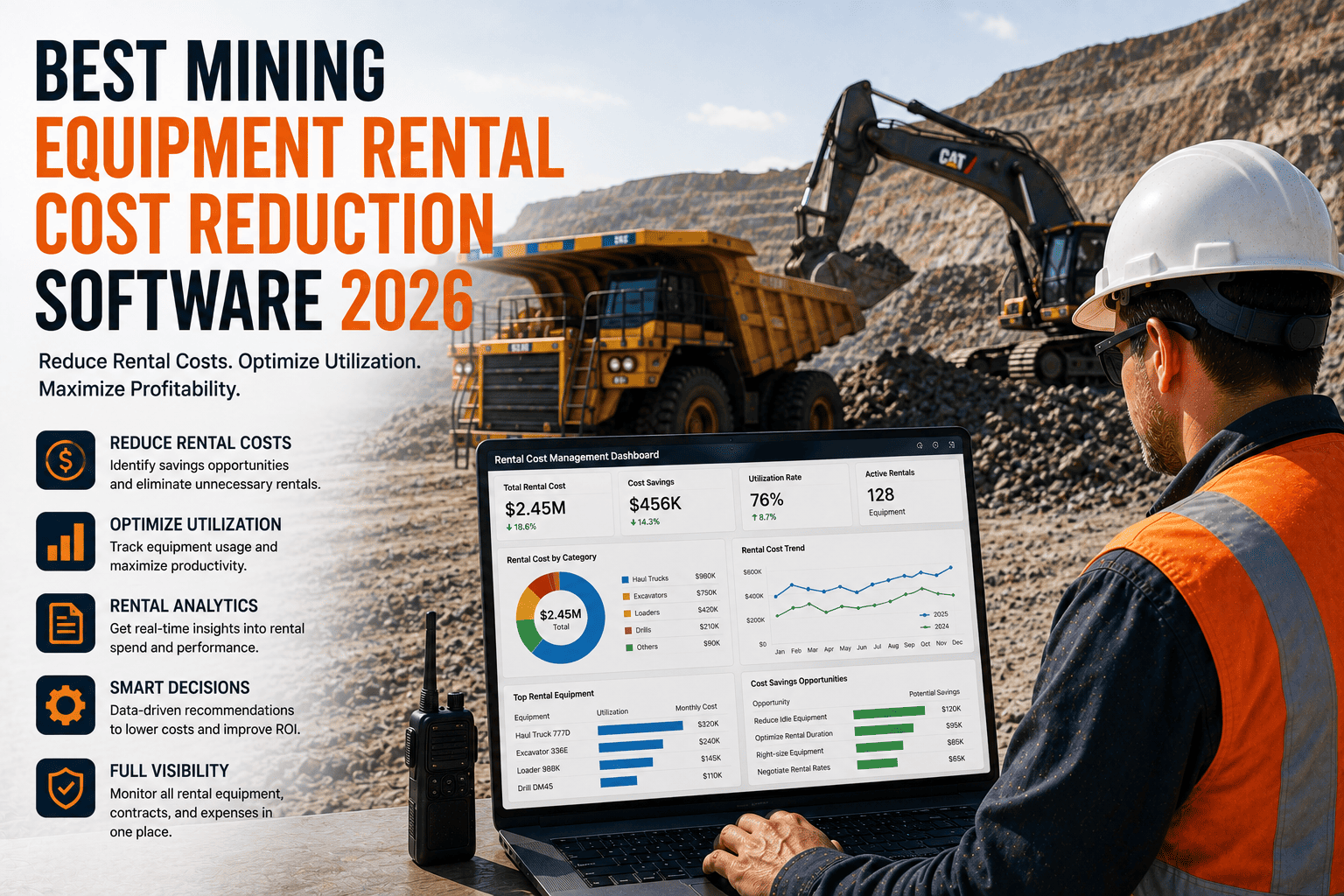
Nobody plans to rent a replacement excavator at premium rates on a Tuesday afternoon. It happens because a machine that was supposed to be running broke down instead, and the job could not wait for the owned unit to come back from the shop. That single emergency rental rarely shows up as its own budget line either, it gets absorbed into "equipment costs" for the month, which is exactly why so many mining fleets underestimate how much unplanned downtime is actually costing them in rented replacements alone.
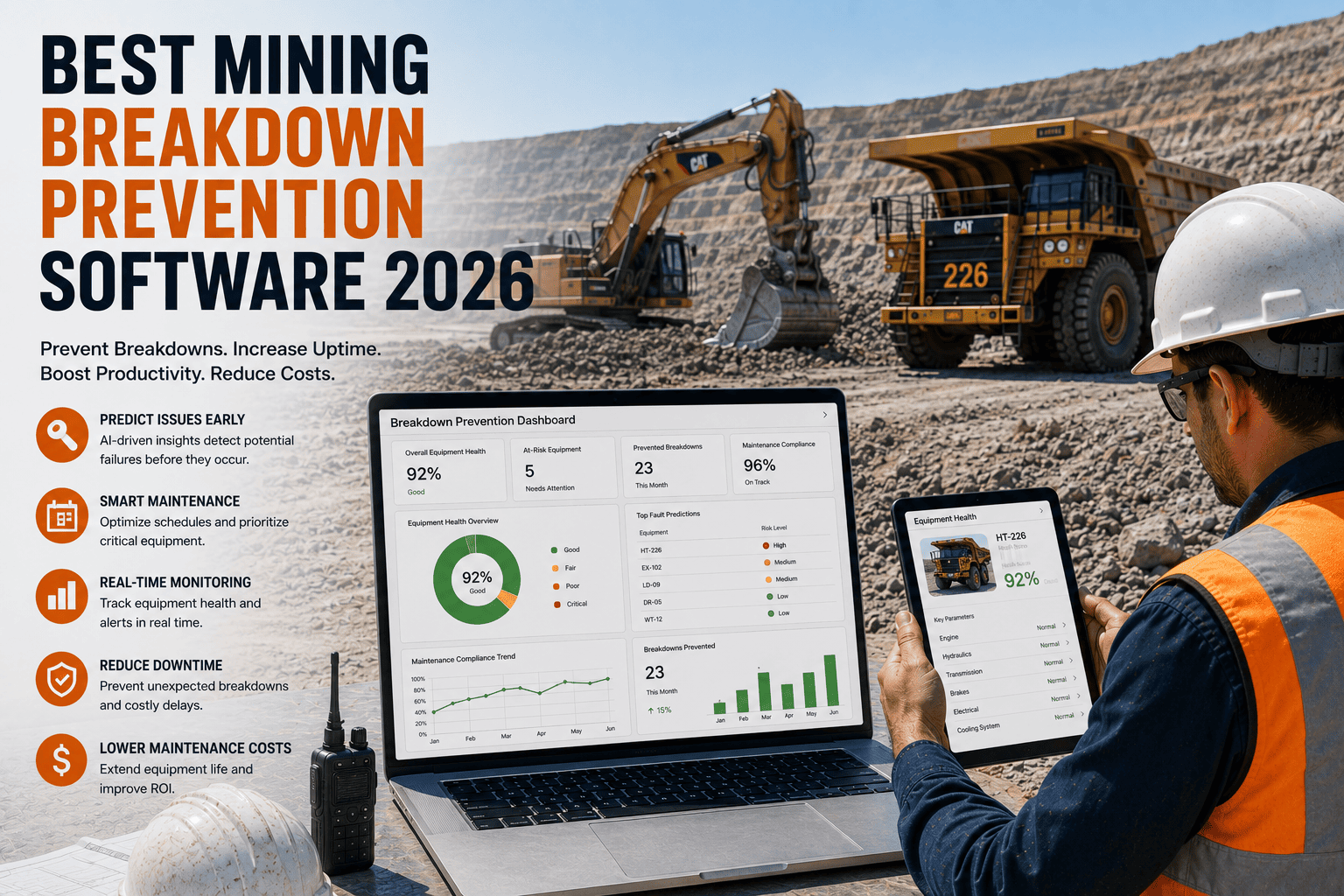
The best mining equipment rental cost reduction software in 2026 works by preventing the breakdowns that force emergency rentals in the first place, using predictive maintenance, real-time equipment availability tracking, and proactive scheduling. Operations that shift from reactive to predictive maintenance report 20 to 30 percent less downtime and 25 to 40 percent lower maintenance cost, which directly shrinks how often a rented machine has to fill the gap. Sign up free or book a demo to see how FleetRabbit reduces emergency rental dependence.
Emergency Rentals Are a Symptom, Not the Real Problem
A mine only reaches for a rental replacement when an owned machine is unexpectedly out of service, so the rental bill is really a downstream cost of a maintenance program that did not catch a failure coming. A single haul truck gearbox or differential failure can cost 50,000 to 150,000 dollars in lost production and emergency repair logistics, and on a large open-pit site, unplanned downtime can run into millions per day once queuing trucks and idle loaders are factored in. The emergency rental is just the most visible piece of a much larger bill.
What Reactive Maintenance Actually Costs Compared to Planned Work
Reactive repairs, the kind that force an emergency rental to cover the gap, increase costs by 3 to 5 times compared to planned work, and sometimes as much as 15 times when secondary damage, expedited parts, and idle crews are added in. Predictive maintenance approaches have consistently shown a 35 to 50 percent reduction in unplanned downtime compared to reactive strategies, which is precisely the downtime that generates the rental invoices nobody budgeted for.
FleetRabbit reads engine, vibration, and duty-cycle data to flag wear before it becomes a failure, so machines get serviced on a planned schedule instead of leaving a gap that has to be filled with a rented replacement.
How the Right Software Actually Cuts Rental Spend
Reducing rental costs is not about negotiating better rates with a rental company. It is about needing the rental far less often, and that comes down to visibility the fleet either has or does not have.
Three Capabilities That Directly Reduce Emergency Rentals
Predictive Failure Detection
Reading vibration, oil chemistry, and duty-cycle data continuously catches seized gearbox and bearing warning signs weeks before failure, turning an emergency breakdown into a scheduled repair.
Real-Time Equipment Availability Tracking
Knowing exactly which owned machines are available, in service, or approaching a scheduled maintenance window lets planners reassign work internally before ever calling a rental company.
Proactive Maintenance Scheduling
Automated scheduling based on condition data, not just fixed hour intervals, keeps repairs happening during planned downtime windows instead of mid-shift on the haul road.
Reactive, Preventive, or Predictive: Where Does Your Fleet Sit
Most mining fleets fall somewhere on a spectrum between three maintenance philosophies, and where a fleet sits predicts almost exactly how often it ends up calling a rental company.
| Maintenance Approach | How It Works | Effect on Rental Dependence |
|---|---|---|
| Reactive | Fix it when it breaks, with no advance warning of failure | Highest rental dependence, since every failure is unplanned and mid-shift |
| Preventive | Replace parts on a fixed schedule regardless of actual condition | Reduces some emergencies but still misses failures that occur between intervals |
| Predictive | Act on what condition data actually shows, servicing components when readings signal wear | Lowest rental dependence, since repairs are scheduled during planned downtime instead of forced by breakdown |
Why Fleet Utilization Targets Make This Urgent
Most mining operations run fleet utilization targets between 85 and 95 percent, which means there is very little slack built in to absorb an unplanned failure without either delaying production or calling a rental company. A mid-sized operation running dozens of haul trucks that experiences even a small increase in unplanned downtime can face revenue losses well into the tens of millions annually, a gap that predictive visibility is built to close before it opens.
FleetRabbit combines condition-based maintenance alerts with live equipment availability, so planners can reassign an internal machine or schedule a repair days in advance, instead of reaching for an emergency rental.
Frequently Asked Questions
The Bottom Line for Mining Fleet Managers
Every emergency rental invoice is really a note left behind by a maintenance program that did not see a failure coming in time. Software that catches wear early and shows exactly what is available across the owned fleet does not just save on the rental itself, it removes the production loss, overtime, and expedited parts costs that come bundled with every unplanned breakdown. The fleets spending the least on emergency rentals are not the ones with the fewest machines. They are the ones with the earliest warning.
FleetRabbit combines predictive maintenance alerts with real-time equipment availability, so your fleet catches failures early and covers gaps internally, before an emergency rental is ever needed.