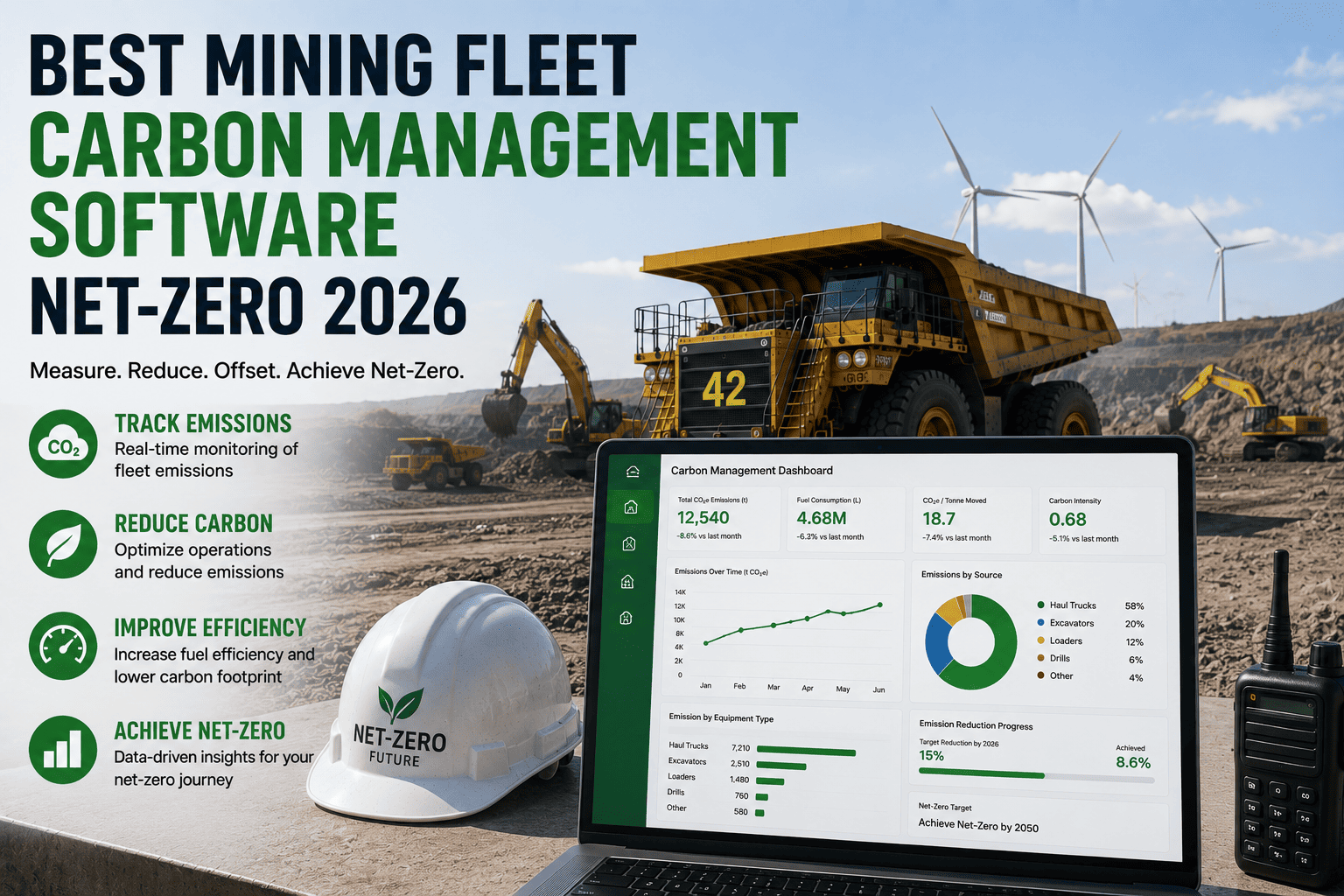
Mining moves the materials the energy transition runs on, yet the industry that supplies copper, nickel, and lithium is itself one of the heaviest carbon emitters on the planet. Every haul truck idling at a crusher, every drill rig burning diesel through a night shift, and every ventilation fan running around the clock adds up to a fleet-level emissions problem that spreadsheets and manual fuel logs simply cannot solve anymore. Mining fleet carbon management software gives operations teams a single place to measure, reduce, and report the carbon output of every vehicle on site, turning a vague sustainability goal into a number you can actually manage week over week.
Mining fleet carbon management software tracks fuel burn, idle time, haul-cycle efficiency, and equipment-level emissions across surface and underground fleets, then converts that data into Scope 1 and Scope 2 reporting that satisfies investors and regulators. The mining and metals sector produces roughly 11 percent of global greenhouse gas emissions, and fleet operations are one of the largest controllable sources on any site. Sites using carbon-aware fleet software typically cut diesel consumption by 15 to 30 percent within the first year through idle reduction, route optimization, and predictive maintenance alone.
Why Mining Fleets Need Carbon Management Software Right Now
Mining and metals activity accounts for close to 11 percent of global greenhouse gas emissions, with primary extraction alone responsible for a meaningful share of that footprint before ore ever reaches a smelter. Haul trucks, loaders, drills, and support vehicles are the single largest source of Scope 1 emissions on most surface and underground sites, which means fleet-level data is exactly where a carbon program should start. Investors, offtake partners, and regulators are no longer satisfied with an annual sustainability PDF. They want continuous, auditable emissions data tied to specific equipment, shifts, and pits, and that level of granularity is not something a fuel card statement can provide.
The pressure is compounding because copper and nickel demand is rising sharply to feed batteries, grids, and wiring, and each tonne of that metal carries a real carbon cost before it leaves the ground. Copper production releases around 4 tonnes of CO2 per tonne of metal, while nickel can release anywhere from 12 to 78 tonnes depending on the ore body and processing route. Producers who cannot show a credible, data-backed reduction plan risk losing contracts to competitors who can. That is why carbon management has moved from a corporate sustainability slide to an operational discipline that sits right next to maintenance and dispatch software.
What to Look For in Mining Fleet Carbon Management Software
Equipment-Level Fuel and Emissions Tracking
The foundation of any carbon program is knowing exactly how much fuel each haul truck, loader, and drill rig burns, broken down by shift, operator, and haul segment. Aggregated site-wide diesel totals are not useful for decision-making because they hide which vehicles and which routes are driving the footprint. Look for a platform that pulls fuel and engine data directly from telematics and onboard sensors rather than relying on manual entry, since manual logs are consistently the weakest link in mining emissions data.
Idle Time and Haul-Cycle Optimization
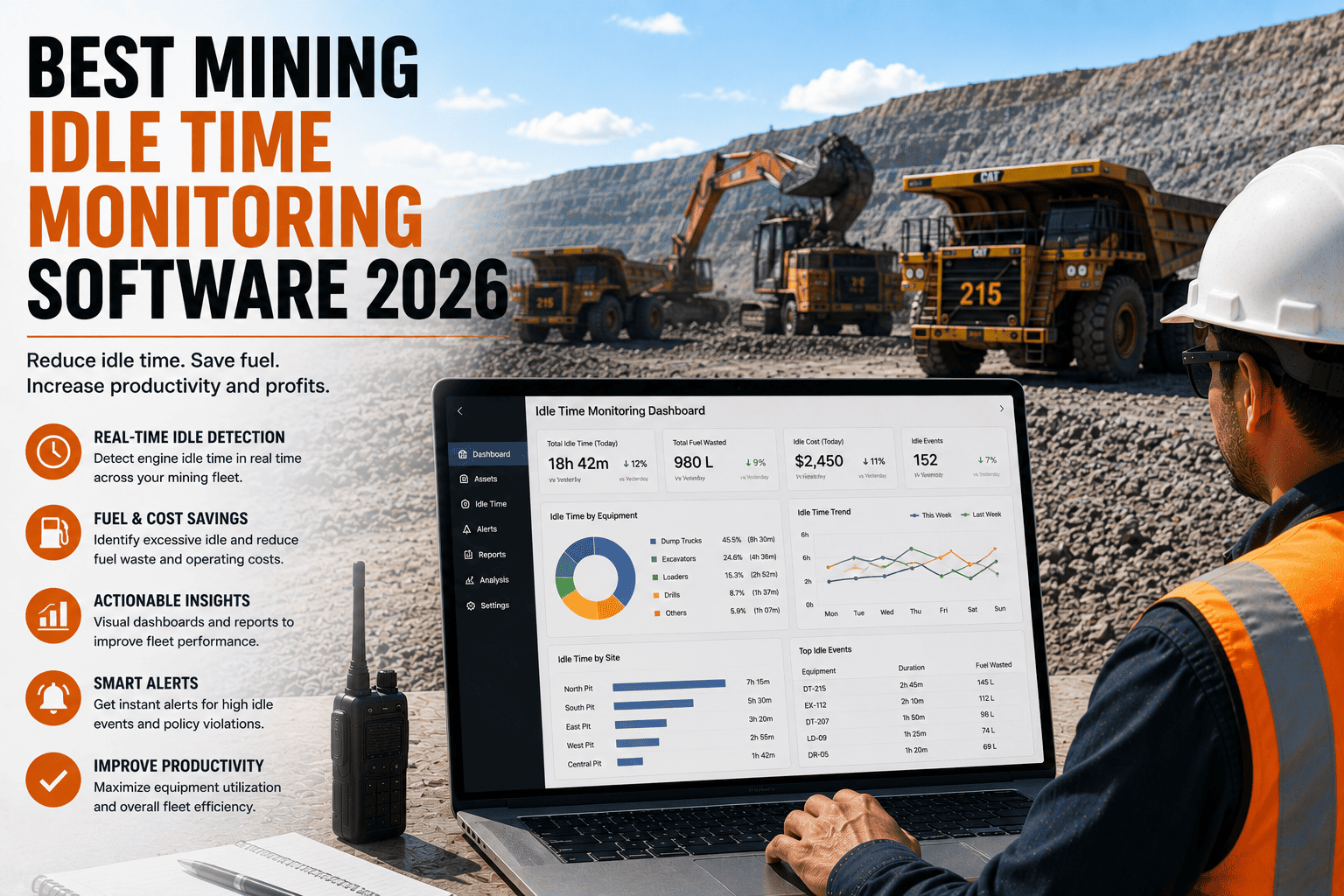
Idling is one of the most controllable sources of wasted fuel and unnecessary emissions on a mine site, particularly at crushers, load points, and shift changes. Trolley-assist systems on haul routes have been shown to cut diesel consumption by 30 to 50 percent where the infrastructure exists, and even without trolley assist, simple idle-reduction alerts and smarter dispatch sequencing routinely trim double-digit percentages off total fuel burn. Software that flags excessive idling in real time, rather than in a report two weeks later, is what actually changes driver behavior on site.
Scope 1, 2, and 3 Reporting Automation
Manually assembling an ESG report from spreadsheets, fuel invoices, and maintenance logs takes weeks and is prone to error, which is a serious liability when the numbers are going to a board or a regulator. The right software should generate Scope 1 direct fleet emissions and Scope 2 electricity-related emissions automatically, with export formats that plug into common ESG disclosure frameworks. Some platforms extend into Scope 3 estimates for contractor and haulage-partner emissions, which is increasingly what customers and lenders are asking to see.
Predictive Maintenance Tied to Emissions
A poorly maintained engine burns more fuel and emits more carbon long before it actually breaks down, so maintenance and carbon data belong in the same system rather than two disconnected tools. Platforms that flag declining fuel efficiency as an early maintenance signal catch emissions creep and mechanical failure at the same time, which is far more useful than treating carbon tracking as a separate reporting exercise bolted onto the maintenance program.
Electrification and Alternative Fuel Readiness
Battery-electric haul trucks, hydrogen fuel cells, and biofuel blends are moving from pilot projects to production fleets at a growing number of sites, and biofuel adoption alone can cut Scope 1 emissions by 40 to 60 percent depending on the blend. Software that can model mixed fleets, comparing a diesel truck against an electric or hybrid alternative on the same haul route, gives operations teams the data they need to justify capital decisions instead of guessing.
FleetRabbit tracks fuel burn, idle time, and equipment health across every truck, loader, and drill rig on your site, then turns that data into audit-ready emissions reporting automatically. Sign up free and connect your first vehicles in minutes, or book a demo to see a live emissions dashboard for a fleet your size.
Comparing the Main Approaches to Fleet Carbon Reduction
Not every site can flip a switch to full electrification, so most carbon reduction programs blend several strategies at once. The table below compares the four approaches mining fleets use most often, along with the realistic emissions impact and how quickly each one can be deployed.
| Reduction Strategy | Typical Emissions Impact | Deployment Speed | Where Software Helps |
|---|---|---|---|
| Idle & Behavior Management | 8 to 15 percent fuel reduction | Weeks, no hardware changes needed | Real-time alerts and driver scorecards |
| Trolley-Assist Haul Routes | 30 to 50 percent diesel reduction on assisted routes | Months, requires route infrastructure | Route modeling and utilization tracking |
| Biofuel Blending | 40 to 60 percent Scope 1 reduction | Weeks to months, supply dependent | Fuel-source tracking and blend reporting |
| Fleet Electrification | Near-zero tailpipe emissions per unit | Years, capital intensive | Mixed-fleet comparison and ROI modeling |
Calculating the ROI of Carbon Management Software
Direct Fuel Savings
Fuel is typically one of the three largest operating costs on a mine site, so even a modest reduction in consumption produces a meaningful dollar figure. A mid-size fleet running 40 haul trucks that cuts diesel use by 20 percent through idle reduction and route optimization can realistically save hundreds of thousands of dollars annually in fuel spend alone, before any carbon credit or compliance benefit is counted.
Avoided Compliance and Reporting Cost
Building an ESG report manually from disconnected fuel logs and maintenance records consumes weeks of staff time every reporting cycle and still carries a high risk of errors that damage credibility with investors. Automated reporting removes most of that labor and reduces the chance of a restated disclosure, which is a real financial and reputational risk for publicly traded miners.
Extended Equipment Life
Because carbon-aware maintenance catches fuel-efficiency decline early, engines run closer to factory specification for longer, which reduces both emissions and the frequency of costly overhauls. Fleets that combine carbon tracking with predictive maintenance commonly see fewer major engine repairs over the equipment's operating life, extending replacement cycles and protecting capital budgets.
Access to Better Financing and Contracts
Mining companies with credible, data-backed decarbonization plans are increasingly winning offtake agreements and financing terms that carbon-blind competitors cannot access, particularly in battery metals where buyers are actively screening suppliers on emissions intensity. That commercial advantage often outweighs the direct fuel savings over the life of a project.
Getting Started: A Realistic Implementation Path
Step One: Baseline Your Current Fleet Emissions
Before choosing software, pull together whatever fuel and maintenance data you already have for the past 12 months so you have a starting point to measure improvement against. Most sites discover their actual diesel spend and idle time are higher than assumed once the data is centralized in one place.
Step Two: Connect Telematics and Fuel Systems
Integrate existing GPS, telematics, and fuel-card data into the platform so emissions figures update automatically instead of depending on manual uploads. This step typically takes two to six weeks depending on how many systems need to be linked.
Step Three: Target Idle Time and Route Inefficiency First
Idle reduction and haul-route optimization deliver the fastest, cheapest wins and build the internal case for larger investments like trolley assist or electrification later. Most sites see double-digit fuel reductions within the first 90 days of active use.
Step Four: Automate Reporting and Scale Up
Once data quality is solid, turn on automated Scope 1 and Scope 2 reporting and begin modeling longer-term investments such as biofuel blending or electric equipment pilots using real site data instead of vendor estimates.
Stop estimating your carbon footprint from fuel invoices and start measuring it truck by truck, shift by shift. FleetRabbit connects your existing telematics and fuel systems to deliver live emissions tracking and automated Scope 1 and Scope 2 reporting your board and regulators can trust. Sign up for free and see your first emissions dashboard today, or book a demo to walk through it with our team.