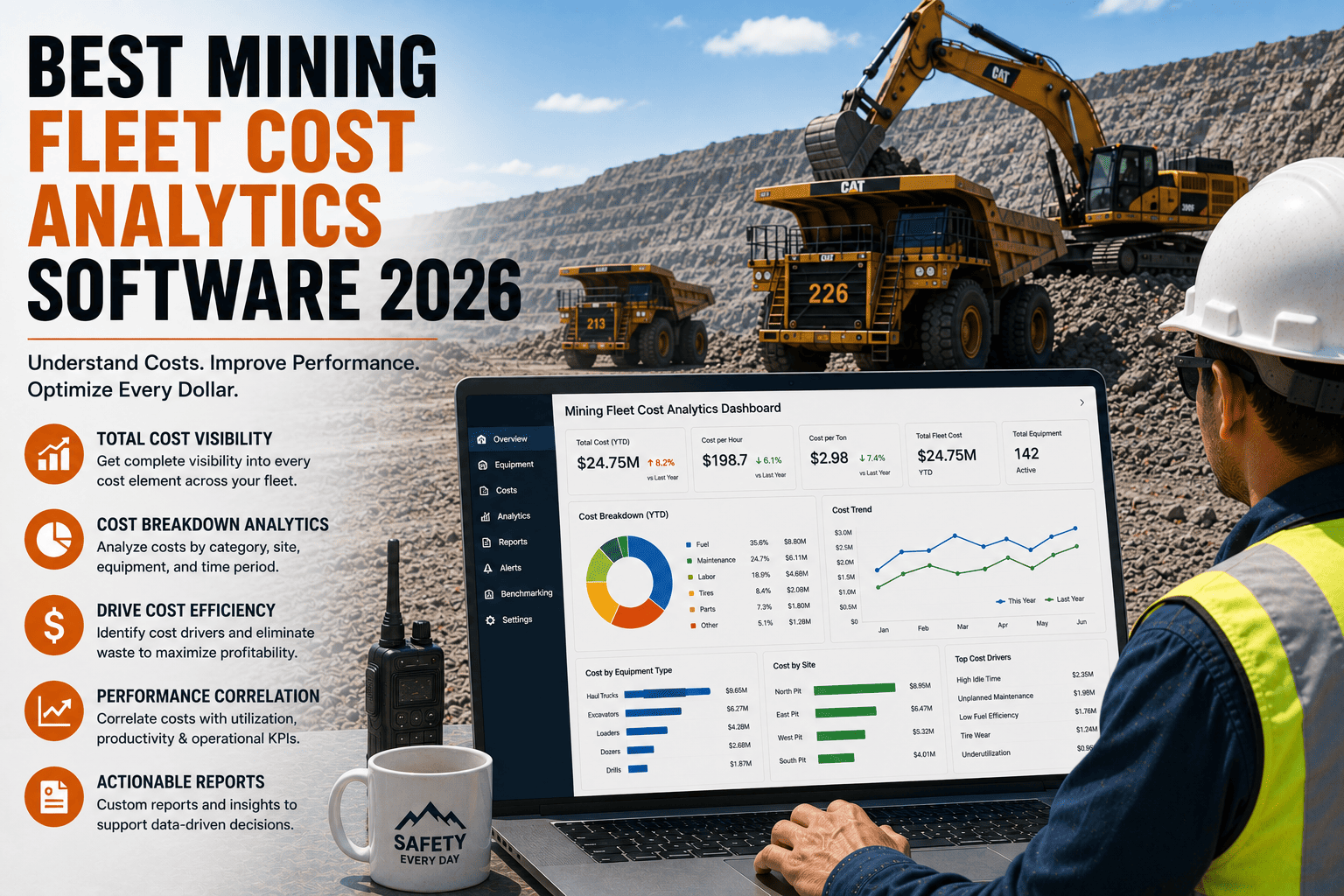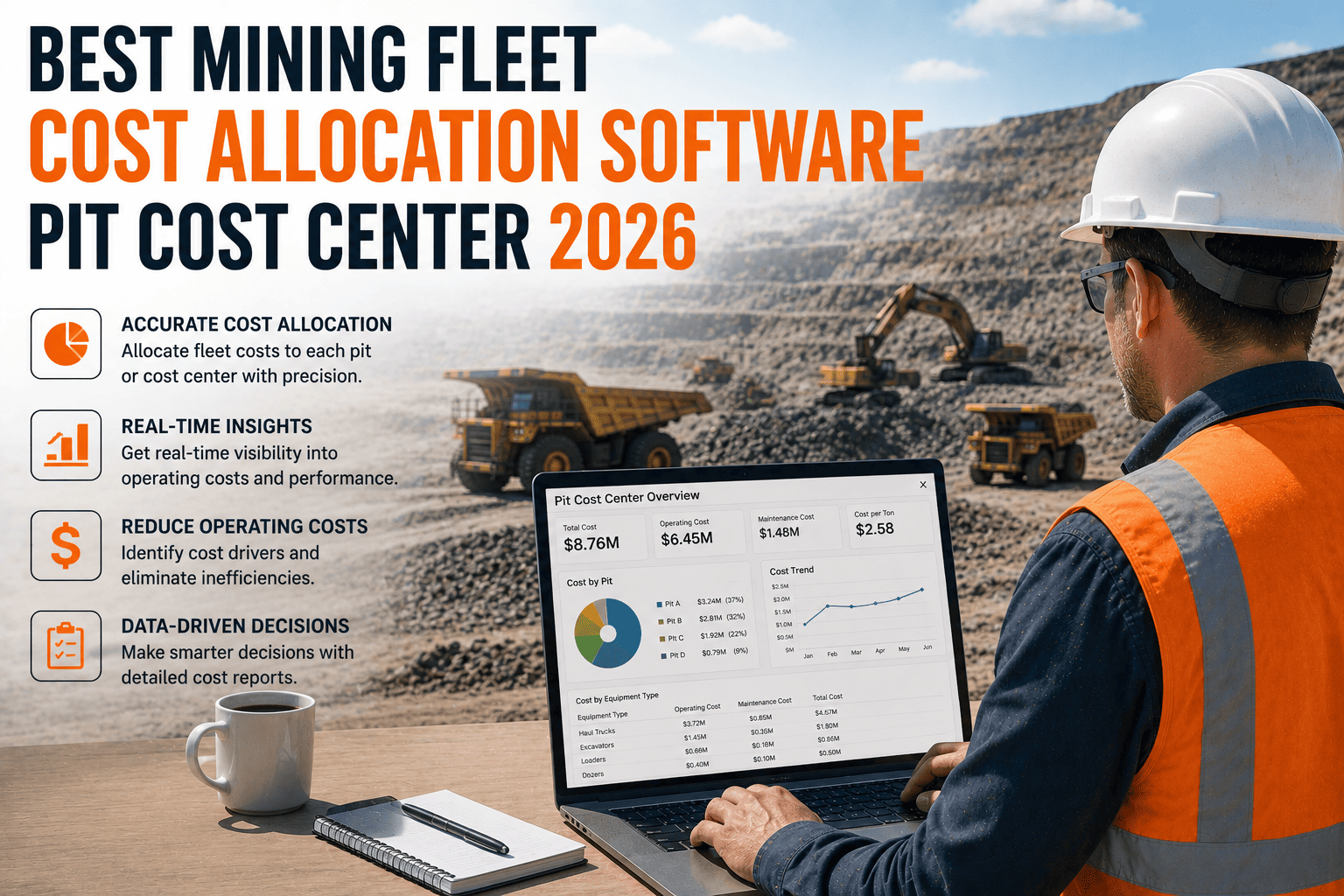
Ask most mine finance teams what a haul truck actually costs to run at Pit 3 versus Pit 7, and you'll usually get a shrug followed by a spreadsheet with a footnote explaining the number is "roughly allocated." Fuel gets averaged across the fleet. Maintenance gets split evenly by truck count instead of actual usage. Labor gets billed to whichever cost center someone remembered to type in that week. The result is a set of numbers that looks precise but quietly misleads every budget decision built on top of it.
Mining fleet cost allocation software automatically assigns fuel, maintenance, labor, and operating costs to the correct pit, bench, project, or cost center based on actual equipment usage, not averages or estimates. Operations using automated allocation typically uncover 10 to 20 percent of costs that were previously mis-assigned, giving finance and site leadership an accurate, defensible cost-per-tonne figure for every location.
Why "Roughly Allocated" Costs Are a Real Problem
Blended or estimated cost allocation feels harmless until a budget decision gets made on top of it. A pit that looks profitable on paper might actually be subsidized by cost that should have been charged to a different location entirely, and nobody notices until the annual reconciliation finally forces the question.
Averaged Fuel Costs
Fuel spend gets split evenly across the fleet instead of tracked per asset and per pit, hiding which location is actually burning the most cost per tonne moved.
Delayed Reconciliation
Cost allocation often happens weeks or months after the work occurred, so by the time a discrepancy is found, the budget decision it affected has already been made.
Manual Cost Center Tagging
Someone has to remember to manually tag every work order, fuel transaction, and labor hour with the right pit or project code, and that step gets skipped constantly.
Unverifiable Cost-Per-Tonne
Without a real allocation trail, a reported cost-per-tonne figure for any pit can't be defended in an audit or explained clearly to leadership when questioned.
Stop Estimating. Start Allocating By Actual Usage
FleetRabbit automatically assigns fuel, maintenance, and labor costs to the correct pit, bench, or cost center based on real equipment activity. Sign up free and see accurate cost-per-tonne within your first week.
How Cost Allocation Software Actually Tracks Every Dollar
Instead of splitting costs evenly or waiting for someone to manually code a transaction, allocation software follows the equipment itself. If a truck spends a shift at Pit 4, every fuel gallon, maintenance hour, and operator wage tied to that shift flows automatically to Pit 4's cost center.
Asset Activity Logged
Telematics and dispatch data record which pit, bench, or project each truck, loader, and excavator worked during every shift.
Costs Tagged Automatically
Fuel transactions, maintenance work orders, and labor hours inherit the correct cost center the moment they're recorded, with no manual coding step.
Split Costs Prorated Fairly
When an asset works across multiple locations in one shift, costs are split proportionally by hours or tonnage rather than divided evenly.
Live Cost-Per-Tonne
Finance and site leadership see an accurate, continuously updated cost-per-tonne for every pit, bench, and project without a manual reconciliation cycle.
What Gets Allocated
Fuel consumption, scheduled and unscheduled maintenance, operator and labor cost, equipment depreciation, and consumables all flow through the same automated allocation logic, so every cost category lines up against the same location structure.
Allocation Methods Compared
Not every allocation approach delivers the same accuracy. The table below shows how common methods compare on precision and effort required.
| Allocation Method | Accuracy | Manual Effort | Best Fit |
|---|---|---|---|
| Even Split by Asset Count | Low, ignores actual usage | Minimal, but misleading | Operations with a single pit only |
| Manual Spreadsheet Tagging | Moderate, depends on consistency | High, hours weekly | Small fleets with few cost centers |
| Rule-Based ERP Allocation | Good, if rules stay current | Moderate, needs upkeep | Operations with stable, defined cost centers |
| Automated Usage-Based Allocation | High, tied to real activity | Low, runs continuously | Multi-pit, multi-project mining operations |
Setting Up Cost Centers That Actually Reflect Your Operation
Cost allocation software is only as accurate as the cost center structure behind it. Before turning it on, it helps to define locations the way your operation actually thinks about them.
Define Cost Centers by Pit, Bench, or Project
Most operations get the clearest picture by structuring cost centers around physical pits or benches, then layering project-level tracking on top for capital work or expansion zones.
Decide How Shared Equipment Gets Split
Support equipment like water trucks or graders often serves multiple pits in a single shift. Decide upfront whether that cost splits by hours worked, tonnage moved, or a fixed ratio, so the logic stays consistent.
Why consistency matters more than perfection
A slightly imperfect but consistent splitting rule is more useful than a precise one that changes every quarter, because consistency is what makes month-over-month comparisons meaningful.
Map Cost Categories to Each Center
Fuel, maintenance, labor, and consumables should each map cleanly to a cost center so a single pit's report shows the full picture, not just equipment hours.
Allocate Costs The Way Your Operation Actually Works
FleetRabbit maps cost allocation to your real pit, bench, and project structure, splitting shared equipment costs automatically instead of guessing. Book a demo to see it configured for your site.
What Accurate Cost Allocation Actually Changes
Once costs are tied to real usage instead of estimates, the numbers stop being a reporting formality and start driving actual decisions.
Defensible Cost-Per-Tonne
Every pit's reported cost can be traced back to actual fuel, labor, and maintenance activity, standing up to audit and leadership scrutiny.
Faster Budget Corrections
Mis-allocated cost gets caught the same week it happens instead of surfacing months later during reconciliation.
Accurate Project Profitability
Capital projects and expansion zones show their true cost picture instead of being blended into overall site averages.
Better Equipment Decisions
Knowing the true fully-loaded cost per pit makes repair-or-replace and redeployment decisions far easier to justify.
Frequently Asked Questions
Key Takeaways
Estimated or evenly split cost allocation quietly distorts every budget decision built on top of it, from which pit looks profitable to which equipment gets replaced first. Automated, usage-based allocation ties every dollar of fuel, maintenance, and labor back to where it actually happened, giving finance and site leadership a number they can defend and act on immediately. The operations getting ahead aren't spending more, they're finally seeing exactly where every dollar goes.
Know The True Cost Of Every Pit, Bench, and Project
FleetRabbit automatically allocates fuel, maintenance, and labor costs to the correct cost center based on real equipment activity, no spreadsheets, no guesswork. Try it free on your own fleet today, no credit card required.