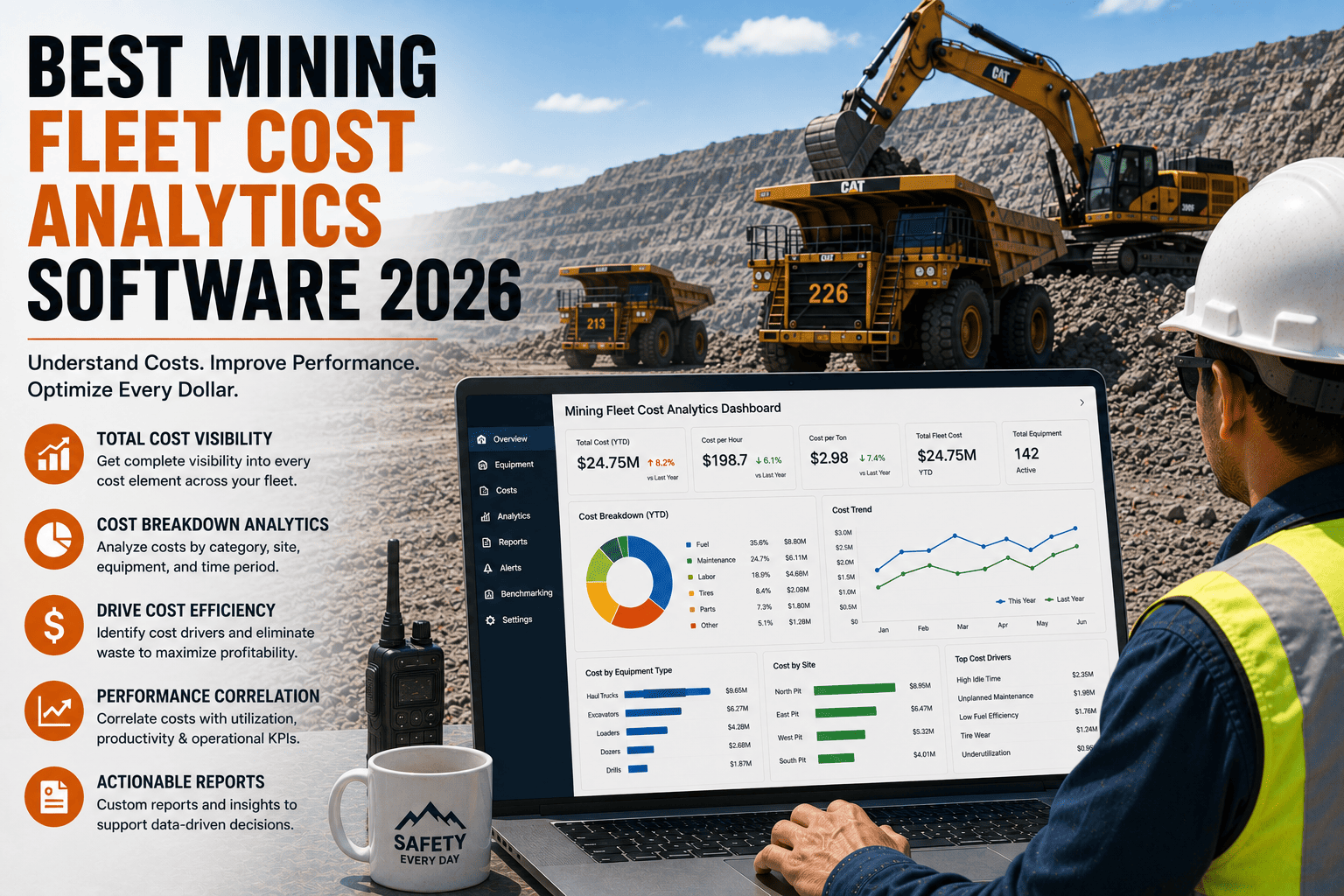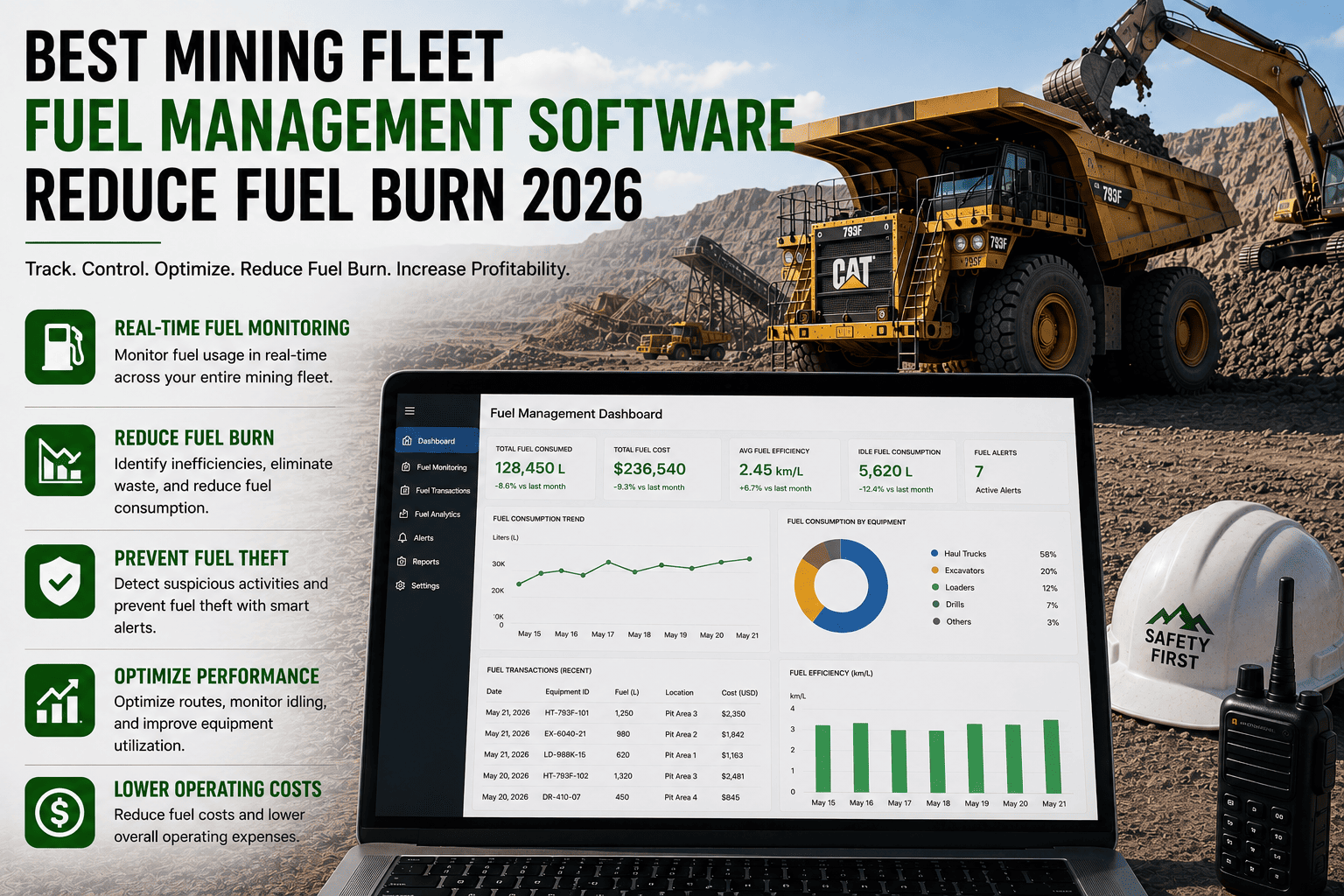
Diesel doesn't disappear quietly at a mine site, it disappears in plain sight, one idling engine and one aggressive haul cycle at a time. Fuel typically eats up 30 to 50 percent of total mining operating costs, which means even small inefficiencies compound into a number large enough to change a site's entire profitability picture. The mines closing that gap aren't necessarily buying newer trucks. They're watching fuel burn the way they watch production, in real time, down to the individual vehicle.
Mining haul trucks sit idle for roughly 35 to 40 percent of operating hours, wasting an estimated 100000 to 150000 liters of diesel per truck annually. At 1.20 dollars per liter, that's 120000 to 180000 dollars lost per truck every year. Across a 50-truck fleet, idle-related fuel waste alone can exceed 9 million dollars annually, and it's almost entirely preventable with real-time monitoring.
Where Fuel Actually Disappears On A Mine Site
Fuel consumption on a haul truck fleet accounts for up to 22 percent of total operating cost by itself, and the number climbs higher once support equipment like excavators, loaders, and dozers are added in. What makes fuel different from most other operating costs is how invisible the waste is day to day. A truck idling in a queue behind a loader looks completely normal to anyone watching. It's only when the fuel invoice arrives weeks later that the scale of the problem becomes obvious, and by then it's too late to trace back to the specific shift, route, or operator responsible.
Idle Time Is the Single Biggest Lever
Empty idle time, trucks waiting in queue at the shovel with no payload, is consistently identified as the largest avoidable source of fuel waste in haul truck operations. It's driven by dispatching bottlenecks, poorly matched loader-to-truck ratios, and working faces that aren't set up efficiently. None of those causes require a new truck to fix. They require visibility into where and when the idling is happening.
Driving Behavior Is a Hidden Multiplier
Two operators driving the same truck on the same route can post noticeably different fuel numbers based on acceleration habits, braking style, and how consistently they hold speed on grade. Without a way to compare operators and shifts side by side, this variance stays invisible, and the fleet keeps averaging out to a fuel number nobody can fully explain.
FleetRabbit tracks idle time, speed, and fuel burn per truck and per operator, then flags exactly where waste is happening before it shows up on next month's invoice. Start a free trial with 3 vehicles and see your idle-time fuel cost today.
The Real Numbers Behind Fleet Fuel Waste
Breaking fuel waste into its individual sources shows exactly where monitoring software delivers the fastest return, and which problems are cheapest to fix first.
| Waste Source | Typical Impact | Root Cause | How Software Fixes It |
|---|---|---|---|
| Excess Idle Time | 100000 to 150000 liters wasted per truck annually | Queuing at shovel, dispatch bottlenecks, poor loader-truck ratio | Real-time idle alerts and automated shutdown recommendations |
| Uneven Load Distribution | 12 to 15 percent higher fuel use per cycle | Inconsistent loader placement, payload variance between cycles | Payload tracking flags trucks running consistently over or under target |
| Aggressive Driving Behavior | Meaningful fuel variance between operators on identical routes | Harsh acceleration, braking, inconsistent speed on grade | Operator-level scorecards compare fuel efficiency across shifts |
| Route and Cycle Inefficiency | Fuel consumption tied directly to haul distance and grade | Suboptimal routing, avoidable grade changes, longer than necessary hauls | Cycle data correlated to route to identify the highest fuel-cost paths |
How Mining Fleet Fuel Management Software Works
Effective fuel management software doesn't just total up how many liters were purchased last month. It connects fuel consumption to the specific truck, shift, operator, and route responsible, so the waste has a clear address instead of hiding inside an aggregate number.
Continuous Idle and Fuel Burn Tracking
Telematics data streams idle duration, engine load, and fuel consumption per truck throughout the shift, replacing end-of-month fuel receipts with a live picture of where diesel is being spent right now.
Operator-Level Fuel Scorecards
Comparing fuel efficiency across operators running the same truck on the same route turns a vague sense that "some drivers use more fuel" into a specific, coachable number, without singling anyone out unfairly.
Automated Alerts for Excess Idling
Rather than reviewing idle reports after the fact, the platform flags a truck exceeding expected idle duration while the shift is still running, giving dispatch a chance to correct it in real time.
Turning Fuel Data Into Site-Wide Decisions
Site leadership gets fuel cost broken down by truck, shift, and route instead of one lump total. Maintenance teams see which trucks are burning more fuel than their peers, often an early signal of a mechanical issue before it becomes a breakdown. Booking a demo shows exactly how this looks against your current fuel data.
What Fuel-Managed Fleets Achieve
Sites that actively manage fuel rather than reviewing it after the invoice arrives consistently report improvement across idle time, per-cycle efficiency, and total fuel spend.
Getting Started With Fuel Management
Most sites already have telematics and fuel purchase data sitting in separate systems that were never connected. The first step is simply bringing them together so idle time, driving behavior, and route data can be viewed against actual fuel consumption, truck by truck. A short trial period is usually enough to reveal which shift, route, or truck is responsible for the largest share of avoidable fuel cost.
From there, the software keeps watching continuously, flagging excess idle time as it happens rather than a month later. You can start a free trial to connect your existing fleet data, or book a short demo to see it against your own site numbers first.
Every hour a truck idles unnecessarily is diesel your site paid for and got nothing back. FleetRabbit shows you exactly where fuel is being wasted, by truck, shift, and operator, so you can fix it before the next invoice arrives.