Every mine manager building a budget request for fleet software eventually hits the same question from finance: what's the actual return. Not a vague promise of "better visibility," but a number tied to fuel, maintenance, downtime, and utilization that finance can hold you to. The good news is that mining fleet management software is one of the easiest technology investments to model, because the four cost centers it improves are ones you're already tracking, just not in one place.
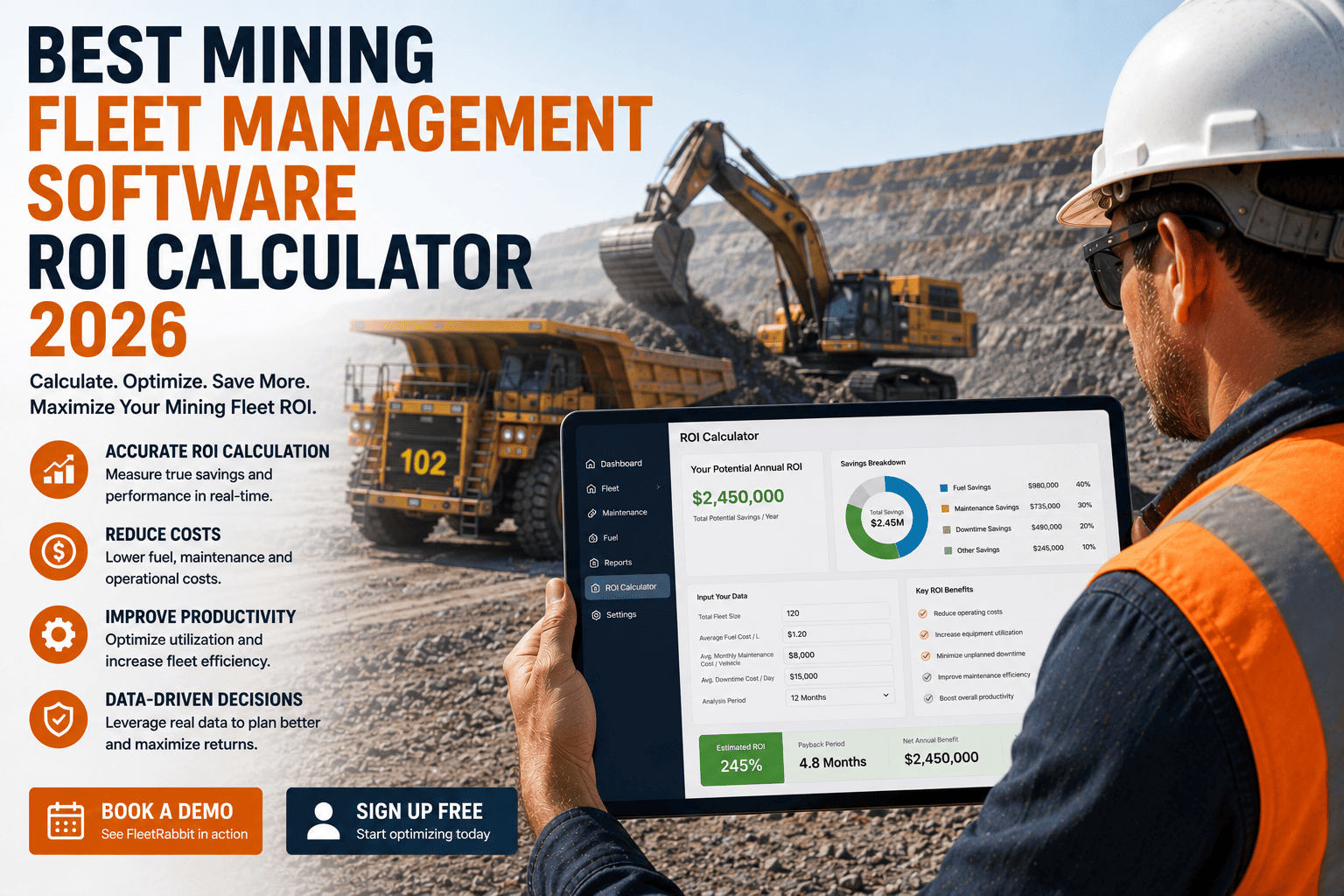
Mining fleet management software typically delivers 3 to 5 times return in the first year by combining fuel savings of 10 to 15 percent, operating cost reductions of up to 28 percent from better utilization, and downtime prevention worth 40,000 to 200,000 dollars annually. Most operations reach positive ROI within 6 to 12 months. Sign up for FleetRabbit to see these numbers calculated against your own fleet.
The Four Numbers That Build Your ROI Case
Building a business case for mining fleet management software comes down to four cost centers. Each one is measurable on its own, and each one compounds when the same platform is tracking all four together instead of leaving them in separate spreadsheets.
Fuel Savings
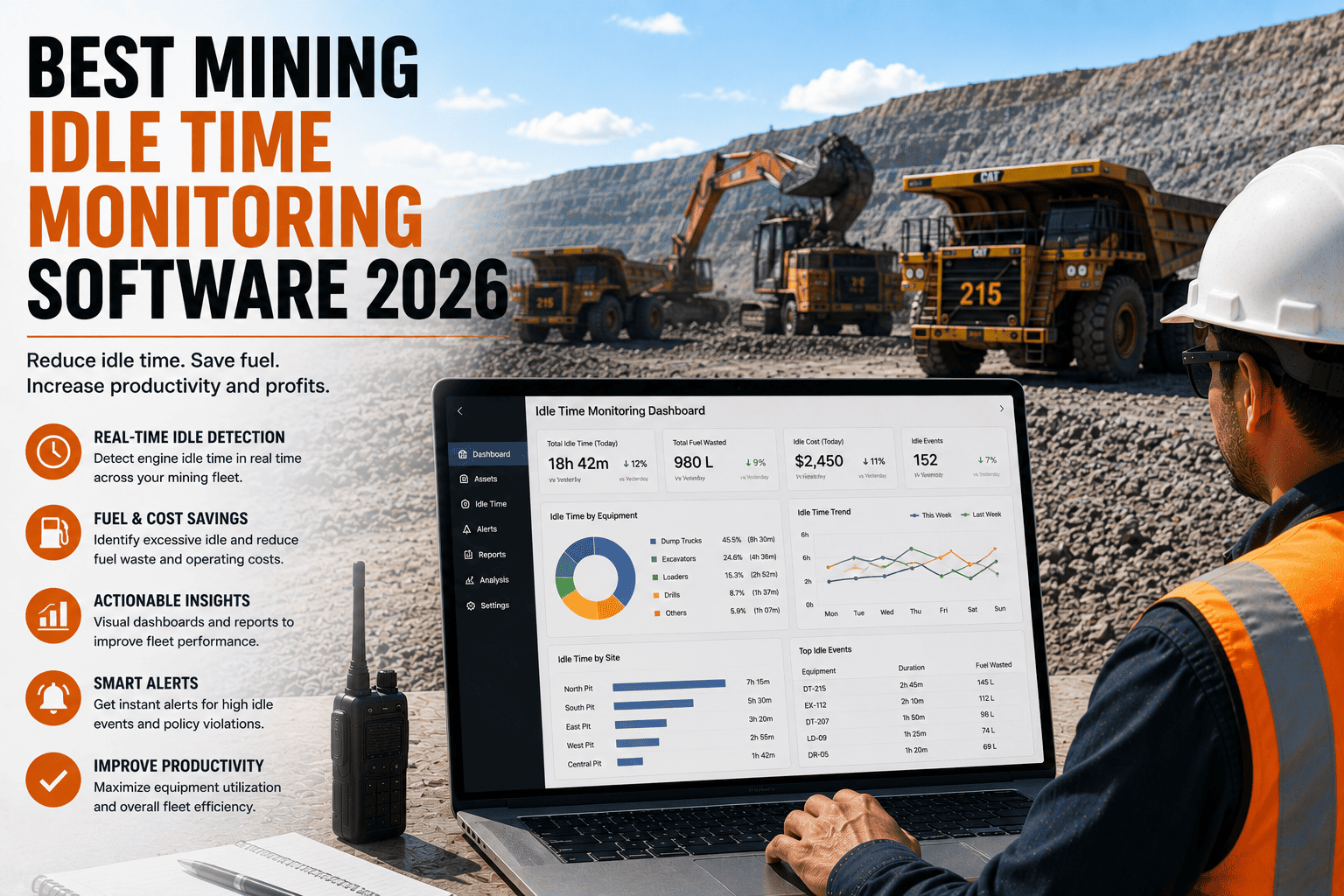
Fuel is where the numbers move fastest because the mechanisms are so direct. Route and haul-cycle optimization typically cuts 5 to 10 percent from fuel spend, while cutting excessive idle time trims another 3 to 8 percent. Combined with abnormal-consumption alerts that catch mechanical issues early, total fuel usage commonly drops by up to 15 percent.
Maintenance and Downtime Reduction
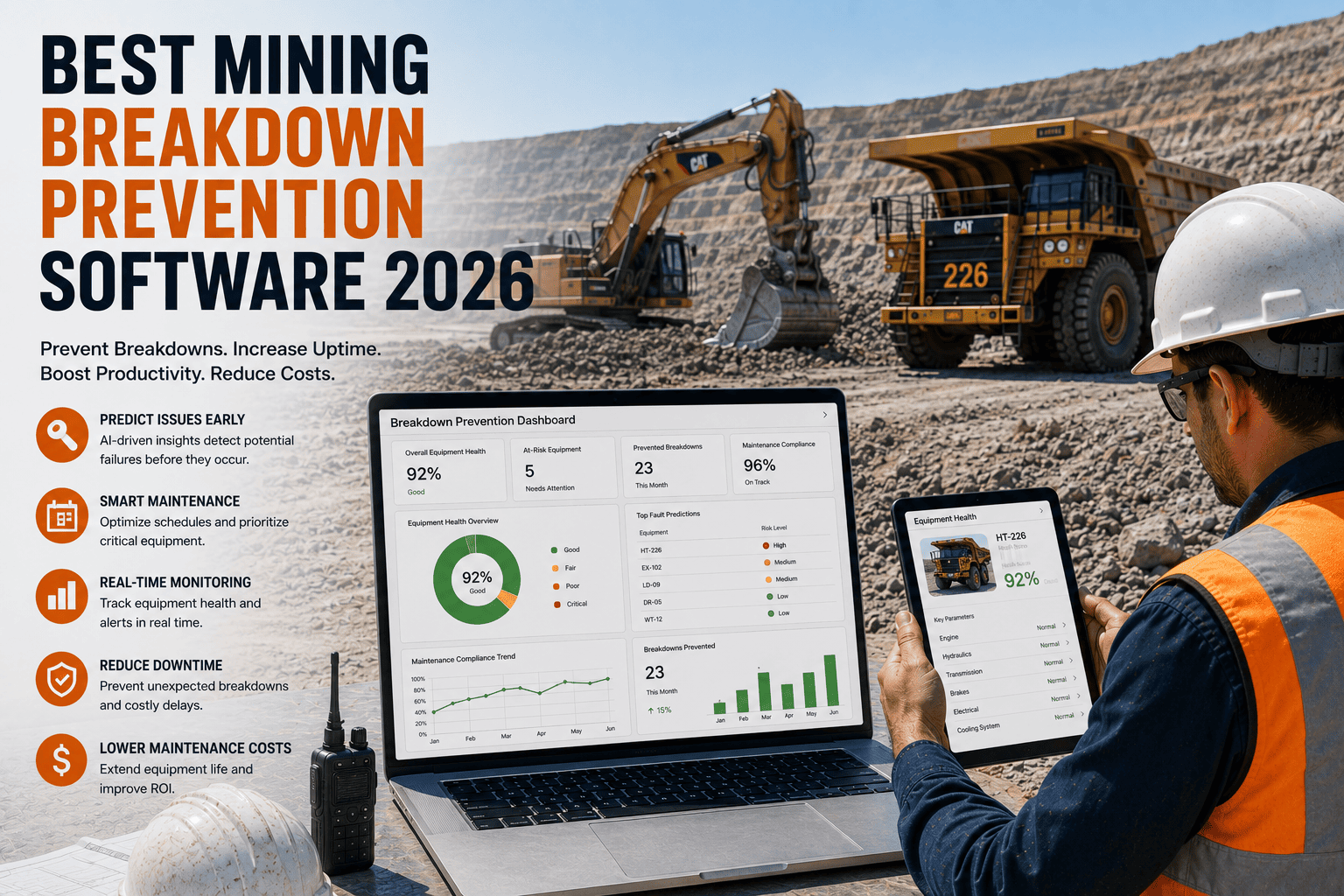
Predictive maintenance scheduling improves haul truck availability by as much as 35 percent within the first quarter of use. Preventing 5 to 8 unplanned breakdowns a year, at 5,000 to 20,000 dollars an hour of downtime for a large haul truck, is where the largest single dollar figures in your ROI case come from.
Utilization and Right-Sizing
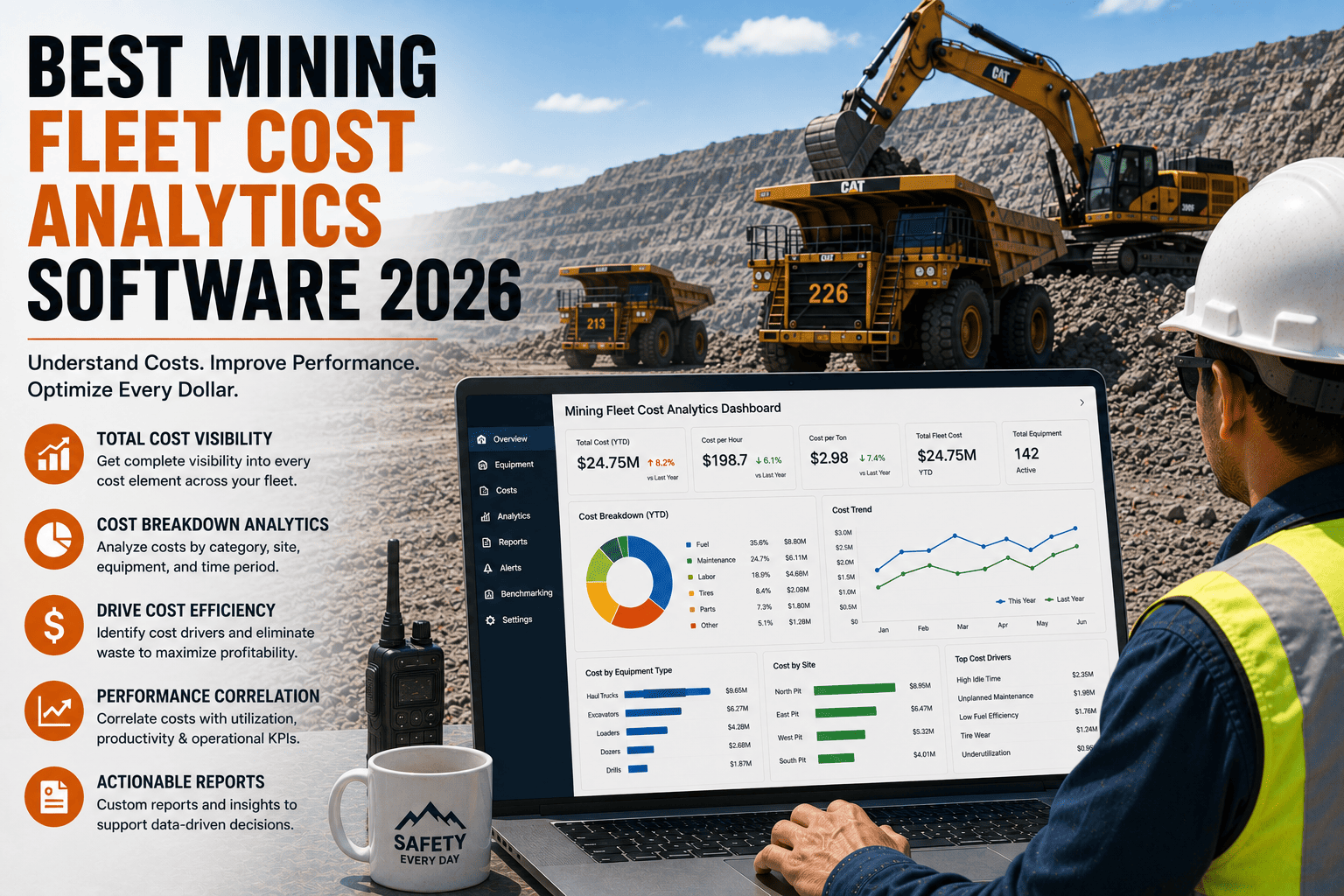
Many mines carry extra equipment as insurance against downtime, and that spare machine still gets insured, depreciated, and maintained whether it's working or not. Automated utilization tracking commonly cuts total operating costs by up to 28 percent by exposing which assets are genuinely earning their keep.
Administrative and Reporting Time
Auto-generated shift reports and utilization dashboards remove hours of manual data entry every week, freeing supervisors to act on the numbers instead of assembling them.
FleetRabbit combines fuel analytics, predictive maintenance, and utilization tracking in one dashboard, giving you the exact figures finance needs to approve the investment. Start your free trial and get a real picture of your fleet's ROI potential.
A Simple ROI Framework You Can Run Today
You don't need a complex model to get a directionally accurate number. Plug your own fleet size and current costs into the four categories below to see roughly where your savings will land.
| Cost Category | What Software Improves | Typical Savings Range | How To Estimate Yours |
|---|---|---|---|
| Fuel Spend | Route efficiency, idle time, abnormal consumption alerts | 10 to 15 percent reduction | Multiply your annual fuel budget by 0.10 to 0.15 |
| Unplanned Downtime | Predictive maintenance catching faults before failure | 40,000 to 200,000 dollars annually | Count last year's breakdowns times your hourly downtime cost |
| Equipment Utilization | Right-sizing the fleet based on real usage data | Up to 28 percent lower operating costs | Compare current utilization percentage against 70 to 85 percent target |
| Availability | Scheduled maintenance windows instead of emergency repairs | Up to 35 percent improvement in one quarter | Track current uptime percentage against 85 percent or higher target |
What This Looks Like on a Real Mine Site
Numbers land differently depending on fleet size, but the pattern holds across small quarries and large surface mines alike. A copper mine studied under an OEE framework found shovels running at just 25 percent overall equipment effectiveness and dump trucks at 38 percent, losses that stayed completely invisible until utilization was measured systematically. A typical unmanaged small mine loses roughly 127,000 dollars a year to unplanned downtime, emergency repairs, and fuel waste combined, a gap that purpose-built fleet software closes almost entirely once it's running.
Smaller Fleets Often See Proportionally Bigger Returns
A single prevented breakdown represents a much larger share of annual operating costs on a 15-truck operation than on a 150-truck one, which is why smaller mining operations frequently recover their software investment within the first quarter of deployment rather than waiting out a full year.
FleetRabbit's utilization and OEE tracking shows exactly which assets are earning their keep and which are quietly costing you money. Book a demo and walk through your fleet's numbers with our team before you commit to anything.
How Long Until the Investment Pays For Itself
Most mining operations see their first measurable downtime reduction within 90 days of going live, with haul truck availability improving as early as the first quarter. Full ROI, meaning the software has paid for itself in recovered fuel, maintenance, and utilization savings, typically arrives within 6 to 12 months, after which every additional month is compounding return rather than payback.
What Speeds Up the Timeline
Fleets with existing telematics hardware see returns fastest since there's no equipment retrofit required, just a data connection and configuration. Operations building fault monitoring and utilization tracking from scratch take a few extra weeks to fully wire up, but reach the same destination.
FAQ: Mining Fleet Management Software ROI
Every month spent without fuel analytics, predictive maintenance, and utilization tracking is a month of savings your fleet isn't capturing. FleetRabbit puts all three in one dashboard so you can build a business case finance actually approves. Start your free trial today, no credit card required.