Fleet management generates substantial financial data across fuel purchases, maintenance work orders, driver payroll, toll transactions, vehicle acquisition costs, and third-party service invoices — but most logistics operators manage these financial streams in disconnected systems that require manual data entry, reconciliation effort, and error checking that consumes administrative hours while introducing reporting delays and accuracy risks. Accounting software integration for fleet management connects the operational data generated by fleet management platforms — telematics fuel consumption records, maintenance work order costs, driver hours and duty status logs, electronic logging device (ELD) data, and fuel card transaction feeds — directly into general ledger systems, accounts payable workflows, and financial reporting dashboards. The integration eliminates manual data transfer, reduces coding errors, accelerates month-end closing cycles, and provides fleet operators with real-time visibility into the actual per-mile operating costs, asset-level profitability, and maintenance expense trends that drive financial decision-making. This guide addresses the technical integration approaches, data mapping requirements, financial reporting dimensions, and operational cost allocation methods that logistics operators need to implement accounting software integration effectively — with specific attention to how FleetRabbit's data architecture supports seamless financial integration for fleets of any size or operating structure.
Accounting software integration for fleet management connects operational systems — telematics, maintenance management, ELD, fuel cards, toll management, and driver payroll — directly to general ledger platforms including QuickBooks Online, QuickBooks Desktop, Xero, NetSuite, Sage Intacct, and Microsoft Dynamics. This guide covers the data categories that require integration, field-level mapping specifications, cost allocation methodologies for fleet-specific accounting (including the distinction between direct operating costs and overhead allocation), API-based integration versus file-based approaches, reconciliation workflows, and the financial reporting enhancements that integrated data enables. FleetRabbit's integration architecture supports native connections to major accounting platforms with configurable GL mapping and automated cost categorization by vehicle, driver, customer, and route dimension.
Why Fleet Management Requires Dedicated Accounting Integration
General-purpose accounting software — including QuickBooks, Xero, NetSuite, and Sage — is not designed to handle the specific data structures and cost allocation requirements of commercial fleet operations. A standard accounting system expects to receive summarized invoice data with basic line item categorization: fuel expense, repair and maintenance, payroll, supplies. But fleet operators need to track expenses at the asset level (per-vehicle profitability), driver level (driver cost efficiency), route level (route profitability by lane), and customer level (customer profitability after transportation costs). The gap between what accounting systems natively support and what fleet operators need to measure drives the requirement for specialized integration — and explains why manual data entry from fleet management platforms into accounting software produces inadequate financial visibility for operating decisions.
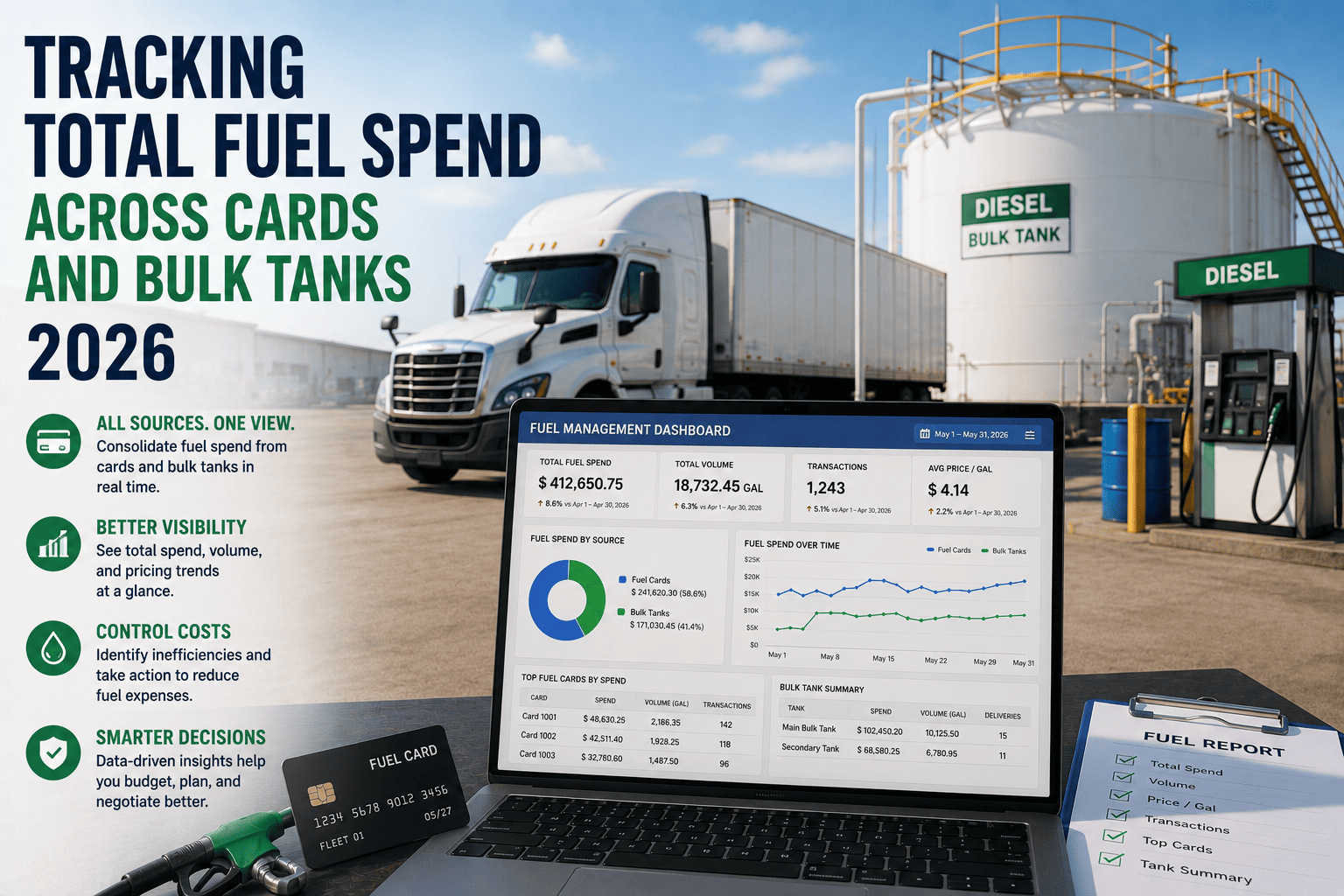
Manual financial data transfer between fleet management systems and accounting platforms creates specific operational problems that integrated fleets avoid. Data entry errors from transcribing invoice amounts, mis-categorized expenses that distort cost center reporting, delayed expense recognition that produces inaccurate monthly financial statements, and reconciliation effort that consumes finance team hours are the direct costs of disconnected systems. The indirect costs are more significant: operations managers cannot see real-time fuel cost per mile by driver or vehicle; maintenance supervisors cannot track warranty recovery against parts costs; and executive teams make pricing decisions based on cost data that is weeks or months out of date. Accounting software integration eliminates these problems by creating automated data flow from operational source systems directly to financial records — with the categorization and allocation rules applied consistently to every transaction.
Integration Architecture: API-Based versus File-Based Approaches
Fleet operators evaluating accounting software integration must choose between two primary integration architectures: API-based real-time integration and file-based batch integration. The choice affects data timeliness, implementation complexity, ongoing maintenance requirements, and the range of financial reporting capabilities available. API-based integration uses secure web service calls between the fleet management platform and the accounting software's application programming interface — transactions flow from the operational system to the accounting system in near real-time, with error handling, duplicate prevention, and automated reconciliation. File-based integration exports data from the fleet management system to structured file formats (CSV, IIF, XML) that are then imported into the accounting system — typically on a daily, weekly, or monthly batch schedule with manual file transfer or scheduled automation via secure file transfer protocols.
For most commercial fleet operators, API-based integration provides superior outcomes for several reasons. Real-time transaction flow eliminates the delay between expense occurrence and financial recognition — fuel purchases appear in the general ledger within minutes rather than days. API integration supports bidirectional data flow — some integrations push cost data from fleet management to accounting while pulling vendor records, account structures, and customer information from accounting to fleet management. API error handling provides immediate feedback when data validation fails, enabling correction before the transaction is permanently recorded. File-based integration remains viable for smaller fleets or operators with accounting systems that do not support modern APIs, but the administrative overhead of file generation, transfer, and import validation typically offsets the lower technical requirements. FleetRabbit's integration layer supports both API connectivity to major accounting platforms (QuickBooks Online, Xero, NetSuite) and file-based export for QuickBooks Desktop and legacy accounting systems requiring IIF or CSV import formats.
GL Mapping and Cost Allocation Methodologies
The technical integration between fleet management and accounting software is only half of the solution — the other half is configuring the general ledger mapping and cost allocation rules that determine which accounting accounts receive which expense transactions, and how costs are distributed across vehicles, drivers, customers, and profit centers. Poorly configured GL mapping produces integrated data that is technically correct but financially useless because expenses appear in the wrong accounts, cost allocation lacks the dimensions needed for analysis, or overhead costs are incorrectly attributed to direct expense categories. Proper GL mapping requires understanding the distinction between direct operating costs (expenses tied to specific vehicles, trips, or customers) and overhead costs (expenses shared across the fleet that require allocation methodologies).
Direct operating costs in fleet management include fuel purchases attributed to specific vehicles, maintenance parts and labor assigned to specific asset numbers, driver wages allocated to trip assignments, and tolls incurred on specific routes. These costs can be mapped directly to expense accounts and cost centers without allocation formulas because the operational system captures the cost at the point of transaction with sufficient dimensional data. Overhead costs — including insurance premiums, licensing and registration fees, shop facility overhead, dispatch and administrative salaries, and technology platform subscriptions — require allocation methodologies that distribute shared costs across vehicles or operating hours. Common allocation bases for fleet overhead include vehicle miles traveled (allocate overhead based on each vehicle's percentage of total fleet miles), operating days (allocate based on days in service), or revenue contribution (allocate based on each vehicle's percentage of total revenue). The accounting integration must support both direct expense mapping and rules-based overhead allocation to produce accurate asset-level profitability reporting.
Data Quality Requirements for Successful Integration
Accounting software integration is only as reliable as the operational data feeding into it — incomplete, inconsistent, or inaccurate data from fleet management systems produces integrated financial records that require manual correction, reconciliation, and adjustment. The most common integration failures originate not in the technical connection between platforms but in the quality of source data: missing vehicle identifiers on fuel transactions, unassigned work order costs, driver records with incorrect pay rates, or incomplete customer billing information. Fleet operators preparing for accounting integration should audit their operational data quality across the specific dimensions that integration depends on before implementing automated data flow.
Vehicle identification consistency is the most critical data quality dimension for fleet accounting integration. Every transaction — fuel purchase, maintenance work order, toll charge, driver payroll allocation — must carry a valid vehicle identifier that matches exactly across all operational systems. If the fleet management platform uses asset numbers (F-001, F-002) and the fuel card system uses license plate numbers or VINs, integration must include a mapping table that reconciles these identifiers. Maintenance cost allocation requires that work orders are consistently closed with complete parts and labor costs attached to specific vehicle records — open work orders, unassigned labor, or missing technician time tracking produce incomplete cost data. Driver assignment accuracy affects both payroll integration and vehicle cost allocation — if drivers are not consistently logged into specific vehicles within the telematics and ELD systems, trip-level cost allocation becomes impossible. FleetRabbit's data validation features include vehicle identifier consistency checking, work order completeness verification, and driver-vehicle assignment auditing that identifies data quality gaps before they affect financial integration.
Connect Your Fleet Operations Directly to Your General Ledger
FleetRabbit's accounting integration connects maintenance, fuel, driver, and operational cost data directly to QuickBooks, Xero, NetSuite, and other major accounting platforms — eliminating manual data entry, reducing reconciliation effort, and providing real-time visibility into asset-level profitability. Book a demo to see how FleetRabbit's integration architecture automates your fleet financial workflows.
Reconciliation Workflows for Integrated Fleet Accounting
Even with fully automated accounting integration, reconciliation workflows remain essential to ensure data accuracy and completeness. Reconciliation is the process of comparing integrated transaction data against source system reports, bank statements, vendor invoices, and operational logs to verify that every expense has been correctly recorded, categorized, and allocated. Automated integration reduces reconciliation effort by eliminating manual data entry errors, but it does not eliminate the need for periodic verification — integration configuration changes, source system data anomalies, and accounting system updates can all introduce discrepancies that reconciliation workflows detect and correct.
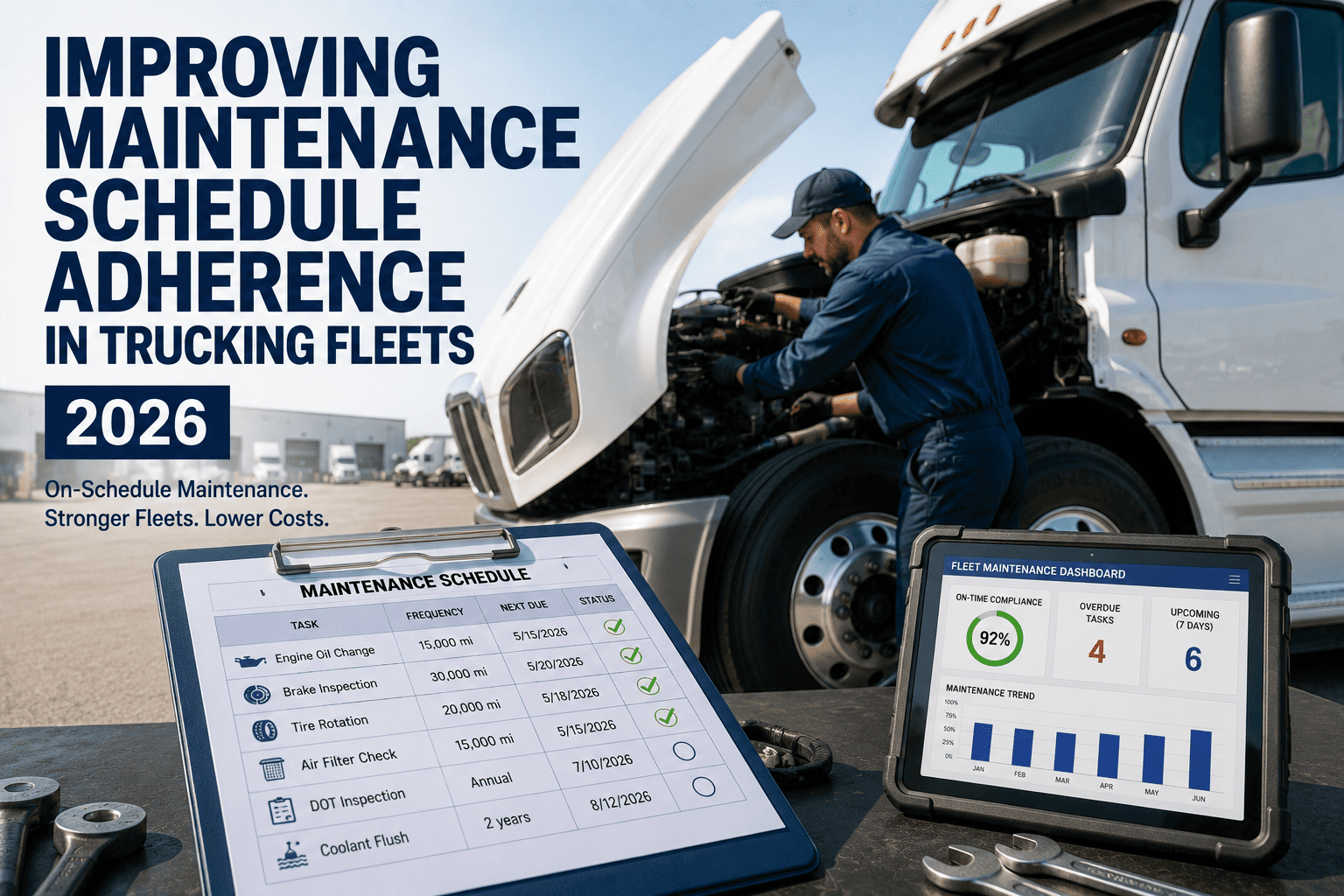
The specific reconciliation requirements for fleet accounting include fuel expense reconciliation comparing fuel card system totals against integrated GL entries by vehicle and by statement period; maintenance cost reconciliation comparing vendor invoice totals against work order costs and GL postings; driver payroll reconciliation comparing ELD-calculated miles or hours against payroll system payments and GL entries; and toll transaction reconciliation comparing electronic toll collection system reports against customer billing and GL expense accounts. Monthly reconciliation cycles timed to vendor statement closing dates are typically more efficient than weekly reconciliation because they align with supplier billing periods. Fleet operators should document reconciliation procedures including which reports serve as source-of-truth, acceptable variance thresholds, correction workflows for discrepancies, and approval requirements for reconciliation sign-off. FleetRabbit's reporting suite includes reconciliation-specific reports that show integrated transactions by GL account, vehicle, and time period — enabling finance teams to verify complete and accurate data flow without running parallel manual systems.
Automate Your Fleet Financial Data Flow from Operations to General Ledger
FleetRabbit's accounting integration connects maintenance, fuel, driver, and operational cost data directly to your accounting platform — eliminating manual data entry, reducing month-end closing time, and providing real-time visibility into per-vehicle profitability. Join logistics operators who have reduced finance team hours spent on fleet data entry by 80 percent while improving cost allocation accuracy.